I Found a Penny Today, So Here's a Thought
|
|
|
 |
|
|
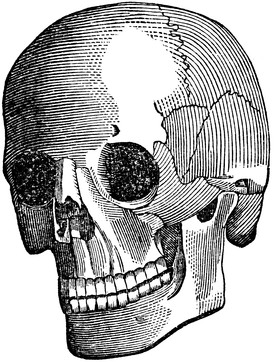
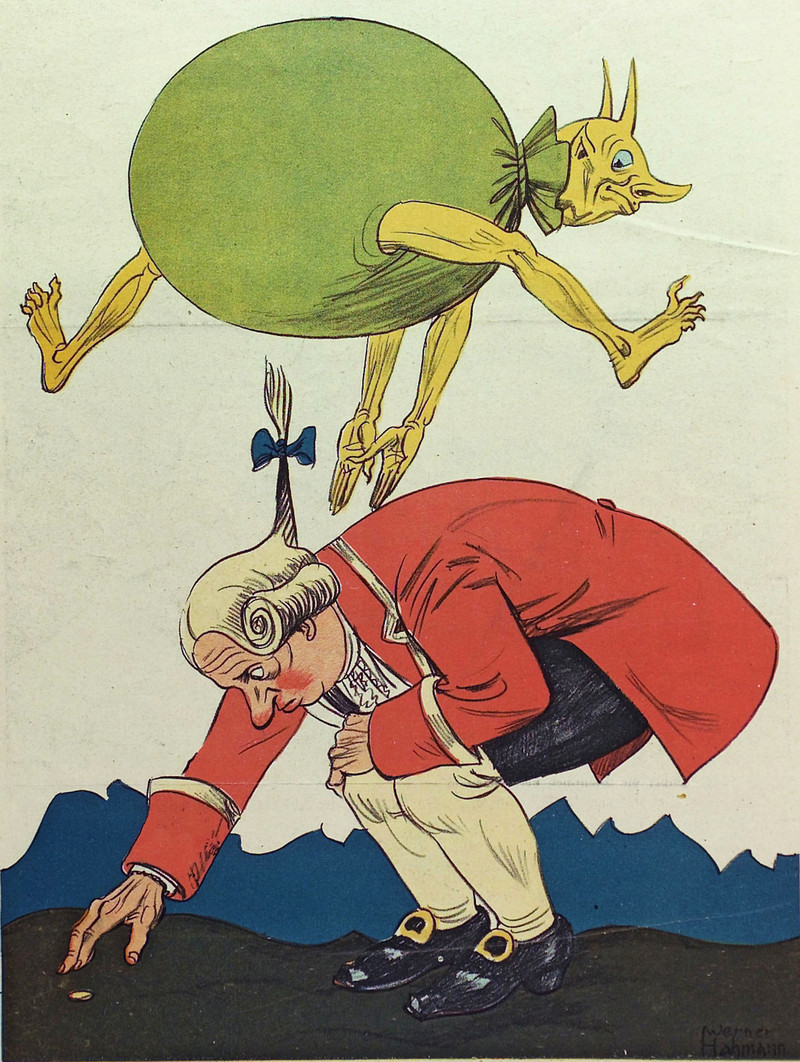
Wolf said: “This world is made of clouds and of the shadows of clouds. It is made of mental landscapes, porous as air, where we are as trees walking, and as reeds shaken by the wind.”
But the skull answered, “To turn the world again into mist and vapour is easy and weak. To keep it alive, to keep it real, to hold it at arm’s length, is the way of gods and demons.”
Wolf cried out: “There is no reality but what the mind fashions out of itself. There is nothing but a mirror opposite a mirror, and a round crystal opposite a round crystal, and a sky in water opposite water in a sky.”
“Ho! Ho!” laughed the hollow skull. “I am alive still, though I am dead; and you are dead, though you’re alive. For life is beyond your mirrors and your waters. It’s at the bottom of your pond; it’s in the body of your sun; it’s in the dust of your star spaces; it’s in the eyes of weasles and the noses of rats and the pricks of nettles and the tongues of vipers and the spawn of frogs and the slime of snails. Life in me still; and honey is sticky and tears are salt, and yellow-hammers’ eggs have mischievous crooked scrawls!”
—From the divine Wolf Solent by John Cowper Powys [with slight edits for brevity]
|
|
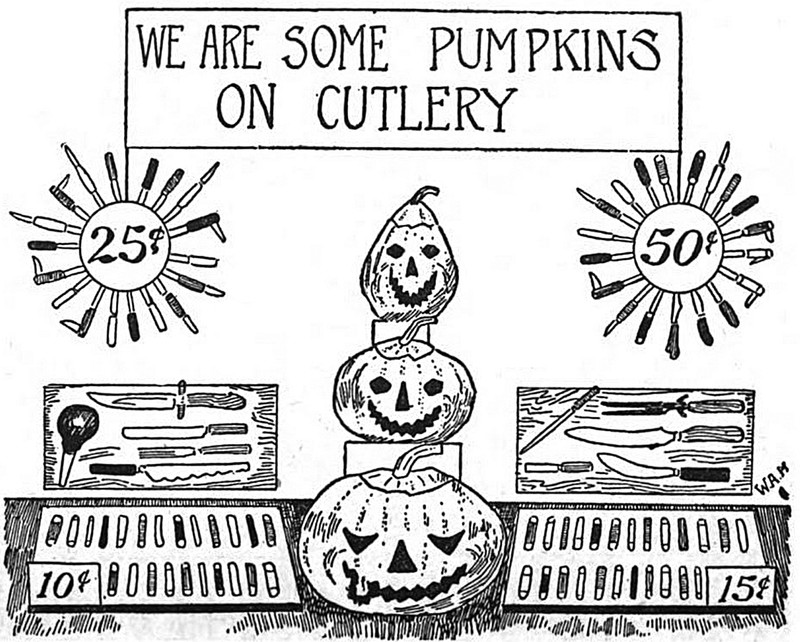
Just as the goddess Diana showed that the hunter and the stag are one, this vintage window display shows that the pumpkin and the knife are one in the jack-o'-lantern. From One Hundred Easy Window Trims, 1913.
|
|
|
|
|
|
|
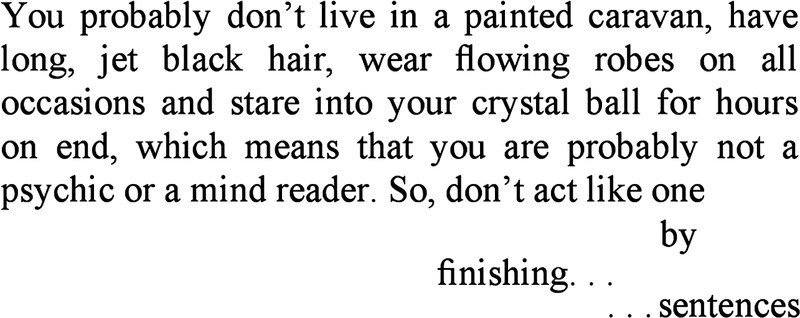
Here's a frightful example of a text not reading its reader's mind. It even predicts that you don't live in a painted caravan and stare into a crystal ball for hours ( we do!) and that you aren't a mind reader ( we are!). It's a classic case of "what you say about others is what you mean about yourself." From Baked Beans & Somtam by Rick Kirtland, 2016.
|
|
|
|
|
|
|
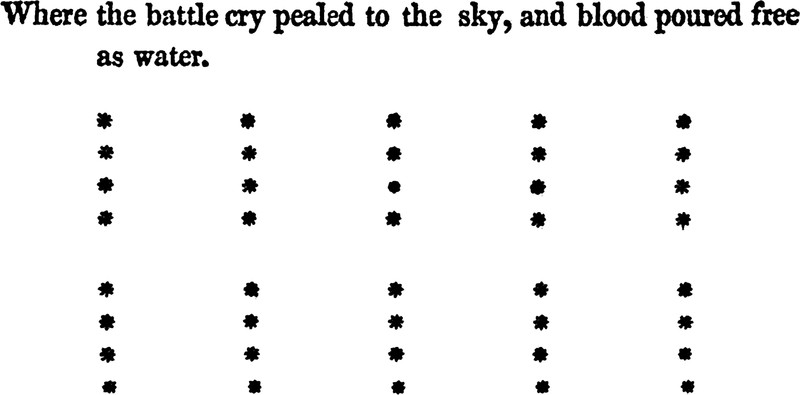
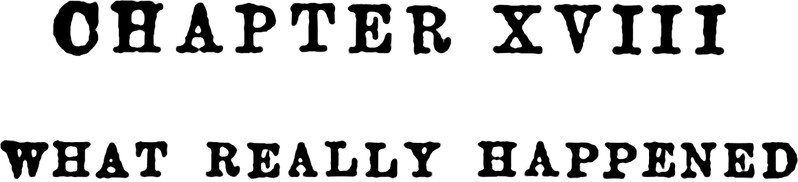
It's important to remember that we won't know what really happened until Chapter XVIII. From The Crimson Cryptogram by Fergus Hume, 1902.
|
|
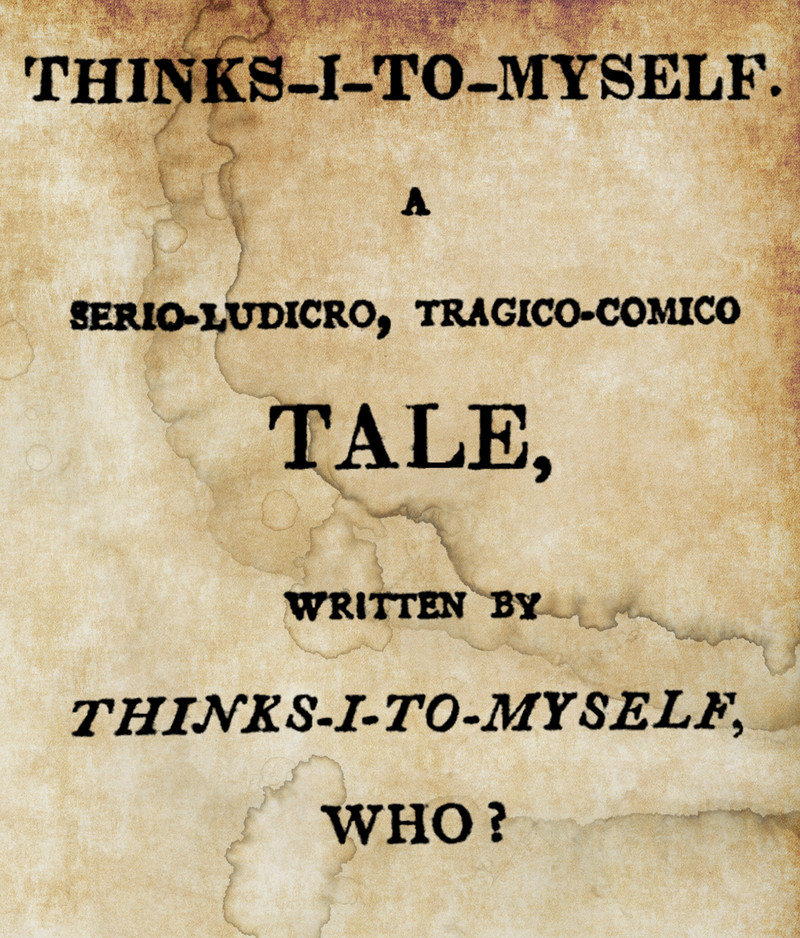
Here's a title page that wonders about the identity of its own author. Plus, note the genre, which is our own personal favorite: "serio-ludicro, tragico-comico."
|
|
|
|
|
|
|
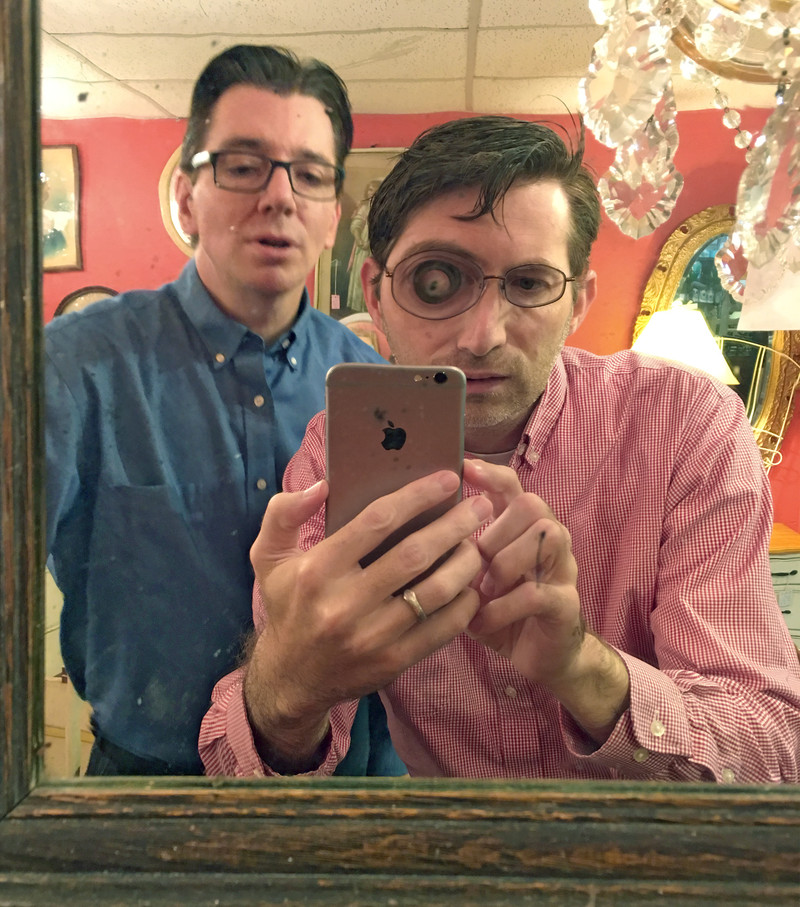
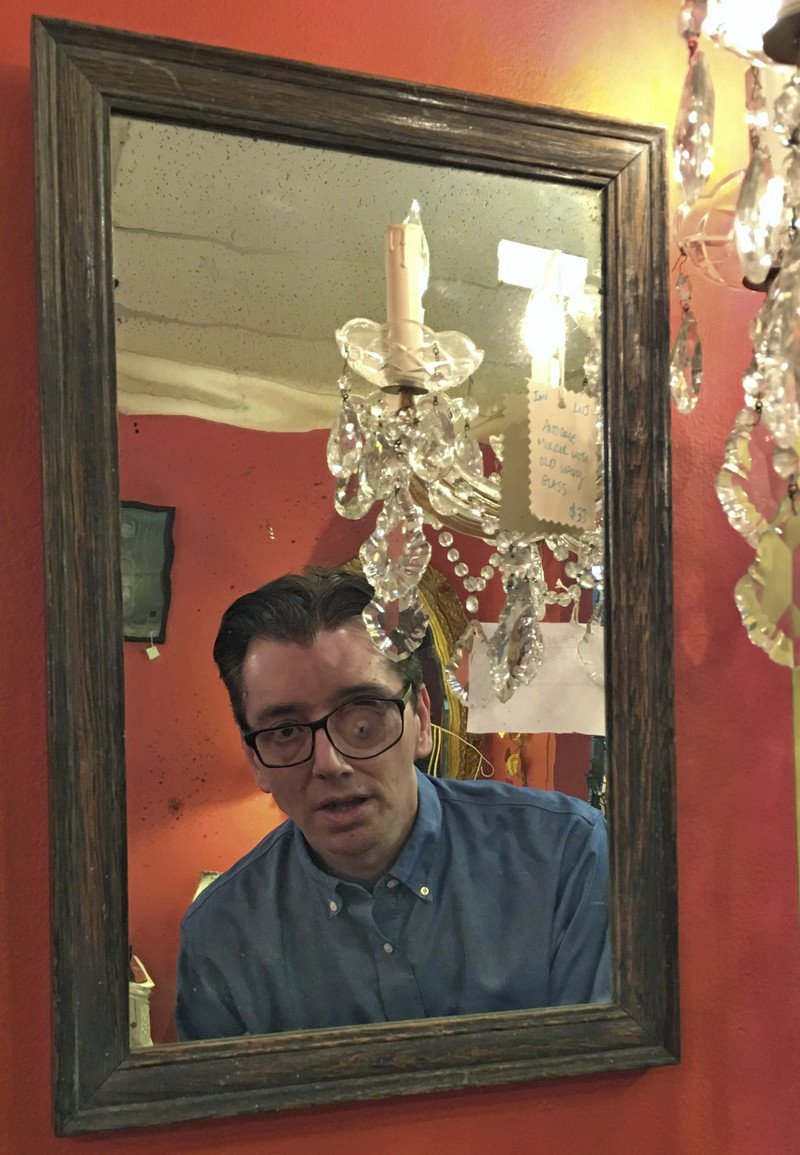
Haunted mirrors are to be avoided when you visit an antiques store (unless, of course, chancing upon such objects is your very purpose). When consulted to appraise a mirror's hauntedness, the first thing we look for is imperfections in the glass or silvering. Notice in the unretouched photographic illustrations how a peculiar mirror has a deformity that warps the face of any Narcissus who approaches it. A thing of horror — and beyond question profoundly haunted. A more subtle issue we look for is a discrepancy between what is reflected and what is actually in the room. This requires very careful looking at details within both worlds, and it can be helpful to take photographs of the mirror world from as many angles as possible so as to study them at leisure. We then look at the back of the mirror for a manufacturer's mark (for example, "Pairpoint Mfg. Co., Quadruple Plate, June 28, 1904"), and if such a mark is upside down, the mirror has been hung "inverted," making it more susceptible to negative powers. Knowing some history about the mirror can be crucial; for example, had the mirror previously been in a room with a dying person? For novices, perhaps the easiest method to determine a mirror's hauntedness is to look into it at night by candlelight. There's little guesswork in such an approach—you'll know!
|
|
|
|
|
|
|
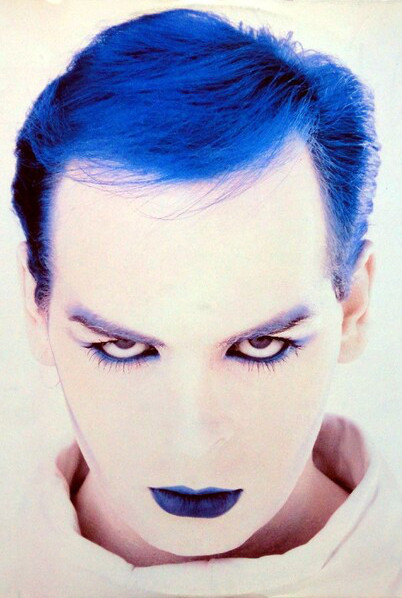
This is one of the looks Gary Numan used to hurl Chris Isaak into the bowels of Hell.
Breaking News:
Gary Numan Blasts Chris Isaak Straight Into Hell
It sounds sensational, but it's true: Gary Numan has sent Chris Isaak straight into Hell, where Isaak is now embedded with His Satanic Majesty Himself. Some are surprised by this, having assumed that Isaak was angelic and Numan demonic (especially given that black eyeliner and those Numanesque lyrics like, "I am the ghost that reminds Death of you," easily the spookiest line we've ever encountered). But no — Numan is the angel, and he has sent Isaak to Hell with great panache.
Given the popularity of Isaak's entrancing song " Wicked Game" (1989), it's impossible not to believe that Gary Numan's new masterpiece " And It All Began With You" is a direct response. There are some subtle harmonic and tonal similarities between the two songs, and to our ears Numan deliberately mimicked just enough of "Wicked Game" to make it obvious that he was sending Isaak directly to Hell. You will recall the bleakness of Isaak's lyrics, proclaiming "I don't wanna fall in love" and ending with "Nobody loves no one." To call Numan's response powerful or dramatic would be the understatement of the centuries. Numan proclaims that not only does somebody love someone, but love can endure anything, in this life and well into the next world:
When you whisper my name, I'll be with you
When you reach out your hand, I'll be with you
When you walk to the light, I'll be with you
When you stand before God, I'll be with you
Yes, Numan is saying that he'll be by his beloved's side even after death, even at the final judgment when the heart of one's soul is placed on a great golden scale and balanced against the white feather of Truth.
Zatel, herald of His Satanic Majesty, said that any inquiries for further light on Isaak's torments will be answered through mainstream media outlets.
|
|
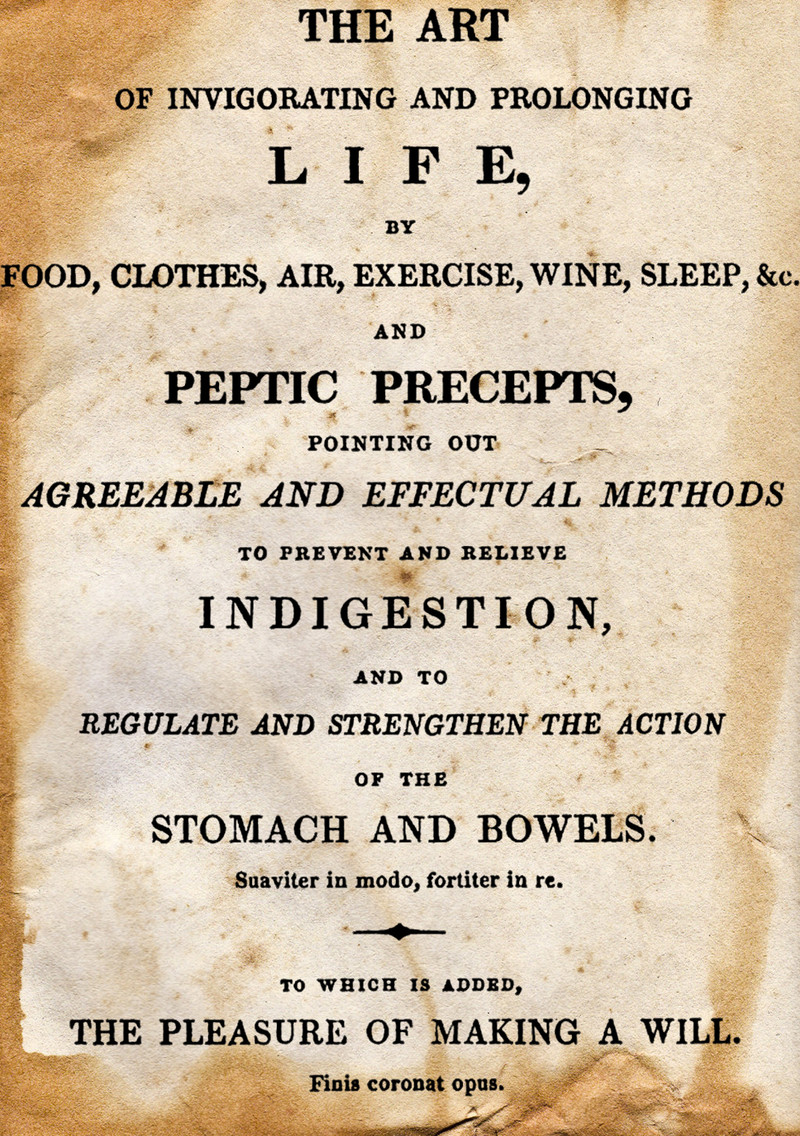
You've heard that the art of living is the art of dying. This book about longevity confirms it -- note the appendix on the pleasure of making a will.
|
|
|
|
|
|
|
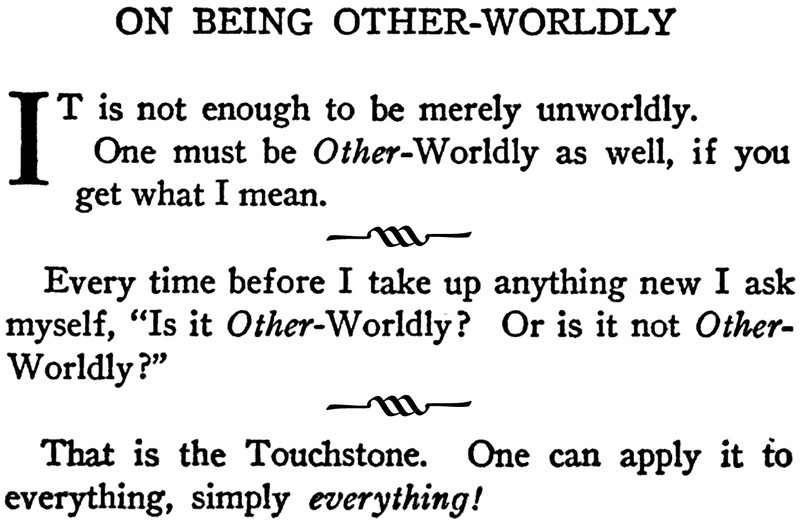
From Hermione and Her Little Group of Serious Thinkers by Don Marquis, 1916. The text reads, "It is not enough to be merely unworldly. One must be Other-Worldly as well, if you get what I mean. Every time before I take up anything new I ask myself, 'Is it Other-Worldly? Or is it not Other-Worldly?' That is the Touchstone. One can apply it to everything, simply everything!"
|
Page 139 of 178
> Older Entries...
Original Content Copyright © 2026 by Craig Conley. All rights reserved.
|