I Found a Penny Today, So Here's a Thought
|

|
|
|
|
|
|
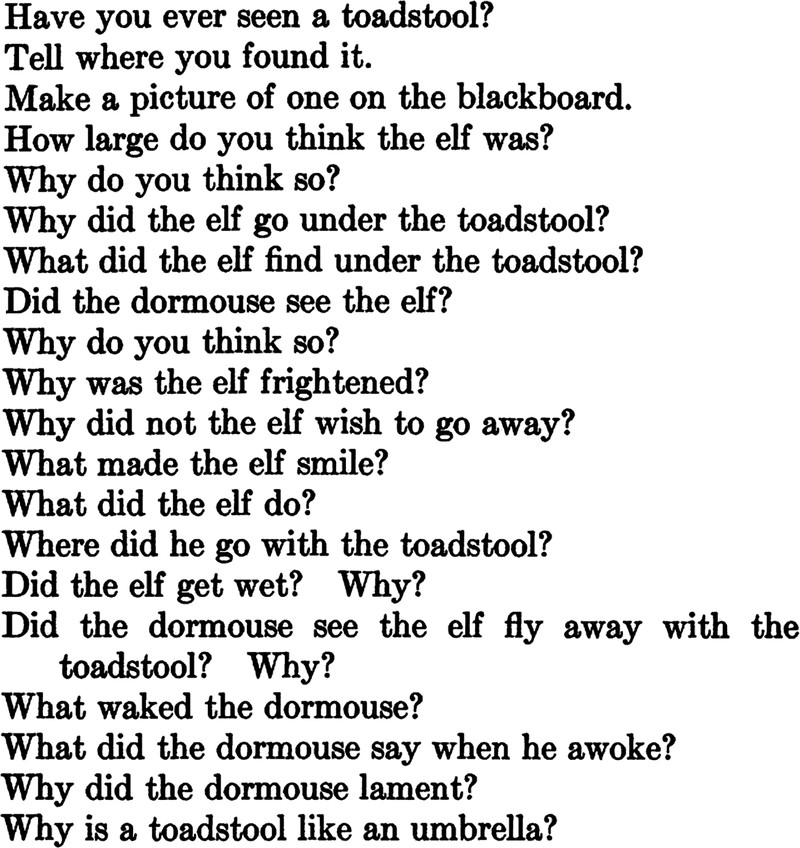
We wonder if they make textbooks like this anymore. (Besides the ones we write, of course.) By only the fourth question, there's an elf. From The Miller-Kinkead Lessons in English, 1914. Also of interest: How to Believe in Your Elf.
|
|
|
|
|
|
|
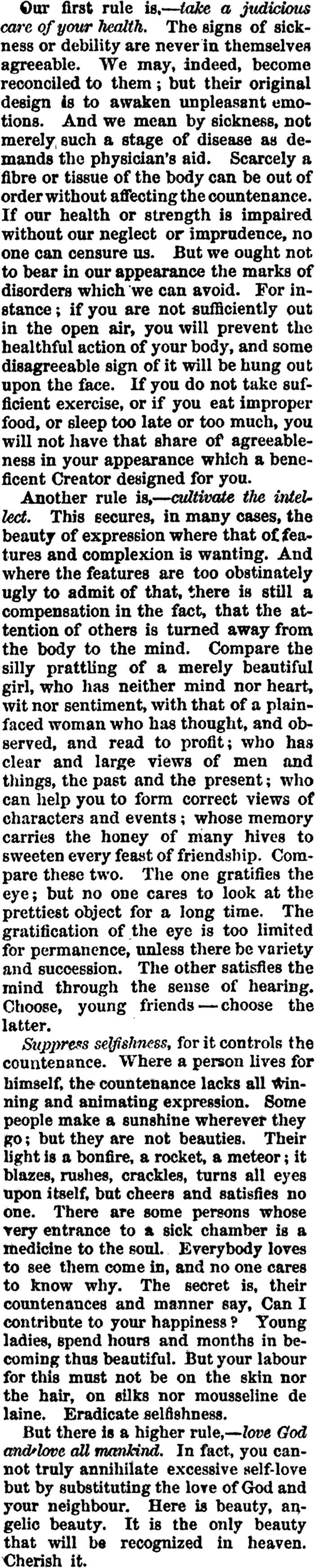
M. asked us, "How can one become physically beautiful at least for a brief moment before death." We find our four-pronged answer in E. N. Kirk's "How to Become Beautiful" (1846).
M. replied, "You did it! Great answer. You're some sort of magician with magic scrolls. Thank you beautiful wiz!"
|
|
|
|
|
|
|
"I did not say it was possible; I only said it was true." —Dumas, or Sir Astley Cooper, or "the Fool in the play," or a character in The Castle Spectre, or [in actuality] Florent Carton Dancourt, Le Chevalier à La Mode, 1687 (as popularly translated into English).
|
|
|
|
|
|
|
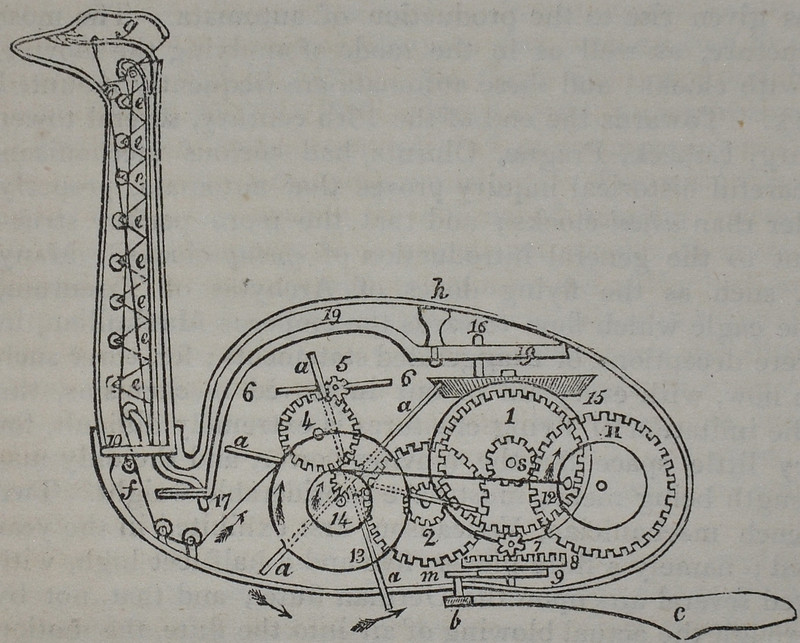
Even if the Loch Ness Monster is an automaton, as Ure's Dictionary of 1846 suggests, "Does it then follow that the automaton possesses a freedom of action, a freedom of will? Yes, we should think that it has a certain freedom of action (the freedom of will we had better leave aside because here the analogy is doubtful at present)" (I. G. Makarov, Cybernetics Today, 1984).
|
|
|
|
|
|
|
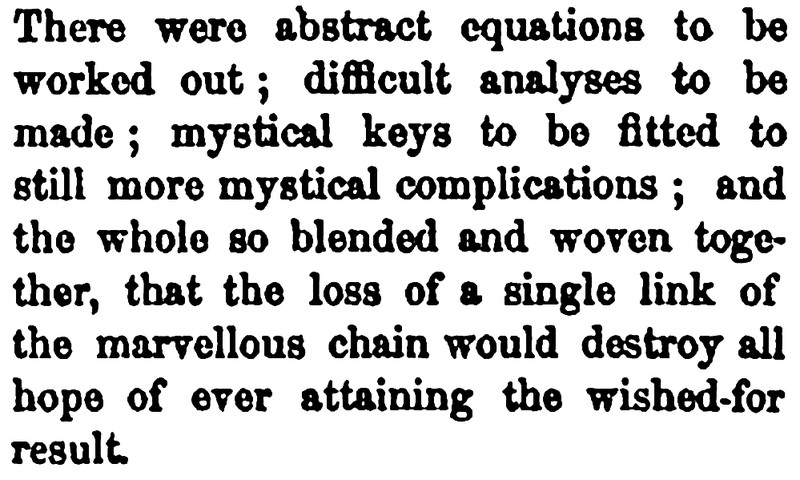
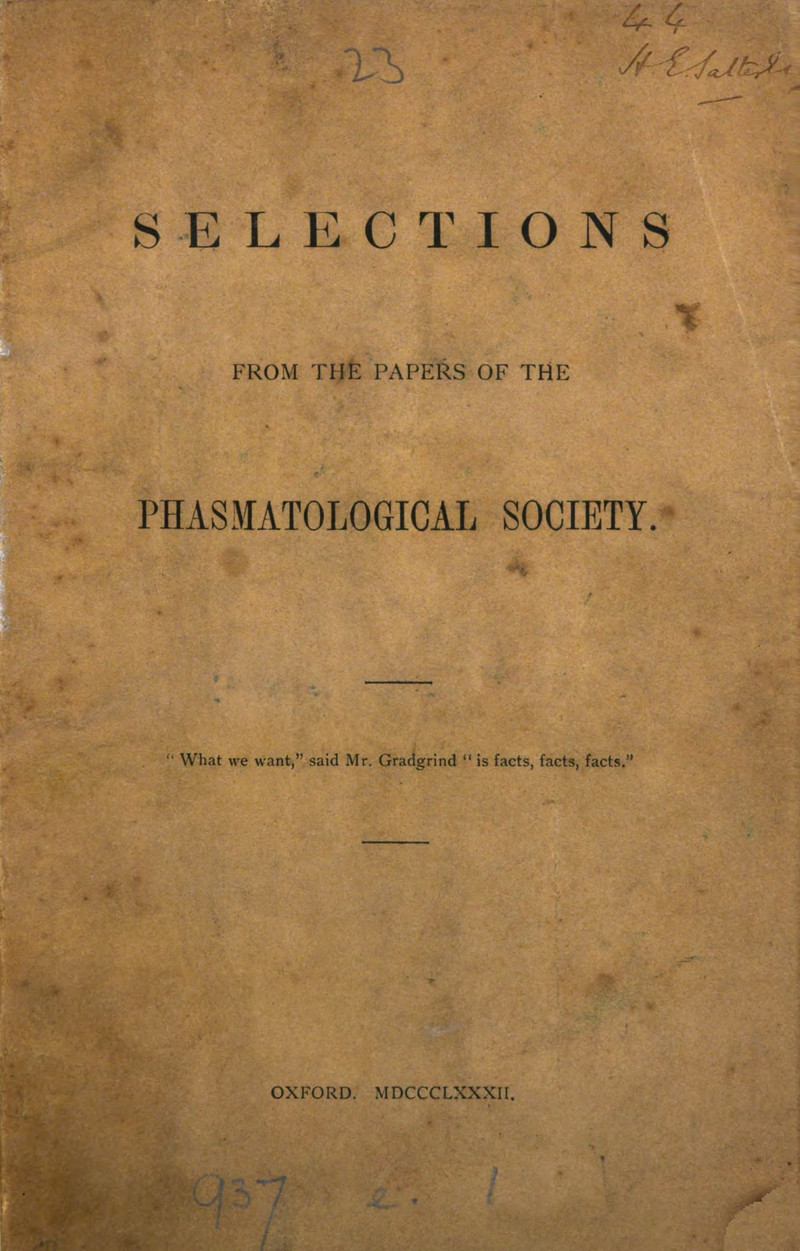
Can you make out the Dickens quotation that serves as the motto? There was a time when even so-called pseudo-science sought nothing but "facts, facts, facts." Today, we're hard pressed to name any institution that could in good faith adopt such a motto. The media? Political pollsters? Climatologists? Any other white-coat wearer of what Robert Anton Wilson dubbed the New Inquisition? Selections from the Papers of the Phasmatological Society, 1882.
|
|
|
|
|
|
|
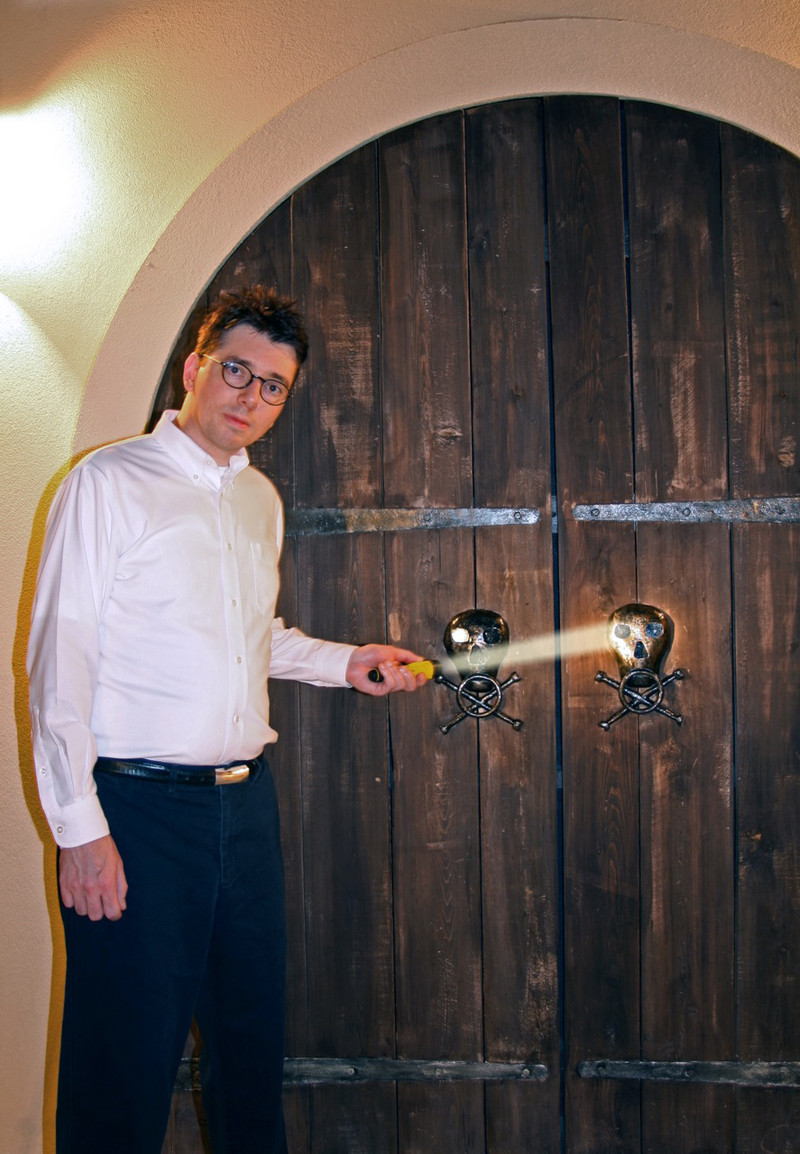
If there's a skull lock and you forgot your skeleton key, try working a beam of light into the mechanism. Recall how "She springs a light, / Unlocks the door" (Dryden). Similarly, " Morning with its key of light / Unlocks the dusky p ortals of the night" ( Albert Laighton, Poems, 1878). And "My light unlocks the stalls, / two doz en and one windows open— / all, except the window of the moon, / already painted on as shining" (Jane Shore, Eye Level, 1977).
|
|
|
|
|
|
|
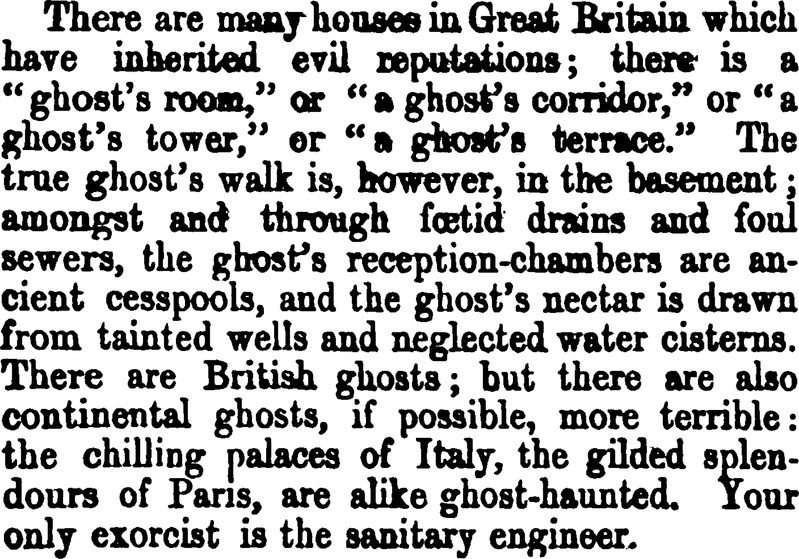
Here we learn where a ghost's true reception chamber is, where a ghost draws its nectar, as well as why a sanitary engineer is your only exorcist: "There are many houses in Great Britain which have inherited evil reputations; there is a 'ghost's room,' or 'a ghost's corridor,' or 'a ghost's tower,' or 'a ghost's terrace.' The true ghost's walk is, however, in the basement; amongst and through foetid drains and foul sewers, the ghost's reception-chambers are ancient cesspools, and the ghost's nectar is drawn from tainted wells and neglected water cicterns. There are British ghosts; but there are also continental ghosts, if possible, more terrible: the chilling palaces of Italy, the gilded splendours of Paris, are alike ghost-haunted. Your only exorcist is the sanitary engineer." From All the Year Round, 1861.
|
|
|
|
|
|
|
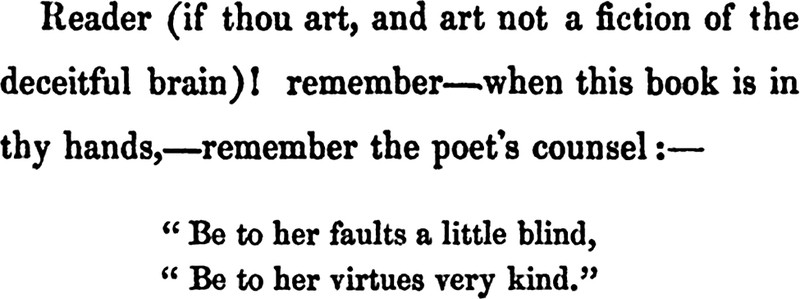
The anonymous author of Whose Poems? (1850) asks his possibly phantasmagorical reader to be kind. He would have benefitted from How to Believe in Your Elf.
|
|
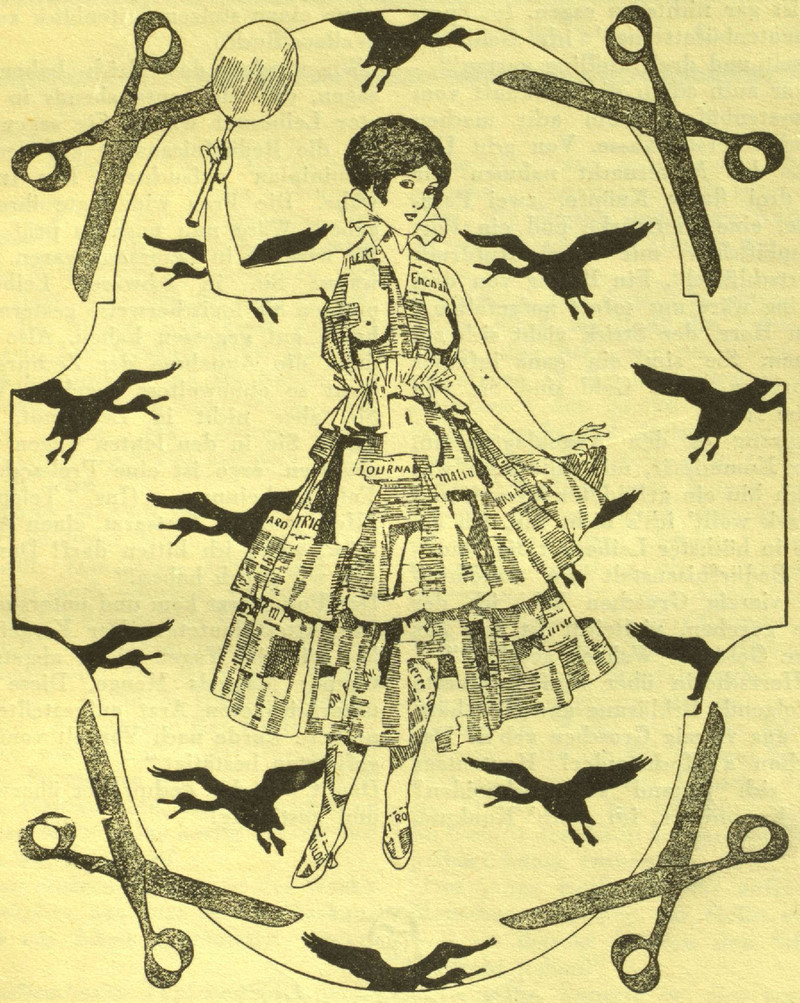
Given the "fake news" controversies, how can one tell if a newspaper dress is a designer imposter? From Mocca, 1932.
|
Page 142 of 178
> Older Entries...
Original Content Copyright © 2026 by Craig Conley. All rights reserved.
|