I Found a Penny Today, So Here's a Thought
|


 |
|
|
 |
 |
 |
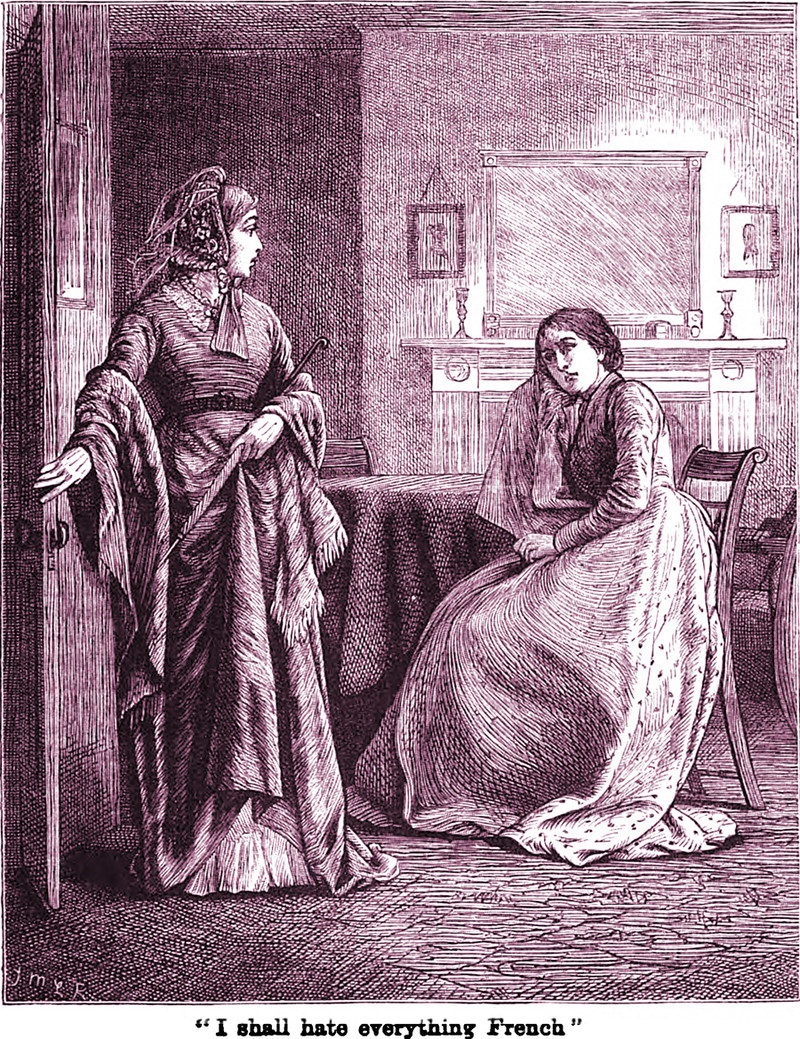
There's so much to love in this first page of William De Morgan's When Ghost Meets Ghost (1914). The first chapter is very rightly numbered zero. Shouldn't all ghost stories begin with chapter zero? The chapter summary is playfully honest about what it amounts to, and it mentions a "somewhere that is now nowhere." In the first paragraph, there's a withering mention of several young ladies having "lost their individuality." The third paragraph exposes a great truth: a story can do without accuracy.
|


 |
|
|
 |
 |
 |
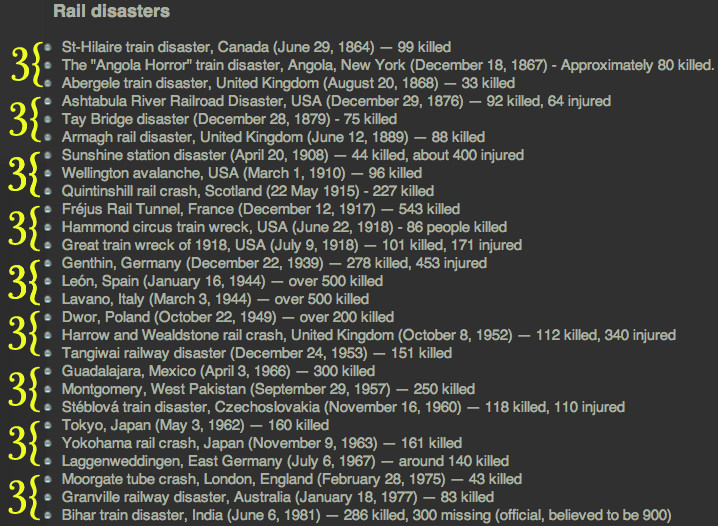
The brace pictured here marks the space of six seconds. It's a "thrill unit" (what Wendy Swanscombe calls a placet [Latin for "it pleases"]). From St. Nicholas magazine, 1904.
|

 |
|
|
 |
 |
 |
Our Favorite Asterisk of All Time?Check out the very special asterisk in this little verse from The Wonder Clock by Howard Pyle, 1887. It stands for the word gloom (in all fairness, how much clarity can we expect of gloominess?) even as it concentrates what little light there is into a gleam in a house cat's eye. Is the asterisk here a genuine example of visual poetry, or did the typesetter run out of space and improvise grandly? We don't care, as the result stands. (Note that we hunted down what would appear to be the web's only other gloomy asterisk, if only to give the cat's other eye a twinkle.)
"Asterisk + Gloom," a photo by Richard Weston, appears here in the context of literary analysis.
|


 |
To readers who have ever juggled more than one book at a time, we present the Bibliofool, whom we found in Bibliophile magazine, 1908:
|


 |
|
|
 |
 |
 |
Time-traveling through old magazines, one truly does experience Einsteinian relativity. Take, for example, this illustration of "a modern home" from 1893 (Cosmopolitan Magazine). We also love how old magazines regularly long for the return of traditional holiday celebrations. Even though the holiday trappings of the 1800s meet our current ideal of olde worlde authenticity, there was a time when all that was newfangled. We can just hear the older generation back then, granting that the yule logs, holly wreaths, mistletoe, and snow effigies seem pagan enough, but if the kids only knew how things were really done back in the day! Every olden time had its own olden time, and we're left with nostalgia for nostalgia.
A modern home? It's all relative.
|

 |
|
|
 |
 |
 |
Acclamation and Acclimation Marks
We don't necessarily "take requests," but truth be told we rarely turn down a fun challenge.
A friend, Dorothy, saw "exclamation point" malapropped as "acclamation point." Another friend, Jonathan, wished there were an acclamation point. "It would come in handy when a bunch of readers wanted to applaud somebody's blog post, or whatever." Dorothy further suggested an "acclimation mark, for when you finally get the hang of something. Someone should make those marks. And do a blog post on them."
Voilà!
We felt it important that the acclamation and acclimation points be typeable and not merely artist's renderings. So we'll note the Unicode entity identifiers for each mark.
Let's begin with our favorite acclamation point — complete with a demonstrative waving flag. Type a regular exclamation point, then a triangular dingbat next to it. Superscript the dingbat to raise it up the flagpole. The dingbat we use is Lucida Grande #8227.
Another acclamation point represents a martini glass raised in a toast (the Y portion is like the cross-section of a glass). It's Lucida Grande #7924.
A third acclamation point communicates vocal approval. A big circular mouth engulfs the dot. It's Lucida Grande #0664.
Different from the acclamation point is the acclimation point — indicative of becoming accustomed to new conditions. There are two acclimation points:
The first acclimation point signifies Dorothy's concept of "getting the hang of something." It features a dot at both the top and bottom, as if the mark were hanging from itself. It's Lucida Grande #7883.
The second acclimation point represents acclimatization as symbolized by an umbrella. It's Ludica Grande #7788.
For copy/paste convenience, below are each of the marks:
!‣ Ỵ ʘ ị Ṭ
|


 |
|
|
 |
 |
 |
We elect to quote this today: "He felt as though, since the purposes of destiny would be fulfilled whatever anybody did or didn't do, that it was more than lawful, that it was natural and wise, to enjoy the spectacle of the rushing torrent of good and evil and let what would be, be." — John Cowper Powys, Porius
|

 |
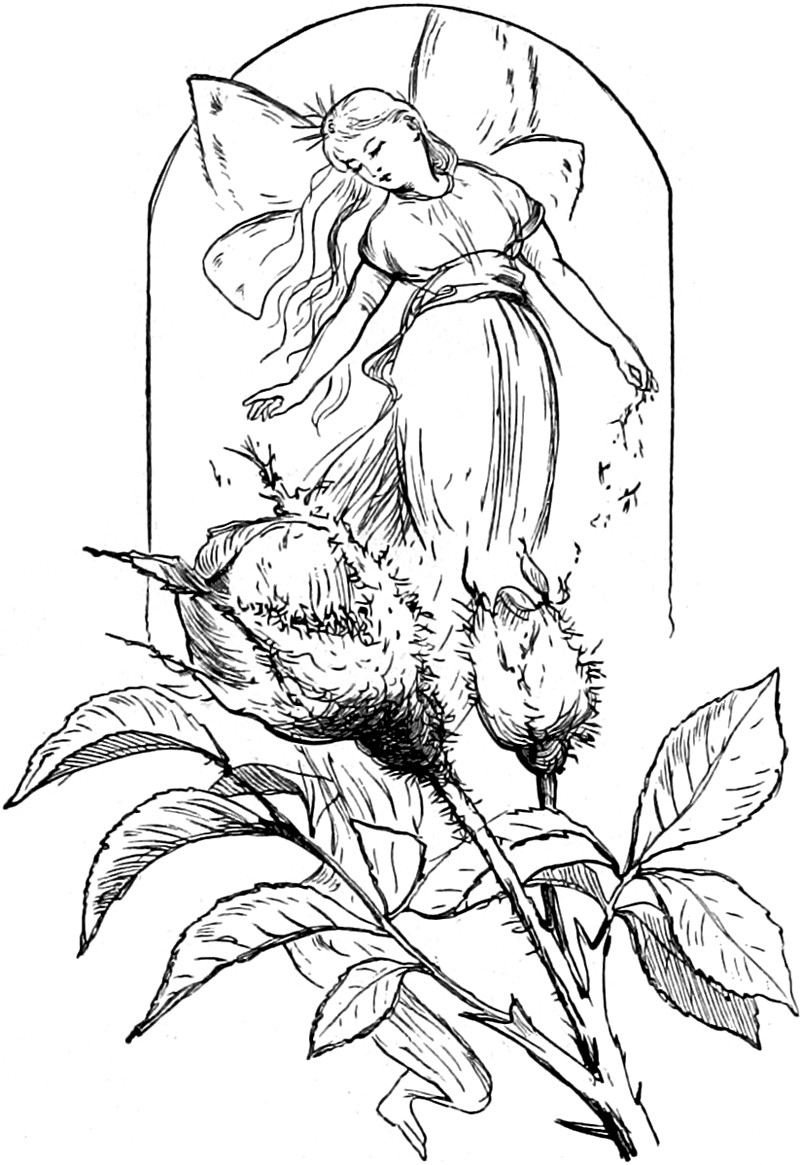
Even way back in 1906, the election fairy had a knack for manipulating the voting machine. From Punch, 1906.
|

 |
|
|
 |
 |
 |
Ghost teeth (what Goethe called Geisterzahn) are neutral entities, neither quite divine nor satanic, equally good and bad. "Their realm may be beyond human rationality, but it is not inaccessible to human experience. [Ghost teeth] have their home in the imagination. Neither concrete, i.e. empirically verifiable, nor rational, they inhabit the above and below of human rationality. They are a concrete experience of the non-concrete in the mind, an imaginary concretisation of extra-rational phantoms" (Maike Oergel, Culture and Identity: Historicity in German Literature and Thought 1770-1815, 2006, p. 241). We wrote a macabre tale about ghost teeth, and it appears in the Spooky Tales ebook:
The Toothsayer
[Author's note: For every lost tooth, from babyhood to wisdom tooth extractions and so on, does a ghost inhabit our mouths? And do these phantom fangs have the power to drive us mad? That's the premise of this of bizarre horror story, whose playful vocabulary is deliberately meant to be a "mouthful."]
I curse myself for biting my tongue, forgetting for a moment that the nefarious responsibility lies elsewhere, then remembering with a curdled chill that the wickedness is in truth within my very mouth — though outside my own control. Execrable, inexorable, intractable, inextricable, non-extractible — I struggle to resist speaking in tongues by babbling meaningful adjectives, for the ghost teeth despise being noticed and described.
The first to name them, in the early 1800s, was Johann Wolfgang von Goethe; in Faust he called them Geisterzahn — phantom fangs. Virtually no one has uttered the word since, either out of denial (that last defense mechanism of the doomed) or — dare I suggest it? — because the phantom fangs "encourage" us not to. Scientists laugh at what their instruments can't detect, even as dentists commit suicide in record numbers.
The Geisterzahn wed themselves to us so piteously early — with the loss of our first baby tooth. Our mouths make a non-concrete space, you see, and the ghost tooth is our very first "filling." Oh, the tooth fairy is real enough — her human emissaries are testament to that — but she's powerless to exorcize the inexorable. So we try not to think about what resides in our mouths, or we wind up those uncanny chattering teeth toys and giggle uncomfortably, fearing our dotage and the loss of our so-called permanent teeth, for then we'll play host to an additional set of phantom fangs. The old grow mean, and who's to blame them? The innocence of childhood is so brief, and for good reason. Not "good reason" — see how they twist our words? It's for bad reason — for bad unreasonableness. I scorn those who believe photography steals the soul; they're putting the cart before the horse's mouthpiece. When we smile for the camera, it's a frown turned upside down, a mocking display of the ghost teeth in all their ignoble, unknowable, ignitable ignominy.
They took him away — Dr. Vipperschnapper, my dental surgeon. They said he couldn't cope, but "cope" originally meant to meet in battle — to come to blows — and Dr. Vipperschnapper took on the ghost teeth as no one before him dared. He'd had a fall alongside a railroad track. He'd knocked out a tooth, but painlessly so, and he knew instantly that he'd stumbled upon an extraordinary insight. But they didn't understand when he implanted those rusty nails into the child's gums. And they took him away, calling him insane, calling him a murderer.
So here I sit, holding a rusty nail for each milk tooth I lost as a child and another thirty-two deteriorating spikes. And I cry as I babble syllables to myself, for in losing all my teeth I've gained too many ghosts. And though they say that a nail implies a hammer, I have not a tool to my name.
For Gary Barwin.
|


Page 153 of 175

> Older Entries...

Original Content Copyright © 2026 by Craig Conley. All rights reserved.
|