I Found a Penny Today, So Here's a Thought
|

 |
|
|
 |
 |
 |
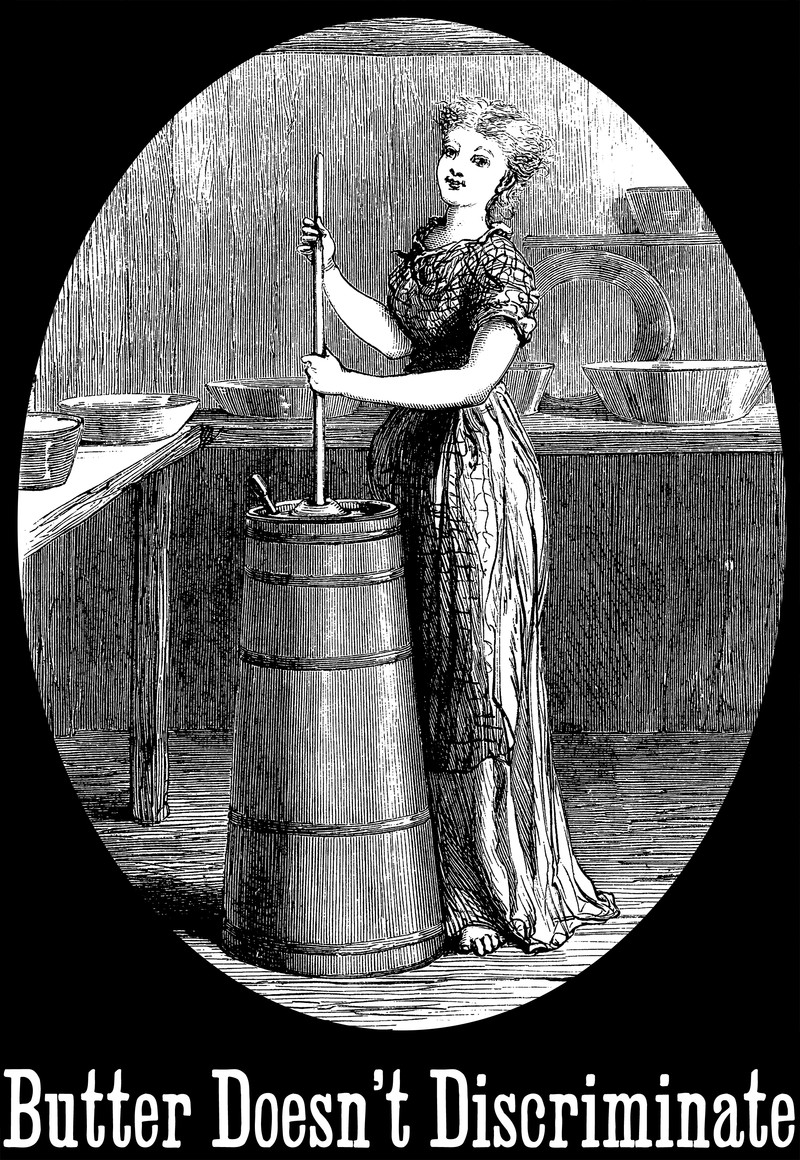
The documentary Women in Boxes, spearheaded by Blaire Baron Larsen, is a springboard for pondering the deeper significance of magicians placing their assistants in boxes. As performers, the duos likely have no idea what archetypal stories they're playing out. But something profound is going on, in light of the renowned psychologist Erich Neumann, a trailblazer in feminine psychology and the Great Mother archetype of world mythology. Applying Neumann's insights to stage magic, the prototypical female assistant symbolizes the anima -- that part of the psyche connected to the world of the subconscious -- the soul, if you will. The anima can be human or animal (hence the great tradition of women magically transforming into tigers). The prototypical male magician symbolizes the hero archetype on a quest toward individuality. In order to be truly creative, the magician's masculine world of ego consciousness must make a link to the feminine assistant's world of the soul. Through "sawing a lady in half," the magician tries to divide the anima, not so much to conquer her but to understand her like a scientist. He tries to contain the anima in a box, not to imprison her but to accommodate, encompass, and give definite form to her curvaceous amorphousness. Indeed, there's nothing inherently "sexist" about the roles of stage magician and assistant; the two form a single personality struggling to become integrated. (Read more of Neumann's wisdom in his indispensable The Origins and History of Consciousness. Here's a link to Camille Paglia's profile of Neumann).
|

 |
|


 |
"There is something soothing about the fog, especially from a distance, some sense that the world might not make any sense but that it wasn't designed to hurt us, just to entice us into thinking." — Geof Huth
|

 |
  by b-artThe Most Forbidden ColorThe fiery color red has long been controversial — so controversial, in fact, that it is commonly banned outright lest it inflame strong emotions, spark revolution, kindle anger, inspire boldness, instigate bloodshed, arouse lust, or provoke pain. Is it preposterous to think that a single color can be dangerous to society? Consider the following examples of forbidden reds from modern to ancient times. Then ask yourself: do you dare to use or wear the color red today? Is red worth the risk of arrest, imprisonment, or even a death sentence? Ultimately, is red (or any color) worth championing? 
Director Michael Mann banned the color red from appearing in his film Miami Vice, as he has a personal dislike for red and other earth tones. (Source: New York Times.) The American Civil Liberties Union reported the first known instance of an educational institution reacting to gang fears by banning a primary color. In reaction to school vandalism and the threat of violence, "officials at Round Rock High School in Texas banned the color red. ... Apparently the gang responsible for these incidents wore red—about forty students wearing red items were sequestered in the library, and the parents were called." (Source: Leland Gregory, Hey, Idiot!: Chronicles of Human Stupidity.) 
In 1887, Chicago police banned the color red from labor union advertisements of the Knights of Labor. This was a colorful example of the anti-Communist "red scare." (Source: Economic History Encyclopedia.) Daniels Farm Elementary School in Trumbull, Connecticut banned its teachers from using red ink to grade student homework. Apparently, parents objected to red as being "too stressful" and symbolic of negativity. "The disillusionment with red is part of a major shift in grading, and three top pen manufacturers have heard the complaints. As a result, Bic, Pilot Pen, and Sanford (the manufacturer of Papermate and Sharpie) are producing more purple pens in response to rising sales. According to Pilot Pen’s vice president of marketing, school leaders are 'trying to be positive and reinforcing rather than being harsh. Teachers are taking that to heart.'" (Source: Lisa Orlando, "The Ink That Teachers Use To Grade Papers Has Parents Seeing Red.") 
The government of Saudi Arabia banned the color red around Valentine's Day, in a move to discourage Muslims from observing the Western holiday. Red flowers, plush hearts, wrapping paper, and other red items were illegal to sell. As a result of the ban on red roses, a black market has flowered. (Source: Saudi Gazette.) In Israel, the color red was banned from kosher clothing stores. (Source: Sensationalcolor.com.) 
Warren S. Jeffs, "the man revered as the prophet of the Fundamentalist Church of Jesus Christ of Latter-day Saints," banned the color red from clothing when he took power in 2002. (Source: Newsweek.) The government of Zimbabwe denied banning the color red from television, though AIDS activists reported being told to remove their red ribbons before filming. (Source: BBC News.) 
In traditional funerals in Japan, red was forbidden because it is "a celebratory color." (Source: Pikatto.) Similarly, in China red was forbidden during periods of mourning. (Source: Beverley Jackson, Splendid Slippers.) And in Estonia, the color red is traditionally forbidden from funerals and other important rites of passage. (Source: Science Direct.) Medieval Spain banned the color red from garments due to its association with blood, the devil, and witchery. Spaniards reportedly began wearing red under their clothes, giving rise to the popularity of red underwear. (Source: Why Fashion?) 
On the Cook Island of Mangaia, "anything red was forbidden ... as being offensive to the gods." (Source: James Frazer, Belief in Immortality and the Worship of the Dead, Vol. 2.) At the New Jersey College for Women in the 1920s, the red clothing was forbidden to freshmen. "Only sophomores and up could wear red." (Source: Rutgers.) 
In 1990, the United States Food and Drug Administration banned carcinogenic Red Dye No. 3 in cosmetics and topical drugs. (Source: BNET.) Though red is hard to beat in terms of controversy, other colors have found themselves on the chopping block. Following are a few brief examples. Forbidden Yellow: President William McKinley's wife banned the color yellow from the White House. (Source: Jane O'Connor, If the Walls Could Talk: Family Life at the White House.) 
Forbidden Orange: The Dutch Patriot Movement of the 1780s banned the color orange. (Source: Peter Boticelli.) 
Forbidden Green: Voyage, a New York City Caribbean bistro, banned the color green from its decor. (Source: The Village Voice.) Early Christians banned the color green due to its pagan connotations. (Source: Rolling Rainbow: Color Matters.) 
Forbidden Purple: The founder of the Woman Suffrage Party, Carrie Chapman Catt, banned the color purple from parades to dissociate her movement from the militant National Woman's Party. (Source: Heritage.) 
Forbidden Brown: Students at Molloy Alternative High School in Lowell, Massachusetts were forbidden from wearing the color brown, due to the emergence of the "Brown Mafia," a teenage gang. (Source: WHDH.) 
[Read the entire article in my guest blog at ColourLovers.com.]
|


 |
|
|
 |
 |
 |
Beguiled by a Mystery(Our guest blog for Gordon Meyer's Rebuilding a Mystery) The question isn't whether the box is foreground or background; the question is one's own place within in the mystery (in which case, thinking inside the puzzle box may possibly be preferable!) Optical illusions, phantasmic artwork, and even family snapshots ask us to consider our own beguilement, as it was, as it is, and as it will be.
|

 |
 While virtually flipping through a scanned book in Google's online library, we came across the scanner's hand. Her hand, covering a blank page, is now immortalized. Note that the pink "finger condoms" match her nail polish. And note that she slipped her diamond rings over the finger condoms. Though not the first scanner's hand we've come across in Google's library, it's the most colorful to date. In fact, we felt inspired to create a color palette in the hand's honor. TheOfficeLawyer writes: Wow.
The scan area is really interesting. It's like she's putting her hand through a rectangular digital portal.
I like that she uses the ring on her middle finger as a holder for the finger cot.
Cubic zirconia looks a lot like really tiny diamonds.
I see that you were unable to salvage any usable color from the nail polish. I agree! The cuticle, though, really is a nice off-white trim color.
Interesting fashion--the cuff looks remarkably like a sweat band. I'm sure that somewhere in there there's a statement about how fashion evolves into the reality of the workplace.
|

 |
|
|
 |
 |
 |
Having come up with 100 Ways to Fail to Boil Water, we don't often stumble upon new ones. So imagine our delight to discover this terrific excuse: a recipe with a missing final paragraph! In the recipe for boiled water on page 212, the last paragraph was inadvertently omitted. It should read as follows: "Now pour the water into a kettle or pot, place it on the stove, and turn the burner on ‘high,’ leaving the water on the stove until it boils.” — Dr. Boli's Celebrated Magazine
|


 |
|
|
 |
 |
 |
Did you know that the difference between men and women is 3.14159? The hilariously insightful Robert Urbanek explains: Pi (Π) is both the sixteenth letter of the Green alphabet and the ratio of the circumference of a circle to its diameter. The difference between what is round and what is straight has no exact value. The calculation of pi begins at 3.14159 and stretches indefinitely.
The first known attempted calculation of pi was recorded in 1650 BC by an Egyptian scribe who estimated the ratio at 3.16. Today, with the help of computers, pi has been calculated to over 1.24 trillion places. Pi even has its "cult" followers: Hundreds of math mavens have joined clubs to investigate and celebrate the ratio.
Pi may provide a link between mathematics and sexuality. Since the straight line (diameter) is symbolic of the male and the circle (circumference) represents the female, one might conclude that pi signifies the unsolvable and infinite differences between men and women. The sexes will never be able to "figure" each other out. However, one can also see a positive aspect in the ratio: as the circumference increases, so does the diameter, and vice versa. Thus, whatever expands the horizons of the woman also expands the opportunities for the man.
Read Urbanek's complete explanation here.
|

 |
|
|
 |
 |
 |
Grafting common household appliances to plumbing fixtures can be fun, if Omegaword has a hand in it.
Our friend Jeff at Omegaword had some fun with circle-defying Venn diagrams, such as a coffee maker/toilet/hair dryer. Jeff didn't label his diagram, but we noticed that the toilet and coffee maker overlap in terms of having an upper chamber of water (plus, bad coffee might taste like wastewater); the dryer and coffee maker are both electric (plus, hot air makes for a frothy cappuccino); and the dryer and toilet come together in newfangled Japanese bidets (plus, they both make a whooshing sound).
|


 |
|
|
 |
 |
 |
We only just discovered this interesting review our eccentric guide to Portmeirion, Wales. We've bolded our favorite bits: Prisoner fans are frequently accused of "reading too much into" the little details and nuances of our favourite series. Here at last is a book that does the same for the programme's location. By turns weird, wonderful, and then even weirder, Puzzling Portmeirion is a strange, but oddly satisfying, companion to the more esoteric aspects of the village (few, if any, of which can have been Clough's original intention). The analysis of the spatial trickery and trompe l'oeil effects is quite well addressed, "treasure hunts" based on various details are included, and the whole book has a rather childlike innocence – reading it reminded me rather of how I felt (or at least what I can remember feeling) when I first saw Portmeirion at the age of nine. The book also wanders off down some very odd mythical and mystical paths which I found less convincing (do fairies really live on toasted cheese in the Portmeirion woodlands? Craig Conley seems pretty sure they do), but one can view Puzzling Portmeirion as an off the wall, artistic response to an off the wall, artistic place, with something, at least, of interest for almost any reader. Potential purchasers with more esoteric interests than mine will also be interested, and very probably charmed, by the two sets of tarot cards using Portmeirion landmarks and details, which are also available from the same source. —Gareth Hughes, The Unmutual Reviews
|

 |
|
|
 |
 |
 |
"Other, seemingly more profound, thoughts took over his brain, thoughts such as, To what extent would a given quantity of catnip have affected quantum mechanics in Schrodinger’s theoretical catbox? and Why was C selected to symbolize the speed of light when Z is obviously the fastest letter in the alphabet?" —Tom Robbins, Fierce Invalids Home From Hot Climates, 2000
|

 |
|
|
 |
 |
 |
Our colorful friend DJ Misc has a fun collection white-space "rivers"—typographic columns of gaps in a text. This one, for example, has a delightful em-dash "bridge" crossing the river of white space. Here and here are two more dramatic examples. Joining in the fun, we discovered a deliciously ironic river of white space, in a text on how the White River area of the Black Hills region was affected by "rapid weathering and vigorous erosion." DJ Misc has added it to his collection.
|


 |
|
|
 |
 |
 |
"I mean, who wears ties these days? Come home at night, take this noose off, and my neck looks like I've been the guest of honor at a lynching." — Richard Marinick, Boyos (2004)
|

 |
|
|
 |
 |
 |
Southwest Airlines was envisaged not with a paper airplane (as Hollywood might lead you to believe) but rather on the back of a napkin. (See this BusinessWeek article for a picture of the doodle.) It could be said (though it won't be) that the napkin's flexibility has "rubbed off" on the company, not to mention elegance, durability, absorbability, and stain resistance. Speaking of napkins in Hollywood, it appears that an uncanny look-alike of former Senator John Edwards has written a book about napkin doodling. (Surprisingly, and some might say disappointingly, the book is printed on regular paper.)
|

Page 164 of 173

> Older Entries...

Original Content Copyright © 2026 by Craig Conley. All rights reserved.
|