|
|
|
|
|
|
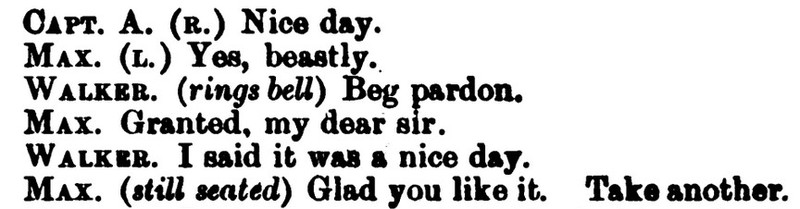
unearths some literary gems.
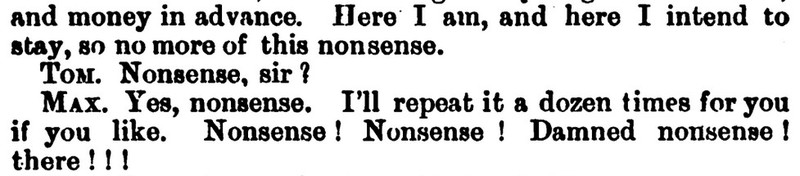
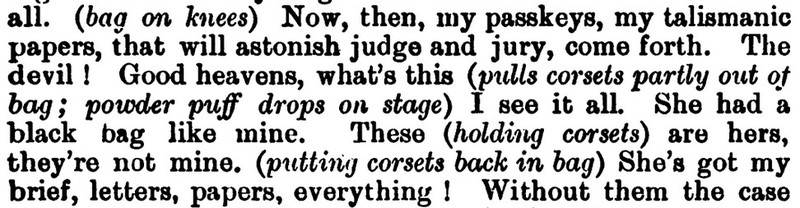
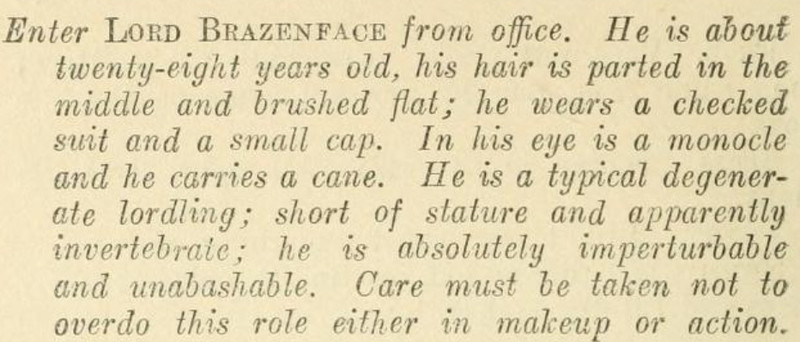
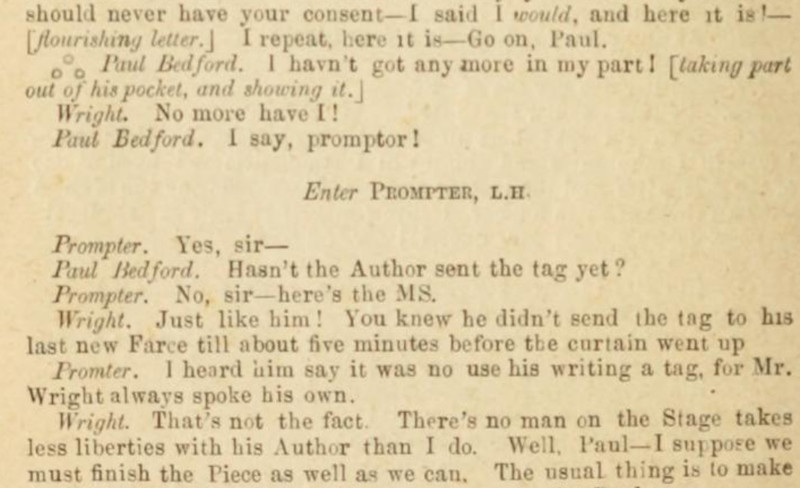
From The Wrong Mr. Wright, by George H. Broadhurst:
Notes on the attachments:
1. I wrote this "spoiler" at the point where all I'd seen were the dramatis personae: "I'm guessing the detective will find the missing fin de siecle lodged in the crack between 1899 and 1900."
After which, I heard an imaginary Kenneth Williams voice in my head, touting a nonexistent "Carry On Belle Epoque" as "a comedy that'll knock you right on your fin-de-siecle." (Belle Epoque would be the name of a character, of course.)
Or, if you prefer, it could work in an imaginary Round the Horne prologue:
ANNOUNCER: Round the Horne presents..."La Belle Epoque."
WILLIAMS: Ooh, that'll knock you right on your fin-de-siecle.
2. At this point, I said to myself, "No, for goodness' sake, you wouldn't want to overdo it and turn Lord Brazenface into some kind of caricature."
3. I couldn't find any evidence that giving someone "the royal Ha! Ha!" had any general currency. (I don't think it's meant to allude to a "ha-ha" in the sense of a sunk fence, though that metaphor technically works.)
4. It's so embarrassing when you typset The Wrong Mr. Wright wrong! Right?
|
|
|
|
|
|
|
unearths some literary gems.
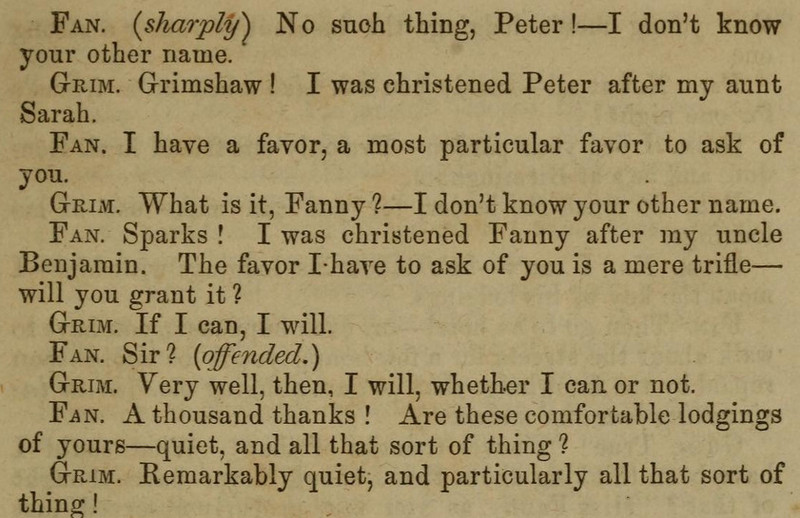
Bits from John Madison Morton:
***
BUNNY. You, Jonathan, will respond to the double-knocks, and announce the respective guests as they enter the drawing room—thus, (announcing) Mr. and Mrs. So-and-so; rather slow and very plain.
JONATH. (imitating) “Mr. and Mrs. So-and-so; rather slow and very plain.” All right, sir. (going)
[And, as recently discussed in the Huberman book, this device can be called "parrot talk."]
***
[Doing the math on cousins.]
ARABELLA. I’ve got three orders for the theatre to-night, will you come? My cousin, Mr. Luke Sharp, has volunteered to escort us.
PHŒBE. (aside) Another cousin! that makes the thirty-seventh that I know of. (aloud) Much obliged, but I’m engaged—I’m going to Mr. Bunny’s ball.
ARABEL. Well, if you won’t come with us, I’ll say good-bye—Oh, stop! do step down a minute, there’s a good girl, and tell me if my new pork pie suits me.
PHŒBE. Pork pie?
ARABEL. Yes—my hat; it’s a present from Cousin Benjamin.
PHŒBE. (aside) Thirty-eight!
ARABEL. Do oblige me, there’s a dear. And, Phœbe——
PHŒBE. Well!
ARABEL. I am so puzzled which gown to put on; I know I look best in my peach blossom silk that cousin George gave me; and yet I ought to wear my light blue satin, for cousin Frederick’s sake.
PHŒBE. (aside) Forty!
***
TRIPTOLEMUS: I soon found myself at the abode of my aforesaid uncle Cockletop, who, on my taking a chair on a Cheshire cheese, at once informed me that his motive in telegraphing for me, was to unite me in the bonds of wedlock with a certain Miss Caroline Bunny; his words literally transfixed me to my chair—my cheese I mean.
***
[And some character names (grouped by play).]
Dr. Jacobus Jogtrot, Mr. Christopher Chirper
Major Pelican, Dr. Vicessimus Prettywell, Sir Marmaduke Mangle [an offstage character]
Sir Fritterley, Colonel Cosey
Mr. Felix Toddle
John Shyly, Selina Sliway
Mr. Nathaniel Snoozle
|
|
|
|
|
|
|
unearths some literary gems.
|
|
|
|
|
|
|
unearths some literary gems.
|
|
|
|
|
|
|
unearths some literary gems.
From Late Victorian Farce, by Jeffrey H. Huberman:
***
The windows and especially the doors of an enclosed set (in contrast to the open pathways of flat wings) provided a physical and audible mechanism for allowing characters bearing complications to appear or disappear with a literal bang....The doors of a box set...served as concrete representations of suspense through which a character might burst at any moment, sending the plot off in a new, frantic direction.
***
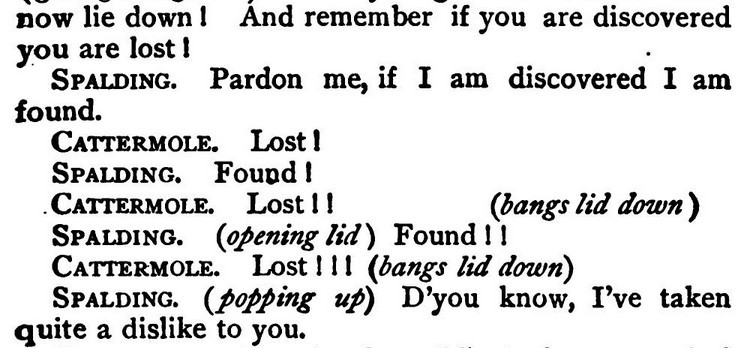
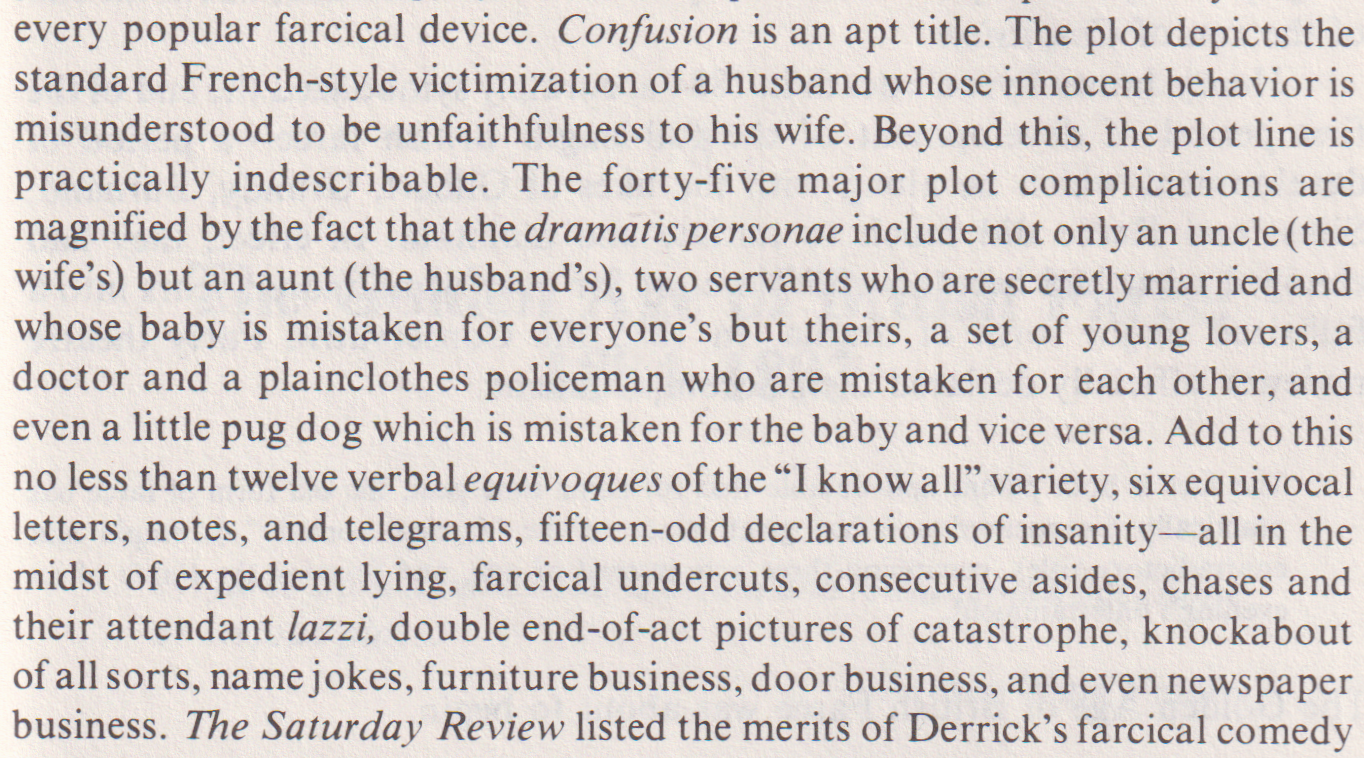
[A few more snippets attached--as you'll see, the farce scholar likes to do the math! It's also fun to encounter new-to-me terminology for familiar devices, e.g., "object-chase" and "parrot speech." Btw, I sought Confusion online and began reading it, but imo it didn't live up to this synopsis. As with Victorian farces I've explored in the past, the dramatis personae (including, in this instance, Mortimer Mumbleford, Christopher Blizzard, and Miss Lucretia Tickleby) were pretty much the highlight.]
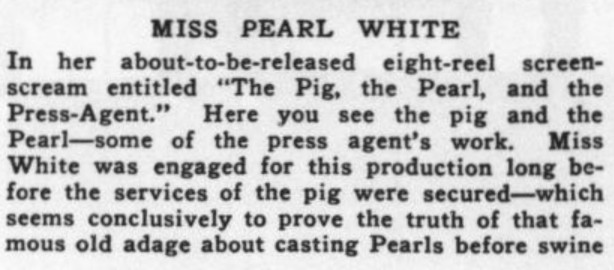
[Bonus: I notice that a play called The Great Pink Pearl debuted, appropriately enough, at the Strand.]
|
|
|
|
|
|
|
unearths some literary gems.
Highlights from Vanity Fair, December 1916:
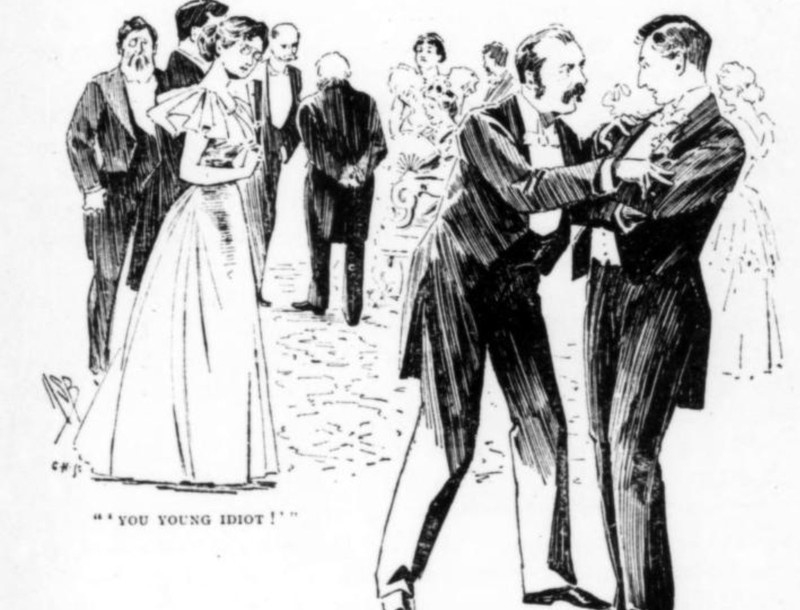
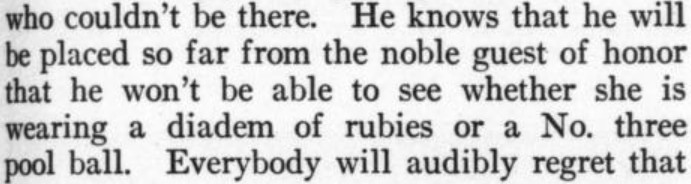
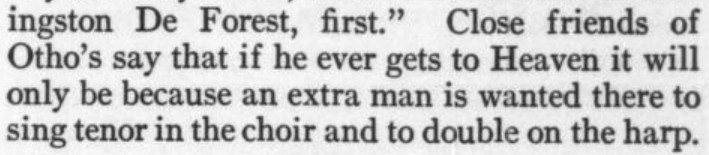
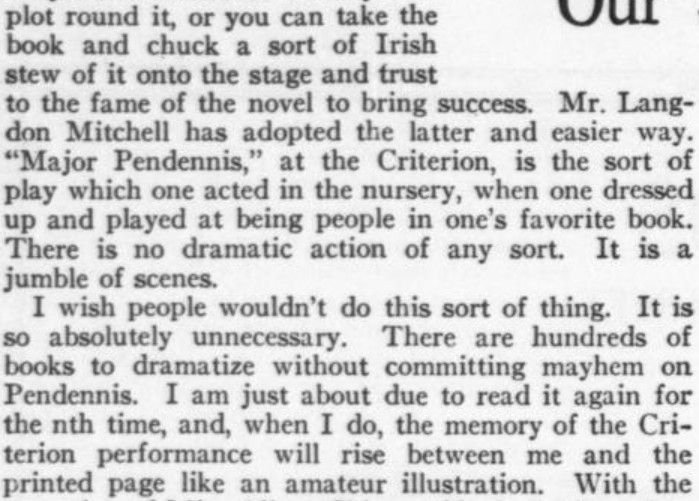
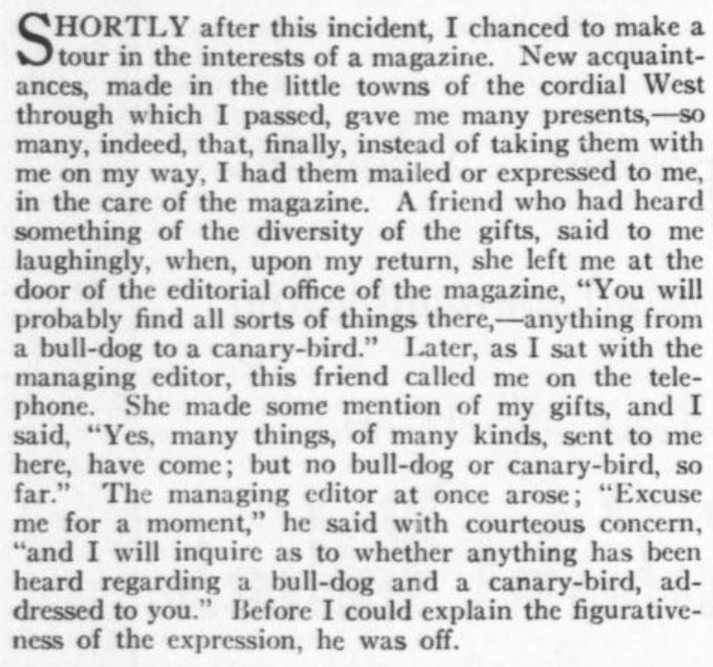
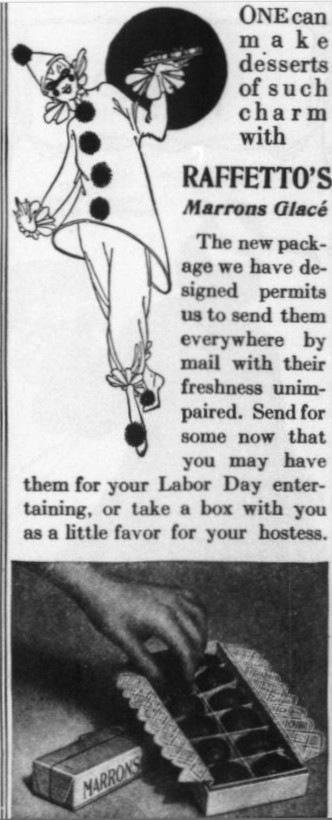
Harry Grant Dart (who it seems was better known as a cartoonist) has a humor piece about being a perpetual "extra man" for formal dinners. Two snippets attached, and here's a bonus: "Mrs. Effington-Smith" (which I'd call an effing good made-up name).
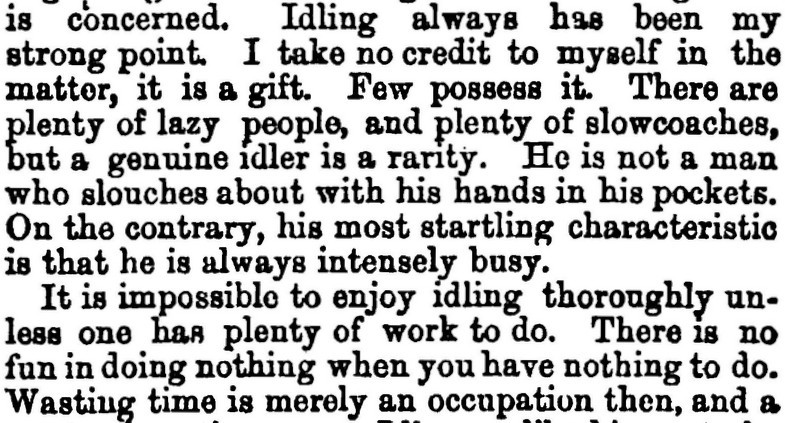
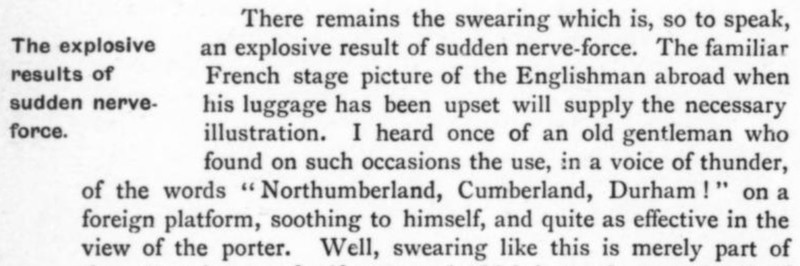
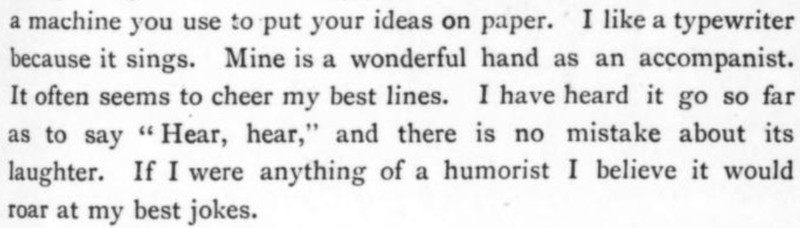
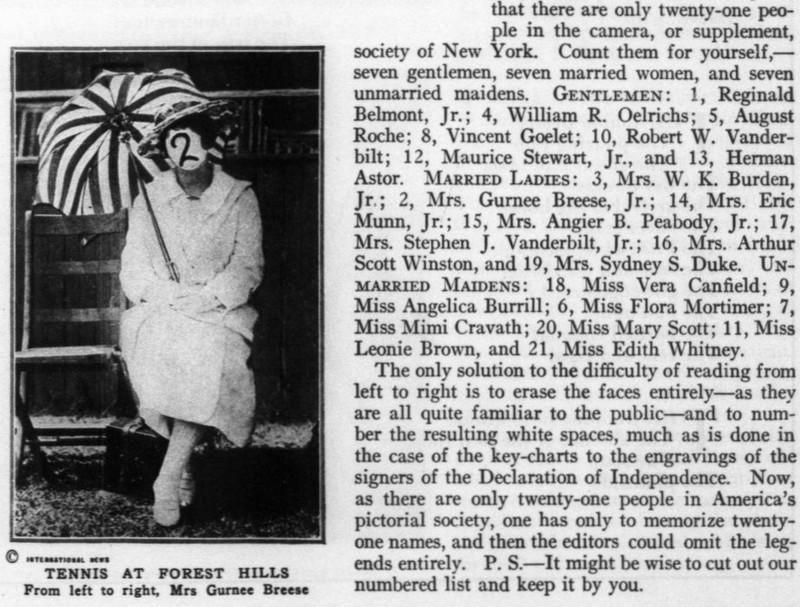
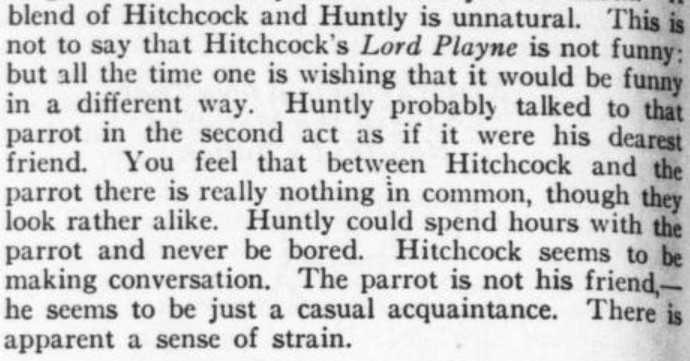
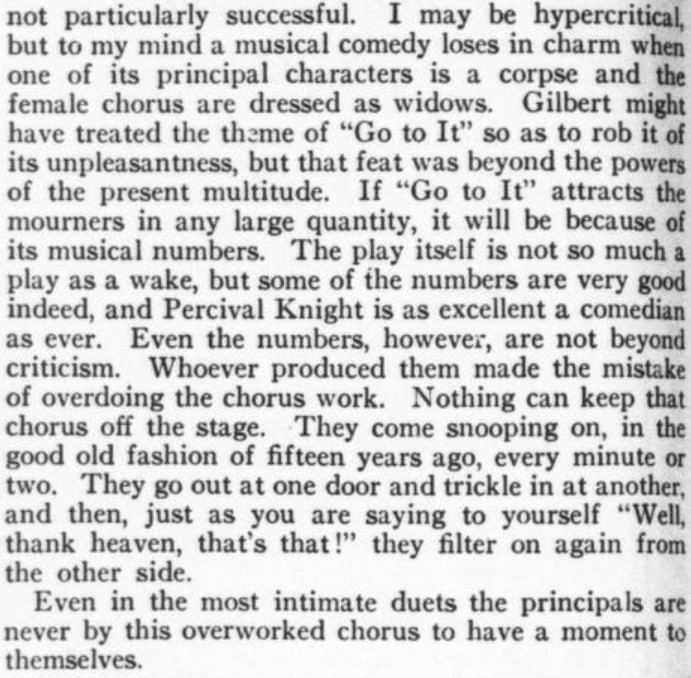
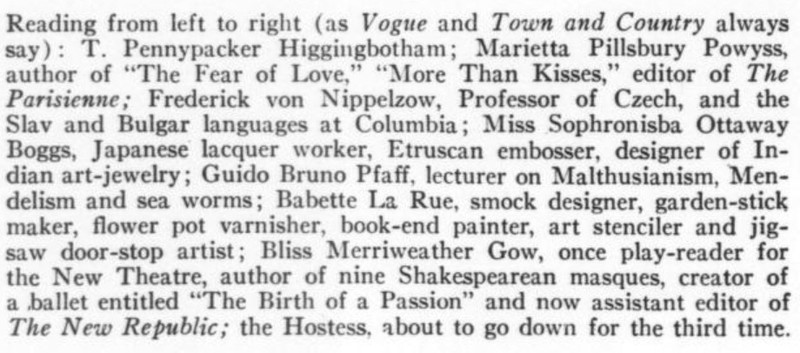
Then Wodehouse (if my guess is correct as to who the pseudonymous author really is) does the math on reading from left to right. (Cf. moments in the PGW canon such as, "Reading from left to right, the contents of the bed consisted of Pauline Stoker in my heliotrope pyjamas with the old gold stripe.") Three additional snippets come from PGW's theater pieces.
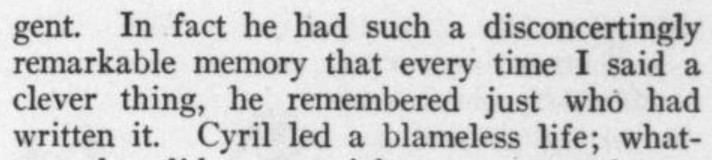
The snippet about literalness was the highlight, imho, of a full piece in defense of literal-minded people; but if you want to view that in its entirety, it's here:
https://archive.org/details/sim_vanity-fair_1916-12_7_4/page/160/mode/2up?view=theater
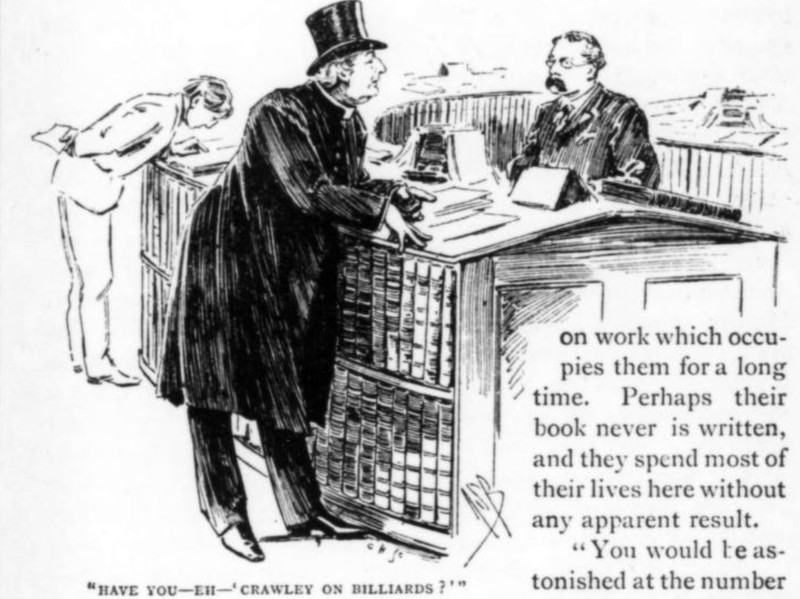
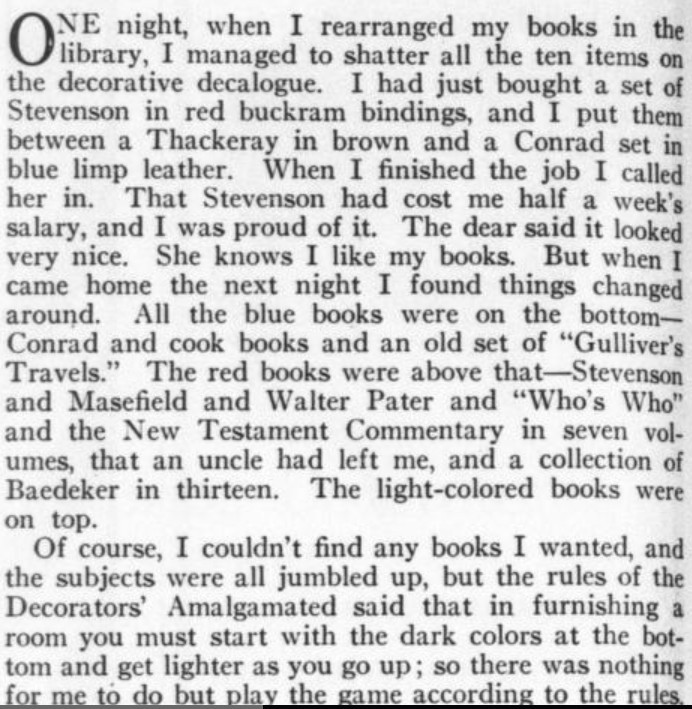
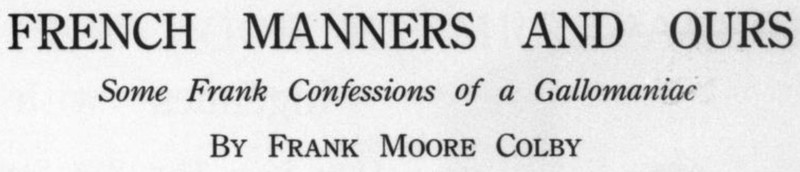
I thought you might enjoy seeing a bit about books arranged by spine color in the 1916 wild; finally, my own math tallies three Franks in Colby's headline: his name, his confessions, and (via the historical Franks) the French.
|
|
|
|
|
|
|
unearths some literary gems.
|
Page 21 of 65
> Older Entries...
Original Content Copyright © 2026 by Craig Conley. All rights reserved.
|