|
|
|
 |
 |
 |
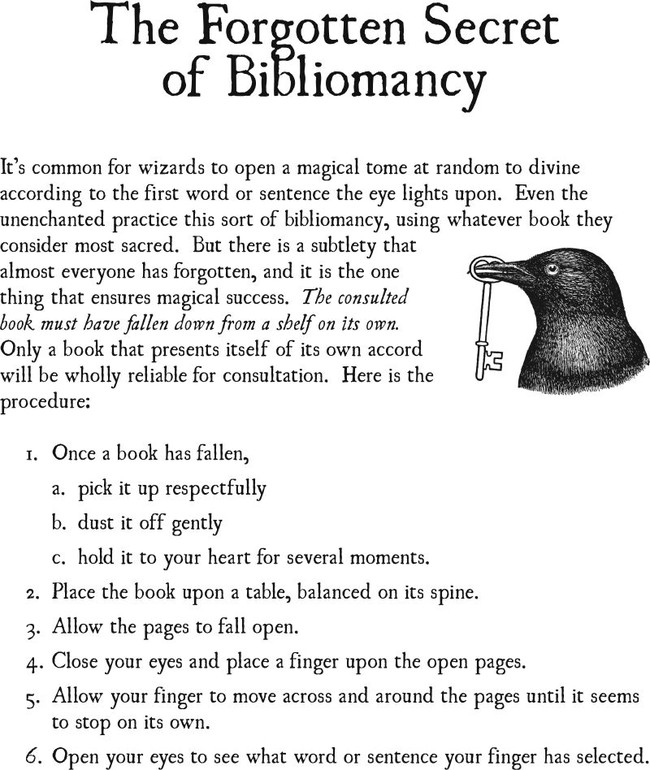
There's so much weirdness about this page from Franzlations that is featured in issue #96 of Geist magazine. Here are two of the weirdnesses, at random: 1. The page is hardly in the book, as it went missing in the drafts for a long while, and then nobody could remember why it was gone, so it was restored just moments before the book went to press. 2. Gary Barwin is here identified as Gary Baldwin, which (as one of those Garys noted) could be a sly allusion to Kafka's famous line "I have hardly anything in common with myself," and which also refers back to how Barwin's very first royalty cheque was made out to "Baldwin" and was not cashable. Of course, if you take the "ld" of Baldwin, rotate them 90 degrees, and lean the l over, they become the capital R of Barwin.
|


 |
|
|
 |
 |
 |
How to Use a Magic Word as a Tarot Spread Template
(from our guest post at Thematic Tarot)
The great alchemist John Dee designed a protective magical talisman under the direction of the angel Uriel: crossed lines, a central circle, and the letters A, G, L, and A. These letters constitute an acronym (also known as a kabbalistic "notariqon") of the unspeakable primordial name that was lost through the ages. It's a well-kept secret that this talisman can serve as a revealing template for a four-card Tarot spread.

The Hebraic words of the acronym are understood to be: Atah Gebur Le-olahm Adonai. This sentence is translated many ways, but you'll see the underlying similarities:
- "You reign for eternity, O Lord."
- "Thou art mighty forever, O Lord."
- "Thou art strong to eternity, Lord."
- "Thou art mighty to the ages, amen."
- "Thou art great forever, my Lord."
- "Thine is the power throughout endless ages, O Lord."
(Interestingly, in the Middle Ages, Christians in Germany used AGLA as a talisman against fire, the letters standing as an acronym for a German sentence meaning, "Almighty God, extinguish the conflagration," as noted in The Oxford Dictionary of the Jewish Religion by Adele Berlin.)
We'll explore three approaches to AGLA for purposes of Tarot spreads. The simplest is based upon this interpretation of the Hebraic words:
"You are strong through the ages, so be it."

The card placed upon "You" is, of course, the significator. The card placed upon "Are Strong" refers to the querent's greatest strength. The card placed upon "Through the Ages" refers to an ongoing issue that seems woven into the entire course of one's lifetime. The card placed upon "So Be It" refers to a truth or certainty that one need not waste energy upon resisting.
Here's how such a reading might go. Drawing cards from the Tarot of Portmeirion, we place the King of Wands on A, "You"; the Ace of Swords on G, "Are Strong"; the Empress on L, "Through the Ages"; and the High Priestess on A, "So Be It." As the significator, the King of Wands depicts a golden Burmese statue of a dancer high atop a stone column, communicating artistic flair and confidently setting a glowing example far and wide. As the symbol of strength, the Ace of Swords depicts a sea-beaten shaft of iron that has survived the cliffside structure it once supported, symbolizing a steadfast spirit undaunted by adversity. As a symbol of the ages, the Empress depicts a statue of the Nordic all-mother Goddess Frigga (labeled "Frix" on the plinth). Wielding a broken crossbow in her left hand and the hilt of a sword in the other, the Empress stands assuredly atop a limestone pedestal, head turned toward her right. She is framed by greenery and overlooks a small fountain -- a popular wishing well -- establishing her as a heeder of prayers and granter of desires. Her broken sword (presumably ruined over time) is of interest, as it symbolizes a firm grip on intention, free from lacerations. Within the context of this spread, we can interpret the Ace of Swords as depicting the Empress' lost blade. The "So Be It" High Priestess is a trompe l’oeil mermaid "sculpture" painted on sheet metal. She sports two tails, symbolizing duality. They curl up to suggest, along with her curved arms, a figure-eight/infinity shape. The infinity shape is echoed in the dramatic curls of her hair. Eyes closed, she cradles a large fish from whose mouth flows the water of the deep realm of the unconscious. The High Priestess, framed by an archway, meditatively sits atop a sphere in a stone pavilion near a tollgate. In terms of "So Be It," she indicates the wisdom of the inner voice during contemplative silence, the need for patience, and the importance of a deep understanding.
Another way to approach AGLA is explained in Eliphas Levi's The History of Magic. Levi proposes that the first letter of the Hebrew alphabet, Aleph, signifies unity; the letter Gimel, the third in the alphabet, signifies the triad and hence fruitfulness (as in two parents creating a third life); the letter Lamed signifies the perfect cycle; and the duplicated Aleph signifies synthesis.
Levi offers a third way to understand AGLA: syllepsis, analysis, science, synthesis.
Syllepsis (from the Greek meaning "taking together") is a term of semantics and refers to a word or expression that is simultaneously figurative and literal. It's a word that we can understand in two different ways at the same time. But those two ways are bound together like two sides of the same coin, as the theorist Riffaterre has put it. Whatever card is placed upon Syllepsis refers to something whose polar opposite we're overlooking, like what's embossed on the back of a coin. In other words, there's an inescapable duality at play. To find the bright side, look for the humor in this, because Syllepsis is a form of punning, a wordplay of double meanings.
The card placed upon Analysis refers to what needs to be examined in detail to determine its constituent elements or structure. Analysis comes from the Greek word meaning to "unloose," so on the bright side this is something about which we can loosen up, quite literally.
The card placed upon Science refers to something that could benefit from discipline, observation, and experimentation.
The card placed upon Synthesis (from the Greek meaning to "place together") is a call to combine ideas into a theory or system.
Levi reminds us that "according to Kabalah, the perfect word is the word realised by acts." Acting upon AGLA with Tarot cards can be a profound way to translate its knowledge into action and thereby understand its mysteries.
For more details about the talisman AGLA, see The Young Wizard's Hexopedia (pictured below) and Magic Words: A Dictionary.
—Craig Conley is author of The Young Wizard's Hexopedia, the Tarot of Portmeirion, HarperCollins' One-Letter Words: A Dictionary, Pomegranate's One Letter Words Knowledge Cards Deck, and Weiser Books' Magic Words: A Dictionary. He is co-author of New Star Books' Franzlations: A Guide to the Imaginary Parables. He has published dozens of articles in such magazines as Verbatim, Pentacle, Mothering, and Magic. His work has been profiled in the New York Times, the New York Post, The Wall Street Journal, The Chicago Tribune, National Public Radio, The Dallas Morning News, Publishers Weekly, The Associated Press, and dozens of others.
|


 |
|
|
 |
 |
 |
Thanks to Tom Sarbeck for saying this of our hard-to-find dictionary of one-letter words:
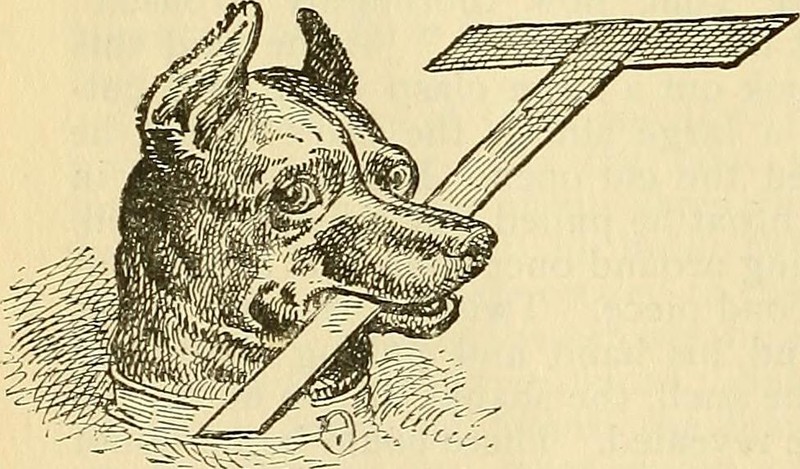
Compiler Craig Conley says, "In Shakespeare's time, R was called littera canina, 'the dog's letter,' because it sounded like a dog's growl."
There may be word lovers who won't read stuff like that; I'm not one of them.
Conley provided me with more motivation to buy his dictionary's Kindle edition; he said that since he wrote its first edition he hasn't had to buy a single drink.
|


 |
|
|
 |
 |
 |
The story of how The Young Wizard's Hexopedia came to be is just about as unlikely as the book itself. One November morning, a stranger wrote from out of the blue, asking for assistance with an extraordinary book of magic. The stranger turned out to be the CEO of a publishing house specializing in the world's quirkiest subject matter, in search of a grimoire that didn't technically exist. His own research had somehow determined that I was the one with the know-how to bring this lost book back from the depths. It seems that he had seen a window display of an esoteric bookshop and had noticed that the lost book in question wasn't there. The problem was that no surviving copies of the book are known to exist. My task was to rediscover and recreate the entire document from quotations and implications in magical literature. The stranger provided me with some crucial scraps, trusting that the whole work might be holographically contained within the parts. Knowing the title and a rough idea of the table of contents, I set to work hunting through cryptic volumes in private libraries of magic (whose locations I'm not at liberty to reveal, though I can say that I visited Hollywood's Magic Castle). Suffice it to say, I left no philosopher's stone unturned. The process was very much like putting together a jigsaw puzzle in a dark room, with only a flickering candle for illumination. To my own surprise, the lost book began taking shape almost immediately. Restoring fragments into sentences and arranging them into paragraphs proved less challenging than one might suppose. For example, you can surely divine what the last word of this sentence will [...]. Whenever a passage seemed to have something almost tangibly missing, like the absence of a vital book in an esoteric shop window, I knew to keep digging. The moment it was clear that the entire Hexopedia was restored, I verified the accuracy of my work with three highly gifted wizards of words: a playwright in New Hampshire, a poet in Pennsylvania, and a teacher of magical arts in Nevada. Then I sent the restoration to the stranger, who flabbergasted me by suggesting that the book should not come back into print at all but rather remain hidden in shadowy slumber until a more enlightened era. (Apparently the trickster merely desired a copy for his personal use!) Having worked so intimately with the text for so long, I felt convinced that the world was ready once again for the Hexopedia ... that it shouldn't rest only in the private library of one megalomaniacal* publisher. And the rest, as the former, is history. Here's a random page from The Young Wizard's Hexopedia.
*Note that "megalomaniacal" is an anagram of "ole magi almanac," so it all seems to be part of some mysterious tapestry, eh?
|

 |
|
|
 |
 |
 |
The Surprising Meanings of the All-Vowel Word OOO in the Televisual Treasure Kamen Rider OOO
Arguably the greatest television show ever fashioned (but unfairly obscure outside its native Japan), Kamen Rider OOO (2010-11) charms from moment one with the intriguing word "OOO" in its title. This all-vowel word has a surprisingly diverse array of meanings within the context of the series. In no particular order:
- infinity with an additional circle or infinity times the letter O (as written in cake icing in episode one of the series; referred to in the theme song as "Skip the addition—multiply your way up").
- the unstoppable progression of the idiom "anything goes" (referred to in the theme song as "Anything goes, goes on: ooo's, ooo's, ooo's, ooo's").
- one thousand (the letter O's symbolizing zeros, as the series sports the one-thousandth episode of the Kamen Rider franchise).
- three medallions (referring to an ancient coin-shaped technology for artificial life that acquired consciousness; the three coins are inserted into the hero's belt to trigger a transformation).
- the name of a masked hero (sometimes also spelled Os, pronounced like the oes in goes).
- multiple kings (from the Japanese pronounciation Ozu).
- a joyous bouquet (an allusion to the idiom that "everything is coming up roses," referred to in the theme song as "Coming up OOO").
- the "three of pentacles" in the Tarot (symbolizing coordinating with others, finding all the needed elements, functioning as a unit, cooperating, meeting goals, knowing what to do and how to do it, and proving one's ability, as per Learn Tarot).
- rarity (as in the old Celtic "Chant of Arcady" sung at harvest gatherings: "I'll sing the three O's. What means the three O's? Three, three's the rare O!" —A. S. Harvey, Ballads, Songs and Rhymes of East Anglia, 1936, page 107).
- a winning move ("A single line of three 'O's is worth more than anything because a move that produces this result is a winning move!" —Mike James, Artificial Intelligence in Basic, page 30).
- omnipotence, omniscience, and optimization ("The three O's, omnipotence, omniscience, and optimization ... continue to appear in modern times in the way we conceive of ourselves through the social sciences. Mortal beings figuring out how to act in the world are routinely modeled as if they have unlimited computational power, possess complete information about their situation, and compute the optimal plan of action to take." —Peter M. Todd & Gerd Gigerenzer, Ecological Rationality: Intelligence in the World, pp. 496-7).
- outflanked, outfoxed, overwhelmed ("The 'Three O's': a defence must be either Outflanked, Outfoxed, or Overwhelmed." —Current Research on Peace and Violence, 1987, page 129).
- continual practice ("Whenever anyone asks why our name is spelled with three O's, we remind them that to be good at picking there is no other path than to practice Over and Over and Over again." —Deviant Ollam, Practical Lock Picking, 2012, page xi).
- the possibility of different combinations ("The three O's tempt the reader to explore the possibilities of different combinations." —Guillaume Apollinaire & Anne Hyde Greet, Calligrammes, 1908, page 407).
- decimalization ("For every three O's added to the given number, we shall have one place of decimals. And, in general, since the nth power of ten has no O's we shall always have, in extracting the nth root, one place of decimals for every n O's added to the given number." —Silas Totten, A New Introduction to the Science of Algebra, 1836, page 225).
- a belt, as in the three stars of the constellation Orion. ("The three o's [are part of a] densely woven mesh of triplets [that] constellates this moving poetic object." —Michael Golston, Poetic Machinations, 2015).
- rising to a challenge ("As soon as the ball is served, the three O's come out to challenge." —Jacob Daniel, The Complete Guide to Coaching Soccer Systems and Tactics, 2004).
- seizing the day; embracing the world ("The three o's are a circular microcosm of the day, or, of the world." —Robert Greer Cohn, The Poetry of Rimbaud, page 60).
The letter O and the lemniscate form the all-vowel word OOO in Kamen Rider OOO.
|


 |
|
|
 |
 |
 |
This David Lynchian Ricky Board is in honor of Gary Barwin, author of Yiddish for Pirates (Random House Canada, 2016), though it is technically a self-portrait by proxy. We'll include Lynch's instructions for making a Ricky Board below (and yes, we realize we violated Lynch's size constraint).
—How To Make A Ricky Board—
by David Lynch
This board can be any size you want.
The proportions are dictated by four rows of five rickies.
Each ricky is, as nearly as possible, exactly the same as every other ricky.
The ricky can be an object or a flat image.
The thing about the rickies is you will see them change before your eyes because you will give each ricky a different name.
The names will be printed or written under each ricky. Twenty different names in all.
You will be amazed at the different personalities that emerge depending on the names you give.
Here is a poem:
Four rows of five
Your rickies come alive
Twenty is plenty
It isn’t tricky
Just name each ricky
Even though they’re all the same
The change comes from the name
|


Page 51 of 74

> Older Entries...

Original Content Copyright © 2025 by Craig Conley. All rights reserved.
|