|
|
 |
 |
 |
"Every sentence includes an infinity of words; one perceives only a few of them, the others being in the infinite or being imaginary." —Raymond Queneau, qtd. in OULIPO: A Primer of Potential Literature
|


 |
|
|
 |
 |
 |
Not a joke. I found this on the shelf in the bookstore when I was looking at other dictionaries. You can explore it online.
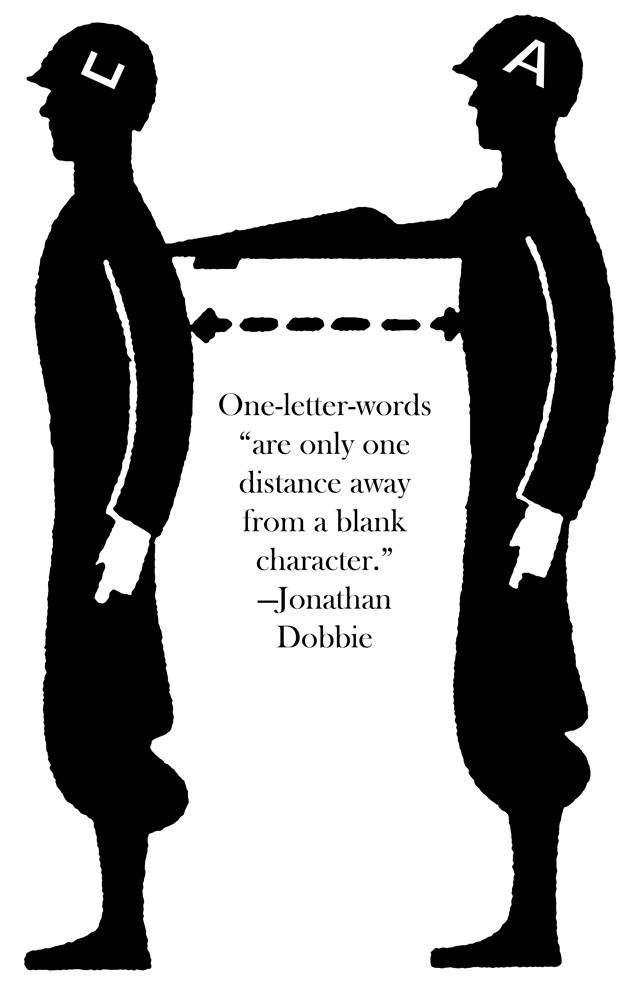
There’s not an awful lot to say about one-letter words, except that there are more than 1000 of them. Many have to do with Roman numerals, music and science, but a fair few have some surprising definitions.
By far the most interesting to me were these ghoulish definitions:
You know the expression, “branded a thief”? To the extent that I had ever thought about it, I’d assumed the phrase was metaphorical. It’s not. Until 1827 in America, thieves were, literally, branded on the thumb with the letter T.
And that is not all. Humans have a long history of shaming and harming each other with branded or incised letters, apparently.
In Colonial America, drunkards were forced to wear the letter D, made of red cloth and sewn onto a white ground, so A is not the only scarlet letter. Civil War deserters were branded with the letter D, as well, on the buttock, hip or cheek. The letter was made with a hot iron or a razor.
Until 1822, the letter F (for “fray-maker”) was branded on the cheeks of people who fought in church. Blasphemers were branded on the forehead with the letter B.
The ancient Romans branded false accusers with a K (for kalumnia, lie), and in England, R was used as a mark for rogues.
And on that cheerful note, I end my month of looking at dictionaries. Happy Halloween, everyone!
|

 |
|
|
 |
 |
 |
And the song that you sing Will speak louder than you But always in a different language —Kurt Harlan of Information Society, " The Sky Away"
|


 |
|
|
 |
 |
 |
From Prof. Oddfellow's sketchbook:
"The book gobbles us up immediately with its little fly-legs." —R aymond QueneauTherefore, a flyleaf:
|


 |
|
|
 |
 |
 |
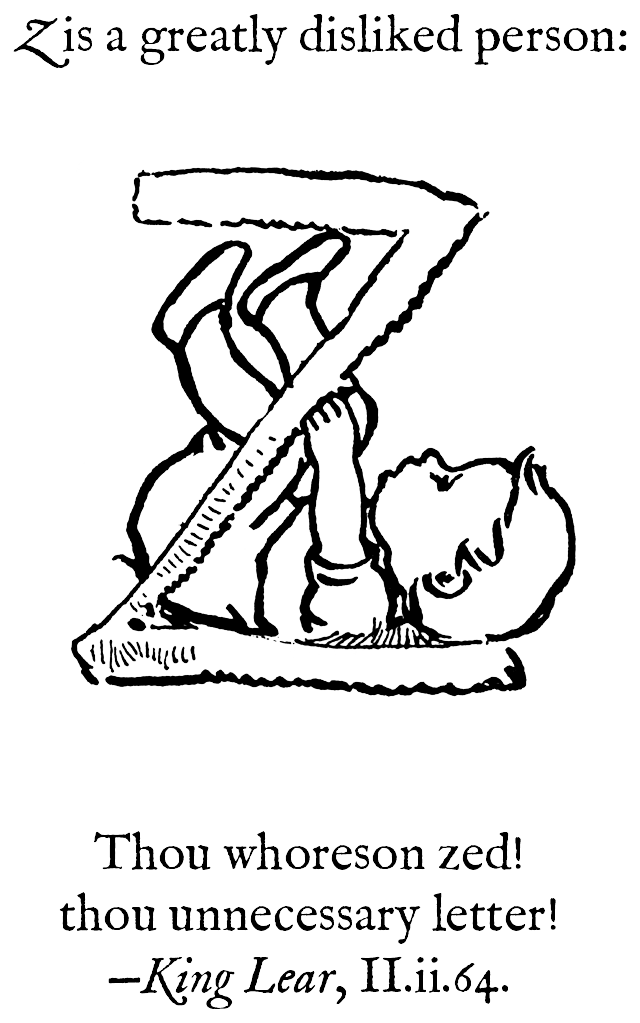
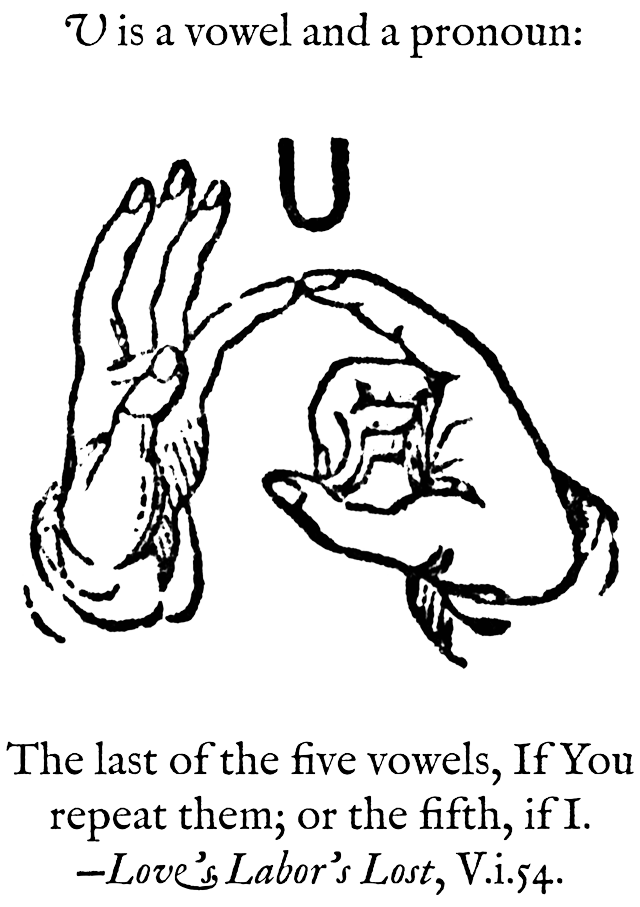
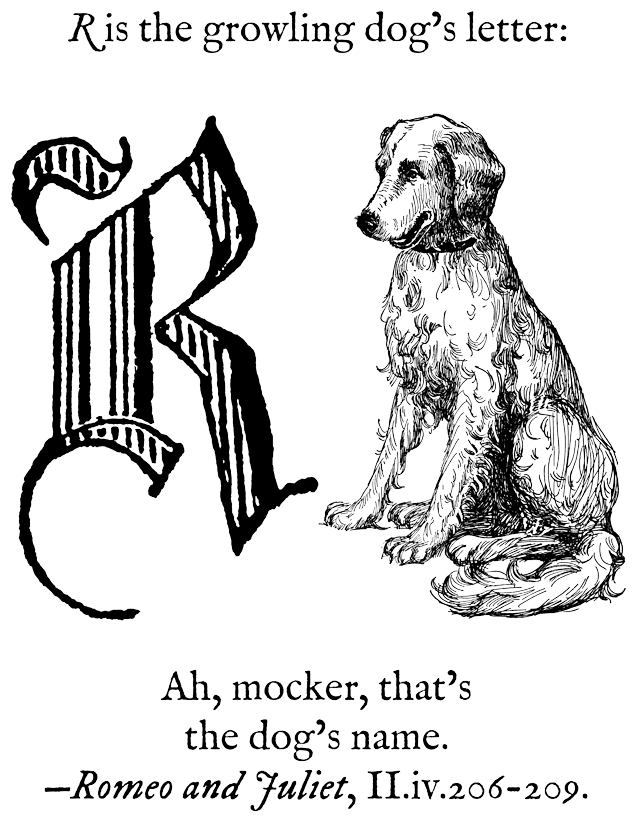
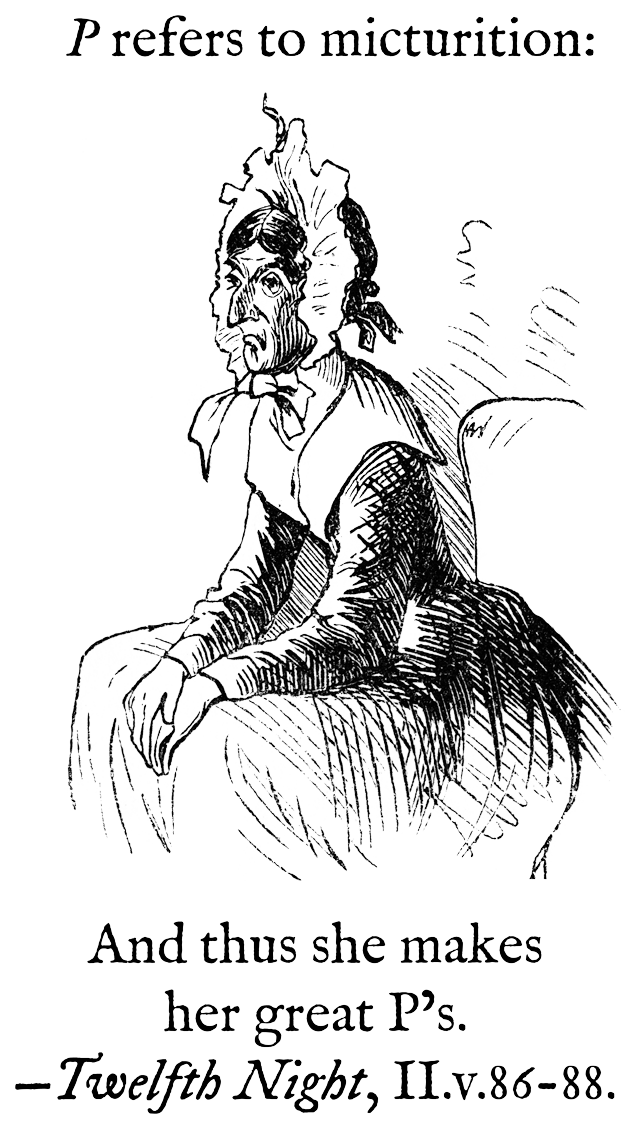
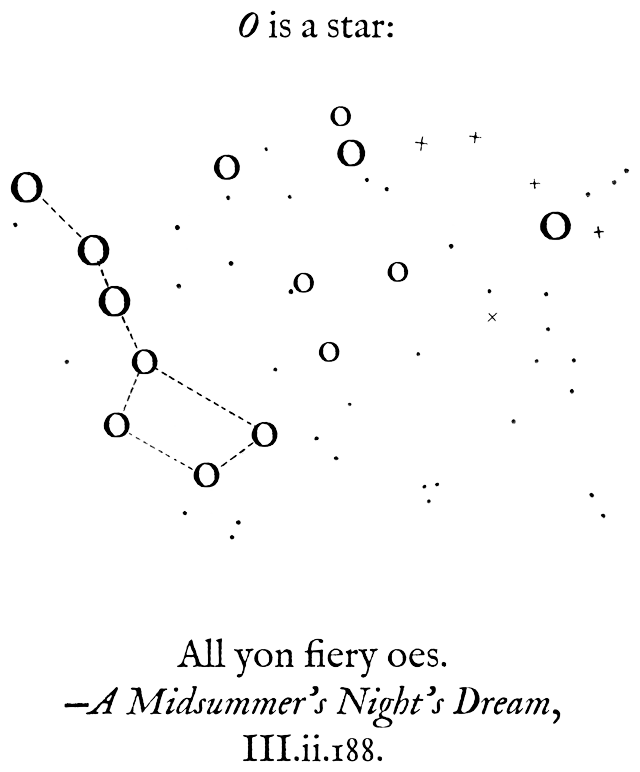
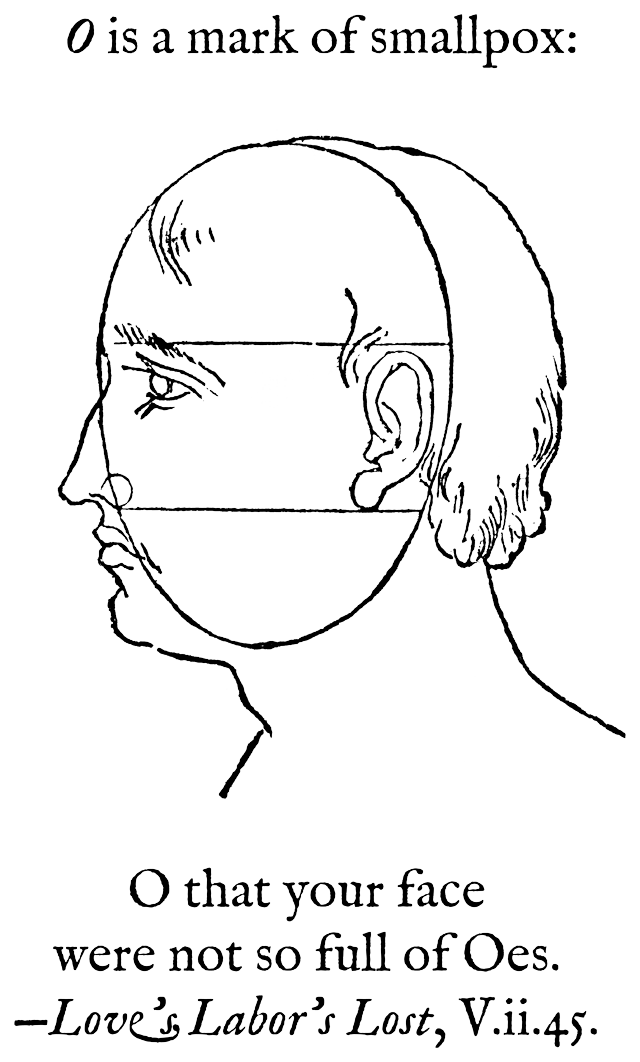
What a confetti that summer was, spent snipping invented words in Shakespeare. Occam's razor was at hand for painstakingly isolating those simplest inventions, the elegantly minimalist one-letter words. Hawthorne may have his scarlet letter, but Shakespeare's coinages are pure gold. The poet Geof Huth suggests that tiny expressions both surprise and justify, making ourselves vessels of concentration, inviting us to accept the mantle of makers of meaning. Thus attending to precision, "we become whom we are asked to become" (Geof Huth, " in tininess, we," June 22, 2009). The Shakespeare Papers dedicated an entire issue to one-letter words, and here's one of the pages we contributed. See our One-Letter Words: A Dictionary.
|

 |
|
|
 |
 |
 |
"Words too silly to be said should be sung." — Oscar Wilde [via DJMisc]
|


 |
|
|
 |
 |
 |
[This note is dedicated to Jonathan Caws-Elwitt.] On the strength of a single droll passage, I am always disappointed with mountains. There are no mountains in the
world as high as I would wish. They irritate me invariably. I should
like to shake Switzerland. — Ronald Firbank, The Princess Zoubaroffa friend and I each bought some selected works of the author. Though neither of us ended up as card-carrying members of the Ronald Firbank fan club, note some of his astonishing staging notes: [in a voice which is rather like cheap scent]
[playing extinct eyes]
[All but imperceptibly, twilight begins to form.]
[impressionistically]
[blinking at a flash of summer lightning]
[covering her eyes with an elaborately becoroneted Vanity-bag]
And in his novel Valmouth, I love Firbanks' thingamabobs, such as: A long sunbeam lighting up the whatnot . . .
Make ready the thingamies!
|


Page 57 of 74

> Older Entries...

Original Content Copyright © 2025 by Craig Conley. All rights reserved.
|