|
|
|
|
|
|
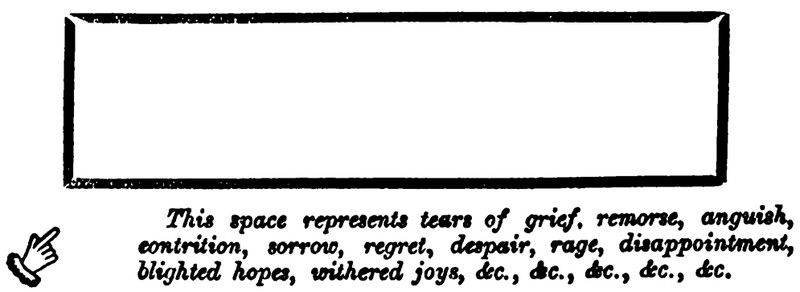
"This space represents tears of grief, remorse, anguish, contrition, sorrow, regret, despair, rage, disappointment, blighted hopes, withered joys, &c., &c., &c., &c., &c." From Judy, Or The London Serio-Comic Journal, 1871.
|
|
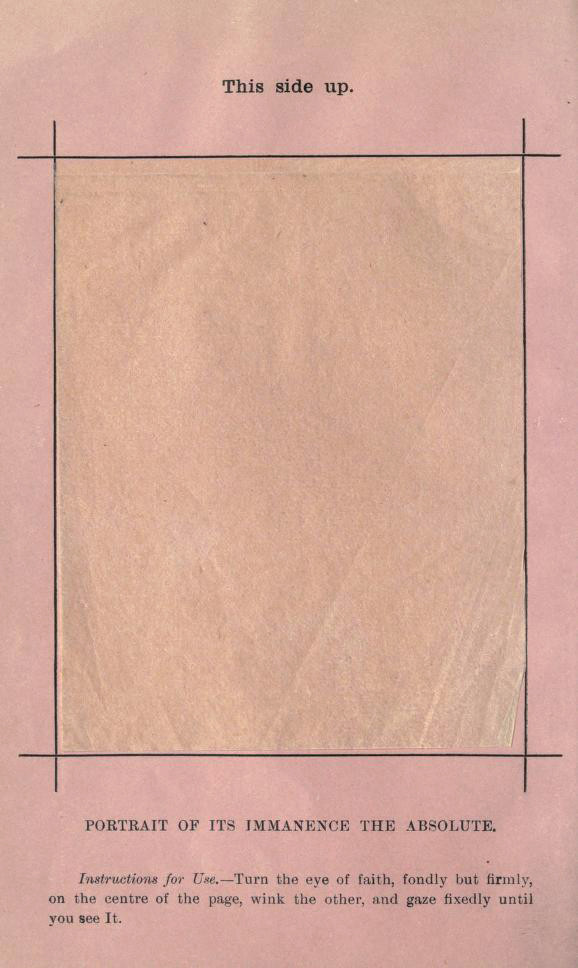
"Portrait of Its Immanence the Absolute," from the Christmas 1901 issue of Mind magazine.
|
|
|
|
|
|
|
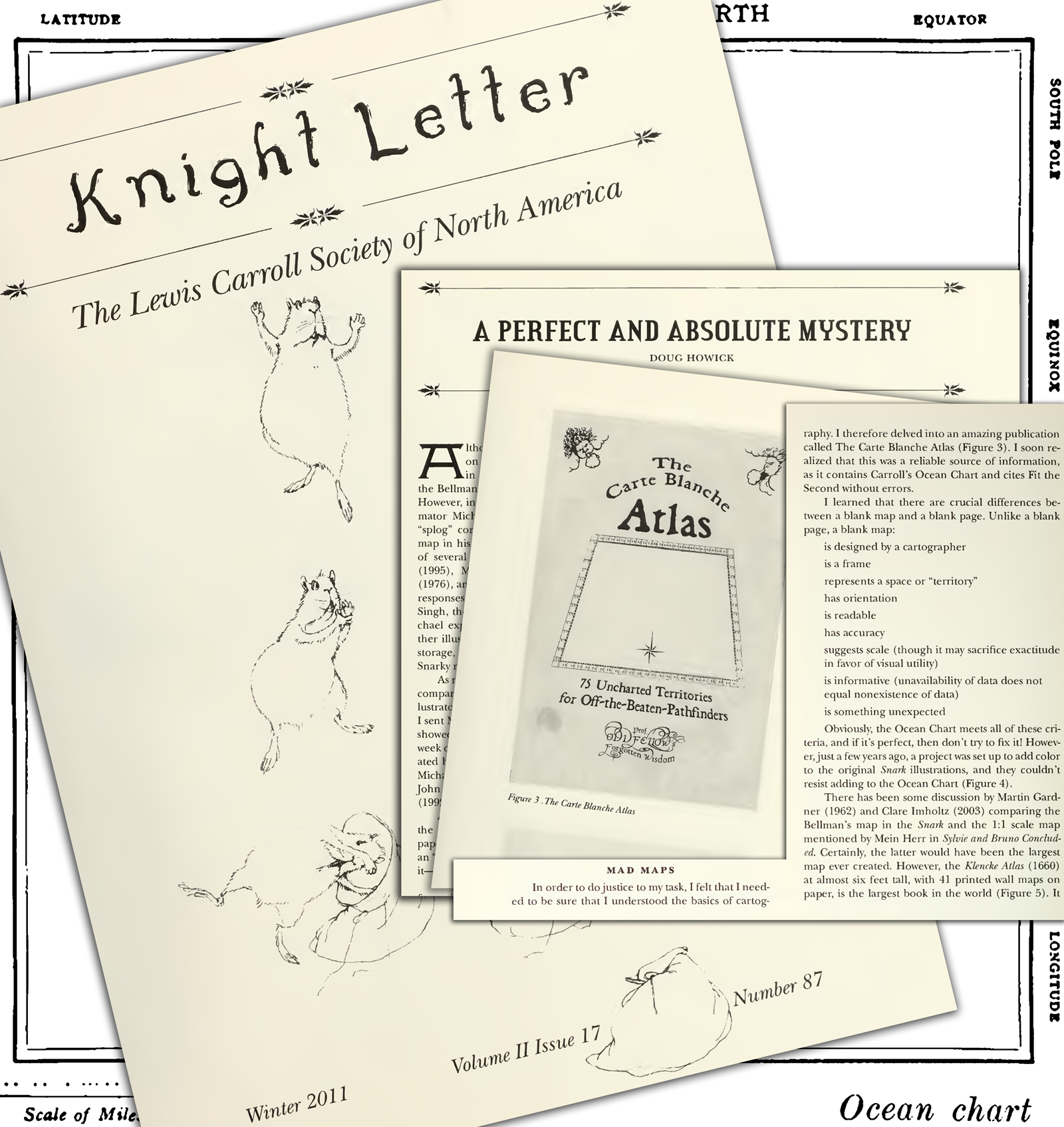
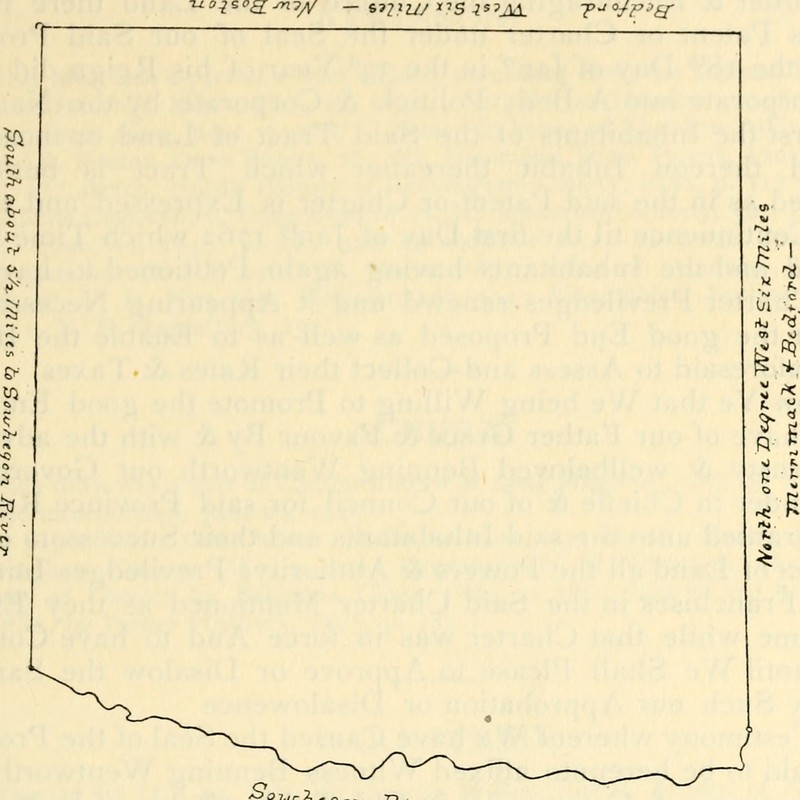
Scholar Doug Howick has pondered the mysterious dots in the Scale of Miles on the blank map in Lewis Carroll's The Hunting of the Snark. Howick writes, "The sequence of dots on the scale has always intrigued me. The original has a '22132' arrangement, but I have been unable to make anything of that. I've also wondered whether it was a message in Morse code, which had been invented by Samuel Morse in 1844. If so, it would spell 'IIESI,' which doesn't make any sense to me either." We might suggest that the dots are "blind spots" indicating the "forgetfulness of antecedent spatial configurations," the "discrepancies and approximations" which cannot be obliterated (as per José Rabasa's critical reading of Mercator's 17th-century Atlas). And/or, the scholar of silliness and its metaphysics, Nina Lyon, writes of how a place inevitably becomes a metaphor, " an elastic description of its describable characteristics as required to illustrate a point plucked from the mind's ether." She writes about how the bumps of a terrain's anatomy become apparent "only with movement" as one repositions oneself in time and space so as to perceive "the multiplicity of it. The many bits of detail, those many geographical features marked out in contour lines and dots of scree on maps, all unfold from the single furrowed surface of the earth upon which your feet continue to move, with slow determined pace. ... The features exist for as long as you can see them, and then you keep on moving and they fall back into where they were before, into the mass again. What seem to be individual entities all fall back into one thing in the end. They are merely attributes of it. The one is ontologically prior to the many." Yes.
|
|
|
|
|
|
|
The artist of this blank map, David Waywell (a.k.a. Stan Madeley), admits that " some people might say that it's a bit obscene." Almost by way of apology, he notes "how much skill was involved in drawing licorice with white ink."
|
|
|
|
|
|
|
Here's the secret to handling any book with glaring omissions:
"There is no way of emending a confused book, but everything may be supplied in the case of books with omissions. For my own part, when I read one of the latter type I am not bothered a bit. What I do, on arriving at the end, is to shut my eyes and evoke all the things which I did not find in it. How many fine ideas come to me then! What profound reflections! The rivers, mountains, churches, which I did not find on the written page, all now appear to me with their waters, their trees, their altars; and the generals draw swords that never left their scabbards, and the clarion releases notes that slept in the metal, and everything marches with sudden soul. The fact is, everything is to be found outside a book that has gaps, gentle reader." —Machado de Assis, Dom Casmurro
|
Page 4 of 9
> Older Entries...
Original Content Copyright © 2026 by Craig Conley. All rights reserved.
|