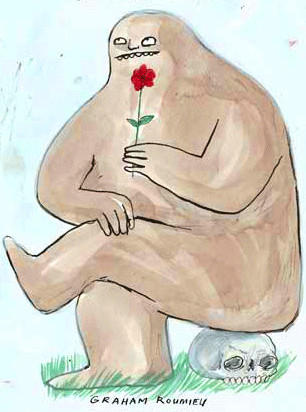
CRAIG CONLEY (Prof. Oddfellow) is recognized by Encarta as “America’s most creative and diligent scholar of letters, words and punctuation.” He has been called a “language fanatic” by Page Six gossip columnist Cindy Adams, a “cult hero” by Publisher’s Weekly, a “monk for the modern age” by George Parker, and “a true Renaissance man of the modern era, diving headfirst into comprehensive, open-minded study of realms obscured or merely obscure” by Clint Marsh. An eccentric scholar, Conley’s ideas are often decades ahead of their time. He invented the concept of the “virtual pet” in 1980, fifteen years before the debut of the popular “Tamagotchi” in Japan. His virtual pet, actually a rare flower, still thrives and has reached an incomprehensible size. Conley’s website is OneLetterWords.com.
We've been keeping one of our latest publications under the radar, lest it fall into the wrong hands. But we felt safe sharing it with Clint Marsh (of Goblinproofing One's Chicken Coop fame). From his review in The Pamphleteer:
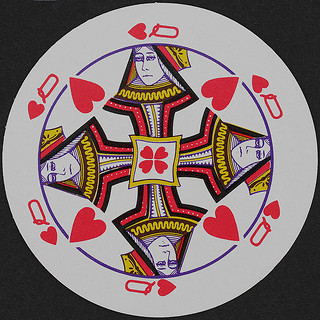
A master of practical esoterica, Prof. Oddfellow (a.k.a. the inimitable Craig Conley) follows in the footsteps of magicians throughout history in tracing his lineage to a potent fabulous ancestor, in this case Elizabeth of York, the mother of Henry VIII and the woman immortalized as the Queen of Hearts in the familiar deck of playing cards we've all seen. Instead of climbing the family tree back toward Elizabeth, though, Conley begins with her and comes down through history toward himself. This approach makes perfect sense to anyone bent on establishing a blood connection to a particular figure from the past, and it seems to involve less risk of falling down the wrong genealogical rabbit hole. ... [Heirs to the Queen of Hearts: Tracing Magical Genealogy is] a wonderful new addition to his teeming brood of bibliomantic offspring.
"Write a novel in which a cryptozoophile kills himself at the end, unable to physically consummate his relationship to his objects of desire." —Stefan, of The Kelayah Objective
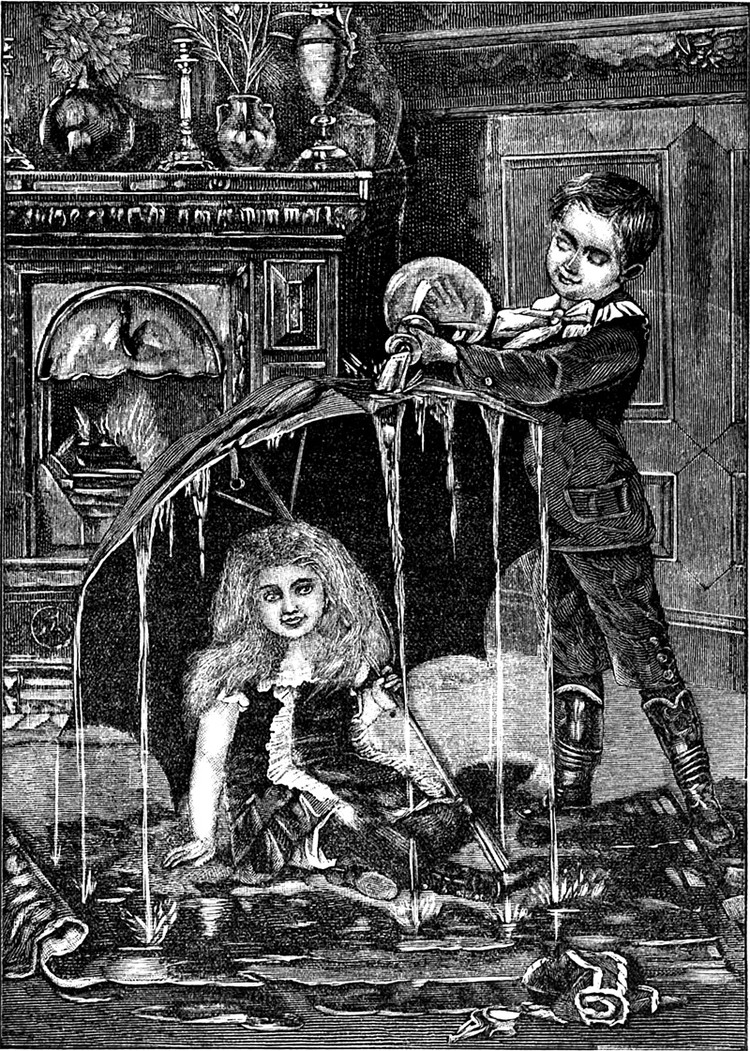
The perfect antidote to a sunny day at a crowded beach. (These young Goths — precursors to Wednesday and Pugsley Addams? — are from Peterson's magazine, 1888.)
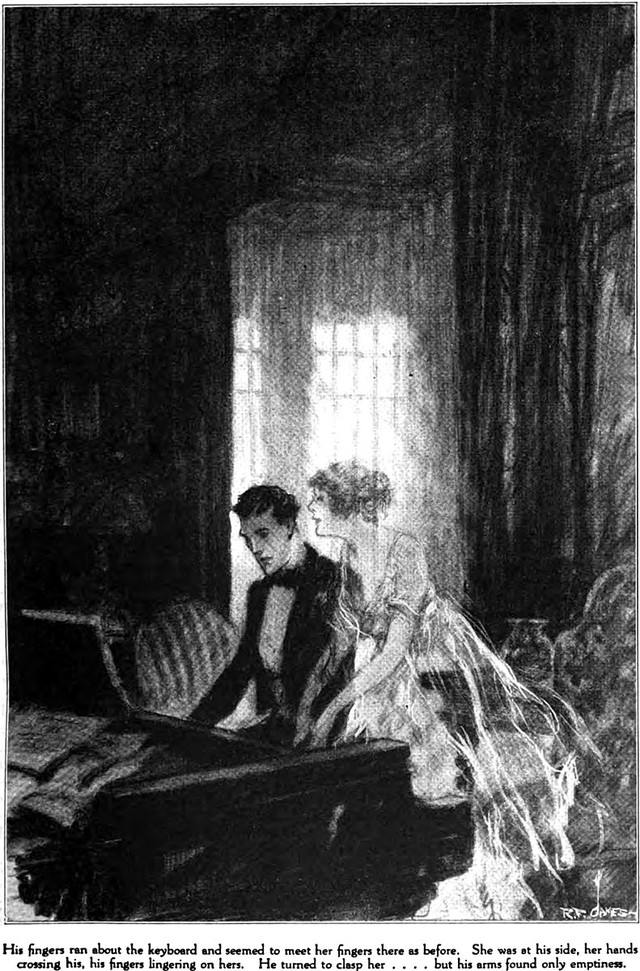
An illustration from a 1916 issue of Green Book magazine. The caption reads: "His fingers ran about the keyboard and seemed to meet her fingers there as before. She was at his side, her hands crossing his, his fingers lingering on hers. He turned to clasp her . . . but his arms found only emptiness."
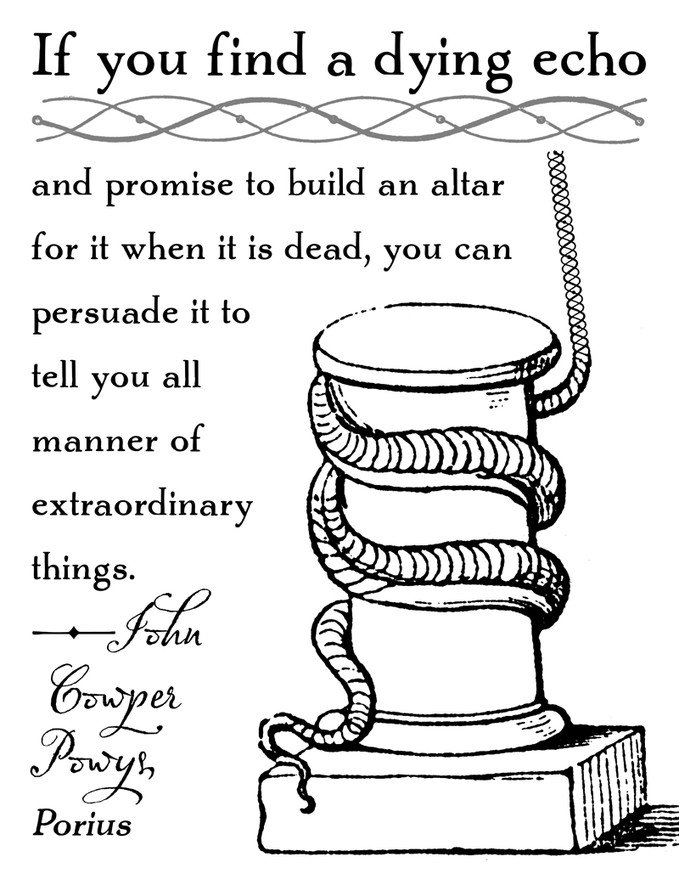
The text reads: "If you find a dying echo and promise to build an altar
for it when it is dead, you can persuade it to tell you all manner of
extraordinary things." —John Cowper Powys, Porius
We're devastated to report that the piece on "Forecasting Yesterday's Weather" in NewScientist (Sept. 20, 1979) doesn't live up to its fascinating title. We had so hoped that predicting past atmospheric conditions would be more accurate than predicting future ones, but it would seem that meteorologists can't even correctly describe current conditions.