I Found a Penny Today, So Here's a Thought
|

|
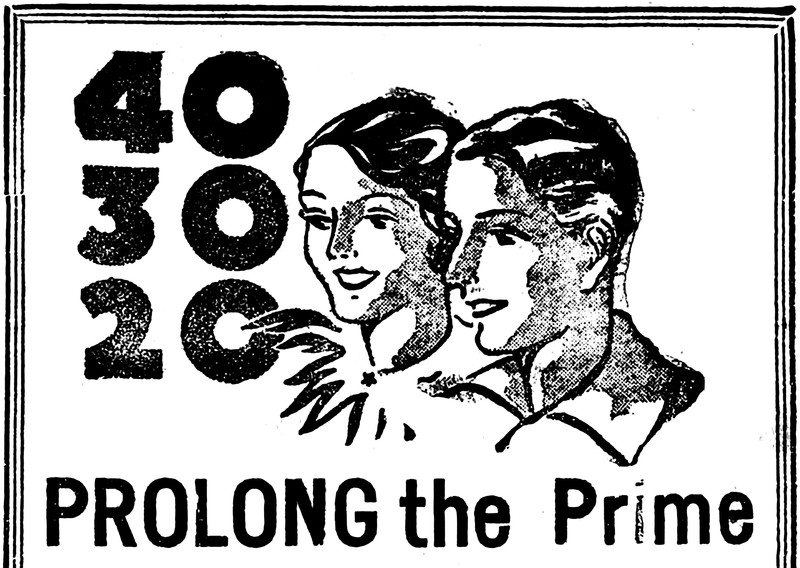
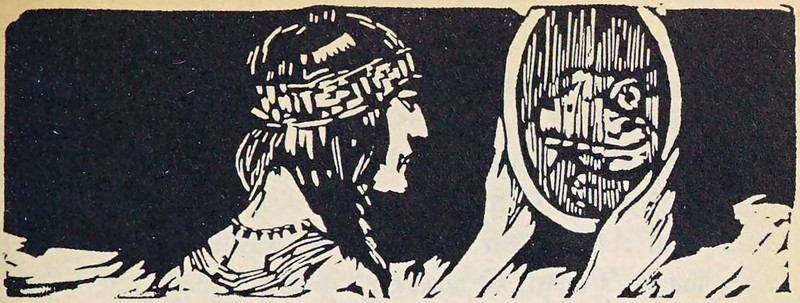
"Prolong the prime." From the Bombay Sunday Chronicle, 1937.
|
|
|
|
|
|
|
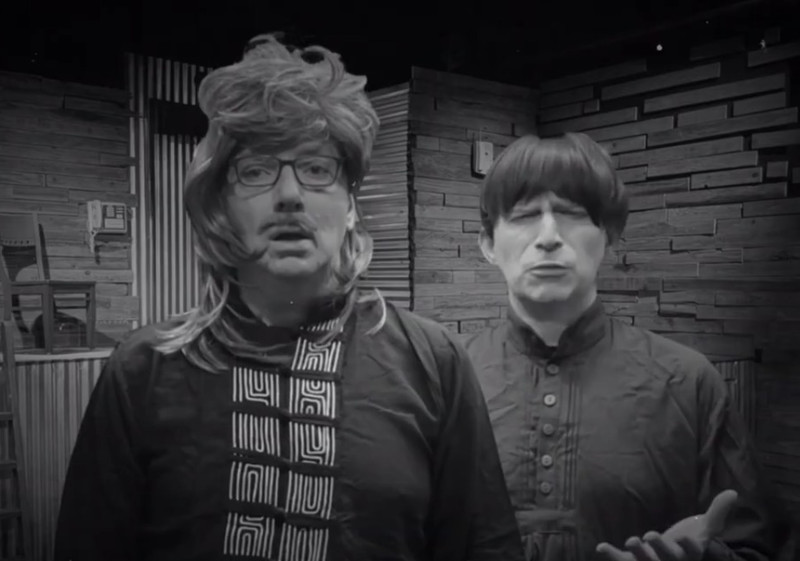
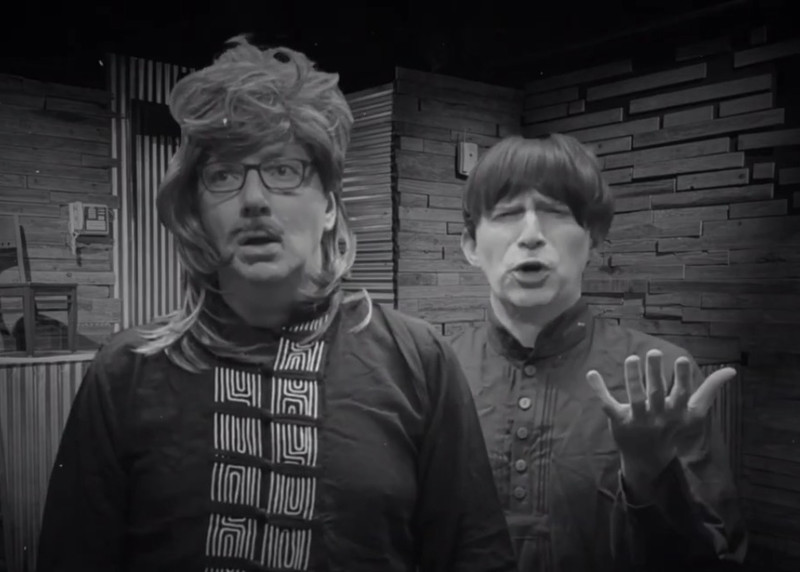
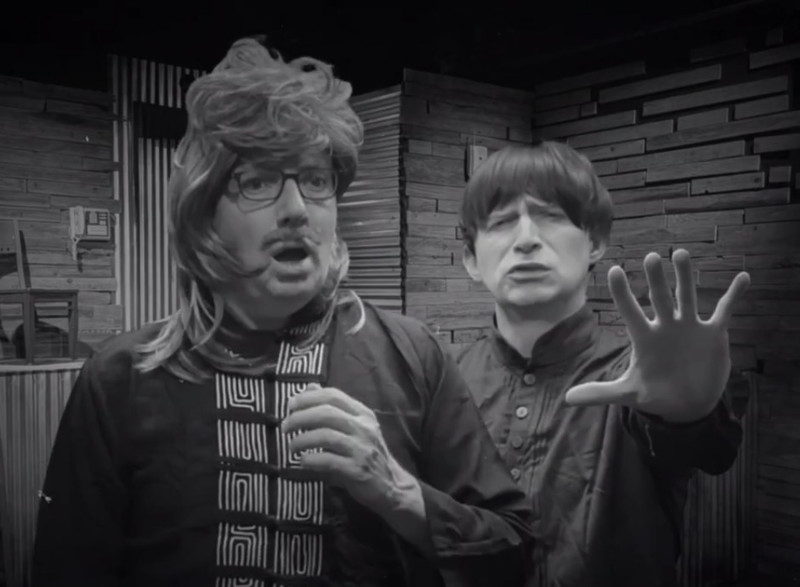
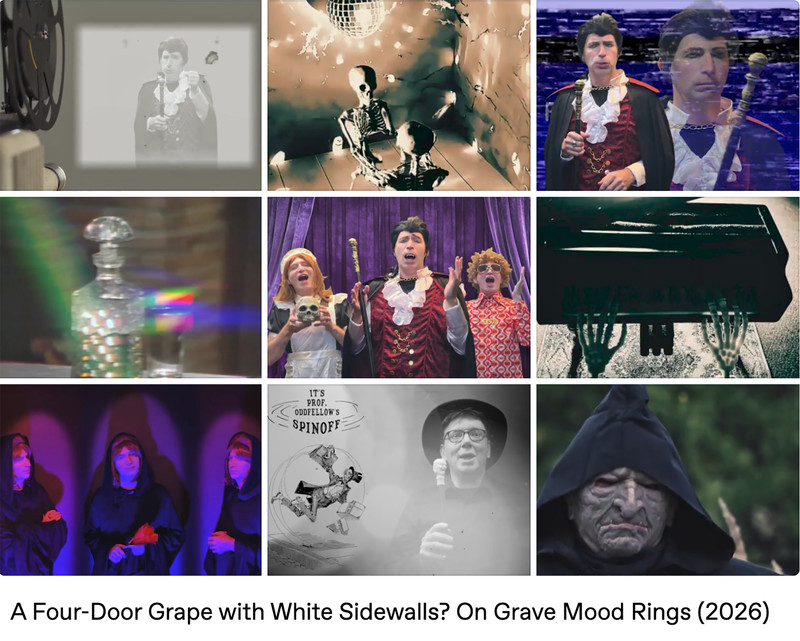
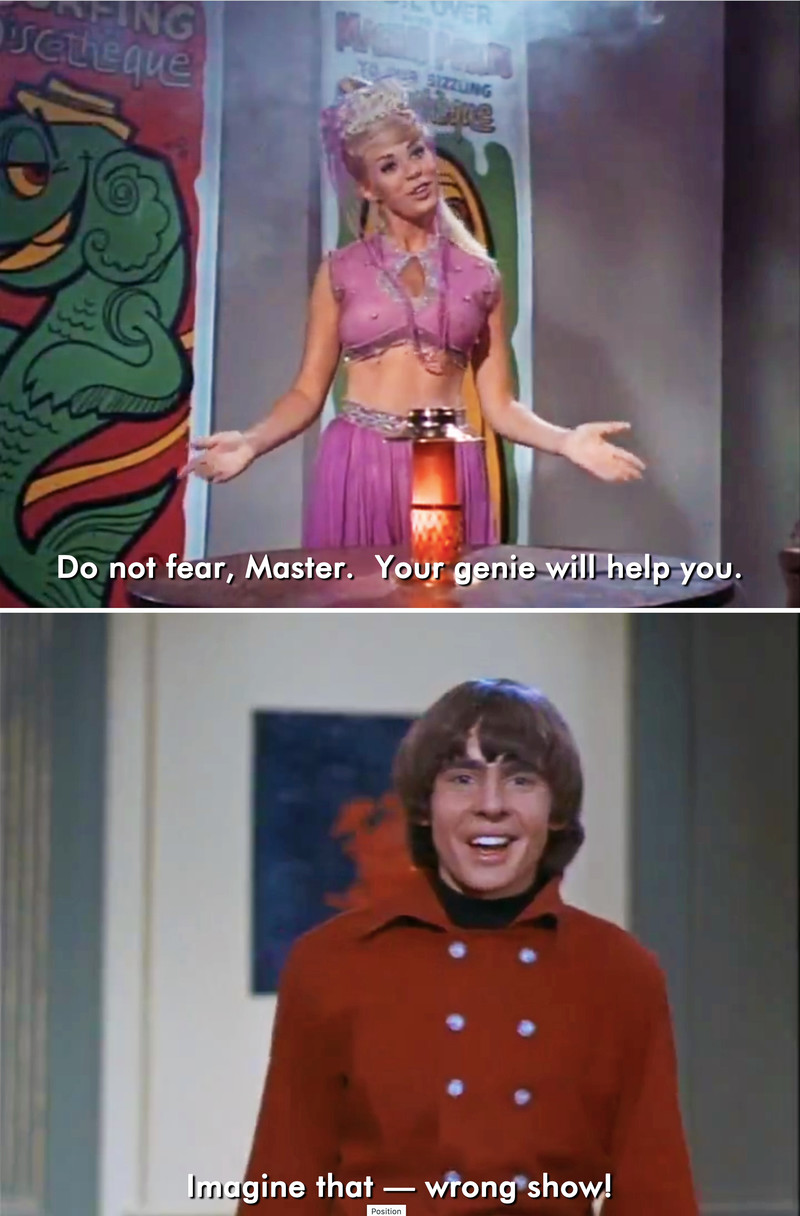
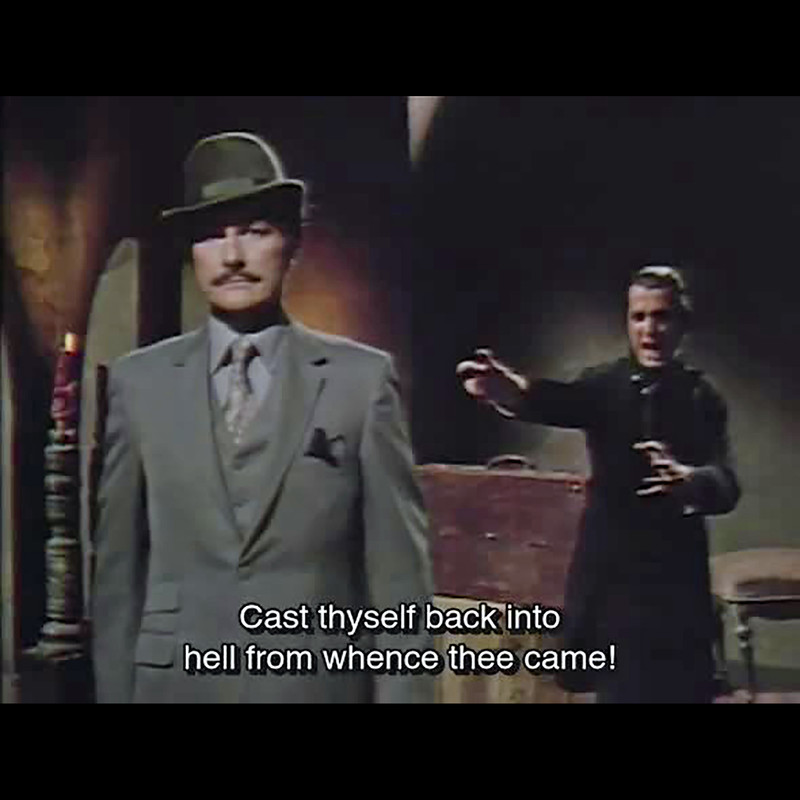
Stills from "Flipping Their Wigs" on Grave Mood Rings, courtesy of Dare-g on Tumblr.
|
|
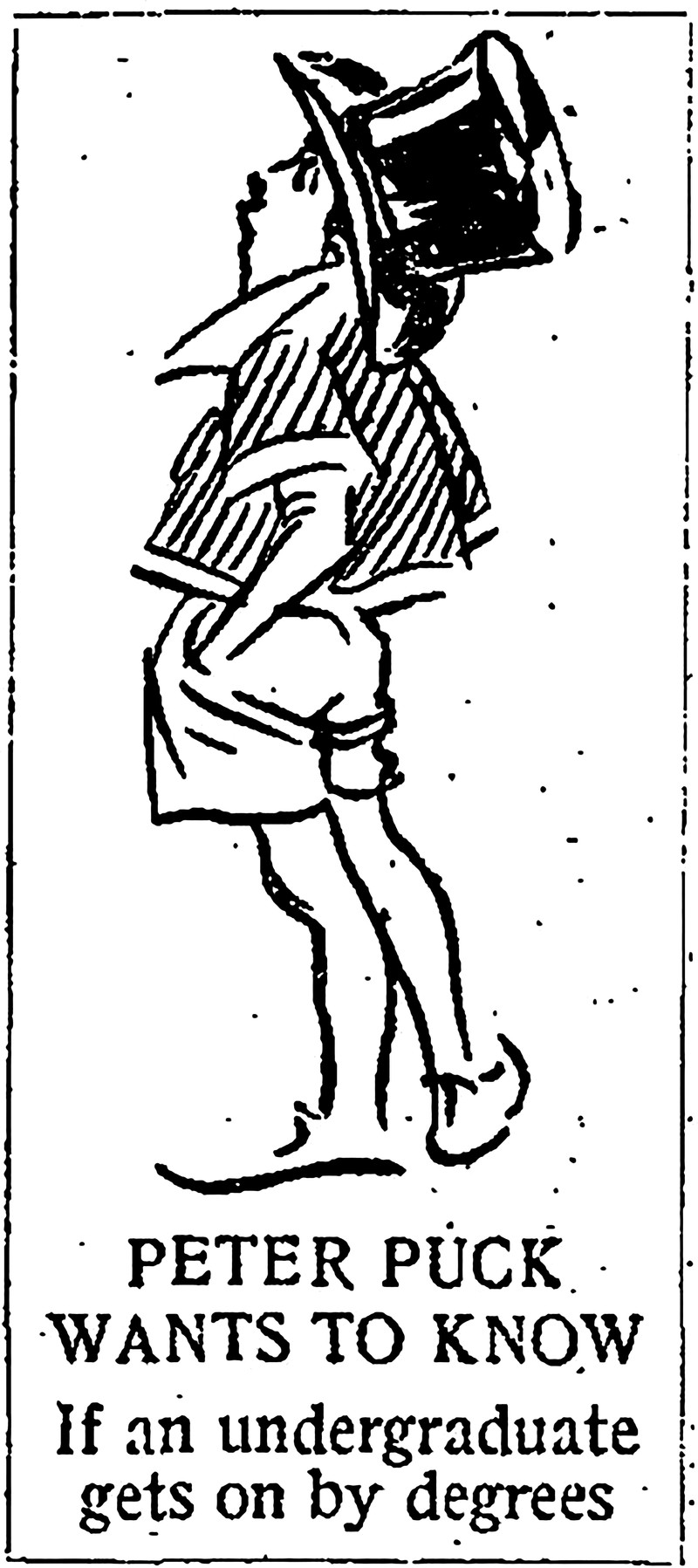
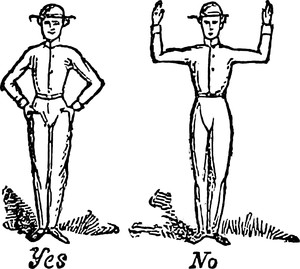
"Peter Puck wants to know if an undergraduate gets on by degrees." From The Children's Newspaper, 1920.
|
|
|
|
|
|
|
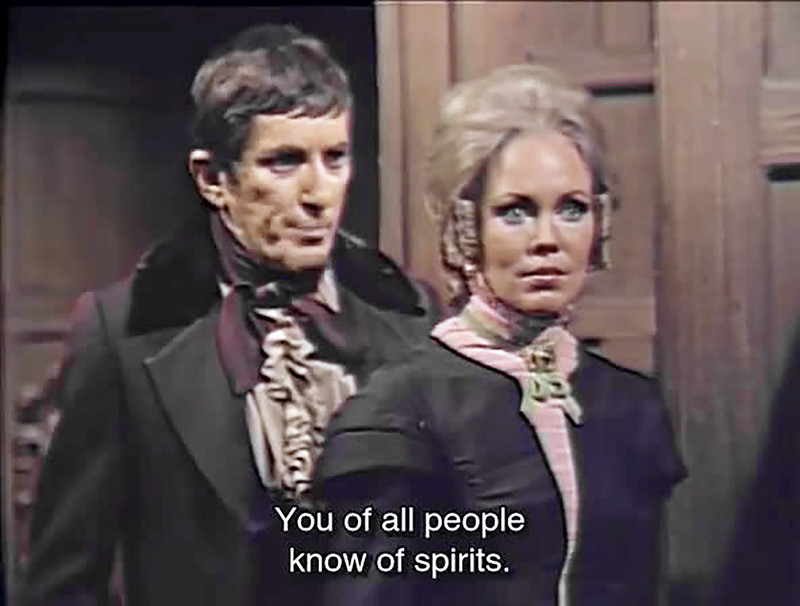
Stills from this episode of Grave Mood Rings, courtesy of Dare-g on Tumblr.
|
|
|
|
|
|
|
From our outpost at Spacey Panda Blog:
Is Your Life Based on a True Story?
It's time to raise the blinds, unlock the windows, and see what's poised out there in a mind-bending new way. Ready to re-fold the origami of reality? Let's do that together, in a few easy steps. I'm Prof. Oddfellow, of the School for the Revival of the Lost Mysteries of Antiquity. There's a preliminary question that's going to figure into what we'll accomplish here. But it's an uncomfortable one for sure. Is your life based on a true story? It sounds like a silly question. Yet have you ever experienced "imposter syndrome" and feared being exposed as incompetent, a fraud, or a liar? Like me, have you ever not liked the image you saw in a mirror? Or has a portrait not seemed, well, photorealistic? Have you ever felt aimless or purposeless? Have you ever made decisions based upon superstitions or delusions or information that later proved to be unreliable? Have you ever been labeled with words that don't fit you? Have you ever "lost the plot," and has that plot ever seemed invented or controlled by others who have made you superfluous? For it has been said that life is a fiction in which not all of us are significant characters. Whether or not we're the hero, we seek to make sense of experience by shaping coherent narratives, further proving that every life is a fiction and every story-making mind its imaginative author. We retell the stories differently according to our audiences and recollections and insights, and our stories become shaped by time, space, and understanding. At least we're in control of the narrative, right, and aren't merely listening to tales from an automatic brain? We're conscious entities and not zombies, right? Well, let's not see ourselves as zombies but rather put an entirely different spin on things — a spin that will help us to see what's outside our window in a whole new twilight.
We'll let our eyes travel over the landscape, past that towering gothic cathedral that surely couldn't have been constructed in the 1300s — I mean, what are we to make of that incomprehensible accomplishment? Was it put there by aliens, or, as so many are positing, is it a remnant of a more highly-civilized and advanced culture whose entire history has been suppressed or obliterated? We daren't dwell at that cathedral, lest a rabbit hole of mysteries keep us investigating forever, though we might mention it again in a bit, alongside those marble columned, massive-domed, Greek and Roman temples that surely can't have been built as government buildings in the 1800s, when there were just donkey carts on dirt roads.
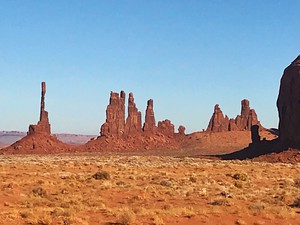
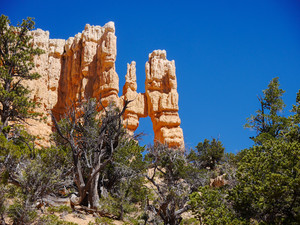
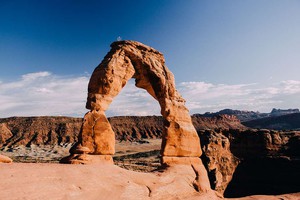
No, let's keep traveling all the way to the deserts of Utah where lie such wonders as Monument Valley and Arches National Park and Bryce Canyon, with mountain peaks looking for all the world more like petrified architecture than natural formations. Are these areas the remains of former cities, their citadels forming the monuments of Monument Valley, their bridges and spires forming the skylines of Arches National Park and Bryce Canyon? Well, in these confusing times, so often the best way to penetrate the fogs of perplexity, disinformation, and illusion is to flip any perspective backwards and upside down. The idea is to invert a riddle to discover the solution, to rearrange a lie to find a truth, and to consider a radically different vantage point so as to see with fresh eyes.
Let's do that even with the canyons of Utah, whose architectural outcroppings would ordinarily suggest lost cities of a forgotten past — such loss being a depressing concept for those of us who shiver at the thought of entire cultures being utterly forgotten. Let's flip the timeline itself, which we can do since even Big Science agrees with the wisdom traditions that linear time is an illusion. Instead of seeing the rocky spires and arches as lost to the so-called past, let's see them as emerging from the so-called future, as if a giant sculptor were forming a city of clay, and we're witnessing the partially-formed lumps that are yet to be intricately carved into towers, aqueducts, and pantheons. Instead of experiencing a profound loss, we can thrill to the excitement of finding a future reality or higher dimension emerging into ours. Same with those inexplicably massive marble monuments they're calling capitol buildings and those cathedrals they're calling churches — yes, they could easily be understood as artifacts of a civilization wiped from the historical record, but they might also be bits of the future poking through holes in the fabric of space-time.
Now let's carry this concept a bit further and wonder whether we ourselves might also be relics popping into this plane of existence from the future. That might mean that our lives are fictional merely because no past story can tell our biography, since that's looking the wrong direction. What if we don't belong to the historical record but rather are the stuff of prophecy? Let only soothsayers speak of us! Let others throw the dice and shuffle the Tarot cards in wonderment over our next move. Let those with second sight see us with their third eyes for our true selves. Let the crystal gazers commune with us, and let the others consider us ghosts. Those who are intrigued to understand us may toss the runes or fine-tune their Tesla spirit radios. If they won't bother to see our auras with a Kirlian camera, were they ever going to see us in the first place? Let us answer the earnest swing of a pendulum or the sincere intonation of an invocation, but otherwise leave them in their befogged slumbers. Compassionate as we may be for this waypoint in the timeline's past, we who follow the path of service-to-others are but visitors who don't truly belong amongst those caught up in service-to-self bewilderment. We the people of the future, let us observe and assist only when directly asked, but even then with no attachment to any outcome.
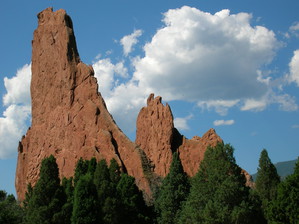
Coming to you via my crystal ball from Colorado's Garden of the Gods — a spectacle of anomalies you'll now see in a whole new way — I've been Prof. Oddfellow. See me in glorious monochrome in the long-running series Prof. Oddfellow's Penetralia and Grave Mood Rings, on cable stations across the United States, Roku, Youtube, and MysteryArts.com.Photo credits: Kirk K., Anna Irene, Cindy
|
|
|
|
|
|
|
A Refutation of the "Say Yes and Never Do It" Philosophy
Film director Mel Brooks shared his survival trick in his memoir: "say yes and never do it." For example, when a studio executive told him to fire Gene Wilder, Brooks answered that Wilder would never be seen again, all the while keeping him as the star of the film. Brooks smiled and said "yes" to all demands, then completely ignored them. Brooks' logic was that trying to explain or convince another of your perspective rarely works, so it's easier to seem agreeable and do what one will anyway. Yet aren't there at least two problems with Brooks' advice?
Brooks was right that explaining isn't the thing to do. Even so, as a Hollywood elite, it's unlikely that Brooks was ever truly anyone's flunky, and so he could get away with never following orders from higher up. That's the problem with celebrity advice: it comes from places of privilege and is addressed to people in general as if they, too, could apply it and get away with it. The rules simply aren't the same in different social spheres. Still, there might be something to learn from the first half of Brooks' survival trick.
What if one says "yes" to any demand, no matter how disagreeable, and then seeks to work with those demands as challenges to make an even better product? It may feel impossible to imagine Brooks' Young Frankenstein without Gene Wilder, but that doesn't mean that another actor couldn't have offered a more brilliant performance. Consider director Lars von Trier's interesting documentary The Five Obstructions, in which he challenges another filmmaker to remake a favorite movie five times, each according to a different "obstruction" or obstacle. One obstruction was to film in Cuba but to use no set. Others were to never show a main character, to film in the worst place in the world but not show that place on screen, and to present everything as a cartoon. The premise, of course, was that arbitrarily imposed obstacles would stimulate better art. We might relate this concept to the wisdom teaching that life is full of challenges and suffering precisely because we don't spiritually evolve without them. Laboratory rats who are placed in utopian environments with plentiful food and no predators live shorter lives, presumably bored to death by lack of stimulation. So the question is, what if we say "yes" to a demand we don't like and then follow through anyway, dropping our egos and our insistence that our preconceived notions can be the only way. It's not that some executive behind a desk should necessarily dictate how art is made — it's more about an artist embracing even misguided suggestions as challenges to be embraced so as to elevate the art. On a personal note, though I'm now intrigued by the power of saying "no" to every question (addressed in this article), I've very many times said "yes" to requests that I'd otherwise never pursue, just because such requests would take my art down avenues that would never have otherwise been accessed. My band Neons Gone Mad has been asked to use our Tesla spirit radio and haunted grandfather clockwork to transmogrify all sorts of famous songs that we're not especially fond of, but having said "yes" to those suggestions, some amazing recordings transpired. For our horror comedy series Grave Mood Rings, we've followed through on viewer and co-writer suggestions that we were personally quite skeptical of, but those ideas ended up manifesting some of our favorite episodes to date. In the face of such personal experience as well as von Trier's Five Obstructions documentary, the advice to "say yes and never do it" rings of myopic, elitist egomania.
|
|
|
|
|
|
|
Possibly Supernatural, Surely Today's Most Inspiring Artist
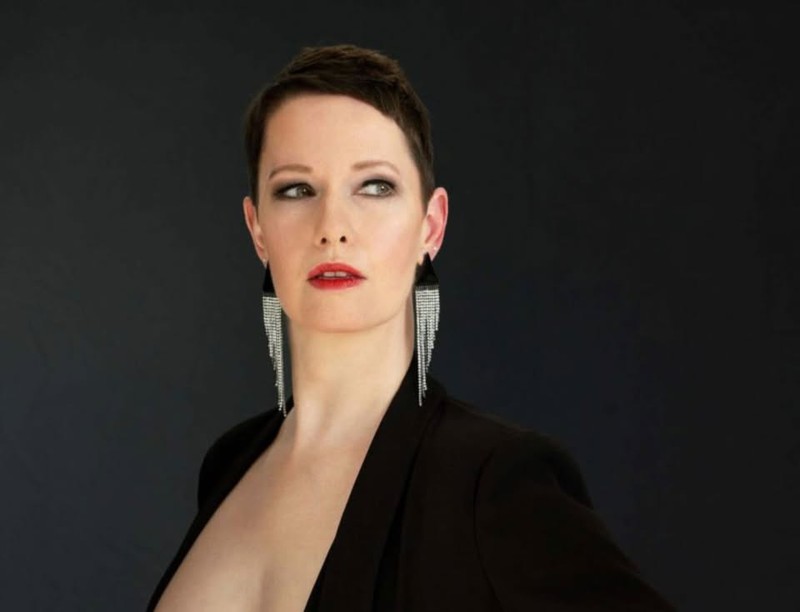
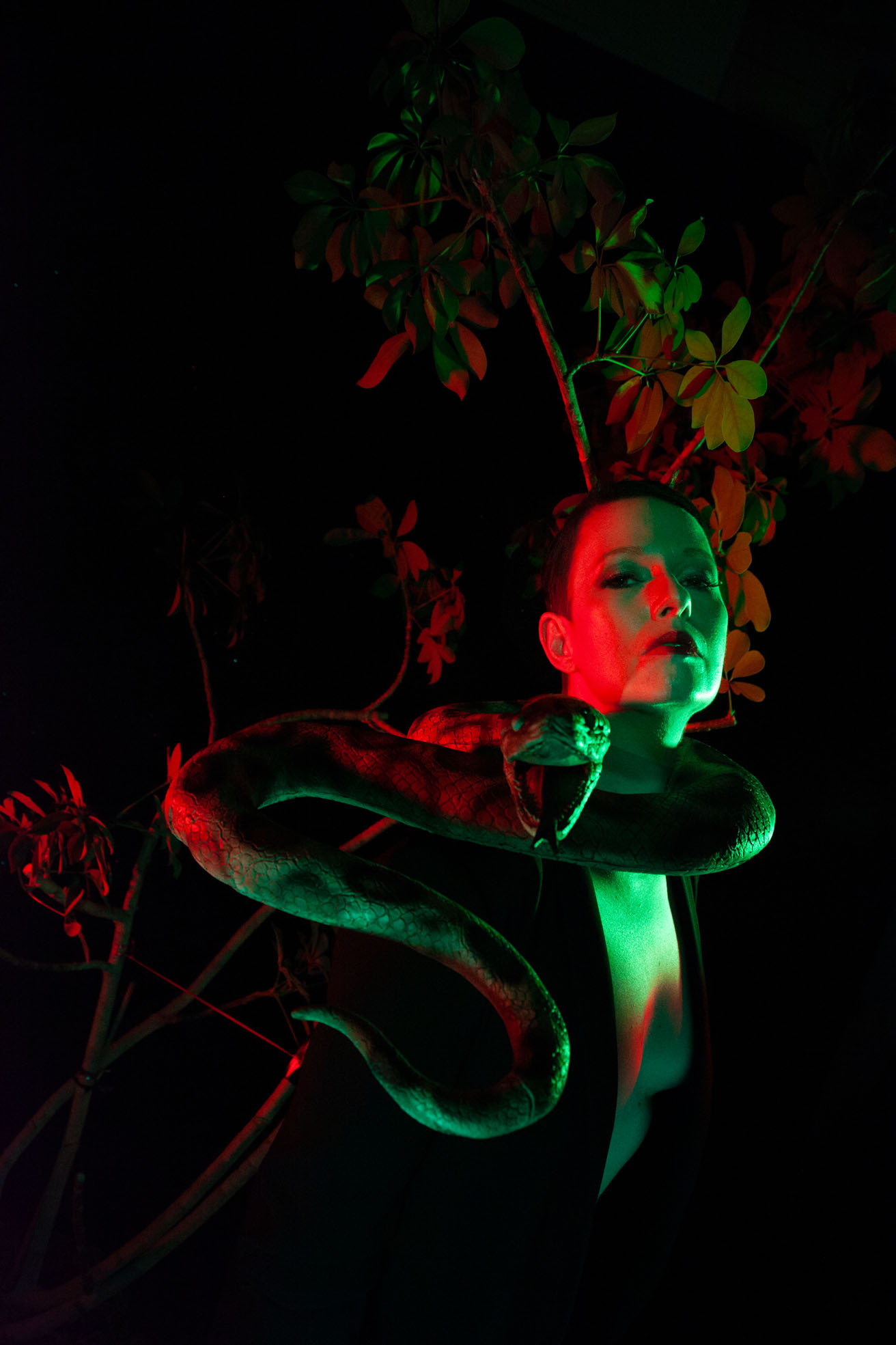
“Vampire photographer”? “Archaeologist of the soul”? Some artists figuratively “walk through the valley of the shadow of death.” Nadine Dinter of Berlin very literally does, and she has the pictures to prove it. Outside of her day job, her work as a necropolis photographer, recording artist, perfumer, and model invariably touches upon love and death, beauty and decay, doom and elation, mourning and resurrection. You’ve heard of human energy fields, but Nadine seeks to capture the auras of statues and the uncanny glamor of hidden doorways and atmospheric pathways in the gothic world she navigates. Then, her music and her perfume ensure a richly sensual experience of her visual work. These are just some of the reasons Nadine Dinter is being called the most inspiring artist working today. But let’s dive deeper into her world.
 In the process of sharing her creativity online and in art galleries, Nadine teaches, too, by helping her audience to understand how a photographer sees the world and how the composition of a shot can utterly transform the viewer’s reaction to a scene. She even offers videos of locations, to give a sense of the greater environment before showing the still photograph she ultimately captured. More context is offered in the captions, including historical backgrounds as well as notes on easily missed details, symbolism, and Nadine’s own emotional experience of each place. The viewer is invited to see through Nadine’s eyes, even while learning to discern with more sensitivity.
As an independent creator, Nadine has her hands in a lot of pots, or more like one big cauldron that encompasses the artistic witchery of her many-faceted world. Let’s seek to better understand how all the elements began to coalesce:
1. Nadine began traveling to Paris and Madrid to explore sculpture photography in the late 1990s. By 2024, that genre had merged with model portraiture into a "TransMutation" series. Her photography of cemetery statuary is frequently exhibited in galleries such as this one.
2. Last year, to add an acoustic dimension to her work, she became a gothic recording artist called d1ntr, collaborating with the post-punk band Hex Formes. Her lyrics and vocals are rooted in the emotions that spring from life’s transformations, addressing her holistic approach to turning pain into beauty, darkness into light.
3. This year, to capture the moods and smells of the statuary gardens and cemeteries she visits, so as to bring more dimensions to the sensual experience of her photography, she crafted a signature scent, “TransMutations,” through the Warsaw perfume lab Mo61.
4. As a muse to other artists, she has inspired songs like “Vampyre Everything” by Scott Baker Graham and imagery by Boris Eldagsen.
5. As a supporter of fellow artists, she began conducting interviews in 2019 (such as this one with Paolo Ventura).
6. As a collector of exotic jewelry selected and collected from all over the world, she makes guest appearances (as in this episode of Grave Mood Rings). Most of her rings feature pentagrams, scarabs and snakes, tied to her fascination with ancient Egypt.
7. Simultaneously, as a model, Nadine has been compared to Isabella Rossellini and has posed for photographers like Greg Gorman, George Holz, Thomas Karsten, Martin Eder, Boris Eldagsen, Catrine Val, Just Loomis, Katja Ruge, Steven Kohlstock, Gerhard Kassner, Felix Lammers and others. Eder's portrait was recently used for the album cover "Tales of Immortality." This portrait by fellow cemetery photographer and darkwave scene promoter DominiQ.D is a personal favorite of mine.
Even while juggling so very many projects, Nadine is friendly, accessible, outgoing, and proactively helpful to others. She truly lives by her motto, “consult, communicate, connect,” as I learned firsthand when she first reached out to me via her Instagram to express supportiveness of my own indie endeavors.
Photo credits: © Greg Gorman (top portrait), Boris Eldagsen (snake portrait), Felix Lammers (graffiti portrait). By permission.
—Hailed by the art world as the most unusual scholar working today, Craig Conley fled academia to author Weiser Books' Magic Words: A Dictionary, HarperCollins' One-Letter Words: A Dictionary, and The Young Wizard's Hexopedia. Even more esoteric publications include Books of the Dead, Magic Archetypes, The Care and Feeding of a Spirit Board, Seance Parlor Feng Shui, How to Hoodoo Hack a Yearbook, Heirs to the Queen of Hearts: Tracing Magical Genealogy, Astrogalomancy, The One-Minute Mystic, and Divination by Punctuation. His work has been profiled in the New York Post, the New York Times, The Wall Street Journal, The Chicago Tribune, National Public Radio, The Dallas Morning News, Publishers Weekly, The Associated Press, and dozens of others.
|
Page 20 of 178
> Older Entries...
Original Content Copyright © 2026 by Craig Conley. All rights reserved.
|