Go Out in a Blaze of Glory
|
|
|
 |
|
|
We're honored that Vegas magician Creed talked up our Field Guide to Identifying Unicorns by Sound and our Magic Words: A Dictionary. We actually once attended a secret fire ceremony deep in the Nevada desert with Creed and, no kidding, we witnessed him reach out and seize one of the zillion stars in the Milky Way. (You sure can see a stunning number of stars from way beyond the lights of Vegas. Surely the Universe won't begrudge Creed's snatching one. It was a moment we'll never forget.)
|
|
|
|
|
|
|
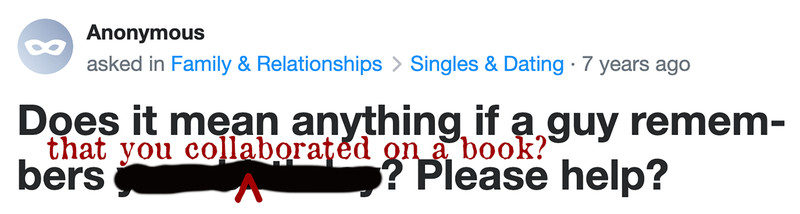
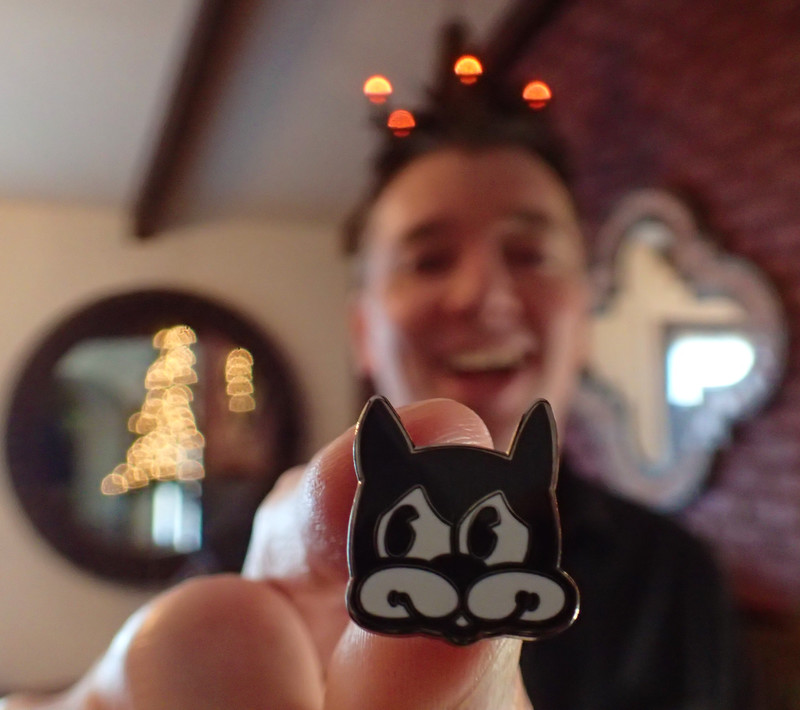
In the style of Yahoo!answers, "Does it mean anything if a guy remembers that you collaborated on a book?" Yes—it means a lot! We were delighted to receive a Jinx mascot pin in the mail, from a friend with whom we wrote a guide to the most remarkable magazine in stage magic's history: The JINX Companion. Thanks for making our day, Gordon!
|
|
|
|
|
|
|
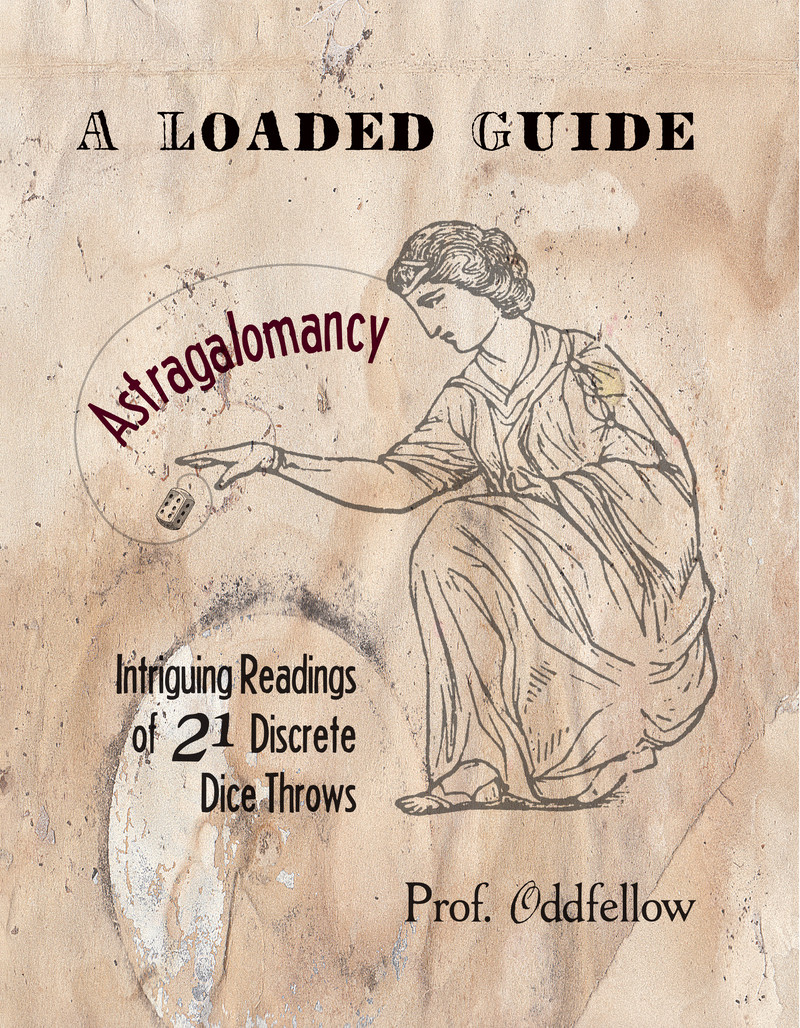
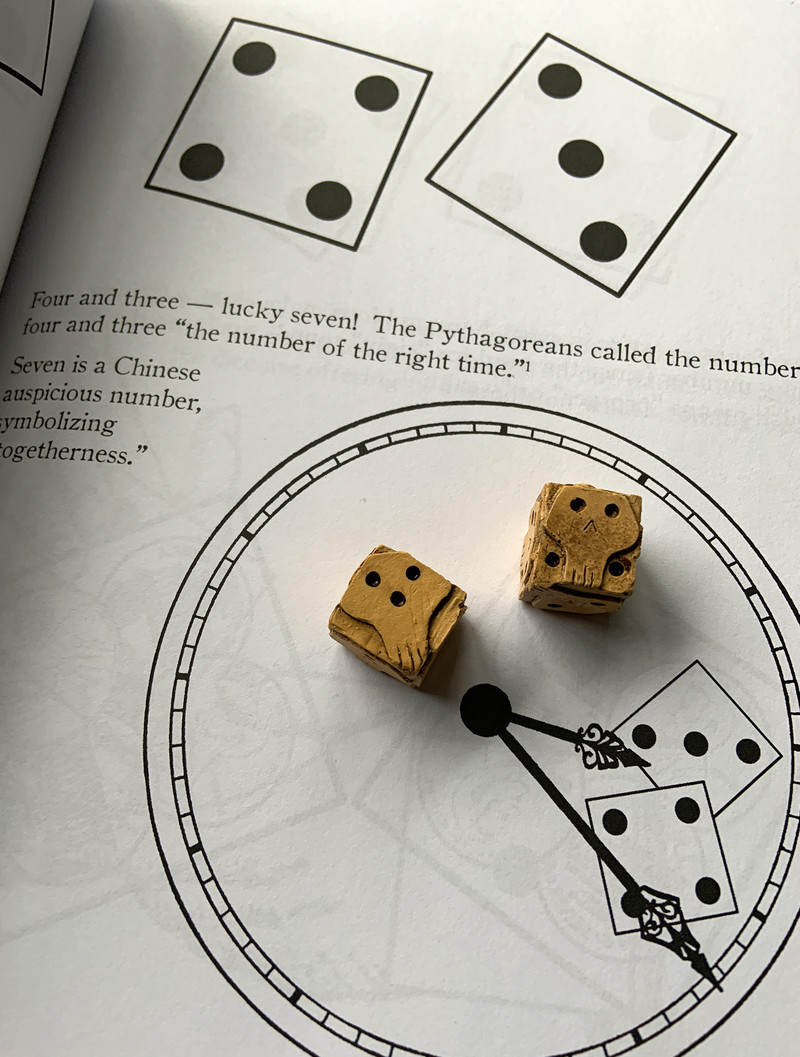
"I enjoyed 'Astragalomancy' very much. To me, it's a classic template for approaching divination. Craig Conley chose a tool (a pair of dice) that's easy to obtain and use, and he devised an elegantly simple system for employing it to precipitate intuitive insights. This system is informed by Mr. Conley's vast historical and metaphysical knowledge base, his epistemological point of view, and his expectations for the process, but as with every occult methodology properly applied, it will change in the hands of each individual practitioner. Anyone should be able to use the tool and the system to access their own intuitive faculties -- provided they are willing to relax and trust those faculties. To 'divine successfully is to transcend conscious thought and arrive at a personally relevant interpretations. ' Astragalomancy' illustrates, both figuratively and literally, how that can be done." —Natasha
|
|
|
|
|
|
|
We're honored that Bobby Bræger (screenwriter, genealogist, lost film hunter, and hauntologist on the cheap) considers the fractued mirror of our Abecedarian blog on Tumblr to be "one of five or six vital blogs" on that medium.
|
|
|
|
|
|
|
We're honored that upon abandoning his Tumblr presence, Dr. John Pistelli, the novelist and professor in Minneapolis, called our Tumblr mirror of the Abecedarian weblog his favorite:
My favorite follow remains @danskjavlarna, with his magical or even magickal ongoing image archive (not to mention his private generosity).
|
|
|
|
|
|
|
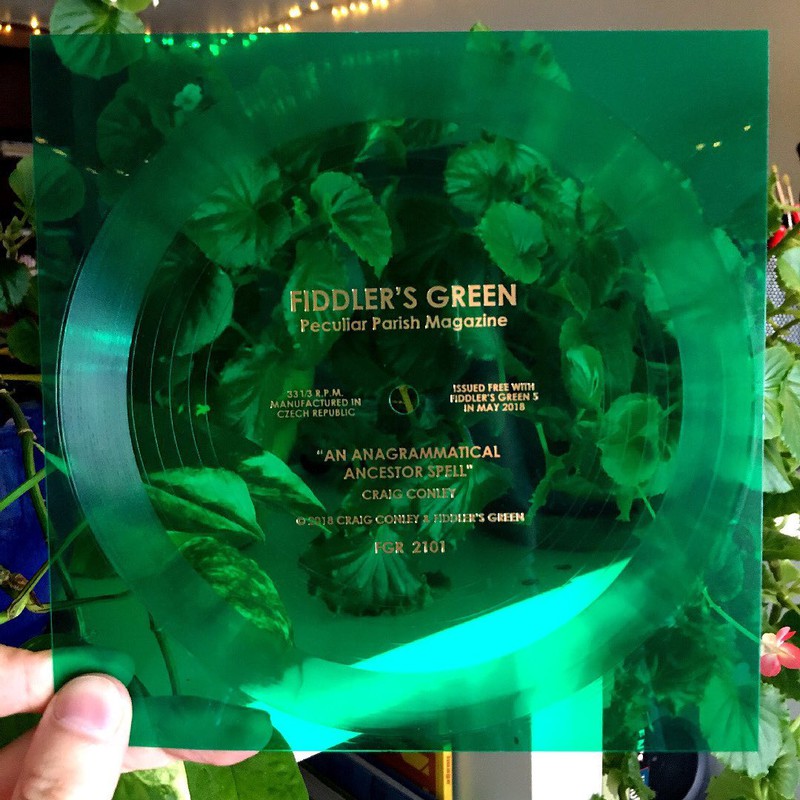
We're delighted that Clint of Fiddler's Green zine said over on Instagram that he smiles every time he sees our video about strange anagrams from alphabet dice. We're also delighted that the editor of Yogurt Culture Zine, Brian Kelly Denton, called our video "wholesome."
|
|
|
|
|
|
|
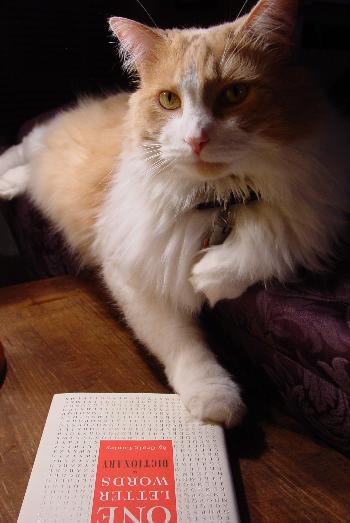
I never gave much thought to one-letter words until I discovered they have their own dictionary. I bought a copy of the dictionary and read in its preface the claim that despite there being only 26 letters in the English alphabet, they represent more than 1,000 units of meaning.
One-letter words are important building blocks of communication. Learning them is easy and so is spelling them, but you shouldn’t underestimate their value. Many of the most important English words are small, and these little words are relatively few in number. But they occur very often in our speech, writing, and reading. A mere ten words account for 25 percent of all the words we use, and all of them have only one syllable. Fifty words account for 50 percent of all the words in our speech, and they also have only one syllable.
Furthermore, two of the top six words we use in speech and writing have only a single letter: a and I. A is the third most frequently occurring word in the English language. I is the sixth most common.
One of our favorites is X, which claims more than seventy definitions on its own. X marks the spot where treasure is buried on a pirate’s map. It’s a hobo symbol meaning handouts are available. X tells you where to sign your name on a contract or will, and it’s also an illiterate person’s signature. X indicates a choice on a ballot, and a mysterious person may be named Madame X. It also marks an incorrect answer on a test, and is the rating for an adult movie. This list could go on for quite a while, but I’ll stop with the designation of a kiss at the end of a love letter.
Craig Conley, the author of the dictionary of one-letter words, confesses that he wrote the first entry in his dictionary in a fit of procrastination while a graduate student spending many hours a day in the library working on his thesis. He was intrigued by all the enormous dictionaries on the shelves, and on a whim he started looking up entries for the 26 letters of the alphabet. He jotted down a variety of tidbits, and those notes became the basis for his dictionary.
For example, remember the expression, “Mind your p’s and q’s” as a comment on behavior. As a English teacher I am familiar with Hawthorne’s story entitled “The Scarlet Letter,” about a woman condemned to wear an A (for the crime of adultery) embroidered on her breast. Here’s his description in the first chapter: “On the breast of her gown, in red cloth, surrounded with elaborate embroidery and flourishes of gold thread, appeared the letter A.”
The letter Q has a special meaning in the field of Biblical criticism, when it refers to material common to the Gospels of Matthew and Luke that is not derived from the Gospel of Mark. R is used in the expression “the three R’s (reading, writing, and arithmetic).” It also designates a movie rating prohibiting attendance by anyone under seventeen not accompanied by a parent or guardian.
In school the letter S is used as a grade rating a student’s performance as satisfactory. T can be used to describe a way of doing something perfectly: “We could manage this matter to a T.” T-bone refers to a thick loin steak containing a T-shaped bone. Until 1827, convicted thieves in England were often branded on the thumb with a T.
The term U-boat referred to a military submarine. V stands for the Roman numeral for five; with a line over it, it signifies five thousand. Z is almost universally recognized as a symbol for sleep, as in “It’s going to be a long night’s vigil, so if you want to catch some z’s work it out with your buddies.”
Clearly, one-letter words are numerous and important enough to deserve their own dictionary. You’ll find Craig Conley’s One-Letter Words: A Dictionary on sale at Amazon.
|
|
|
|
|
|
|
"Found the work of Professor Oddfellow recently and I am just amazed by every part of it." —Vitor Augusto, over on Tumblr
|
|
|
|
|
|
|
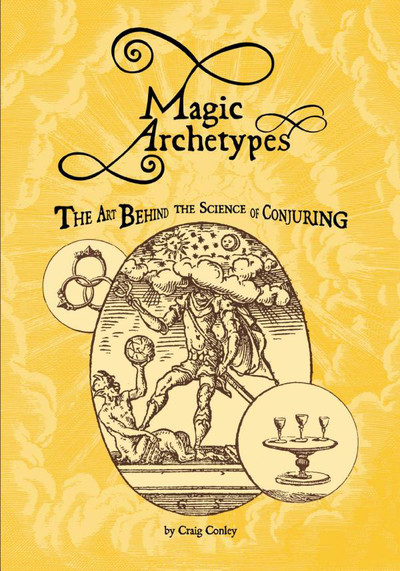
FIVE STARS. Craig Conley is a genius. He draws from the right sources, which give his books a certain richness and beauty. This book itself is a great source for any sorcerer or enthusiasts of the magical arts. —Joseph Ledoux
About the book:
Stage illusionists and amateur conjurors play out a mythic story, told through the deep symbolism underlying their age-old magic tricks and tools: the top hat, cups and balls, escape trunk, linking rings, white dove and rabbit, wand, handcuffs, restored ropes and papers, multiplying coins, etc. This book explores how magical props, as symbols, point beyond themselves to the larger mystery.
Magic Archetypes is a picto-poetic history of magic predating Robert Houdin's Scientific School of conjuring, recalling the ancient Mystery School traditions. Told by artists from the 700s - 1600s who were influenced by the iconography of even earlier ages, this history is an initiation into the deeper aspects of magic: the meaning in the art beyond clever trickery, the archetypes at play since time immemorial. A fascinating, enlightening companion for professional illusionists, amateur conjurors, and art lovers intrigued by the power of archetypes.
|
|
|
|
|
|
|
"I've only just become aware of your work and I'm both grateful and in awe. I'm especially smitten with the Hexopedia. As someone who conjures things for a living, I feel as though I've stumbled onto a deep well of utility and aesthetics I'll be able to draw and learn from for years to come."
|
Page 8 of 22
> Older Entries...
Original Content Copyright © 2026 by Craig Conley. All rights reserved.
|