|
|
 |
|
|
unearths some literary gems.
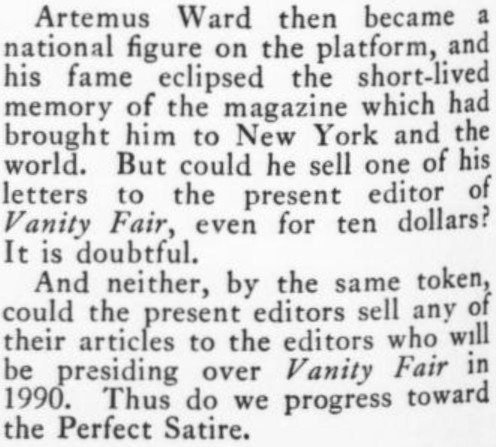
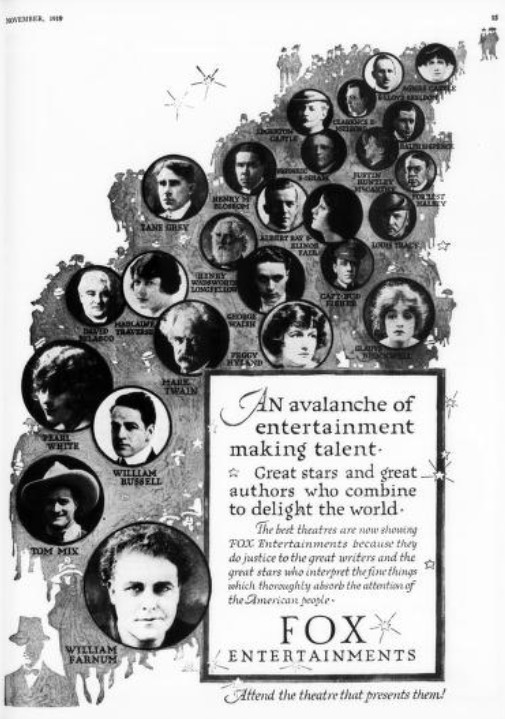
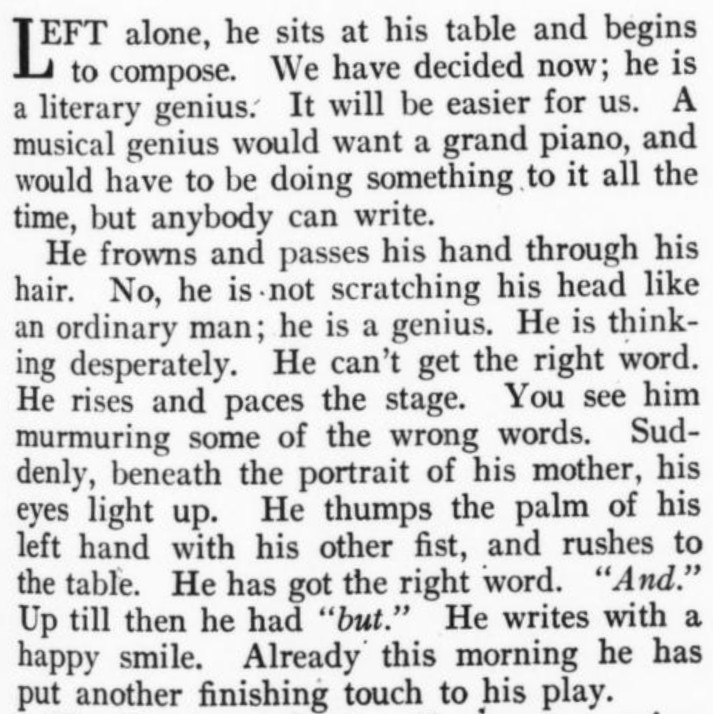
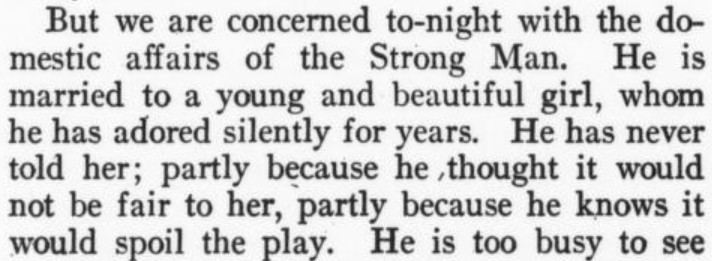
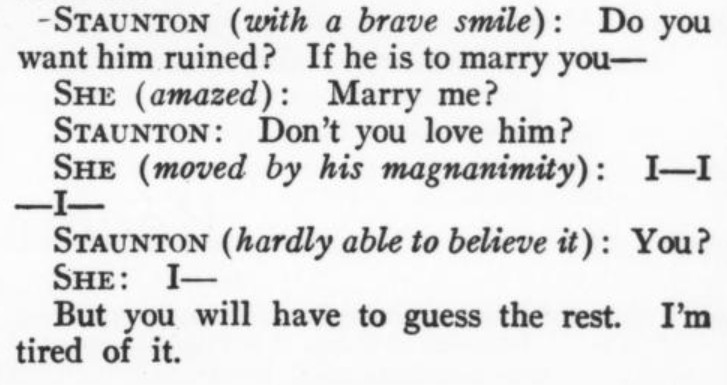
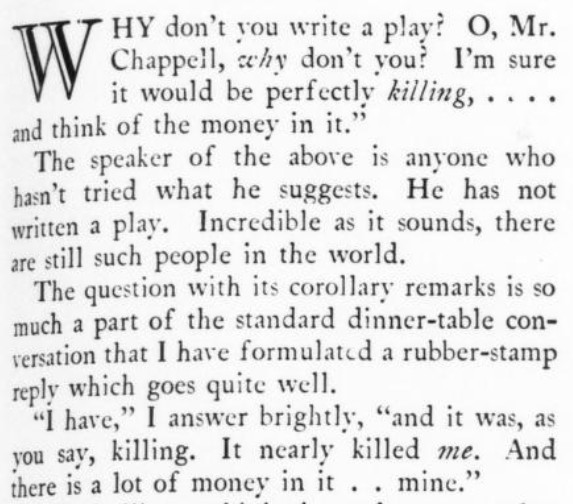
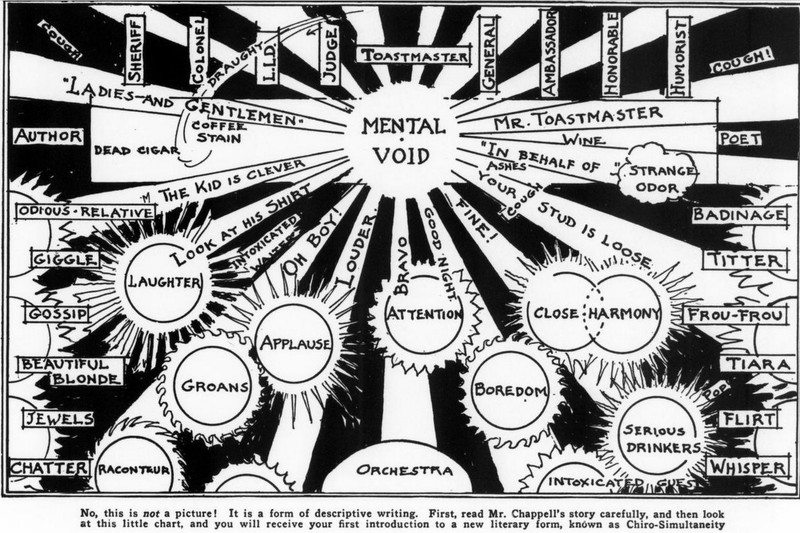
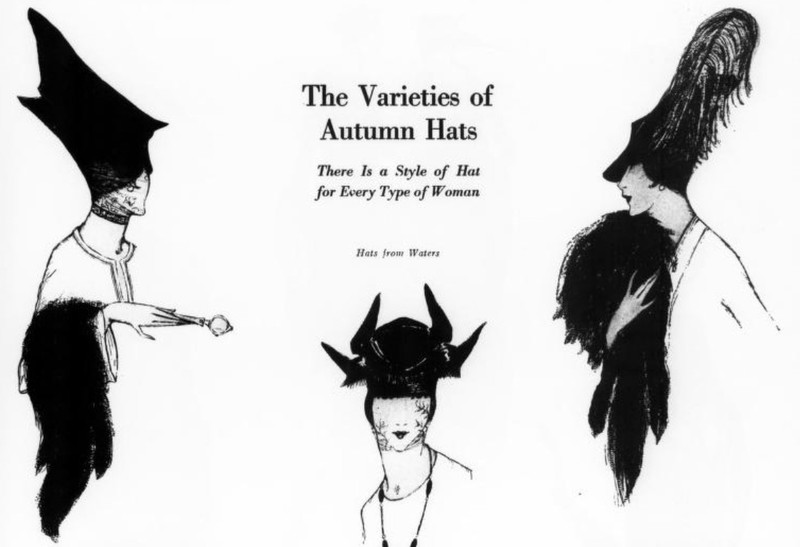
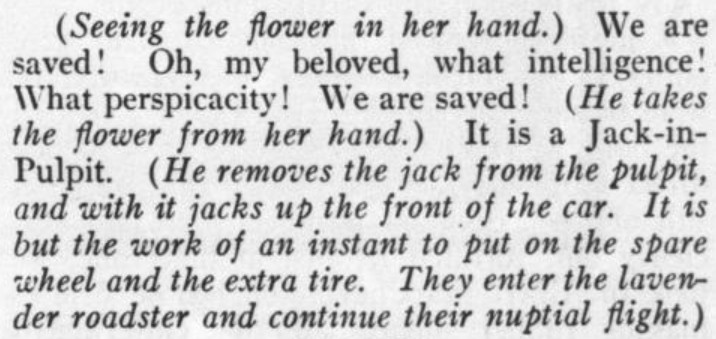
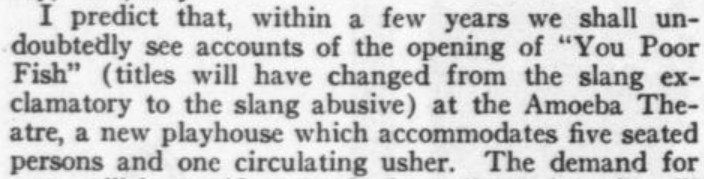
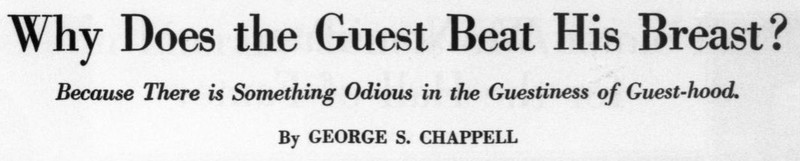
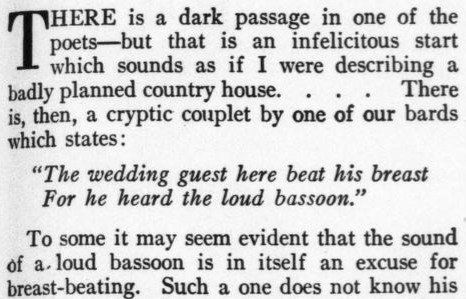
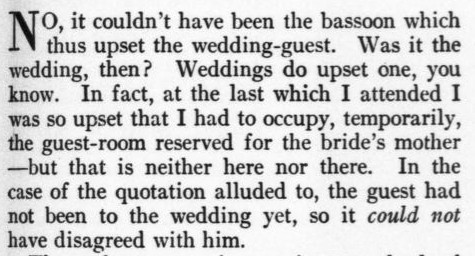
From Vanity Fair, Nov.-Dec. 1919:
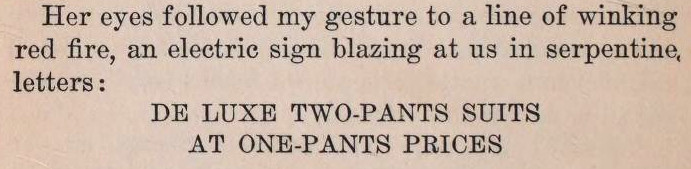
My notes on some of the attachments:
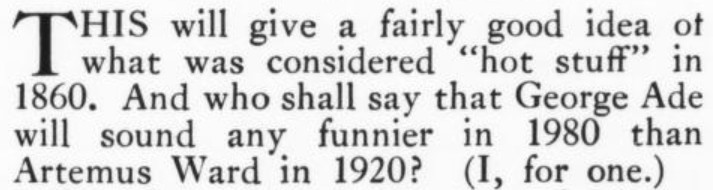
1. I'm including the reference to VF in 1990 because (a) it's one of those future forecasts that falls within our own lifetimes, and (b) the 1919 writer could not have known how lucky he was to pick a distant-future date when VF actually existed, given that there was no VF between 1937 and 1982. Incidentally, they're taking a liberty in linking the ca. 1860 VF--the Artemus Ward one--to the 1913-onward one, as (unlike the 1913-1936 vis-a-vis the 1983- one) they don't seem to have been related apart from exploiting the same name. Even aside from that, there was no U.S. magazine at all called VF for most of the time between 1863 and 1913, so presuming that the then-current (and only six-year-old) VF would last at least until 1990 was quite optimistic--and, continuitywise, incorrect.
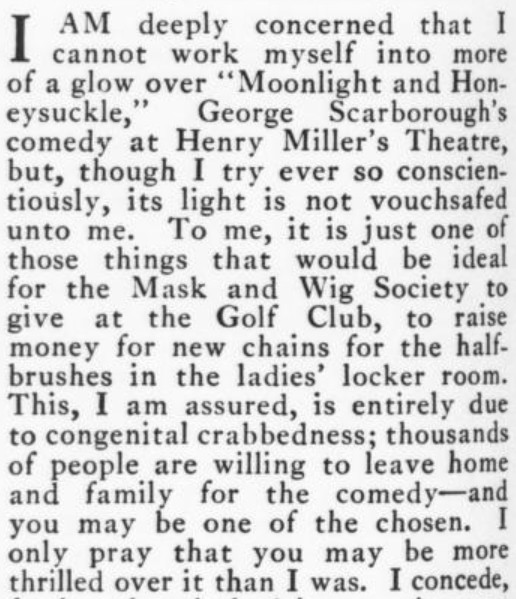
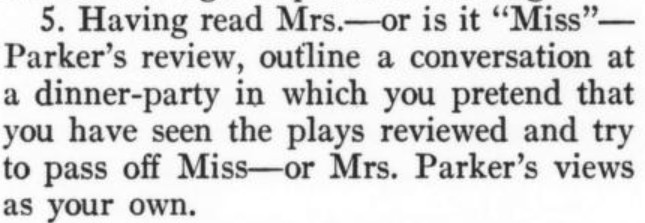
2. Since I know you keep track of someone else's honeysuckle, I thought I should include this evidence from a Dorothy Parker column that the play called Moonlight and Honeysuckle was *not* for her. In other words, it was someone else's Moonlight and Honeysuckle--in fact, as she attests, many other people's Moonlight and Honeysuckle.
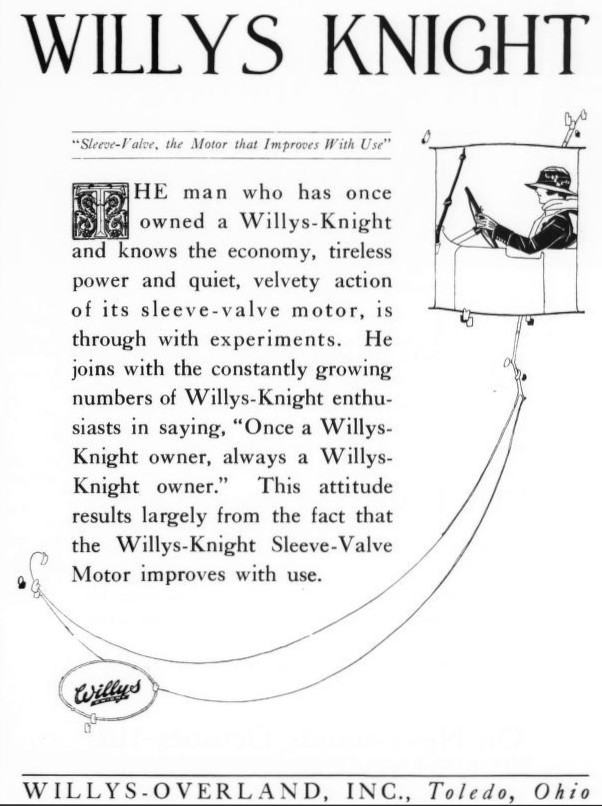
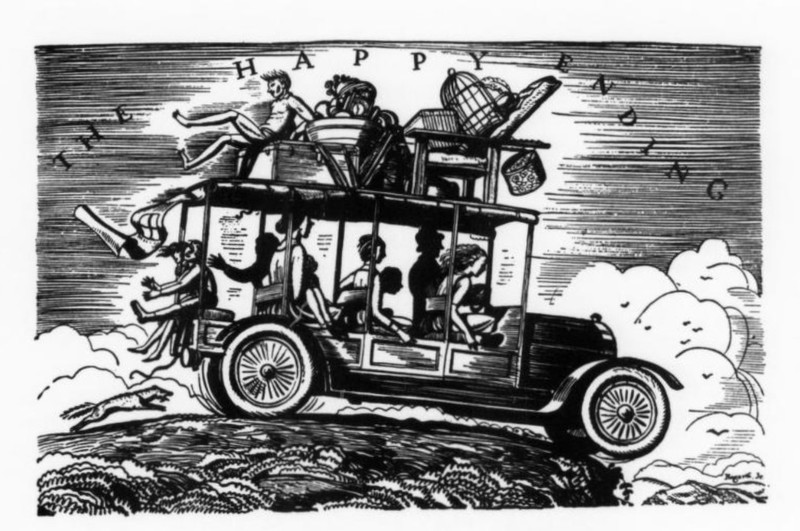
3. I guess the idea in the Willys Knight (N.B. silly name for a car) illustration is that the car gives the impression of floating above the ground, so smooth is the ride? The ad makes no mention of that conceit, nor does it seem to be represented in the other WK ads I've seen. And I'm guessing the "Overland" in the company name is just a fun coincidence.
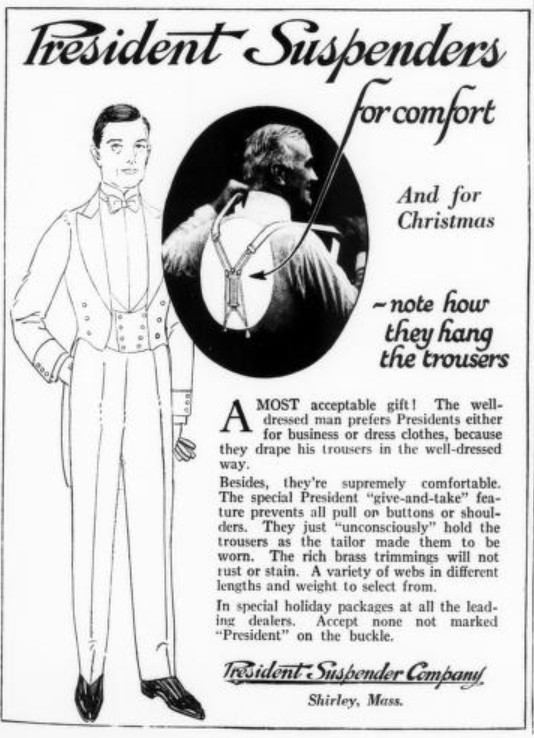
4. I have a lot to say about the President Suspenders ad. What first attracted my interest was the letter F that doubles as an arrow. Then, when I began reading the fine print, of course I noted the understated hype of "a most acceptable gift!" But the pièce de résistance, imo, is the claim that the suspenders do their job "unconsciously."
[Bonus: A couple called Mrs. and Mr. Poldoodle]
|
|
|
|
|
|
|
unearths some literary gems.
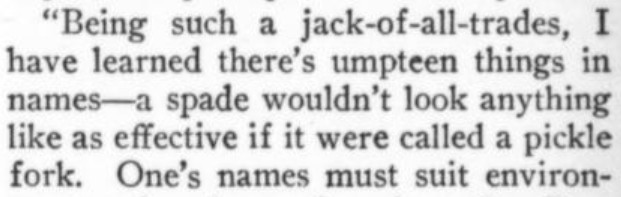
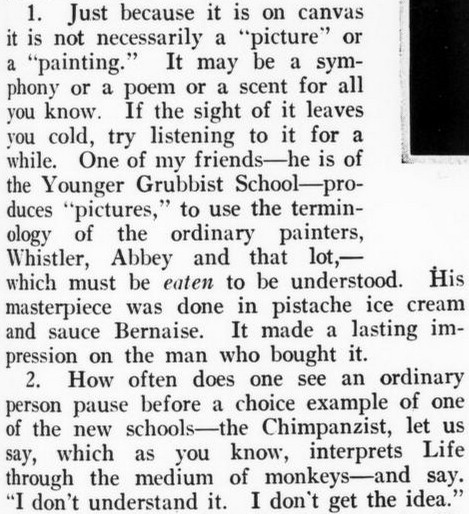
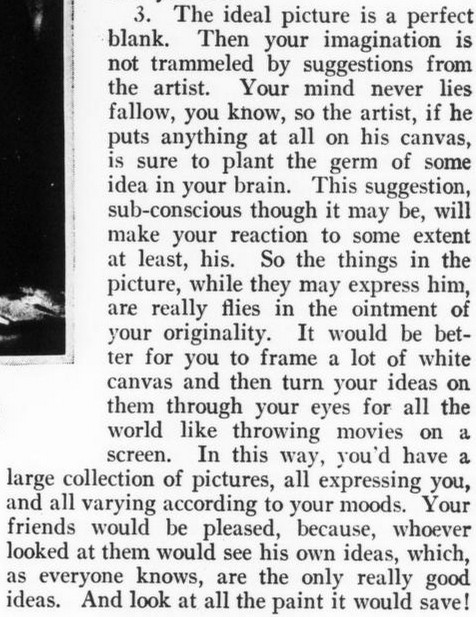
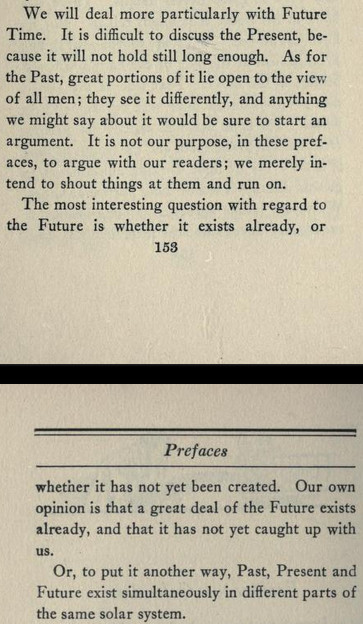
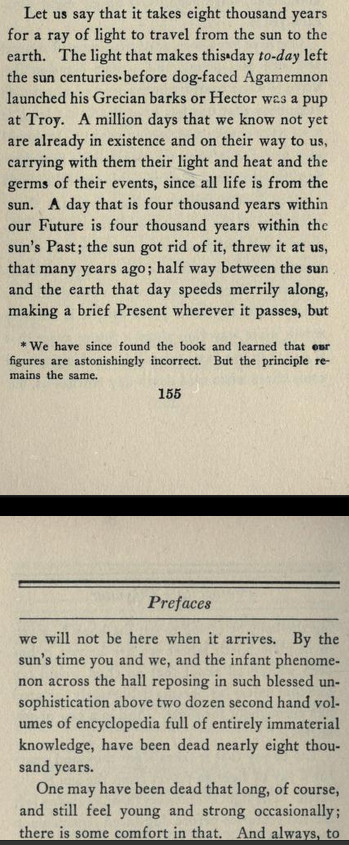
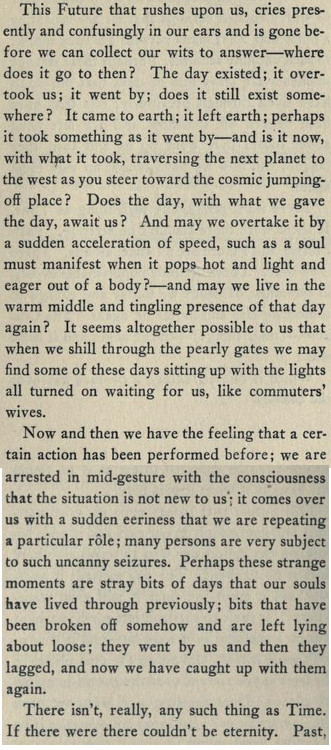
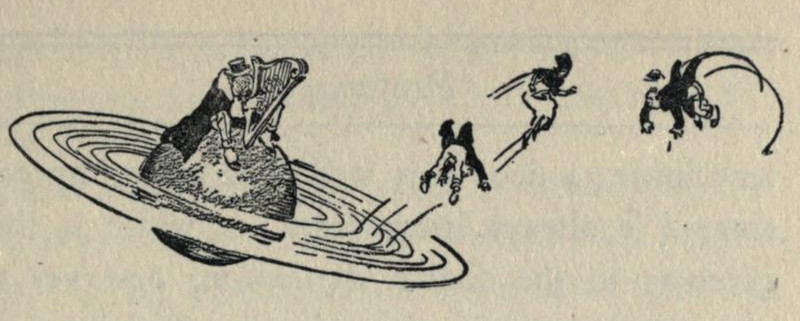
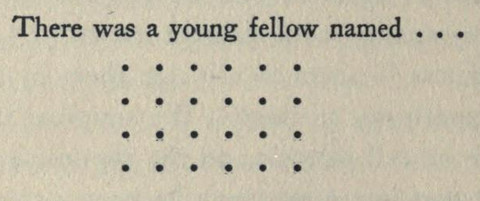
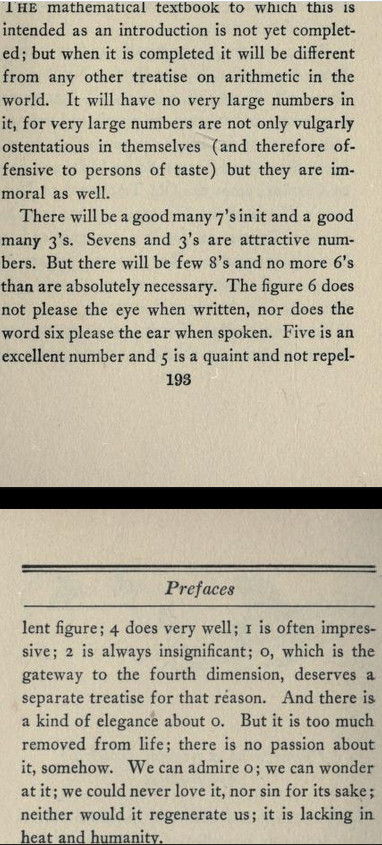
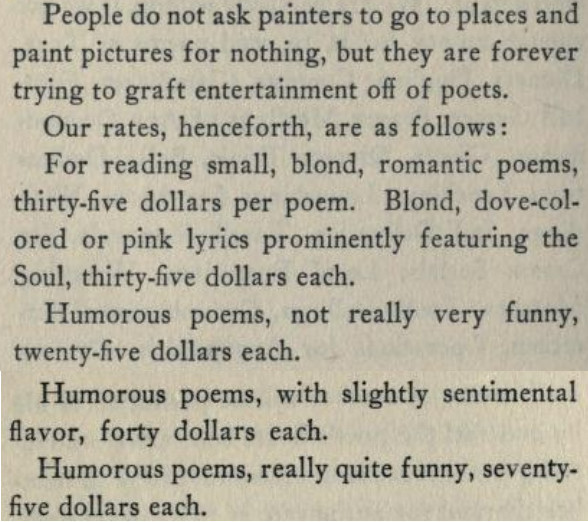
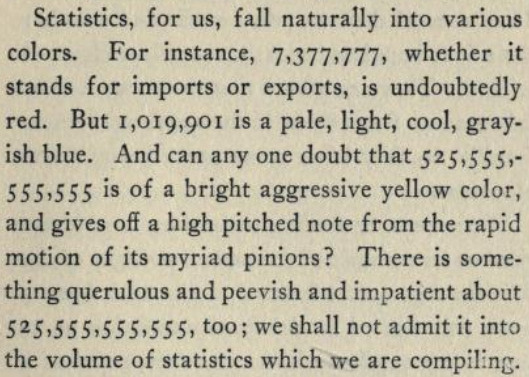
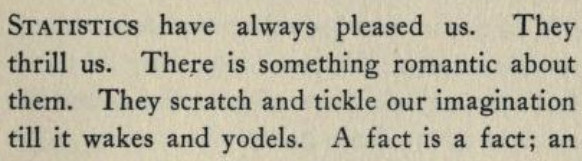
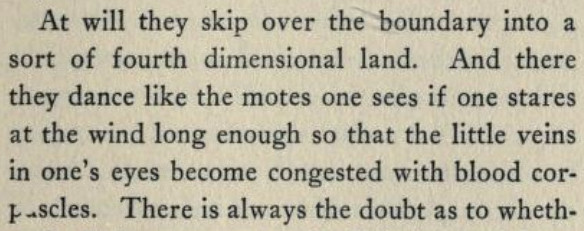
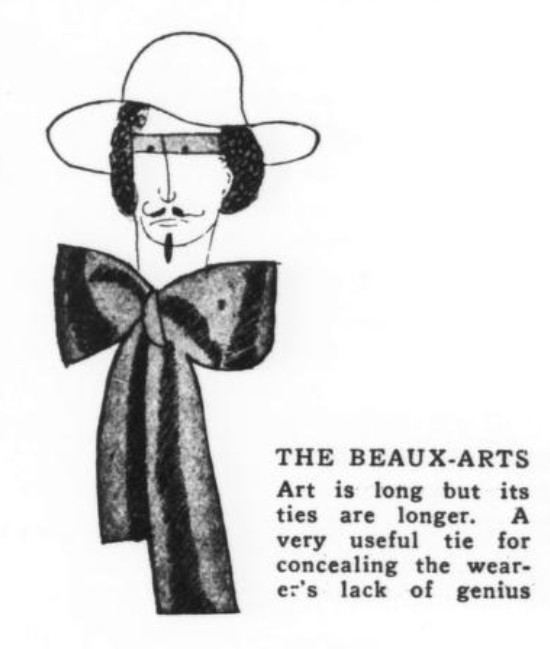
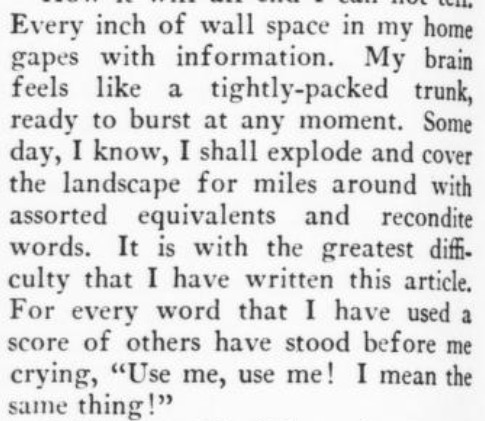
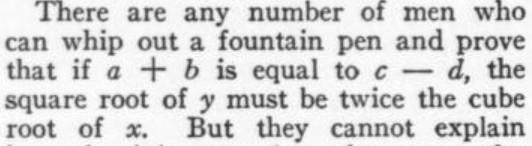
From Prefaces, by Don Marquis (illustrated by Tony Sarg):
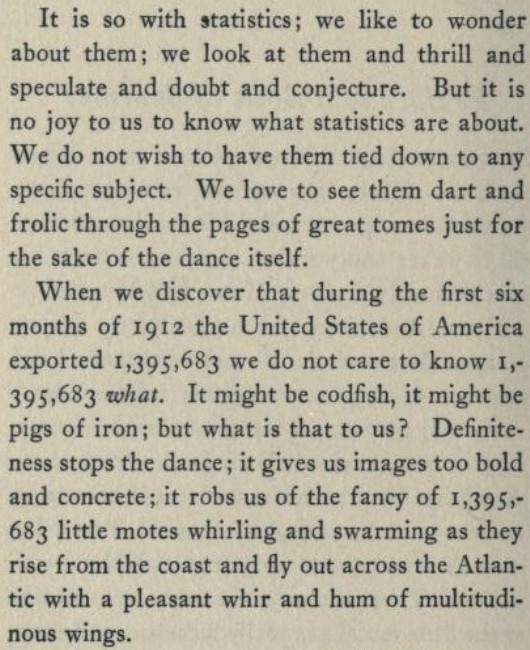
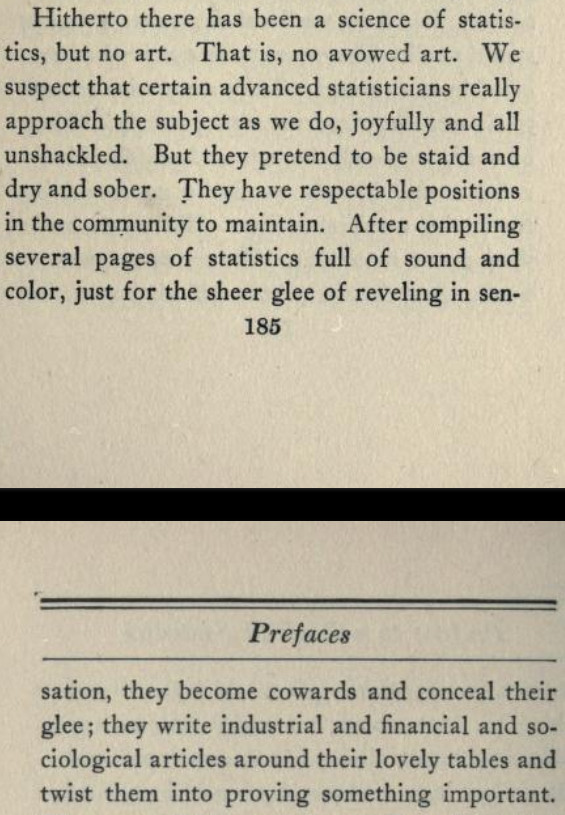
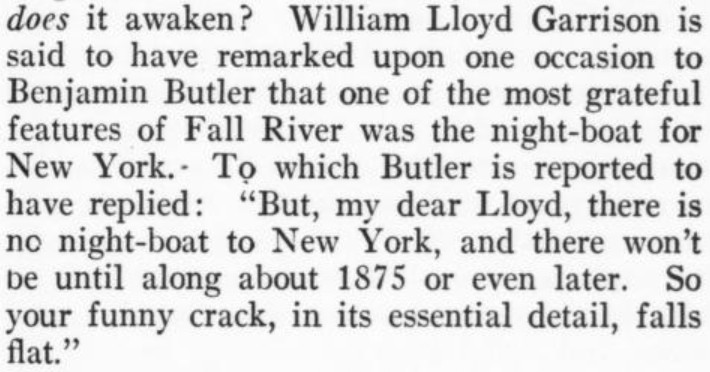
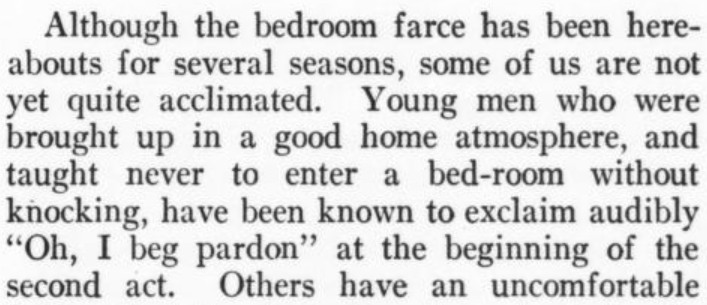
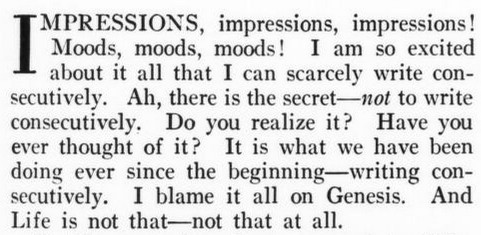
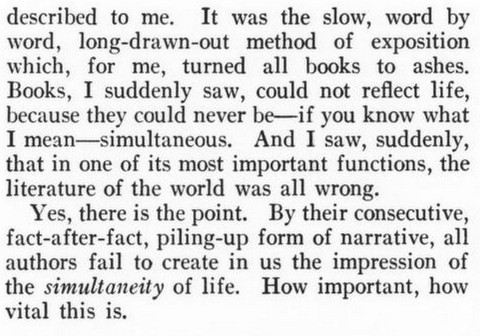
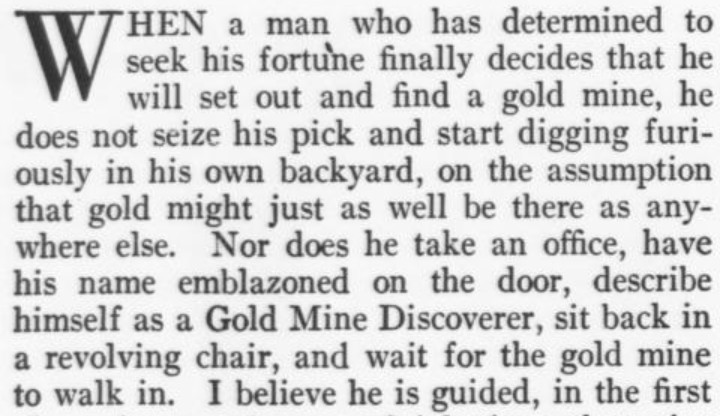
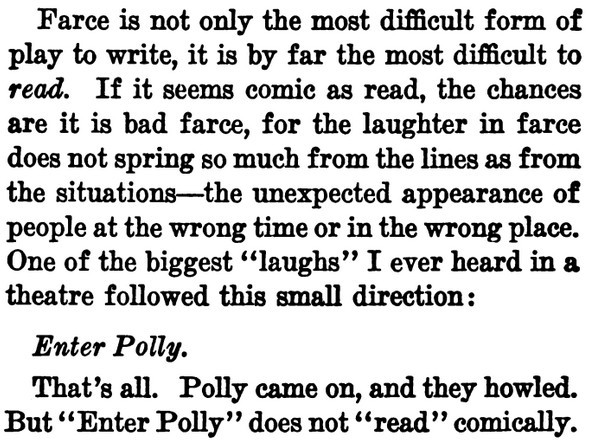
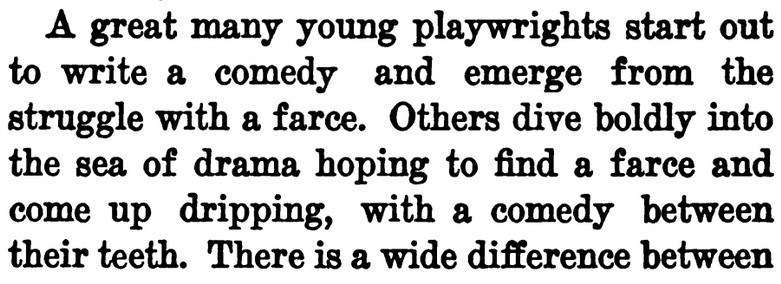
[Clearly, the publishers of this book were playing a long game. They took out a display ad to promote it in the June 1919 issue of Vanity Fair, and less than 104 years later I came along, got lured in by the ad, and enjoyed the book for free in an out-of-copyright web archive. In the past I've never warmed up to Marquis, but the idea of a book entirely composed of prefaces to imaginary books seemed worth investigating. (And haven't we encountered *another* book of this nature--some other book of introductions to nonexistent books?) Snippets attached.]
|
|
|
|
|
|
|
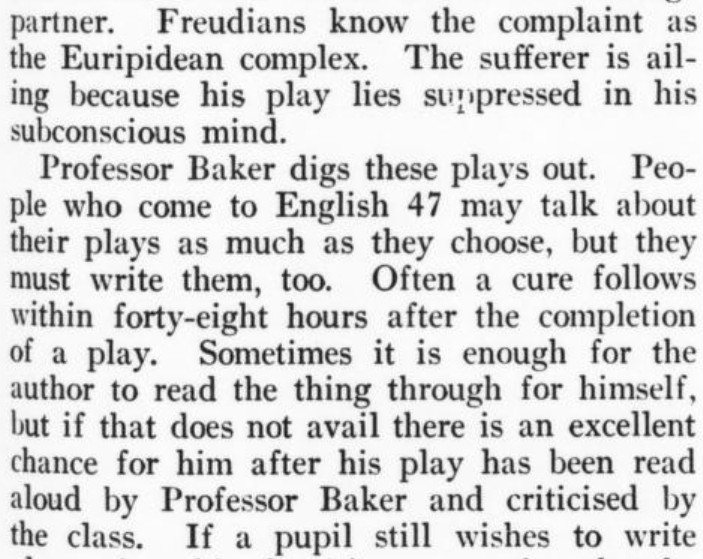
unearths some literary gems.
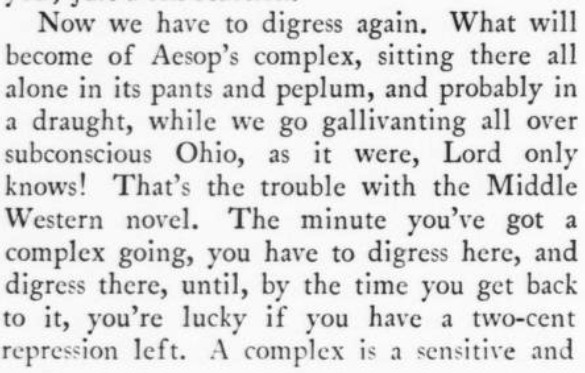
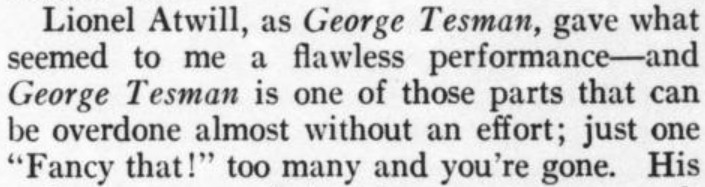
[I'd thought I'd been through all the Thurber I was going to go through, but this posthumous collection of the uncollected stopped me on the street (that is, it was on a sidewalk shelf of free books outside a local book shop).]
***
[In the preface, the editor does the math.]
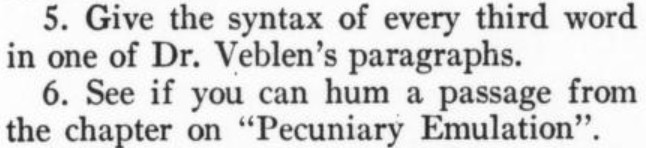
By plotting the points that he makes in reference to others (x = here, a genuine concern; y = there, a round or unreserved applause, or a dismissive swipe, or a raised eyebrow), a figure of Thurber's own accomplishment can be traced.
***
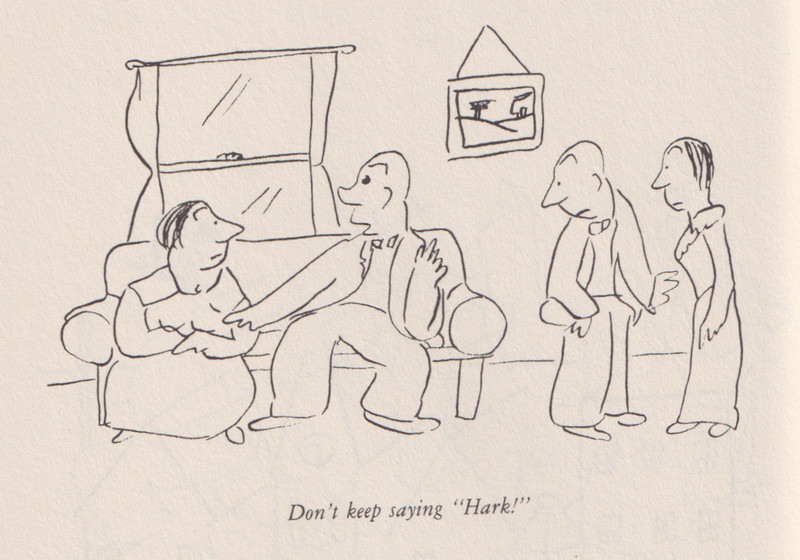
My drawings have been described as pre-intentionalist, meaning that they were finished before the ideas for them had occurred to me.
***
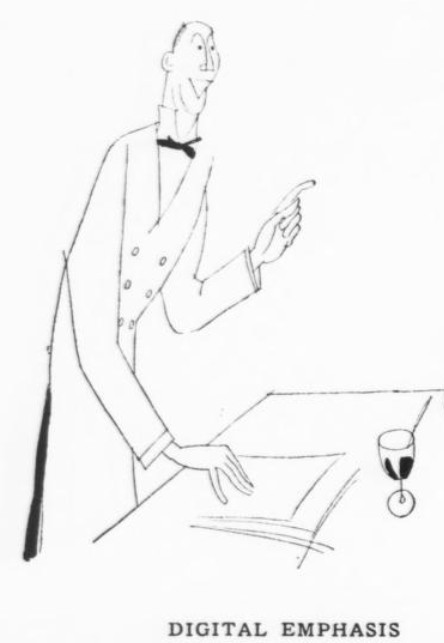
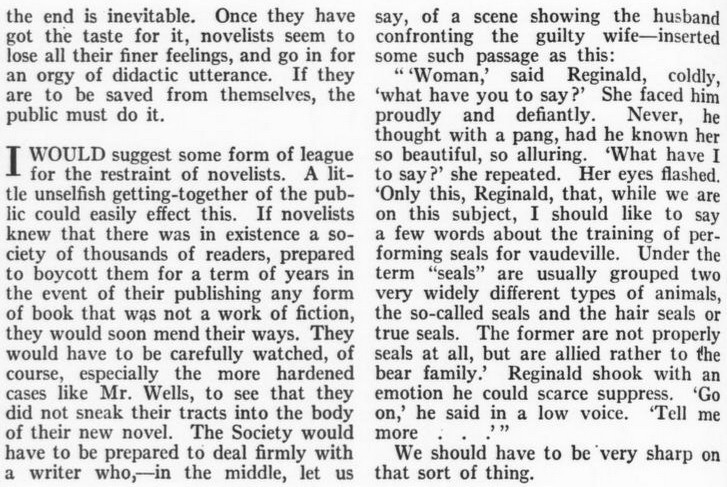
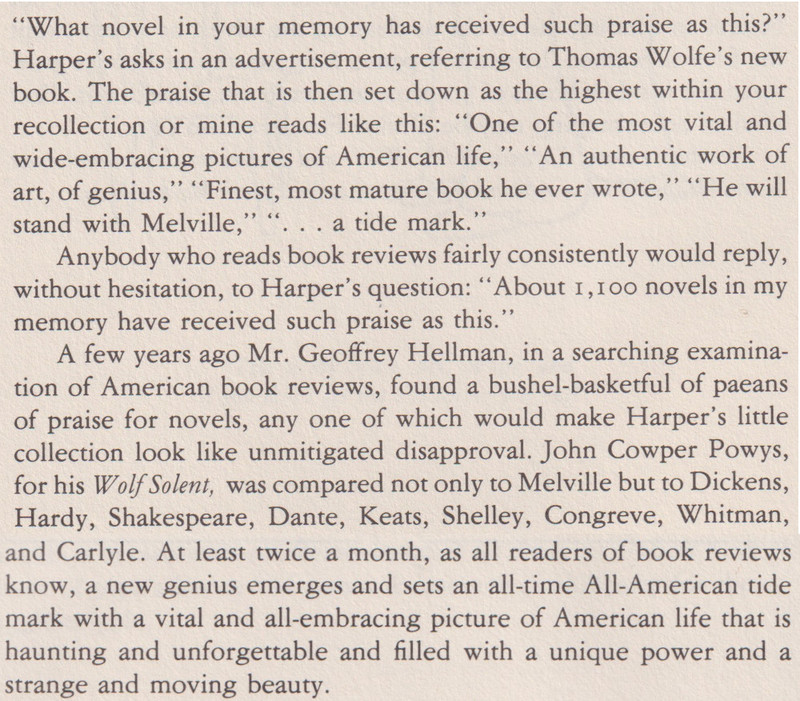
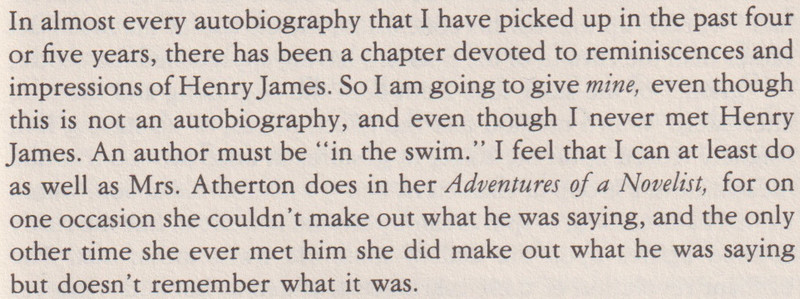
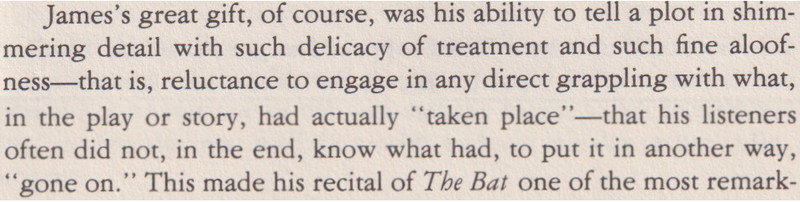
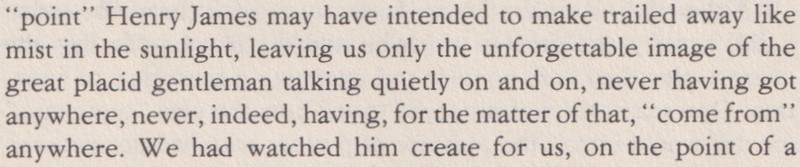
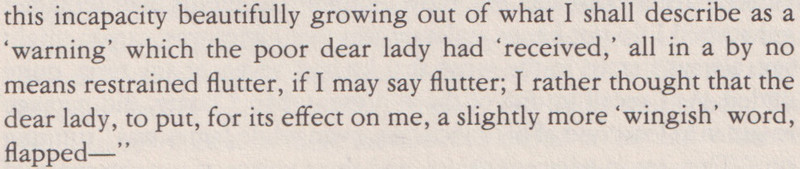
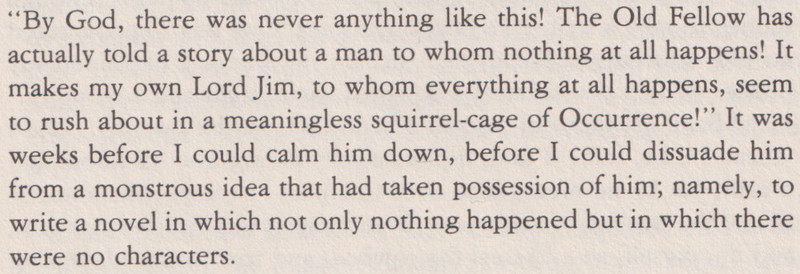
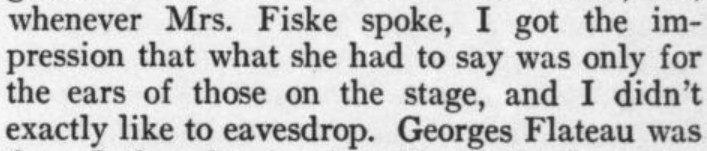
[More snippets attached. Note that the Rhetorical Question Answered segues nicely into one of those "Borgesian, Jamesian..."-style rosters; and the actual Jamesian snippets culminate in some flapping.]
|
|
|
|
|
|
|
unearths some literary gems.
|
Page 17 of 64
> Older Entries...
Original Content Copyright © 2025 by Craig Conley. All rights reserved.
|