|
|
 |
|
|
unearths some literary gems.
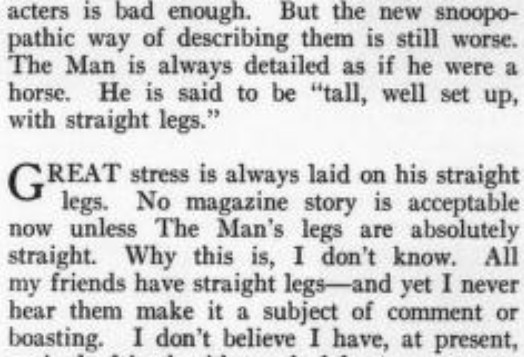
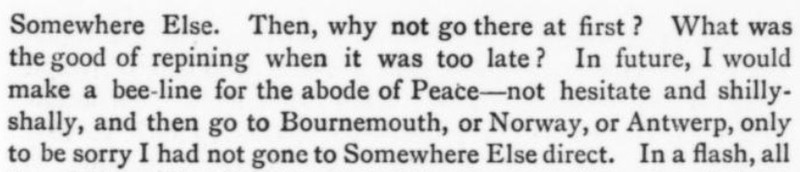
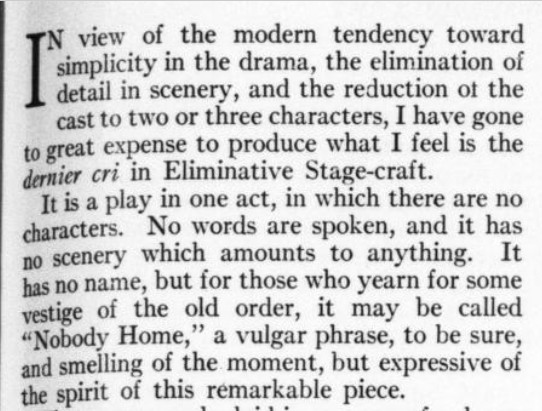
Snippets from Vanity Fair Feb '16:
***
"Trombone players...never die, in fact, until extreme old age makes them incapable of working the slide." [George Bernard Shaw, quoted from an old letter]
***
[Speaking of the "talking parts" vs. unimpeded action, here's a phrase about an ideal sort of novel for reading on trains]
"action and talk cunningly sandwiched"
[Which made me hungry, natch.]
***
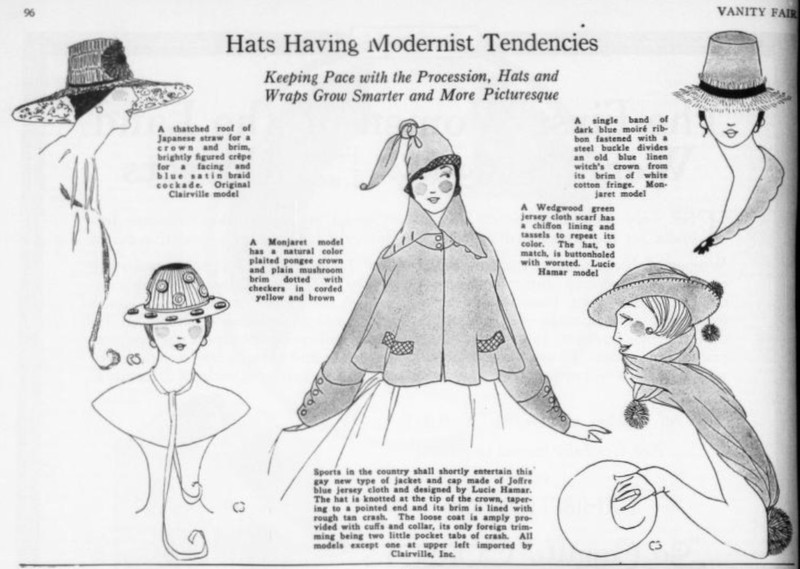
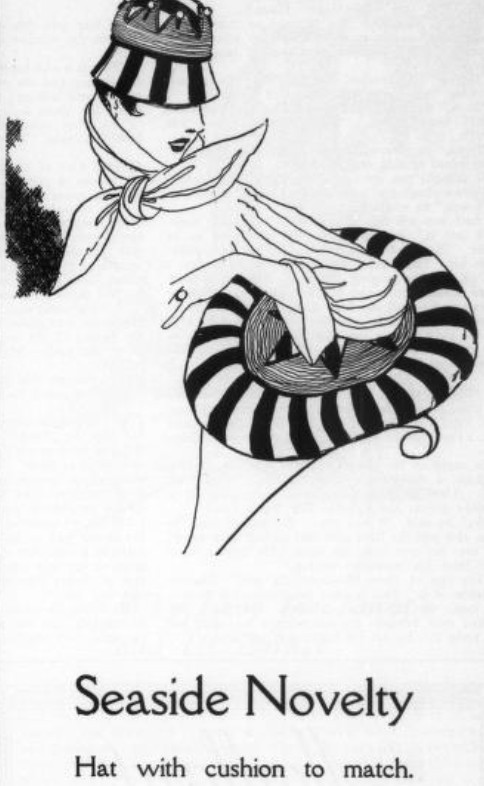
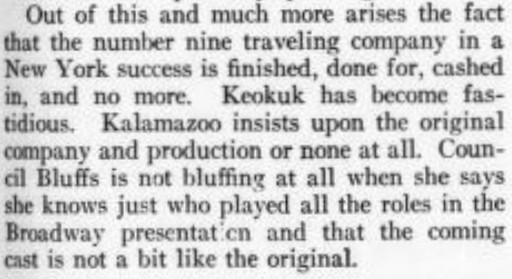
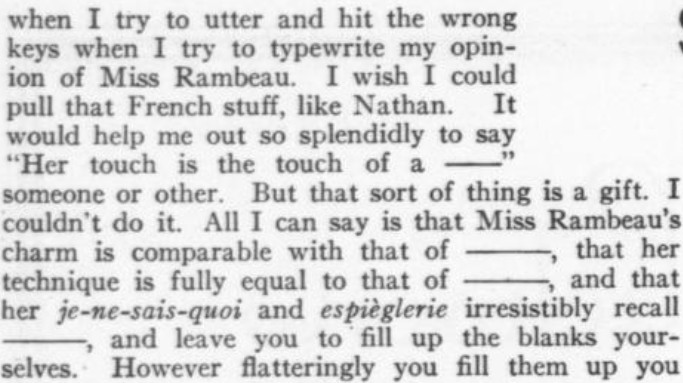
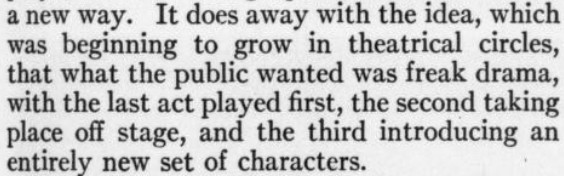
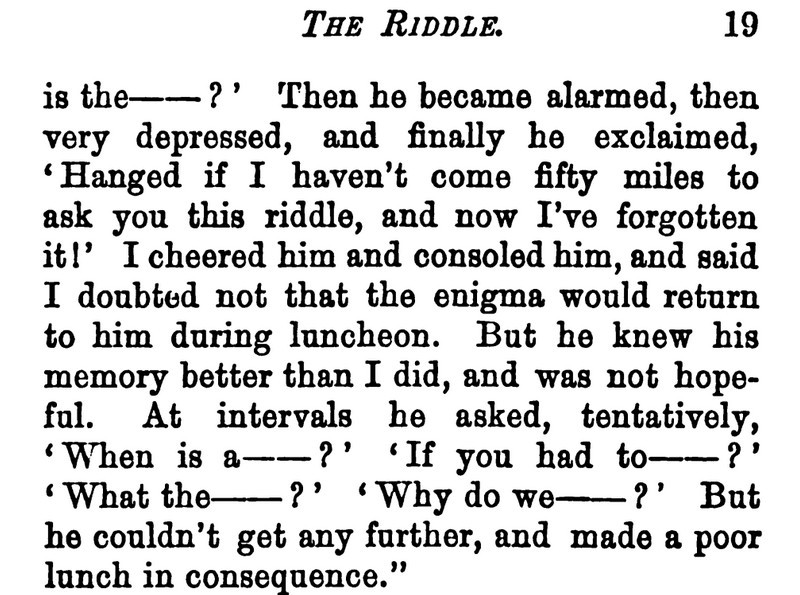
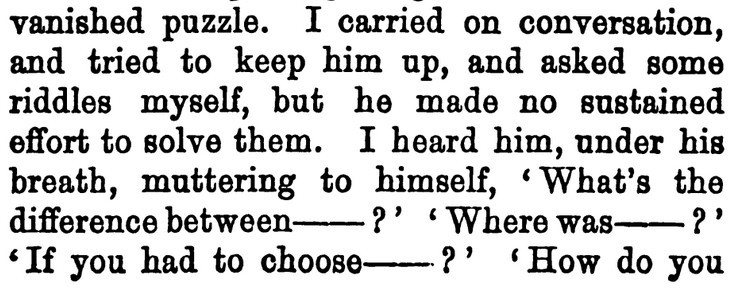
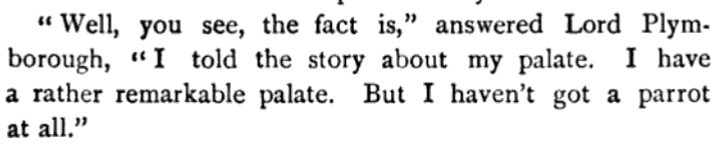
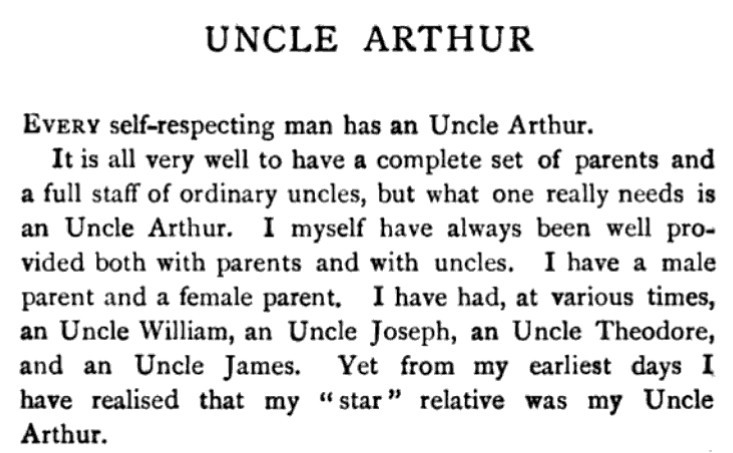
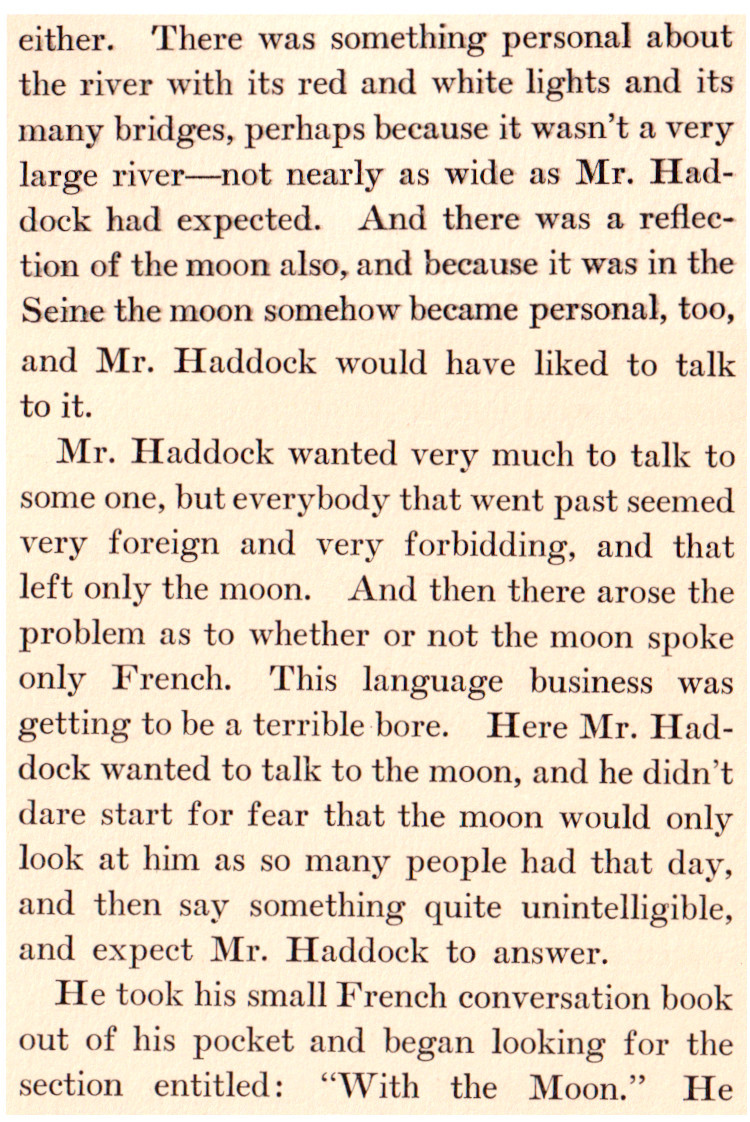
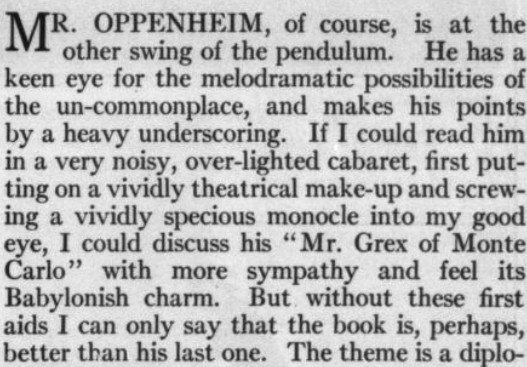
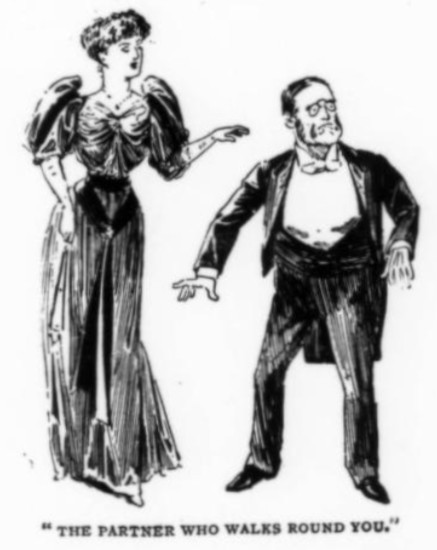
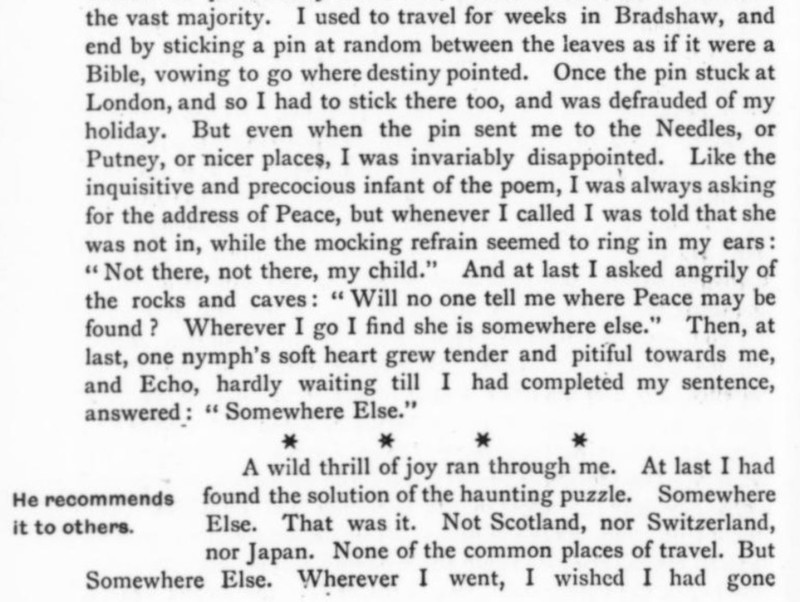
[More snippets attached, including a silly pillow. As for those hats with "modernist tendencies," I like the implication that the hats have agency, and are evolving on their own initiative. Meanwhile, I note that Wodehouse is kindly honoring our running theme about "fill in the blank" literature.]
|
|
|
|
|
|
|
unearths some literary gems.
Wodehouse IS Vanity Fair Jan. 1916:
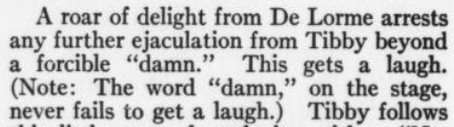
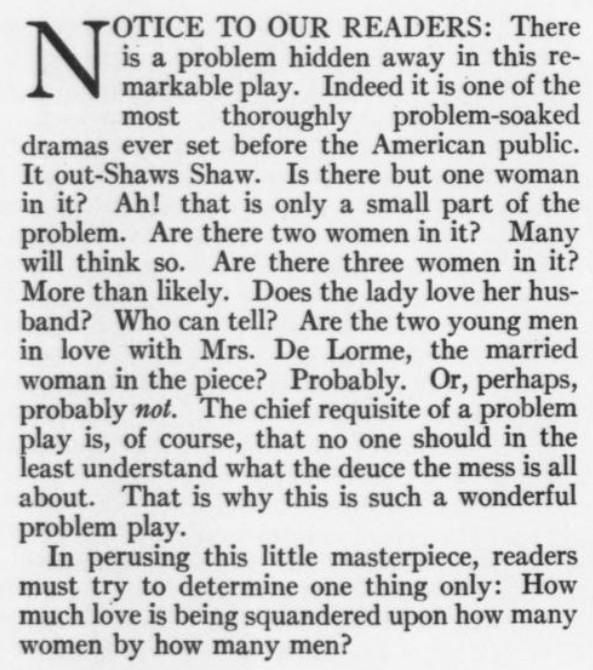
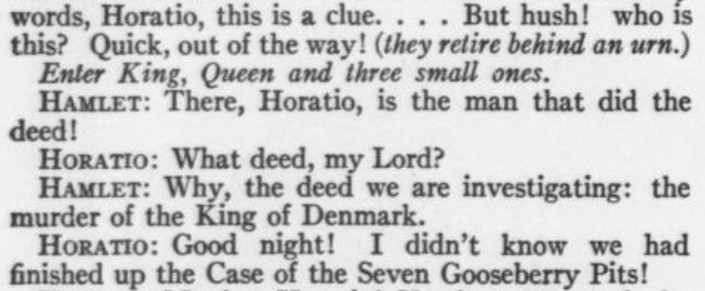
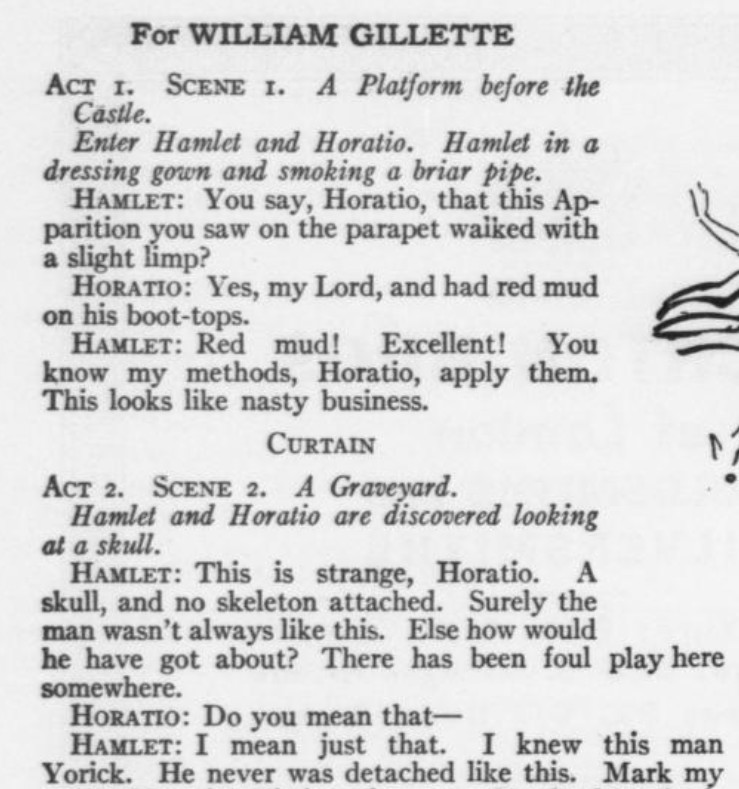
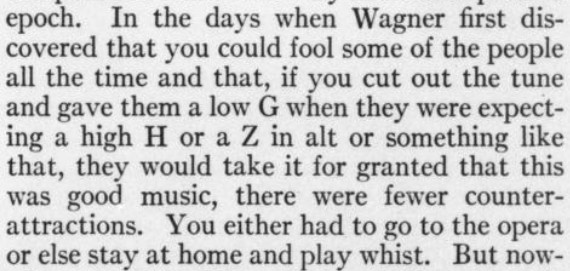
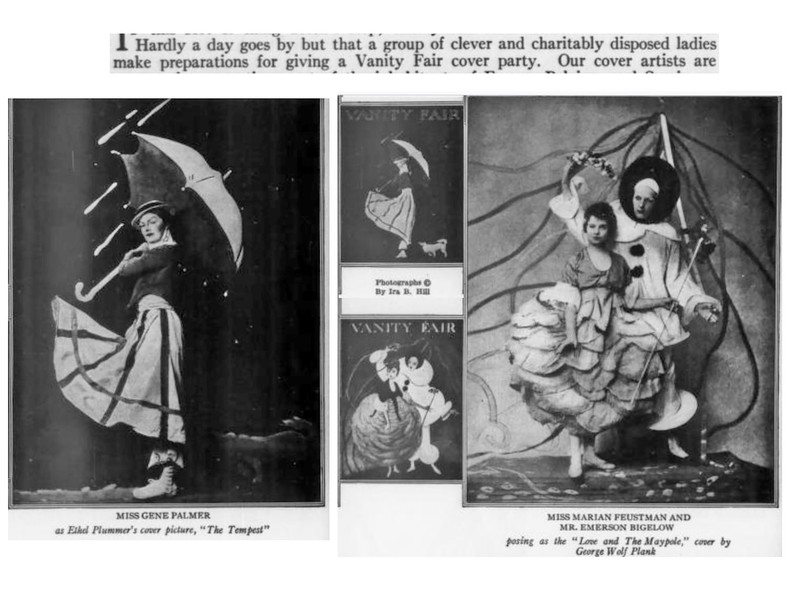
Doing the math, I note that Plum appears FIVE times in this issue (under four different names, with one theater-crit roundup and four humor pieces). Incidentally, this same issue that featured a didactic Gillette saying that plays were meant to be performed, not read, has a waggish Wodehouse touting score-reading at home as a way to avoid going to the opera without losing face.Speaking of Gillette, here also is some Benchley, who manages to get a word in edgewise despite the PGW monopoly. They also made room for "The Brocaded Wrap: An Almost Unsoluble Problem Play," by Louise Closser Hale (which, as Gillette would agree, would probably be more fun to see performed than to read, as there's lots of visual farce business). I note that an onstage "damn" in 1916 is the equivalent of the obligatory "Shit!" in latter-day movies seeking to avoid a G rating and cash in on a cheap laugh.Or why not throw a Vanity Fair cover party?
|
|
|
|
|
|
|
unearths some literary gems.
From The Londoners: An Absurdity, by Robert Hichens:
***"I had no idea, no notion at all, that you knew Mr. Van Adam.""Oh yes.""Besides, I fully understood he was in Florida.""Oh no.""This makes my paragraph all wrong.""Oh yes.""It is really most unfortunate.""Oh no."Mrs. Verulam felt like a pendulum, and that she would go on helplessly alternating affirmatives and negatives for the next century or two. But Mr. Rodney, who, being of a very precise habit, was seriously upset by being given the lie direct—in tweed, too, on a London afternoon of May!—repeated "Oh no!" in accents of such indignant amazement that Mrs. Verulam was obliged to recover her equilibrium."Oh yes, I mean," she said. "Oh yes, yes, yes!"***"The trains are very slow on that line, I believe," Mrs. Verulam added, with a vagueness as to the different railway systems that would have made her fortune as a director.***"You will notice a slight mistake at the close," Mr. Rodney continued in a resentful voice, and glancing from the tweed suit to Mrs. Verulam and back again. "It would not have crept in" (errors have no other gait than that generally attributed to the insect world) "had I known that we were to have the unexpected pleasure of welcoming you to London."***Either Mrs. Lite was unusually clever at making pies, buns, sweetmeats, and cakes, or Mr. Lite had extraordinary business capacity, or Fortune was determined that there should be a Bun Emperor in Britain, and that Mr. Lite looked the part better than anybody else.***Ribton Marches had been built according to Mr. Lite's own ideas, which took the form of a huge erection combining many of the peculiar merits of the Leicester Square Alhambra and the Crystal Palace. Wherever you expected to find stone you came upon glass; wherever you anticipated glass you came upon stone. If you looked for a flat roof, your eye met a cupola; if you glanced up in search of a cupola, you probably missed it and saw a flat roof. The palace continually "had" you. It was full of winter gardens, and in all these winter gardens there were talking parrots. The palace was crammed with echoes, and as you explored it, under the careful and most suspicious supervision of Mr. Lite, its mighty walls seemed to breathe out to you from every side such mysterious expressions as "Hallelujah! Bow-wow-wow!" "Polly, go to bed!" and "Polly very drunk; naughty Polly!" the latter statement being usually succeeded by a loud noise as of the drawing of dozens of champagne corks. There were several libraries in the palace, and several boudoirs; but the boudoirs were on the ground-floor, and the libraries were upstairs.***"You don't know Martha Sage.""But indeed I do," said Mr. Rodney. "She has often dandled me in her arms.""What, recently?""Yes, yes," he rejoined distractedly; "often and often."[...]"When I was a little boy—when I was a child," said Mr. Rodney, recovering himself in time to save Lady Sage's vanishing reputation with the Duchess."Oh, that's nothing. She has dandled everybody at that age. But she doesn't allow anybody to influence her decisions for all that."***"Oh, Mr. Bush!" she added, with a most tender accent of commiseration, "I can scarcely tell you how grieved, how horrified I am that you should have been so nearly murdered—and so soon after your arrival, too!"***Mr. Harrison, above stairs, was with much tribulation and uncurled whiskers preparing his report to lay before the Emperor at eight o'clock on the following morning.***"Have any more thoughts been taking you like a storm, Marriner?""They have indeed, ma'am.""If you think so much you ought to keep a lifeboat by you," said Mrs. Verulam dreamily.***"Lady Sage grows a little wearisome, I fancy," he murmured dissuasively."Do you think so? Oh, I love her recollections!""I think her too historical for hot summer weather, I confess," continued Mr. Rodney***"There's a great deal of knack in sitting a wooden horse," said the Duke.***"Duchess," she said, "Mr. Bush, you must know, is full of maxims.""Dear me! Is he related to a copy-book?" replied her Grace lethargically.[...]Mr. Bush added, after a moment of deep thought:"Look after the sheep, and the sheep'll look after you!""It sounds like 'Diana of the Crossways,'" piped Lady Drake in her acidulated manner."I don't know that I should care to be looked after by a sheep," said Miss Bindler practically, as she lit a small cigar. "I don't consider a sheep to be an efficient animal."[...]"Oh, I feel sure that even a sheep is deeply, deeply interesting, if properly studied," she said."Aye," said Mr. Bush."It's what we bring to a thing, isn't it?" she added, greatly encouraged."What would you bring to a sheep?" said Miss Bindler."Swedes,*" said Mr. Bush, before Mrs. Verulam could make reply.[*i.e., turnips]***"Dear me! I had no idea that—that"—she searched her mind hurriedly for an appropriate American name—"that Vancouver intended to come over this summer."***"Certainly," she said, idly watching Lady Cynthia Green, who was making puns to Sir Brigham Lockbury in the middle distance—"certainly.""Mrs. Verulam," he continued, without much subtlety of exposition, "you are marching to your doom—you are indeed! And all for what?""I beg your pardon?""Well, all for which—whom?" he cried in an under voice, seeking grammar.***"Not far," rejoined the paragon—"not far!" And he laughed like Fee-faw-fum.***His expression was like the third act of a melodrama.***[Walking to Conclusions dept.]The paragon, whose wits were slightly sharpened by cowardice, immediately walked to the conclusion that Mrs. Verulam had observed his ostentatious secrecy with the Duchess.***He...led her among the parading horses, getting so entangled with the four legs of the favourite that it seemed as if his one ambition was to become a centaur before evening.***"It is to say that they have discovered Yillick," answered Mrs. Verulam in an unemotional voice."I beg your pardon?""I say they have discovered Yillick," she cried irritably."Indeed! What is that?""I don't know. One can't know everything."***The paragon made no reply, but went on digging in a heavy and almost soporific manner. His calm was so great, so apparently complete, that it nearly attained to majesty. The sphinx could not have gardened with a greater detachment in worlds before the sun and before the birth of Time.***[Who Needs Context? dept.]"I—really I—I must positively decline to clear the—ground of monkeys," said Mr. Rodney***[Bonus: A character who despises London (though it is his home) and wants to show it off extensively to an American visitor merely to prove how inferior it is to Paris.][Bonus: the word "bemuddled"]
|
|
|
|
|
|
|
unearths some literary gems.
|
|
|
|
|
|
|
unearths some literary gems.
|
|
|
|
|
|
|
unearths some literary gems.
|
|
|
|
|
|
|
unearths some literary gems.
rom The Mayfair Mystery, by Frank Richardson:
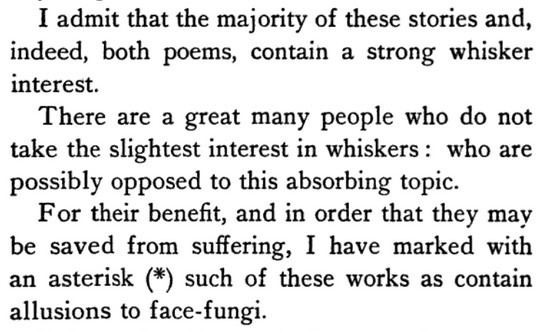
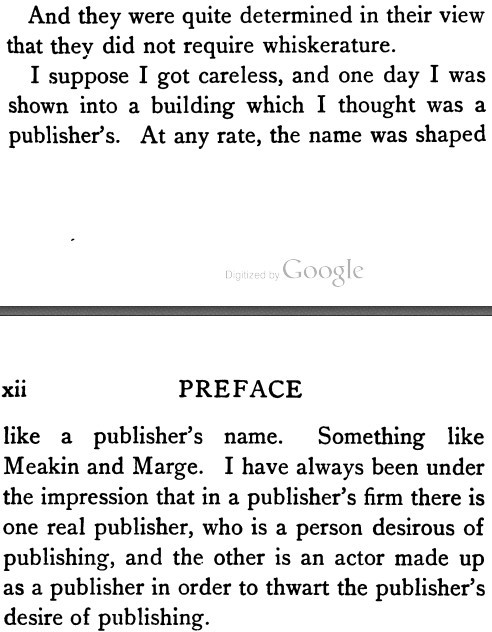
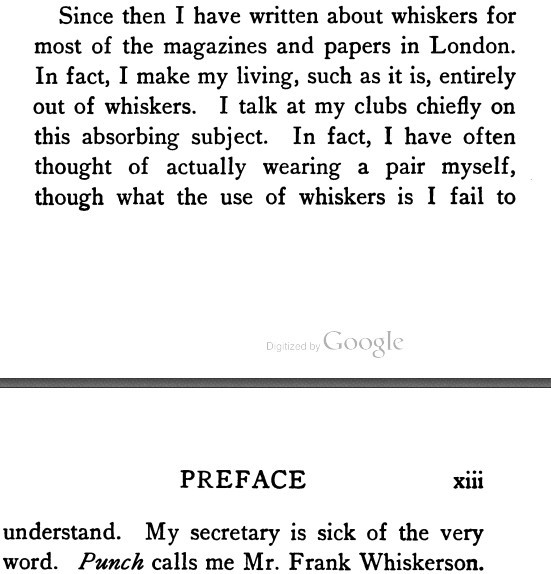
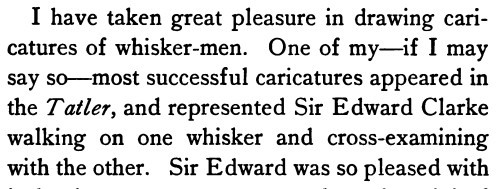
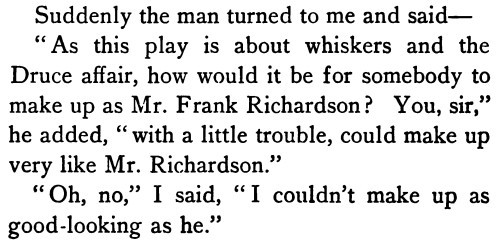
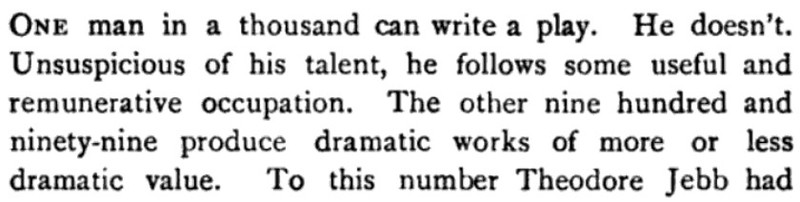
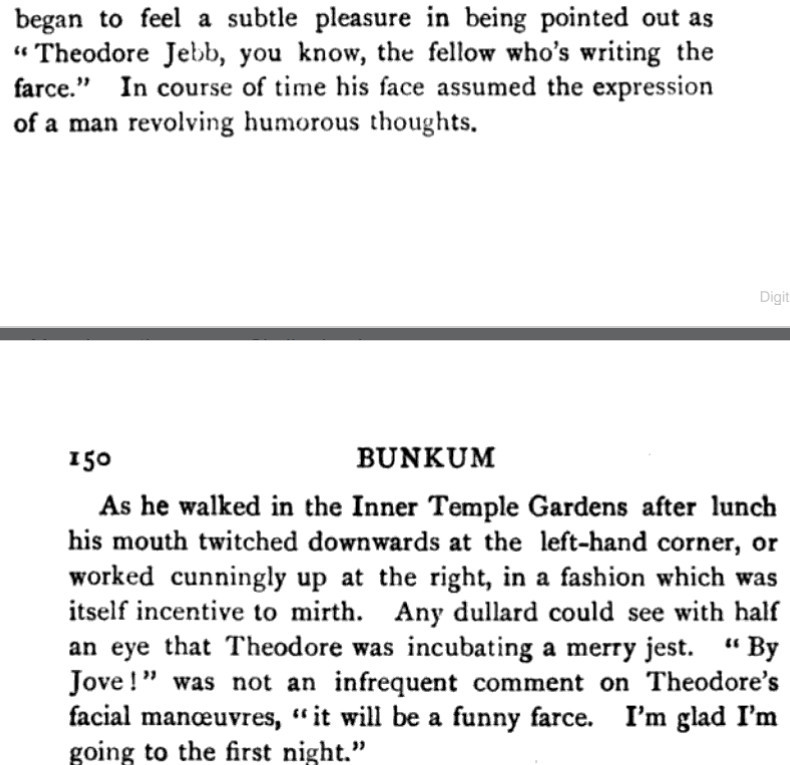
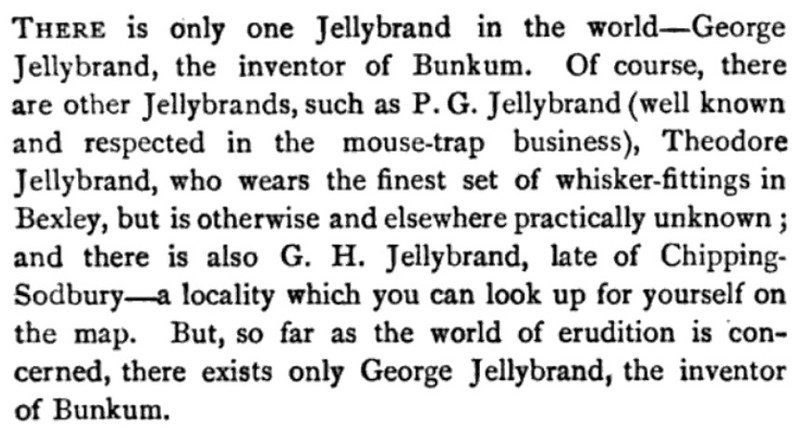
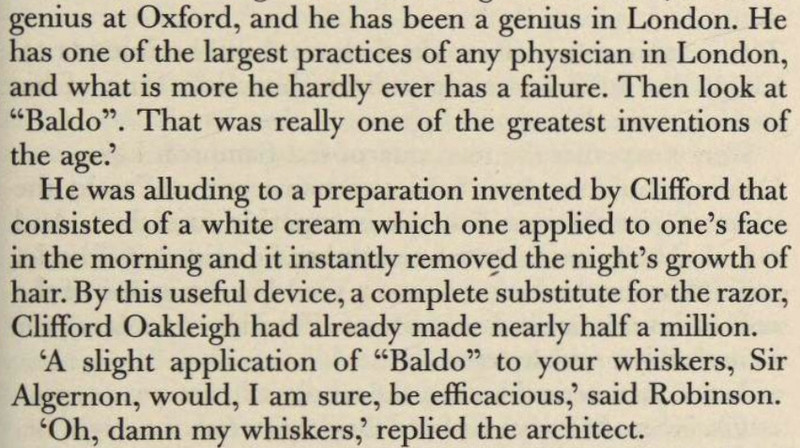
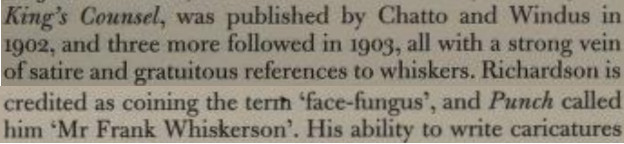
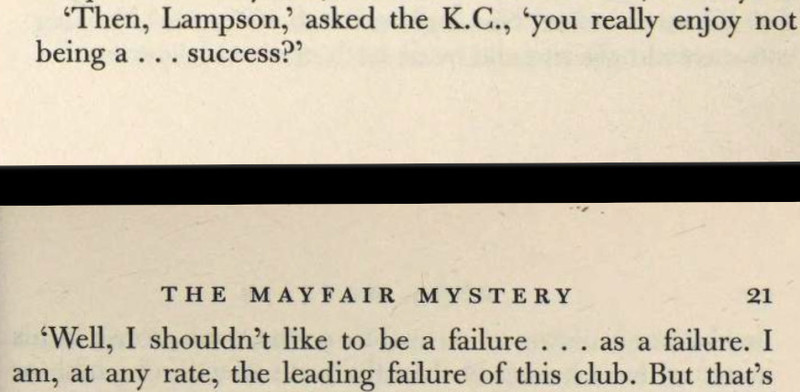
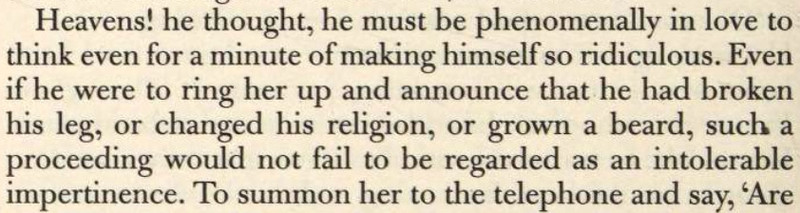
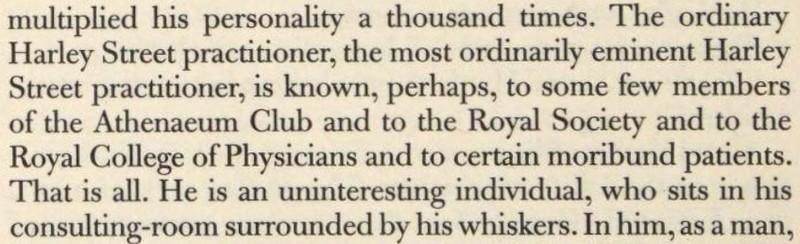
[This so-called mystery novel, first published in 1907 as 2835 Mayfair, might be better described as a steampunk-horror paranormal transgender romance. (I'm not trying to be funny; it seems to be a quite remarkable--and largely forgotten--book for its time.) Most of the comic relief pertains to whiskers, which I've learned was Richardson's claim to fame. (You'll recall "Mainly about Whiskers" as a chapter title in the previous Richardson book I read.) Among the attachments here, the one called "face-fungus" comes from the 2015 preface to a reprinted edition (and the OED does show Richardson as the first citation for the term); the others are from the body of the book, and only the vast majority of them involve whiskers. Incidentally, the supporting character who is obsessed with whiskers, "Frank Robinson," is presumably the author's self-parody--and Robinson is disliked by his club acquaintances, so Richardson obviously has a sense of humor about himself.][Bonus: an offstage character called the Hon. Otho Trigg]
|
|
|
|
|
|
|
unearths some literary gems.
From Love Insurance, by Earl Derr Biggers:
***Mr. Thacker was cold and matter-of-fact, like a card index.***He continued to crank with agonized face. In the course of a few minutes, sounds of a terrific disturbance came from inside the car. Still, like a hurdy-gurdy musician, the man cranked."I say," Minot inquired, "has your machine got the Sextette from Lucia?""Well, there's been a lot of things wrong with it," the man replied, "but I don't think it's had that yet."[Cf. Cranking a Metz engine as as musical effect, seen recently in another snippet from this same era (ca. 1914).]***The dimple, in repose now, became the champion dimple of the world.***And, every few feet, Mr. Minot came upon "The Oldest House in San Marco."[Btw, this fictional town of San Marco, Florida, seems from various clues to probably be based on St. Augustine.]***Miss Meyrick presented her father and her aunt, and that did not tend to lighten the formality. Icicles, both of them, though stocky puffing icicles.***"Ever hear of Cotrell's Ink Eraser? Nothing ever written Cotrell can't erase. Will not soil or scratch the paper. If the words Cotrell has erased were put side by side—"[later]"I rigged up a big electric sign in Times Square and all night long I had an electric Cotrell's erasing indiscreet sentences."***"Her lines are good, but somehow—it's really a great problem to me—she doesn't sound human and natural when she gets them off. I looked up her beauty doctor and asked him if he couldn't put a witty gleam in her eye, but he told me he didn't care to go that far in correcting Mrs. Bruce's Maker."[Btw, the speaker is a hired wit who "ghostwrites" repartee for a society lady. Then--precursing my short story "Get It in Writing," in which the protag finds himself concurrently ghostwriting memoirs for two rival artists--the hired wit takes on another client, who is the chief social rival of the first. (Then, on the evening they're going head-to-head [SPOILER], he accidently gives them both the same script!)]***Minot hesitated. Ought he to leave the scene of action? Of action? He glanced about him. There was less action here than in a Henry James novel.***"I can talk as we walk along," said Trimmer, and proved it.***"One condition I attach. Ask no questions. Let us go out into the night unburdened with your interrogation points."***"What is this—a comic opera or a town? You are managing editor, Harry. I shall be city editor. Is there a city to edit? No matter."***"Don't look a gift bill in the treasury number."***He wore an orange and purple dressing-gown with a floral design no botanist could have sanctioned—the sort of dressing-gown that Arnold Bennett, had he seen it, would have made a leading character in a novel.***A deathly silence fell. Only a little traveling clock on the mantel was articulate.***
|
Page 22 of 64
> Older Entries...
Original Content Copyright © 2025 by Craig Conley. All rights reserved.
|