CRAIG CONLEY (Prof. Oddfellow) is recognized by Encarta as “America’s most creative and diligent scholar of letters, words and punctuation.” He has been called a “language fanatic” by Page Six gossip columnist Cindy Adams, a “cult hero” by Publisher’s Weekly, a “monk for the modern age” by George Parker, and “a true Renaissance man of the modern era, diving headfirst into comprehensive, open-minded study of realms obscured or merely obscure” by Clint Marsh. An eccentric scholar, Conley’s ideas are often decades ahead of their time. He invented the concept of the “virtual pet” in 1980, fifteen years before the debut of the popular “Tamagotchi” in Japan. His virtual pet, actually a rare flower, still thrives and has reached an incomprehensible size. Conley’s website is OneLetterWords.com.
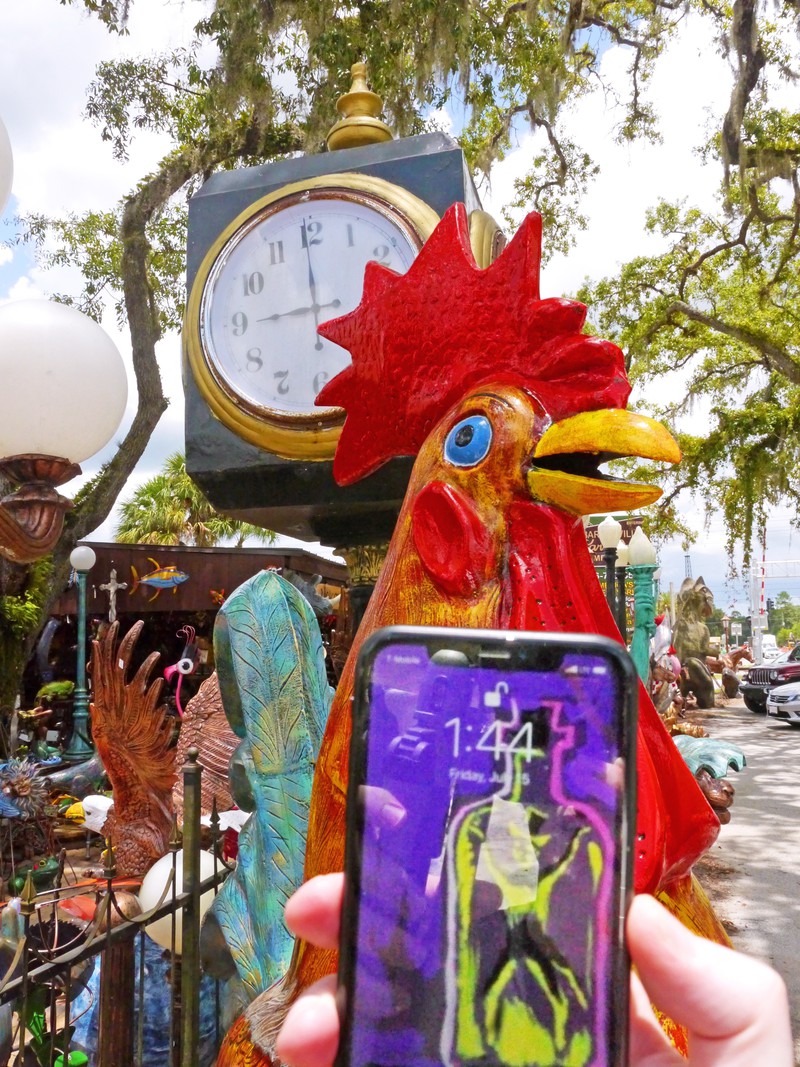
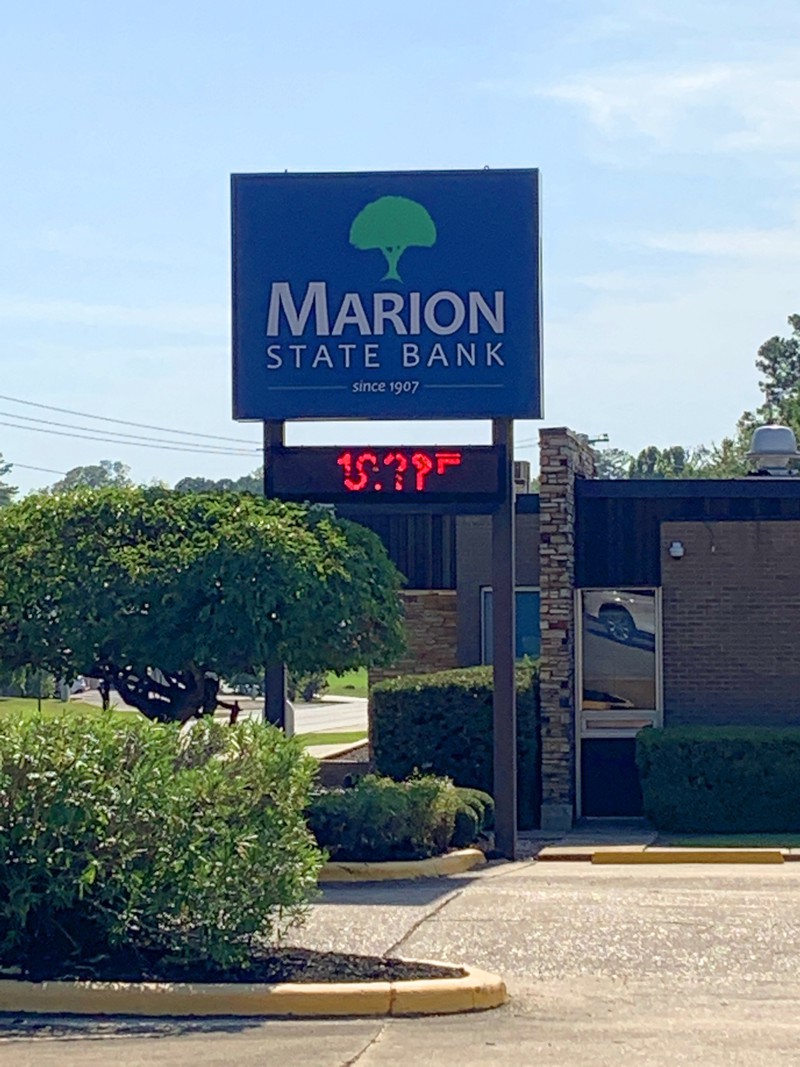
We tracked down a temporal anomaly in Barberville, Florida. All four faces of the clock agreed on the wrong time. Yet, via the gift of numerology, 1:44 does resolve to 9, so there's a coherence in the digits of the clock and phone.
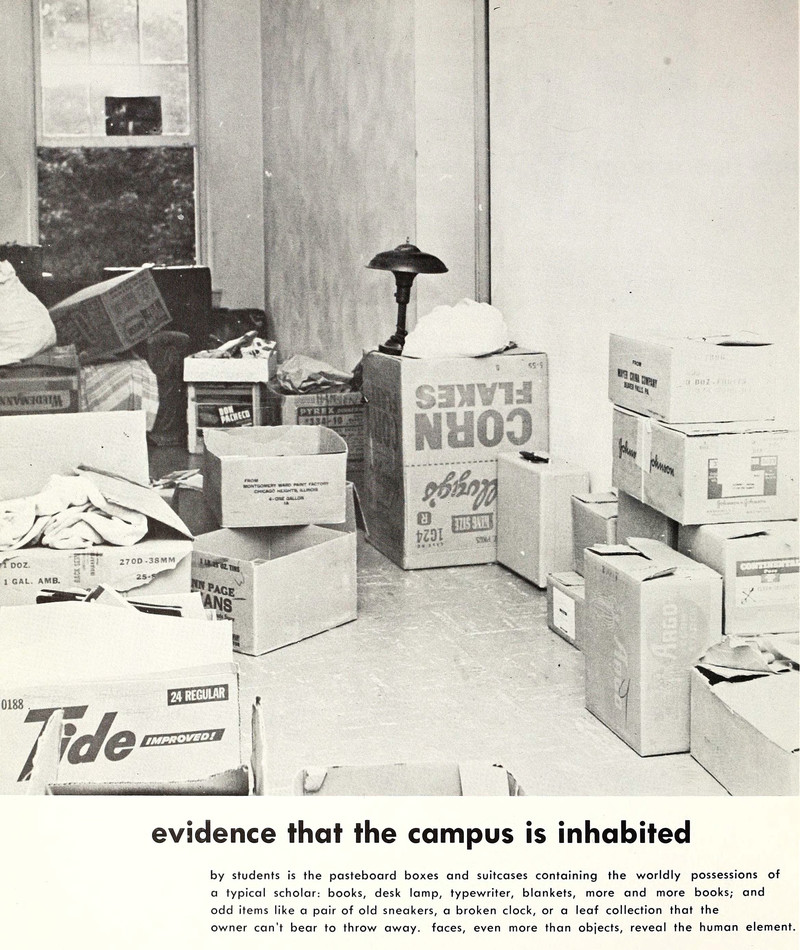
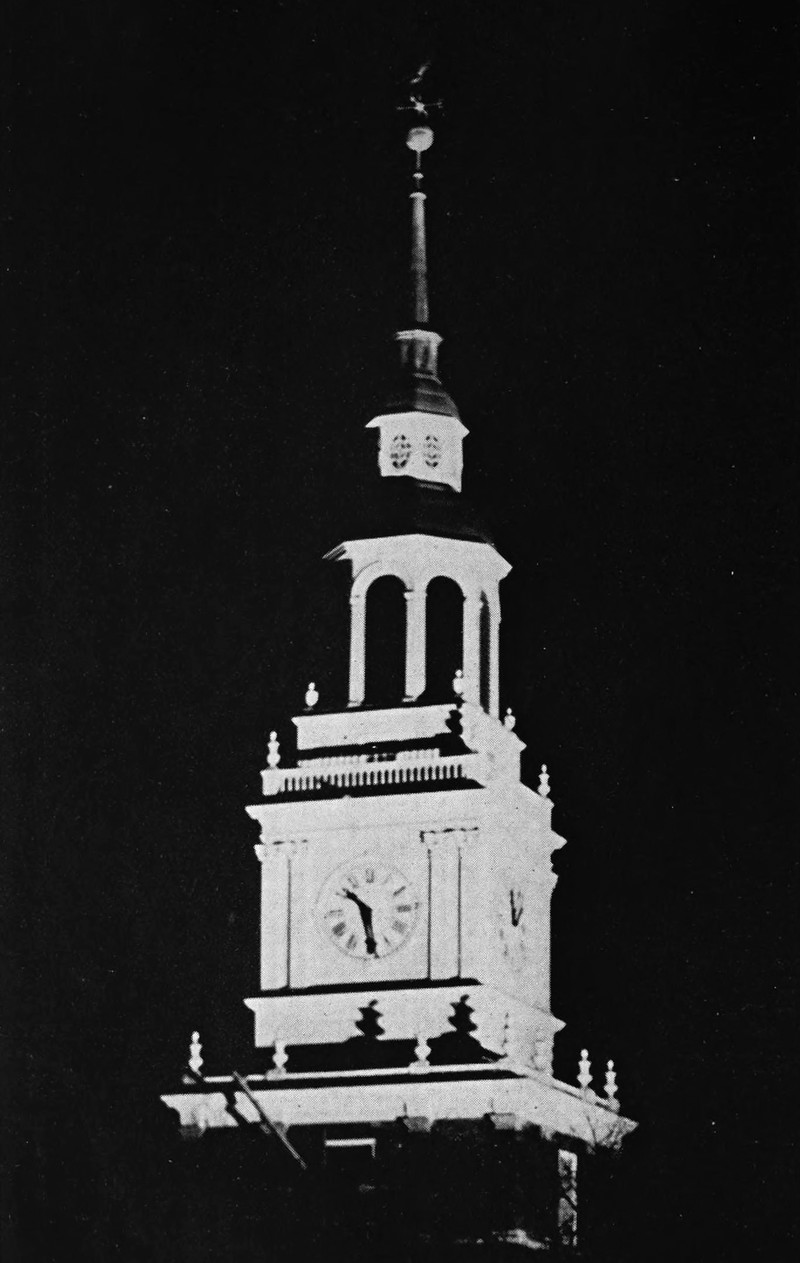
The neatest thing about this is a detail in the caption. The presence of a broken clock is offered as evidence of human habitation. It's as if not having a grasp of time is what distinguishes humanity. That, and a leaf collection. From Earlham's 1959 yearbook.
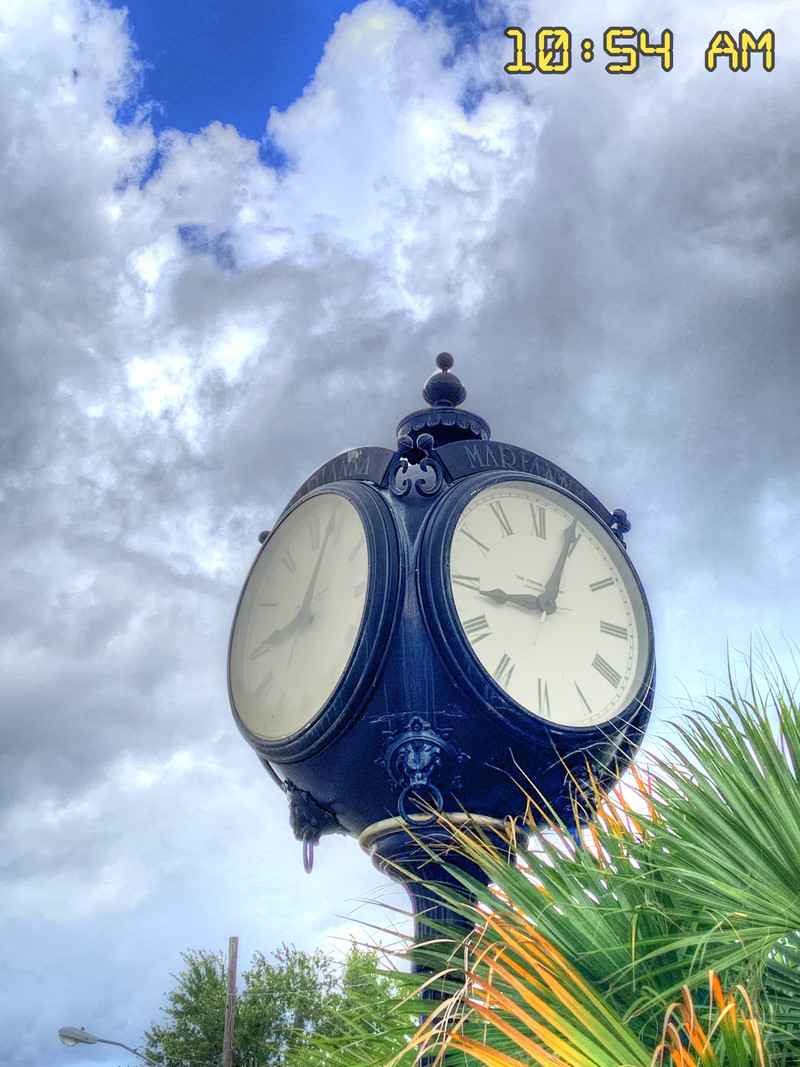
We tracked down a temporal anomaly to the town clock of Marianna, Florida. "It makes it appear as if time were a mysterious something the measure of which is determined by man-made instruments, clocks" (Norbert Elias, Time).
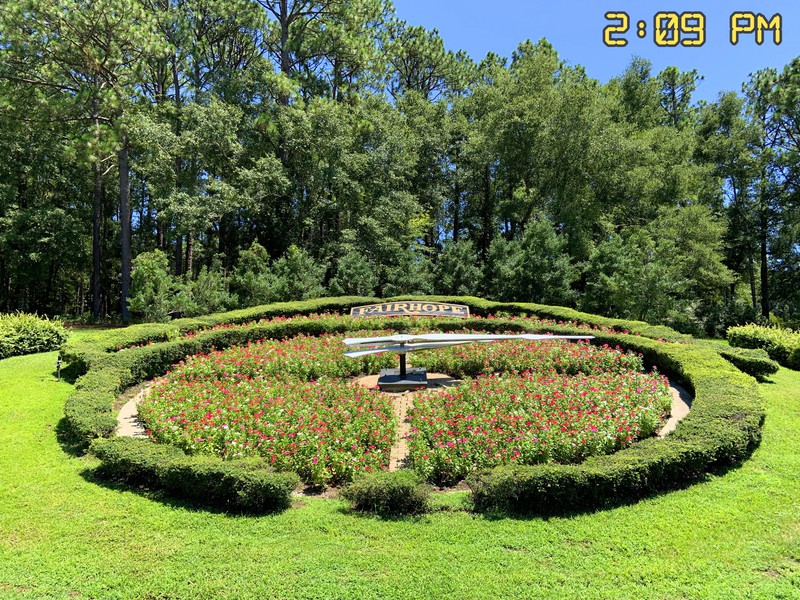
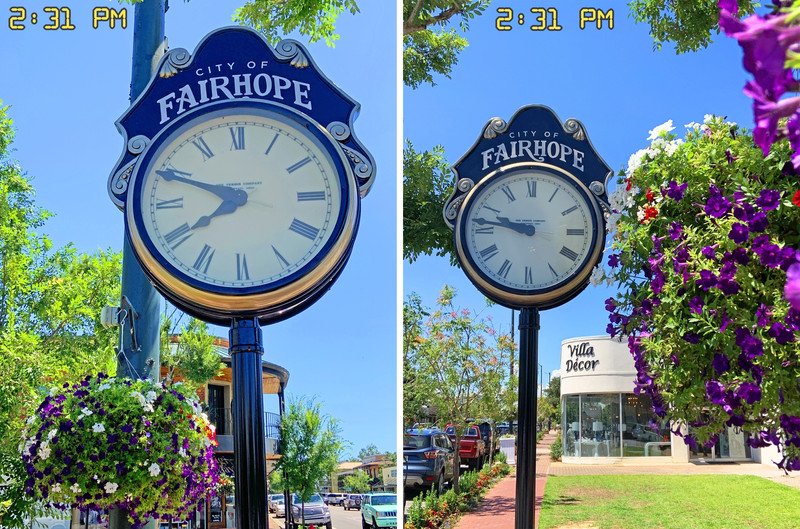
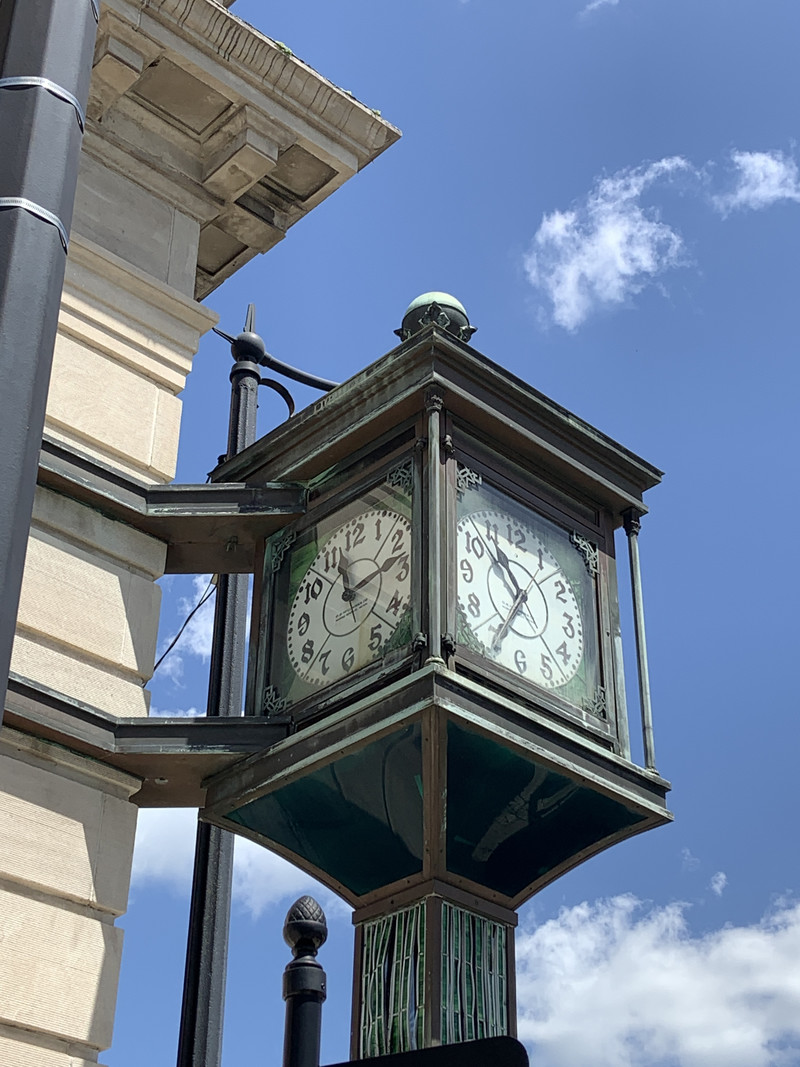
The two sides of the town clock in delightfully charming Fairhope, Alabama display two different times, neither of which agrees with the time in the world outside of the anomaly. Poetic snippet from David Jaffin's Untouched Silences.
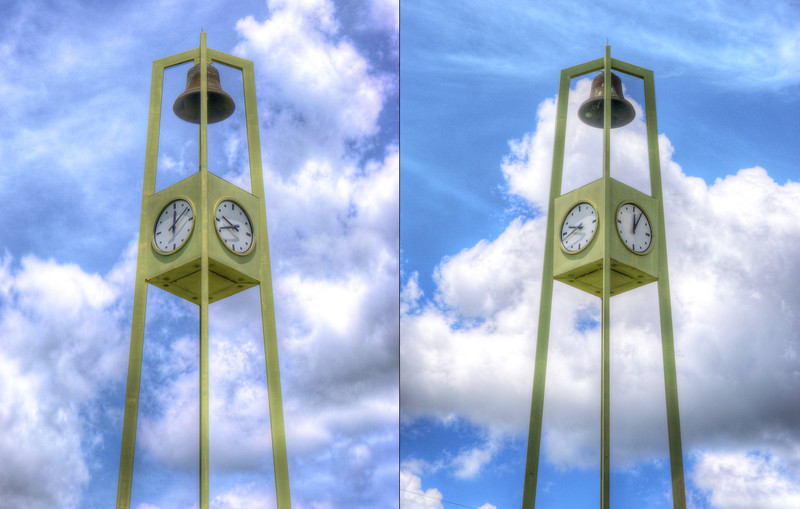
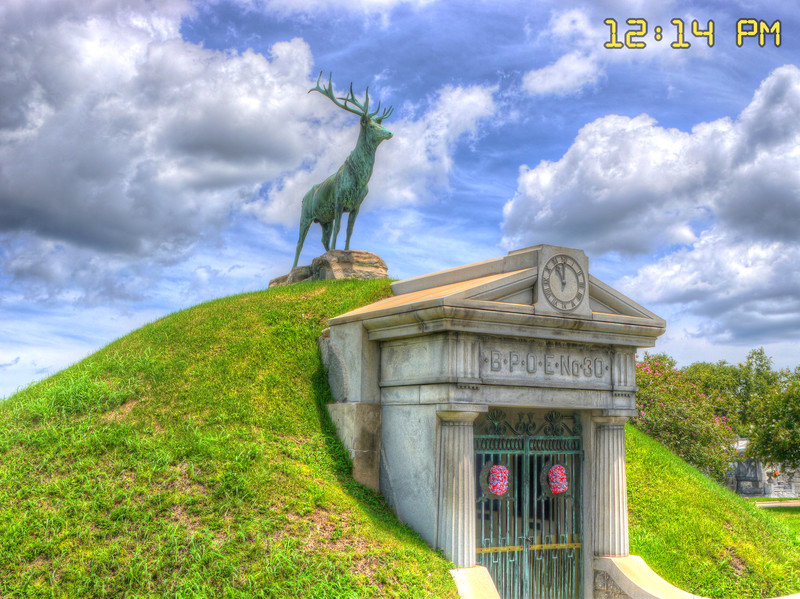
We tracked down a temporal anomaly to New Orleans' Greenwood Cemetery's clock tower, where all four sides were on separate time zones. "Meanwhile the clocks chime on and hours unroll as if time still existed and was somehow theirs" (Zsuzsa Rakovszky, New Life).
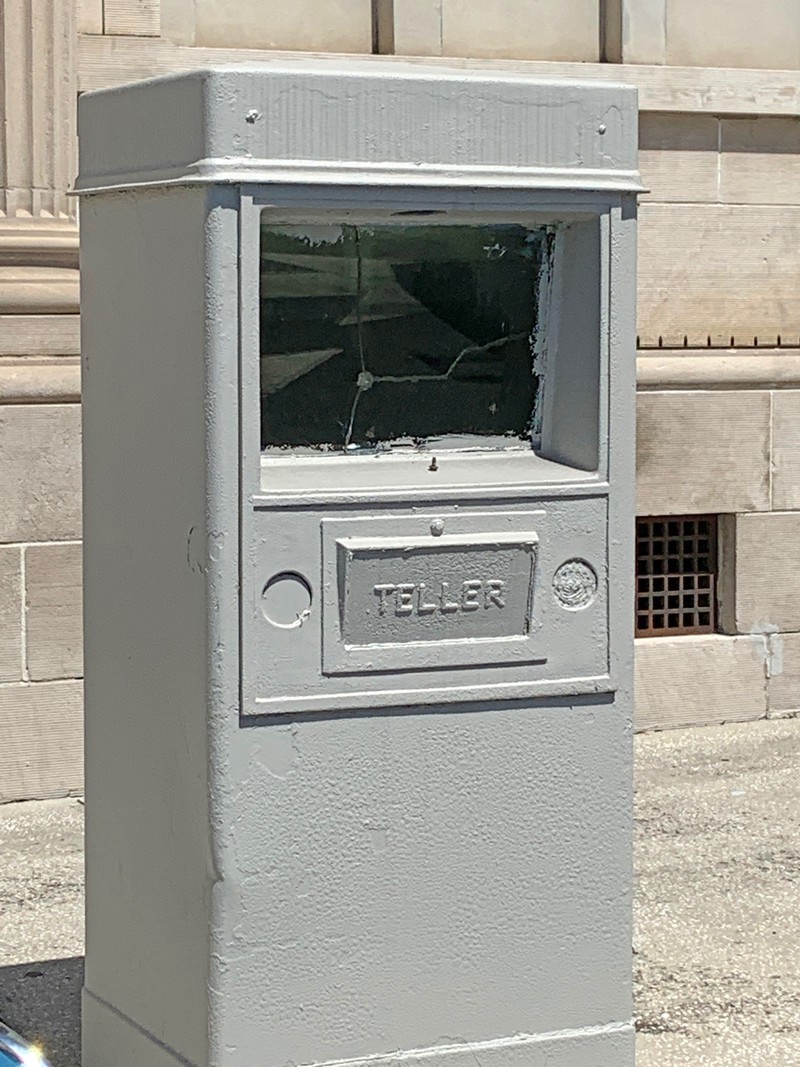
We tracked down a temporal anomaly to the Ocala National Bank. (Needless to say, none of the times on the clocks was correct.) On the back of the building is a door to nowhere, and around the corner of the same building is yet another door to nowhere ... so a space warp is obviously at the root of the temporal distortion. On the street practically under the clocks is a non-functional, ossified bank teller kiosk, itself frozen in time. Why not?
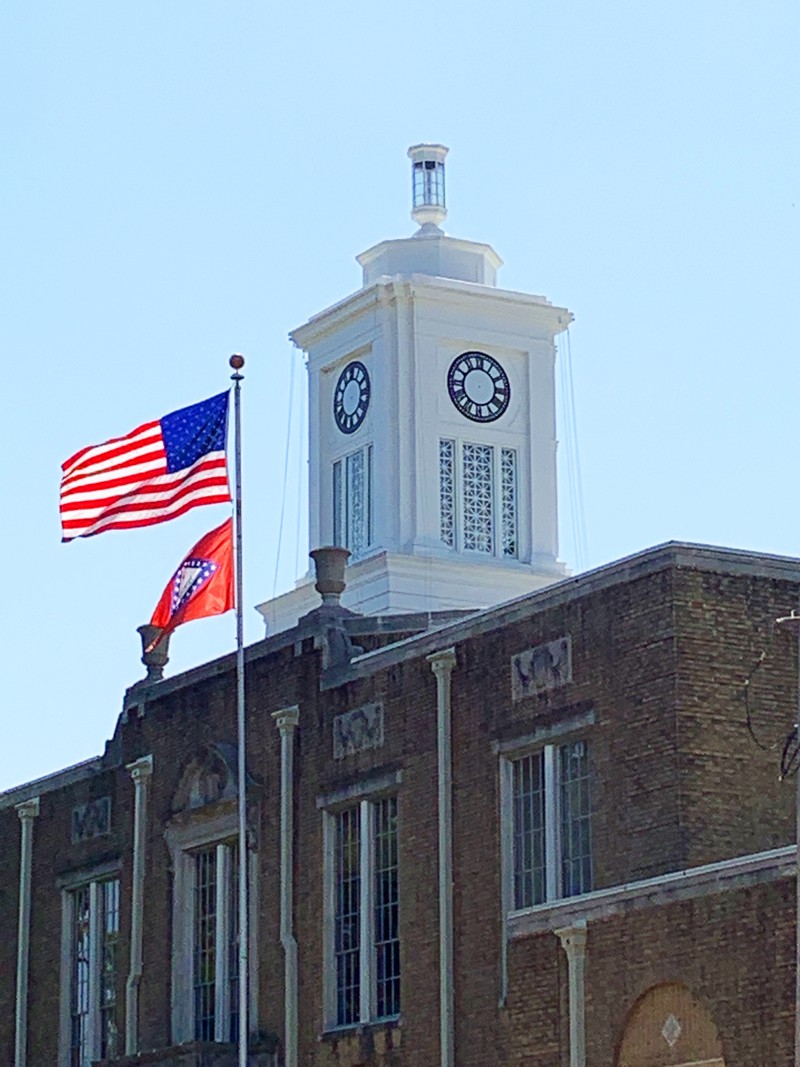
We tracked down a temporal anomaly to the Camden, Arkansas courthouse, whose clock tower is hands-free. We agree with Mark Bauer that "absence of data does not necessarily mean the absence of effect (which is listed as '—')."
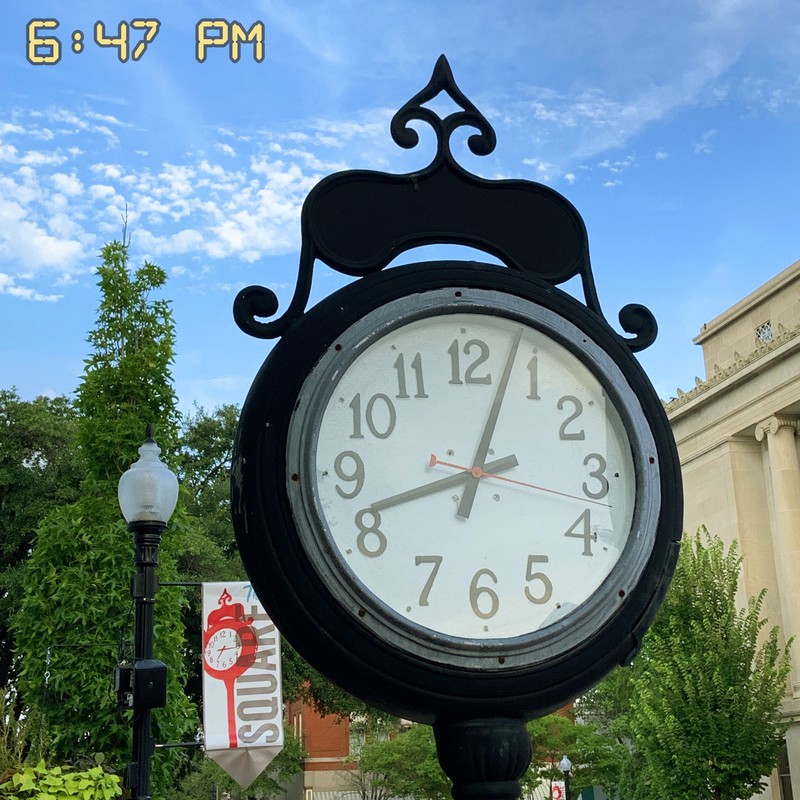
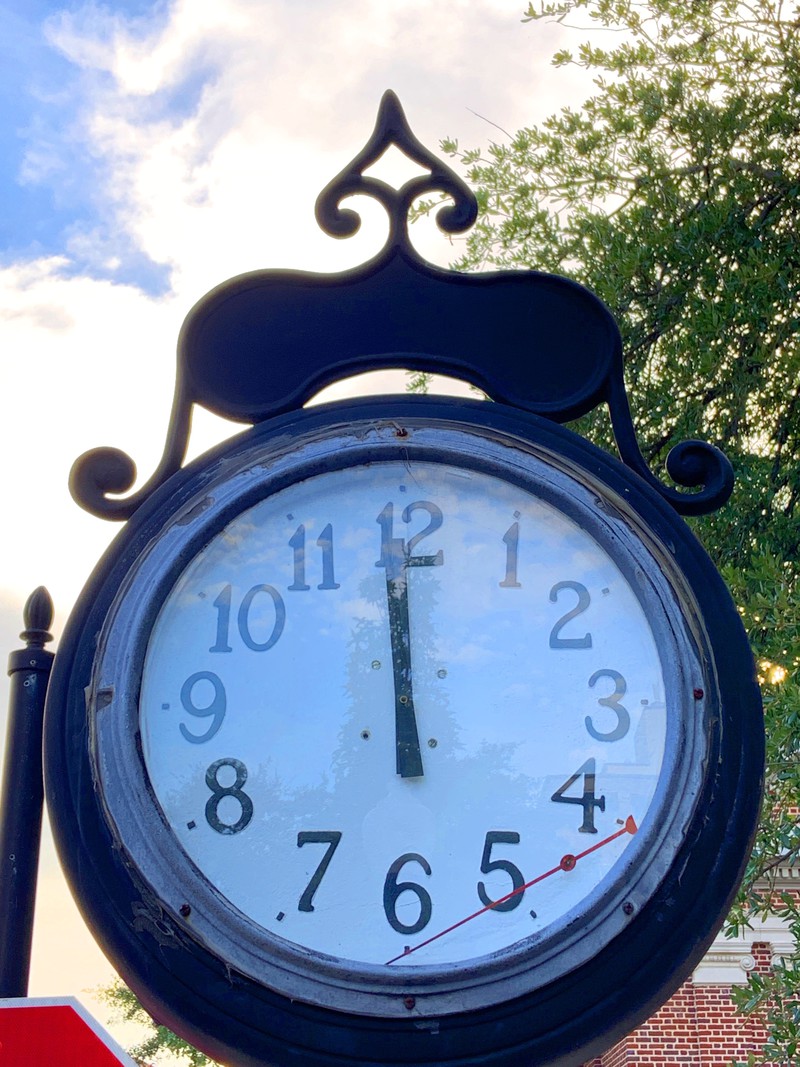
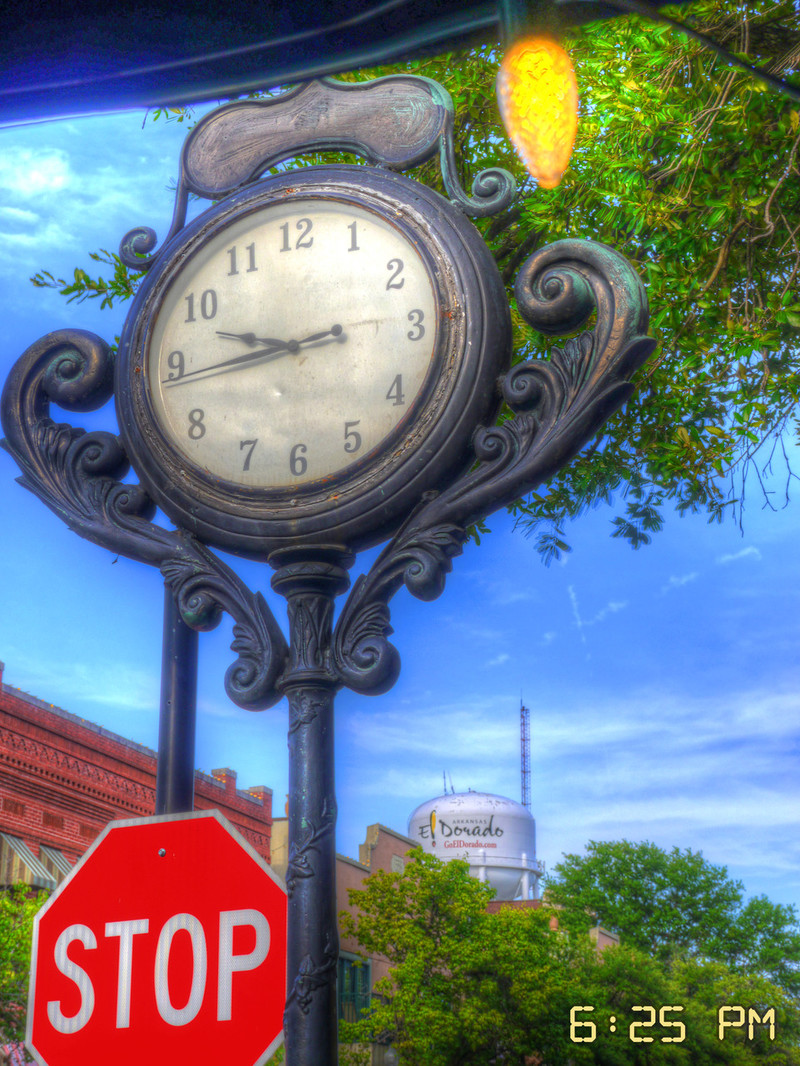
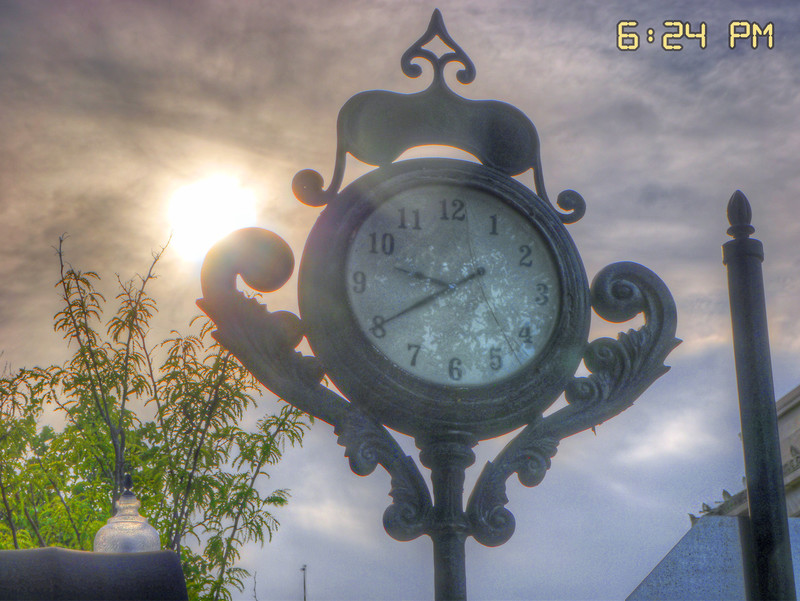
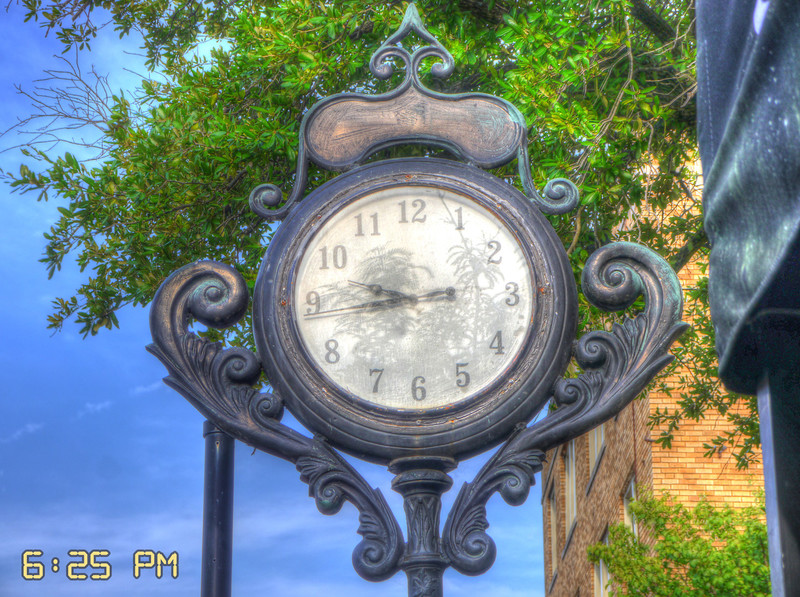
We tracked down a very significant temporal anomaly to El Dorado, Arkansas. The symbol of Main Street is a clock, but none of the clocks on the town square agree on the time. Even the clock printed on the town square banner is correct only twice a day. El Dorado's Main Street has been named the best Main Street in the United States, and no wonder — the feeling of classic Americana is ... well ... literally timeless!
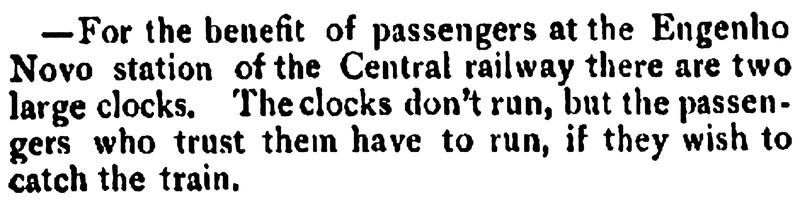
The two large clocks at the railway station don't run, but the passengers who trust them have to run if they wish to catch the train. From The Rio News, March 29, 1892.
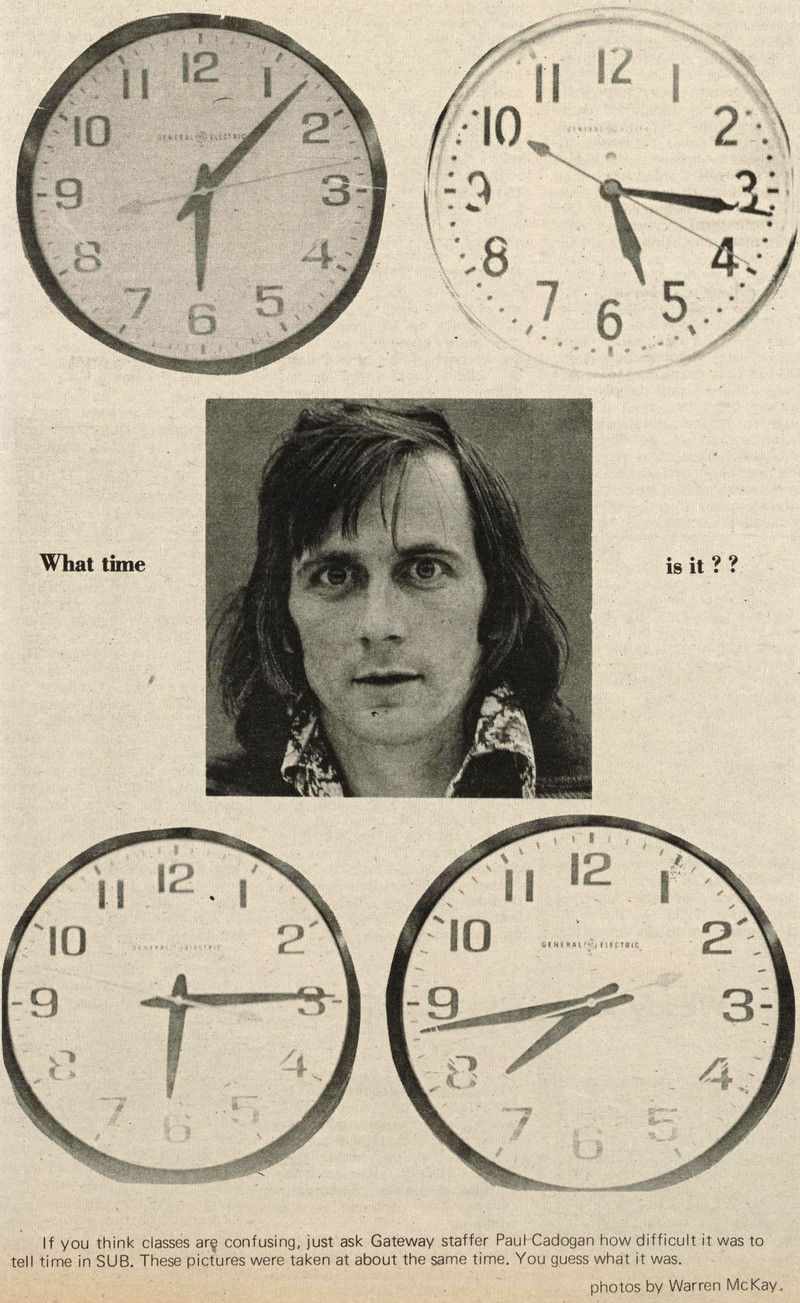
A temporal anomaly in Edmonton, Alberta -- four clocks photographed around the same time in the university's student union building, whatever that time may have been. From The Gateway, Nov. 6, 1973.
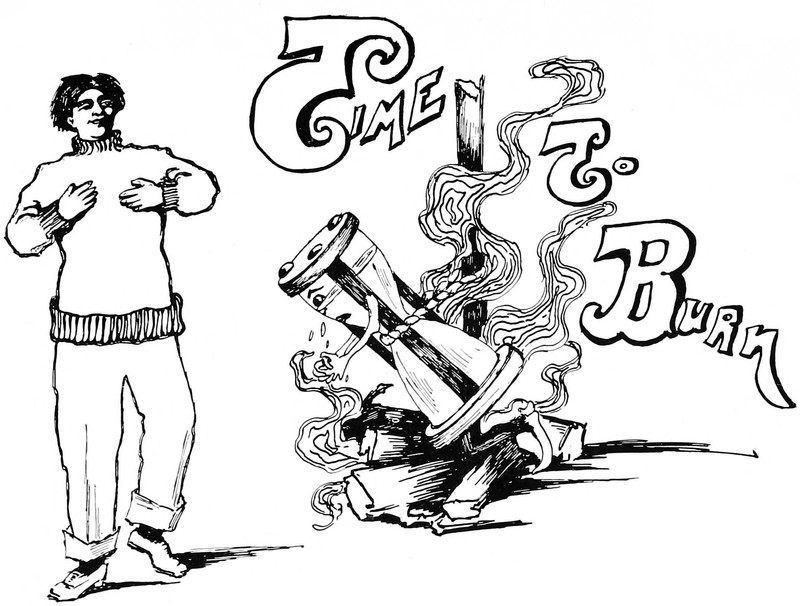
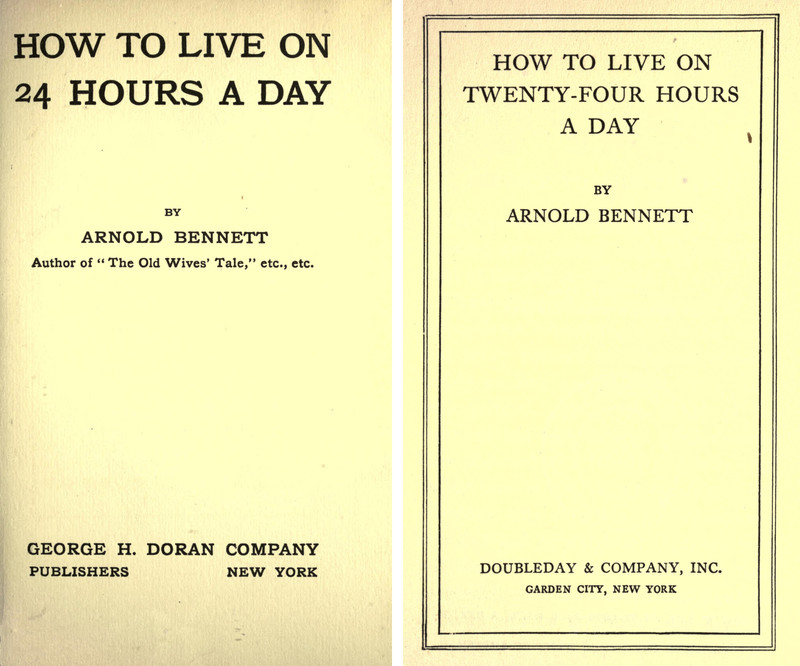
Great title: How to Live on 24 Hours a Day by Arnold Bennett, 1910. But does spelling out the number 24 make for a longer day? The version with the numeral has 75 pages, and the version with "twenty-four" has 103 pages.