CRAIG CONLEY (Prof. Oddfellow) is recognized by Encarta as “America’s most creative and diligent scholar of letters, words and punctuation.” He has been called a “language fanatic” by Page Six gossip columnist Cindy Adams, a “cult hero” by Publisher’s Weekly, a “monk for the modern age” by George Parker, and “a true Renaissance man of the modern era, diving headfirst into comprehensive, open-minded study of realms obscured or merely obscure” by Clint Marsh. An eccentric scholar, Conley’s ideas are often decades ahead of their time. He invented the concept of the “virtual pet” in 1980, fifteen years before the debut of the popular “Tamagotchi” in Japan. His virtual pet, actually a rare flower, still thrives and has reached an incomprehensible size. Conley’s website is OneLetterWords.com.
"Is there a word for that awful realization that your colleagues are as bad as your students? There should be. Gedämpfteerwartungenenttäuscht or something like that." —The Musubi Murder, by Frankie Bow
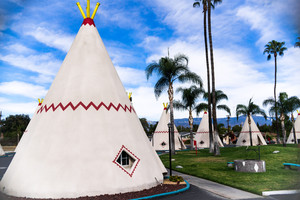
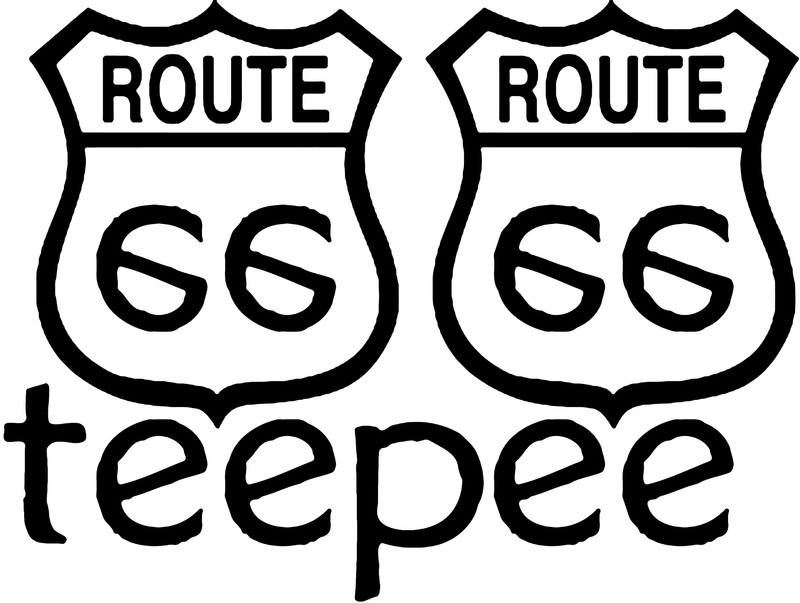
We're often asked, "is it teepee or tepee?" You'll see tepee everywhere, but "popularity is only of temporary moment ... a vulgar struggling for supremacy" (Chamber's Edinburgh Journal, 1849). Indeed, California's Wigwam Motel (on both the historic registry and alongside the ghostly vestiges of Route 66) spells it teepee. That's surely definitive. For further proof, we offer our own graphical evidence (heehee).
These are text scanning errors: in each case, the word apocrypha appeared as a page or column heading but got attached to first words on the page or the final words of the previous page, creating a new sentence that exists only in the context of a Google search result.
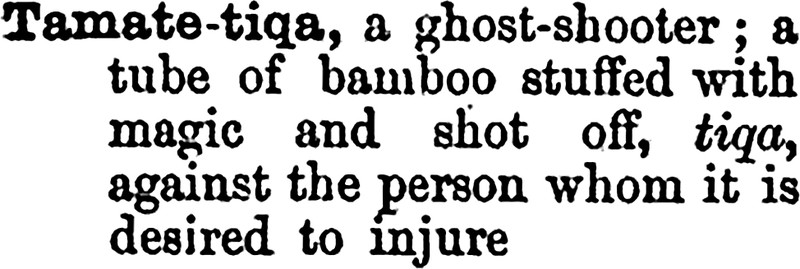
In the Mota language of the Vanuatu archipelago, a tamate-tiqa is a "ghost-shooter," a tube of bamboo stuffed with magic and shot off against the person whom it is desired to injure. From A Dictionary of the Language of Mota, Sugarloaf Island, Banks' Islands by Codrington and Palmer, 1896
Today we call them "paranormal investigators," "ghost hunters," or Ghostbusters, but in the early 1900s they were known as "ghost breakers." Our image is from the title page to The Ghost Breaker by Charles Williams Goddard & Paul Dickey, 1915.