|
|
 |
|
|
- juggernaut
- thunderdome
- transhuman
- electrolyte
- halcyon
- bourgeoise
- tarmac
- mundane
- odyssey
- expressway
- cobblestones
- favela
- consecrating
- galvanized
- supersonic
- masquerade
- Martian invasion
- testosterone
- supernova
- boogaloo
- Himalayas
|
|
|
|
|
|
|
"The poem is not the sum of the impressions, as a heap of diamond dust is the sum of its shining particles; nor is the poet merely a sensitized medium for their reception and transmission. Beneath the poem lie also innumerable blendings and fusings of impressions, brought about below the level of conscious mental processes." — John Livingston Lowes, The Road to Xanadu, 1927 |
|
|
|
|
|
|
We were delighted to stumble upon a seemingly absurd reference to " lengthy one-letter words." The context was newfangled electric typewriters with overly-sensitive touch-response: the slightest droop of the wrist, spelling lengthy one-letter words: mmmmm or zzzzzzzz
Of course, lengthy one-letter words add up to another passion of ours: all-consonant and all-vowel words! Can you guess our definitions for mmmmm and zzzzzzzz? |
|
|
|
|
|
|
Consonant-ly suprisingOn my travels trough the WWW I have come across a huge amount of useless, informative, amazing and scary sites. But I wanted to share this one with everyone. The Dictionary of All-Consonant WordsJust a quick browse through here threw up such gems as: qch.interj. a casual, cough-like utterance meaning oh. <"How’s Andy,” he asked casually. "Qch, fine,” said the other. — Dorothy L. Sayers, The Five Red Herrings. hgkh.n. the sound of someone struggling not to drown in a vat of fresh cream, as in the graphic novella Hearts and Minds by Scott McCloud; see also sppt, blpb. C-rch.n. a judicious alien Luminoth who lies silently "in a small corridor within the depths of a high fortress,” in the video game "Metroid Prime 2: Echoes.”
|
|
|
|
|
|
|
"When a new mode of imagining erupts into literature, it dislocates the rhetoric of its time, and is of subtler stuff than that rhetoric—'the infinite arrives barefoot on this earth,' says Hans Arp." —Christopher Middleton's introduction to Jakob Von Guten by Robert Walser--- William Keckler writes: I love the Hans Arp quote. Or was it Jean Arp? It must be hard to live in Alsace-Lorraine where one never knows one's true name or nationality.
Binary human beings should make a comeback.
I'm fairly certain one of my favorite poetry presses in America, Burning Deck, published Mr. Middleton's own poetry, as well as some of his translations. Unfortunately, I don't own those books, though I probably own a hundred other titles from that awesome press run by legends Keith and Rosmarie Waldrop.
I think it's cool to see you zero degrees of separation away from them with this post, Craig!
|
|
|
|
|
|
|
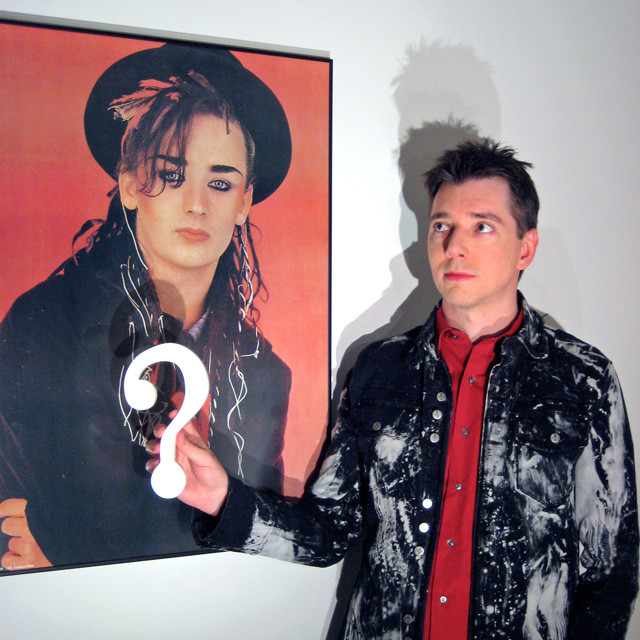
We question the premature apostrophe in a banner made in honor of the recently incarcerated singer/songwriter Boy George. In the purple ribbon, the apostrophe appositely hovers between the O and the Dowd, but the mark skips ahead one place in the initials (perhaps to indicate hopes for an early release from prison). Does the unexpected period between the O and D subliminally suggest an abbreviation for "overdose," as drugs figured into the charges? In any case, here's a " get out of jail free" card for you, Boy George. |
|
|
|
|
|
|
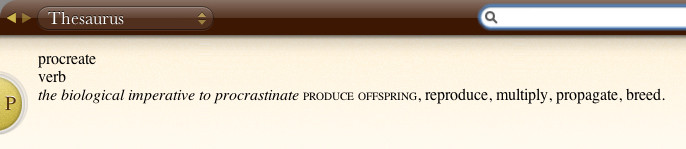
Our thesaurus widget offered quite a surprising definition for procreate. (See screenshot below.) The "biological imperative to procrastinate" sounds more like prophylaxis, eh? [Thanks to SPOGG for picking up this item!] |
|
|
|
|
|
|
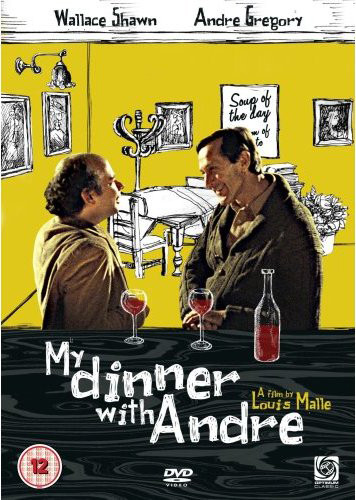
Looks like the artist for a new British release of My Dinner with Andre misread "dinner" as "diner." There's certainly no "Soup of the Day" sign at the swanky restaurant in the film! And that coat check lady looks as thin as a rail! |
|
|
|
|
|
|
"I rather enjoy that sense of bewilderment a novel gives you when you start reading it, but if the first effect is fog, I'm afraid the moment the fog lifts my pleasure in reading will be lost, too." — Italo Calvino, If On a Winter's Night a Traveler (Why not mention again how marvelous this book is?!)
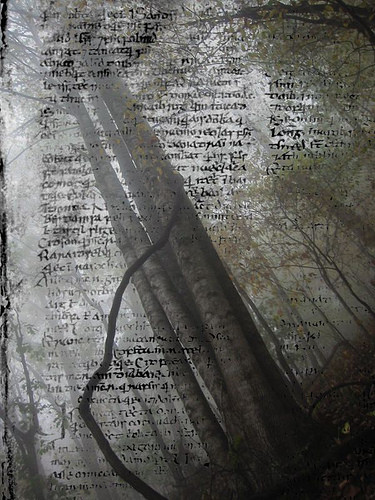
"The Ancient Irish Epic Tale," created by stephanie.
|
Page 63 of 74
> Older Entries...
Original Content Copyright © 2026 by Craig Conley. All rights reserved.
|