|
|
 |
|
From Prof. Oddfellow's sketchbook:
|
|
| Did You Hear the One I Just Made Up? |
(permalink) |
|
|
|
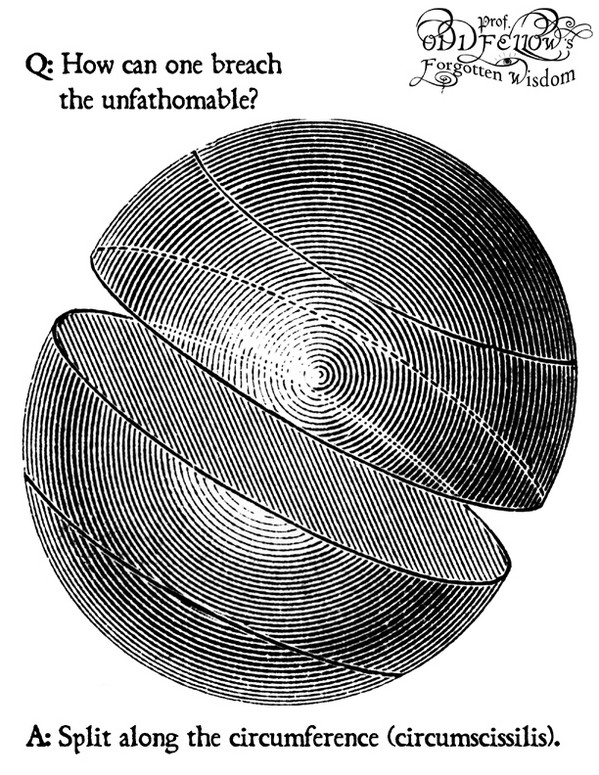
Q: Even when he's not playing cards, he has the biggest scores. Who is he? A: John Williams. |
|
Piecing together the secret of inspiration . . . |
|
|
|
|
|
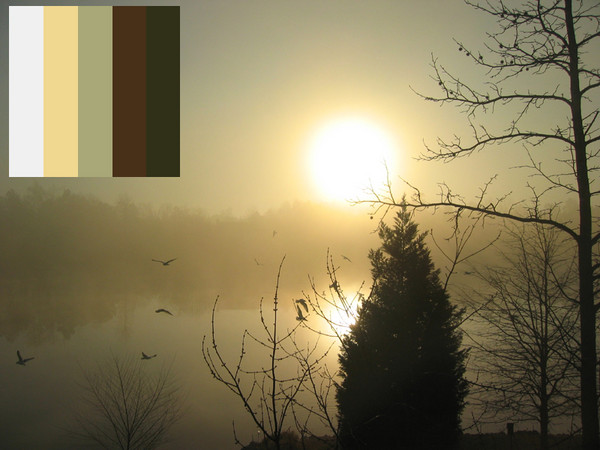
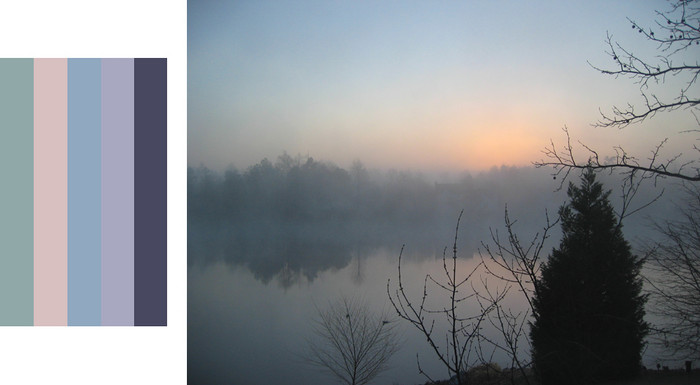
I bleakly stared into the dark void.

Full-size photo available here.
|
|
| Puzzles and Games :: Letter Grids |
(permalink) |
|
|
|

This puzzle grid contains several big words. Can you find them?
• 7-letter words: 15
• 8-letter words: 3
• 9-letter words: 1
All letters in the word must touch (in any direction), and no square may be reused.
Click to display solutions
|
| 7-letter words: |
• deplore
• elopers
• feeders
• floored
• footler
• foretop
• hoopers
• loopers |
• pleurae
• proofed
• spoofed
• spoored
• torpedo
• trooped
• trooper |
| 8-letter words: |
• deplores
• foretops |
• troopers |
| 9-letter words: |
| • torpedoes |
|
|
|
|
|
|
|
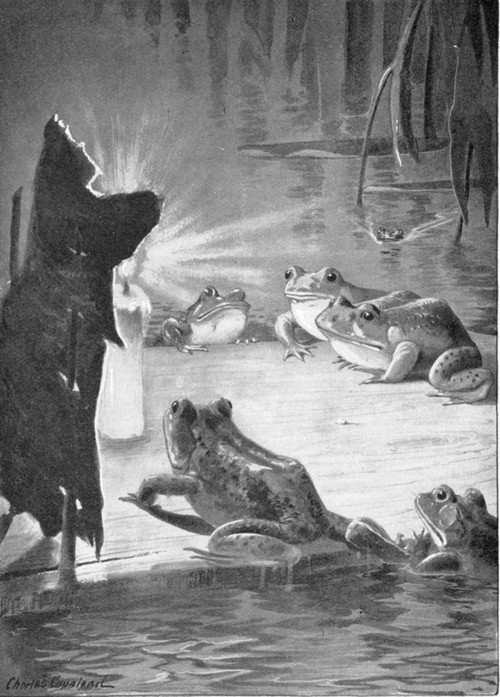
CHIGWOOLTZ THE FROG (from Wilderness Ways by William J. Long, freely available from Project Gutenberg) The most curious and interesting bit of their strange life came out at night, when they were fascinated by my light. I used sometimes to set a candle on a piece of board for a float, and place it in the water close to shore, where the ripples would set it dancing gently. Then I would place a little screen of bark at the shore end of the float, and sit down behind it in darkness.
Presently two points of light would begin to shine, then to scintillate, out among the lily pads, and Chigwooltz would come stealing in, his eyes growing bigger and brighter with wonder. He would place his forearms akimbo on the edge of the float, and lift himself up a bit, like a little old man, and stare steadfastly at the light. And there he would stay as long as I let him, just staring and blinking.
Soon two other points of light would come stealing in from the other side, and another frog would set his elbows on the float and stare hard across at the first-comer. And then two more shining points, and two more, till twelve or fifteen frogs were gathered about my beacon, as thick as they could find elbow room on the float, all staring and blinking like so many strange water owls come up from the bottom to debate weighty things, with a little flickering will-o'-the-wisp nodding grave assent in the midst of them. But never a word was spoken; the silence was perfect.
Sometimes one, more fascinated or more curious than the others, would climb onto the float, and put his nose solemnly into the light. Then there would be a loud sizzle, a jump, and a splash; the candle would go out, and the wondering circle of frogs scatter to the lily pads again, all swimming as if in a trance, dipping their heads under water to wash the light from their bewildered eyes. |
|
|
|
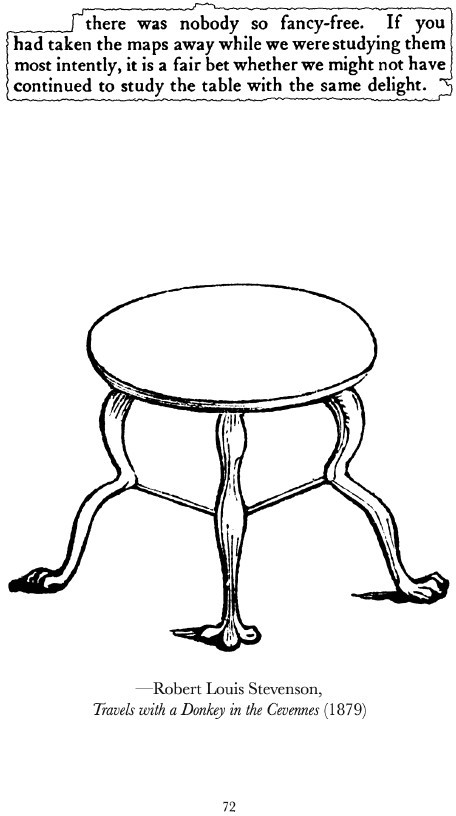
TearsTears were the oldest trick in the book used by women, yet somehow his usual immunity wasn’t working.
—Francis Ray, Only Hers (2000)
|
|
|
|
|
|
| I Found a Penny Today, So Here's a Thought |
(permalink) |
|
|
|
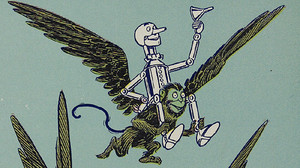
Original Colors: The Wonderful Wizard of Oz
Though it has been depicted countless times on stage and screen, the marvelous land of Oz has an original and quite inventive color palette. The genuine colors of the yellow brick road, the field of poppies, the Cowardly Lion’s mane, the flying monkeys, Toto, and the great Emerald City are preserved in the very first printing of The Wonderful Wizard of Oz (1900). That edition of the book is preserved in the Library of Congress Rare Book and Special Collections Division, available for on-line viewing with extraordinarily high quality scans. “The Wonderful Wizard of Oz was an innovative book not least because of the twenty four full color plates and myriad monochromatic illustrations in which the color changed according to the location in the story (Kansas = grey, Emerald City = green and so on). With the illustrative vignettes often encroaching on the text area, the type was cleverly printed over the top of the colored images” (BiblioOdyssey). Without further ado, here are the official colors of this beloved classic.
[Read the entire article in my guest blog at Colourlovers.com.]
|
|
From Prof. Oddfellow's sketchbook:
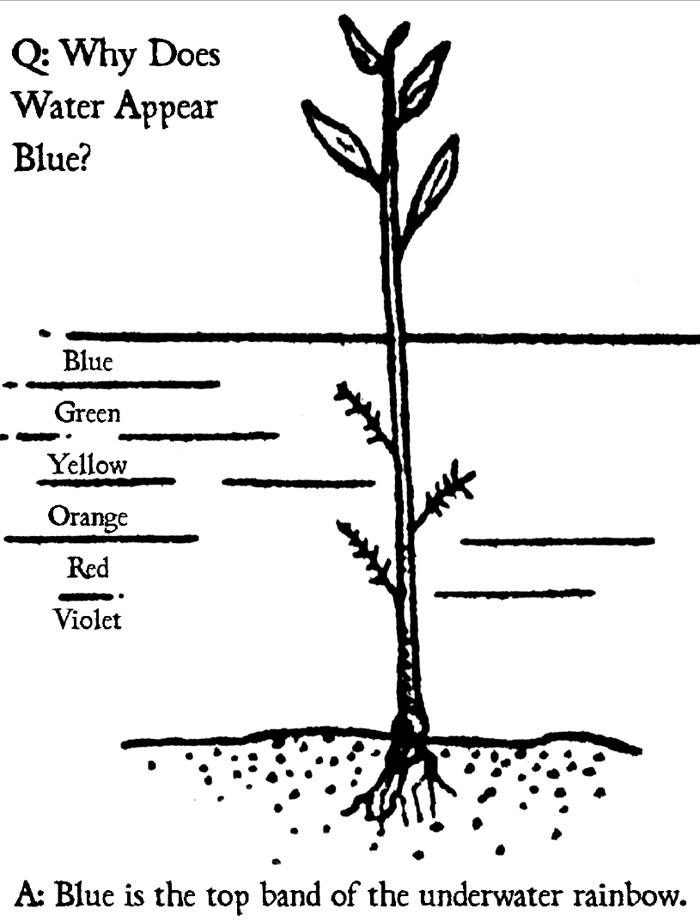
Thanks to Codename Gimmick, whose word chromonautical inspired this diagram.
|
|
Piecing together the secret of immortality . . . |
|
|
|
|
|
| I Found a Penny Today, So Here's a Thought |
(permalink) |
|
|
|
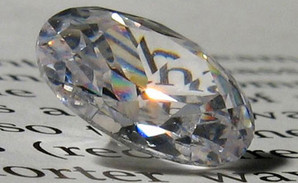
Diamonds in the RougeThough widely perceived as colorless, diamonds are infrequently achromatic and can occur in every hue of the rainbow. In fact, color is one of the four standards for judging the beauty and worth of a diamond (the others being carat, cut, and clarity). When it comes to diamond color, there are two seemingly contradictory principles: less is more, and more is more. The fewer impurities and flaws, the more transparent the diamond and the higher the value. Yet rare colors such as blue, green, pink, orange, and black are highly desirable and even museum-worthy. A faint straw yellow will detract from a diamond's value, while a deep yellow is prized. "White" diamonds are classified according to their degree of transparency. Most white diamonds actually contain yellow or brown tints. The Gemological Institute of America developed a scale of diamond color saturation, ranging from D (colorless) to Z (noticeable light yellow or brown). Diamond color is determined by comparing a gem to a master set. Special folded cards are also used to evaluate color. Dara Horn poetically describes how diamond color is influenced by context. Three diamonds that look identically transparent against deep black velvet reveal their differences when placed in the crease of white paper: "The first sat tarnished on the paper, throbbing a bruised and tawny color; the second glowed a dim yellow like a dying gas lamp in an old painting. The last one, exposed and revealed, blazed burning white." [Read the entire article in my guest blog at Colourlovers.com.]
|
Page 3 of 4
> Older Entries...
Original Content Copyright © 2026 by Craig Conley. All rights reserved.
|