|
|
 |
|
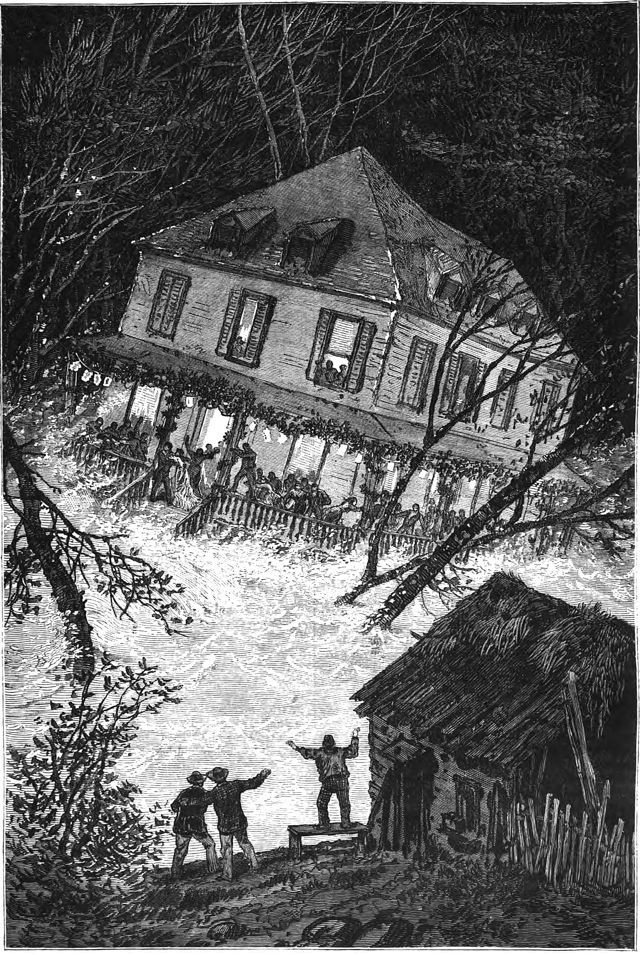
A floating house party from an 1881 issue of Frank Leslie's Popular Monthly magazine.
|
|
 "Don't take this the wrong way. I've been down that road, so I'm the last person to criticize. All I'm saying is, watch it." — Darlene Quinn, Twisted Webs
|
|
 "'A rose is a rose is a rose is a rose' — and enough is enough is enough." —Shana Alexander, "The Case for Jean Harris," New York Magazine (April 7, 1986)
|
|
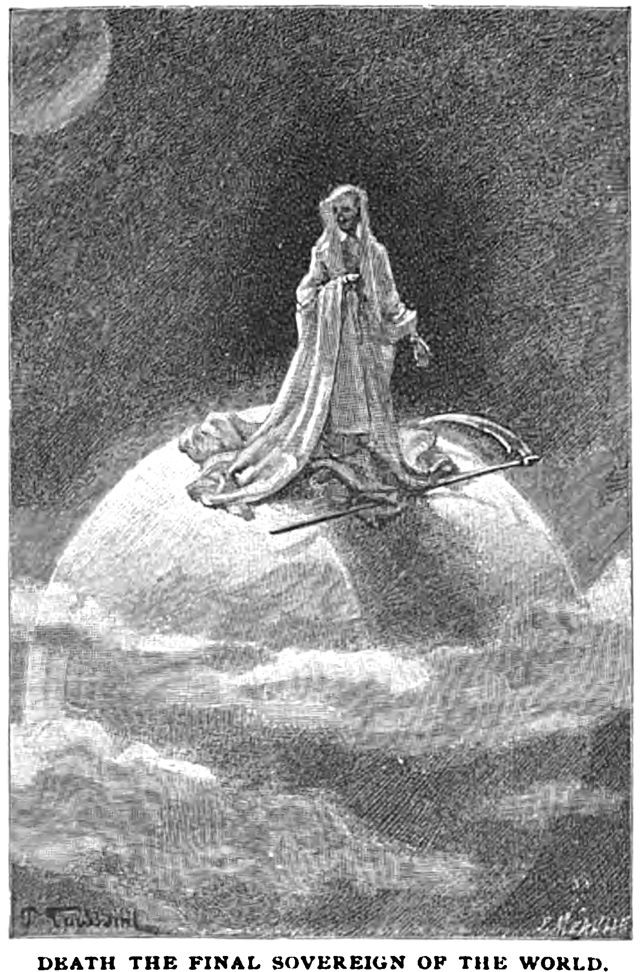
An illustration from an 1893 issue of Cosmopolitan magazine. The caption reads: "Death the final sovereign of the world."
|
|
 I'm older than I look.
|
|
I dreamed of invented compound words, deliberate misspellings, and the grammar of gossip.
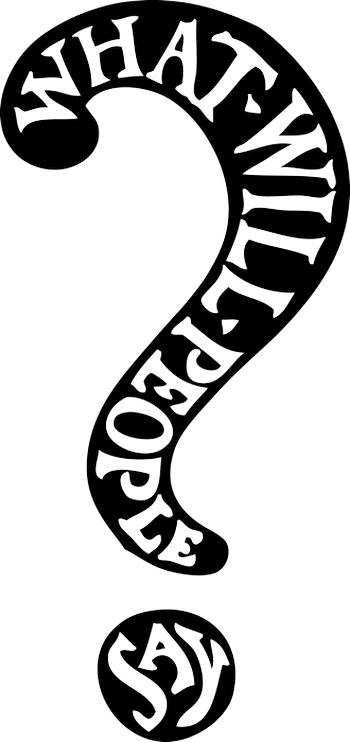
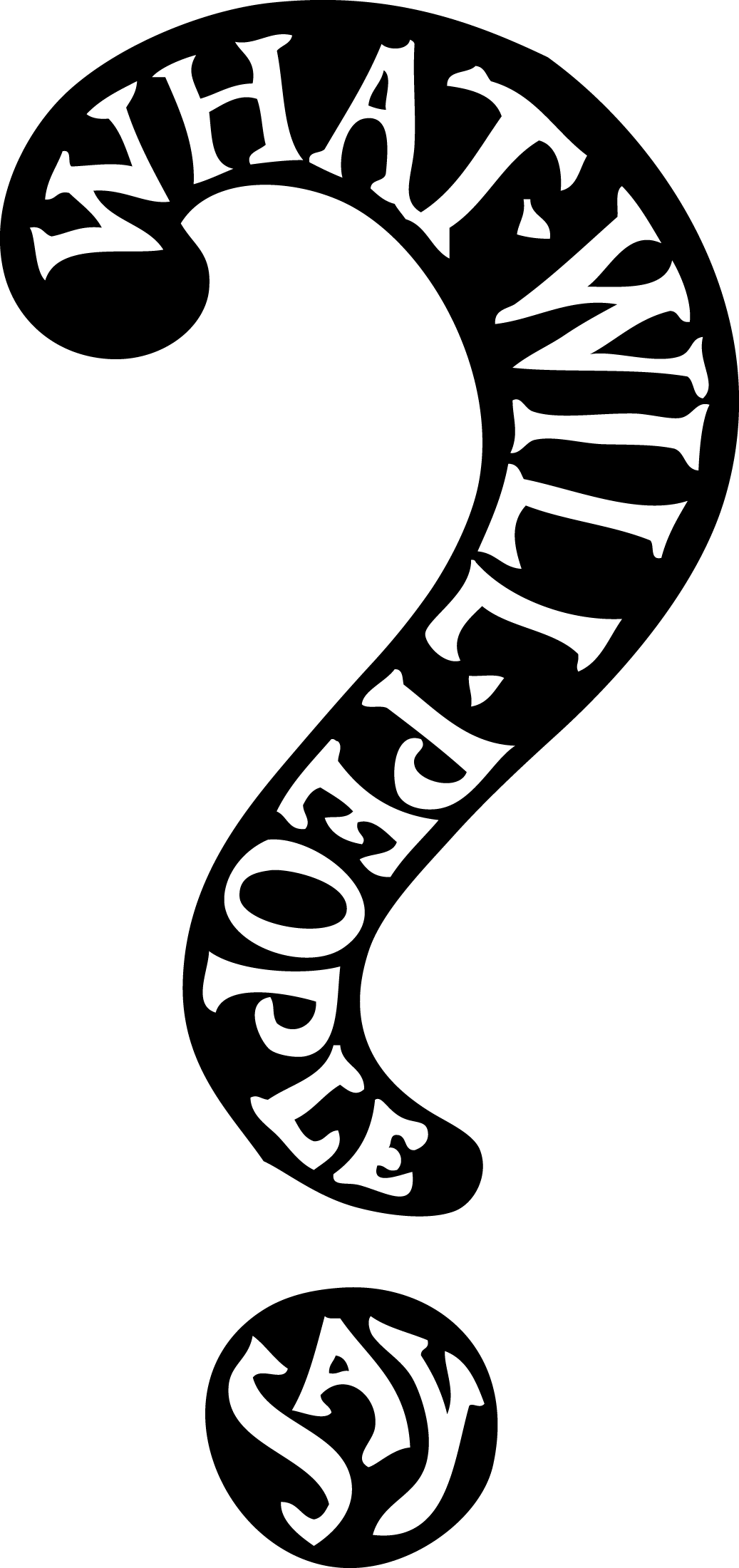
Prof. Oddfellow offers this free vintage clip-art question mark, originally appearing in a 1914 issues of Harper's Magazine and painstakingly restored to its original glory. The image is available for download in high-resolution GIF and vector EPS formats.
|
|
| The Ghost in the [Scanning] Machine |
(permalink) |
|
|
|
~ Unsubstantiated Insubstantiality ~ 
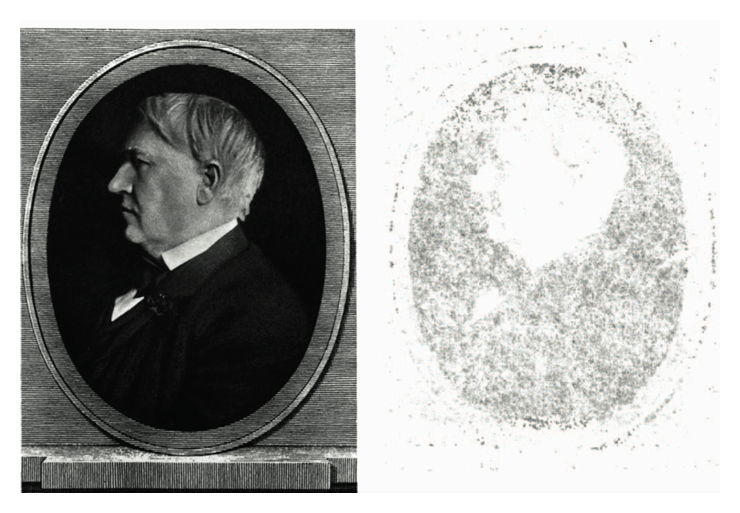
Portrait from Memoir of William Carey.
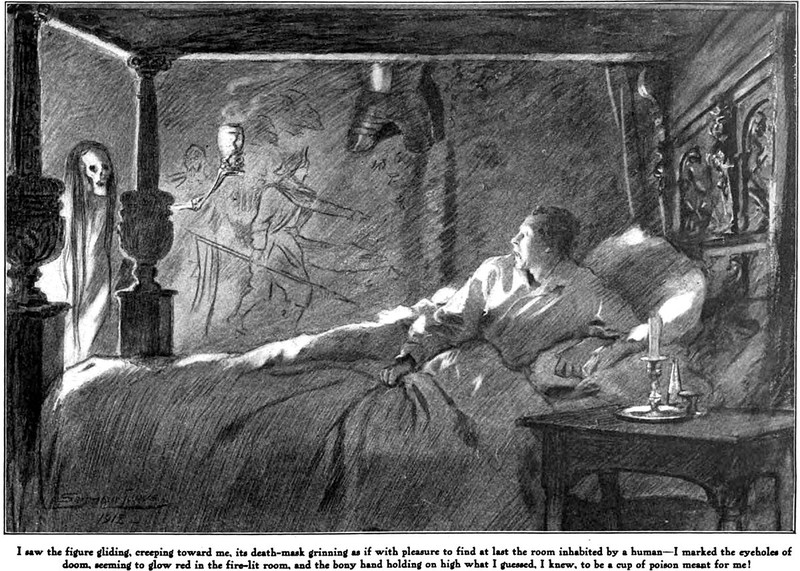
"The strong light rendered the apparition invisible to hiseyes.” —Justinus Kerner, "The Ghost-Seer of Prevorst”
|
|
|
|
|
|
---
A collaborative work between poets Gary Barwin and Hugh Thomas and featuring illustrations by Craig Conley, the book – as its title suggests – takes the paradoxical and absurd prose of the Czech literary giant as a point of departure for tangential musings on language, transformation and, of course, the nature of parable itself. The book’s authors summarized the impetus of the project early in the evening with the proclamation that “new writing is the imaginary future of past writing.” It is with this sense of creative lineage that Franzlations sets out to explore the labyrinthine corridors of Kafka’s work. ...
Against projections of Conley’s minimal, diagrammatic illustrations, Barwin and Thomas alternated rapidly between each other, juggling their book’s seemingly self-contained aphorisms and parables in a rhythm that highlighted the project’s overall cohesion.
A tribute to Kafka stripped of the element of narrative might easily risk being a fragmented experience, a mere collection of paradoxes and non-rational linguistic puzzles. Fortunately, Barwin and Thomas inject the word-play of Franzlations with exactly the kind of wit and dark humor often overlooked in Kafka’s own work. Rather than focus on the nightmarish quality of Kafka’s writing, Barwin and Thomas emphasize the playful irony of metamorphosis, the way in which things both are and are not what they appear to be. In one memorable riff on that infamous opening line, the authors recounted how “one morning Ovid woke to find himself a Czech insurance officer.” While Barwin and Thomas moved deftly between these registers Thursday night, between light-heartedness and cerebral absurdity, so many mirrors, inversions and mazes eventually sent this reviewer’s head spinning. Clearly, Franzlations is a book to be absorbed slowly and revisited. After all, as the authors themselves noted, “a road is a labyrinth unfurled.”
|
|
Ponce de León Revealed as the Legendary "Ninth Immortal” of Chinese Mythology
St. Augustine, Florida - The saintly "Eight Immortals” of ancient Chinese folklore are finally ready to play ball as an unlikely ninth comes up to bat: famed Spanish explorer Juan Ponce de León (1474 - ∞).
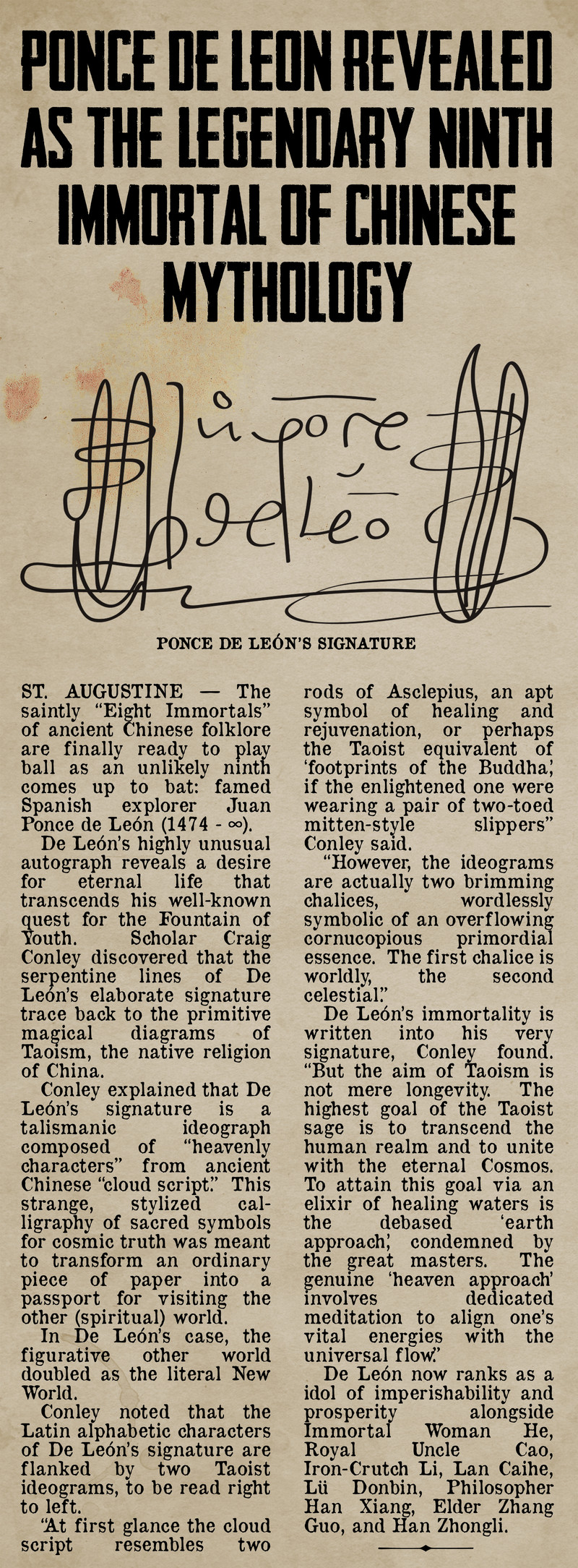
De León’s highly unusual autograph reveals a desire for eternal life that transcends his well-known quest for the Fountain of Youth. The serpentine lines of his elaborate signature trace back to the primitive magical diagrams of Taoism, the native religion of China.
De León’s signature is a talismanic ideograph composed of "heavenly characters” from ancient Chinese "cloud script.” This strange, stylized calligraphy of sacred symbols for cosmic truth was meant to transform an ordinary piece of paper into a passport for visiting the other (spiritual) world. In De León’s case, the figurative other world doubled as the literal New World.
Note that the Latin alphabetic characters of De León’s signature are flanked by two Taoist ideograms, to be read right to left. At first glance the cloud script resembles two serpents winding around rods of Asclepius (an apt symbol of healing and rejuvenation) or perhaps the Taoist equivalent of "footprints of the Buddha” (if the enlightened one were wearing two-toed mitten-style slippers). However, the ideograms are actually two brimming chalices, wordlessly symbolic of an overflowing cornucopious primordial essence. The first chalice is worldly, the second celestial.
De León’s immortality is written into his very signature. But the aim of Taoism is not mere longevity. The highest goal of the Taoist sage is to transcend the human realm and to unite with the eternal Cosmos. To attain this goal via an elixir of healing waters is the debased "earth approach,” condemned by the great masters. The genuine "heaven approach” involves dedicated meditation to align one’s vital energies with the universal flow.
De León now ranks as a idol of imperishability and prosperity alongside Immortal Woman He, Royal Uncle Cao, Iron-Crutch Li, Lan Caihe, Lü Donbin, Philosopher Han Xiang, Elder Zhang Guo, and Han Zhongli.
|
|
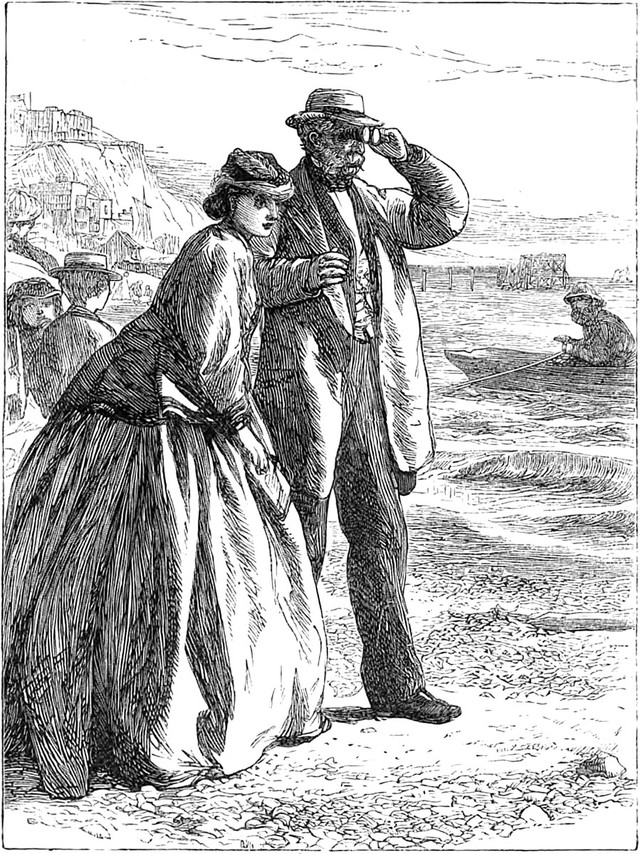
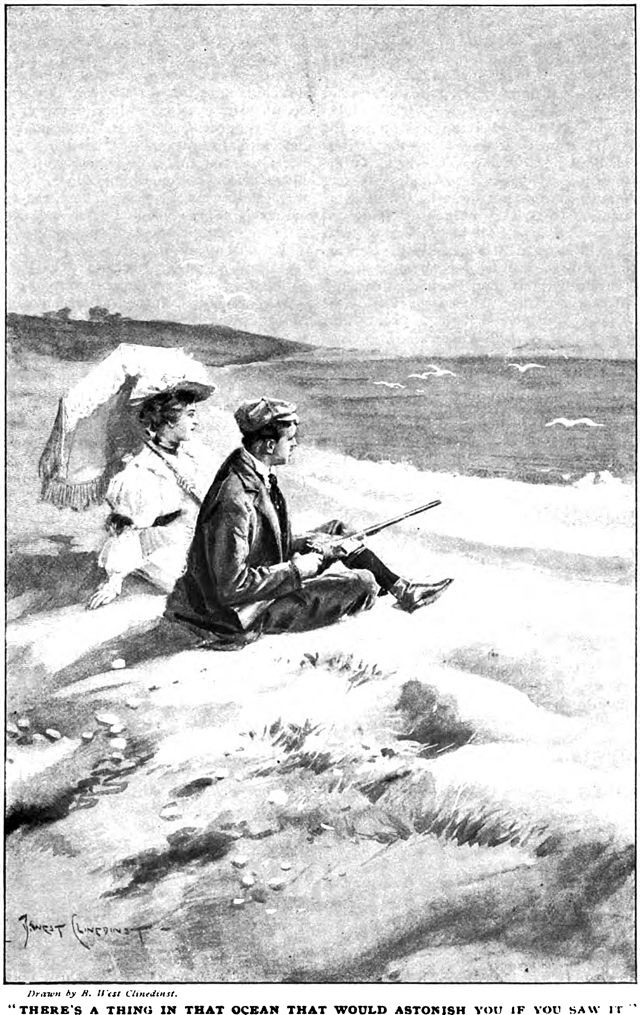
Staring into the depths: an illustration from an 1897 issue of Cosmopolitan magazine. The caption reads: "There's a thing in that ocean that would astonish you if you saw it."
Dedicated to Jonathan due to "things."
|
Page 2 of 5
> Older Entries...
Original Content Copyright © 2026 by Craig Conley. All rights reserved.
|