|
|
 |
|
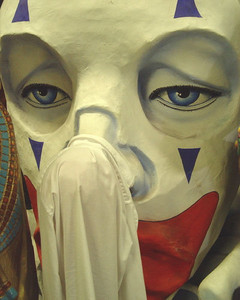
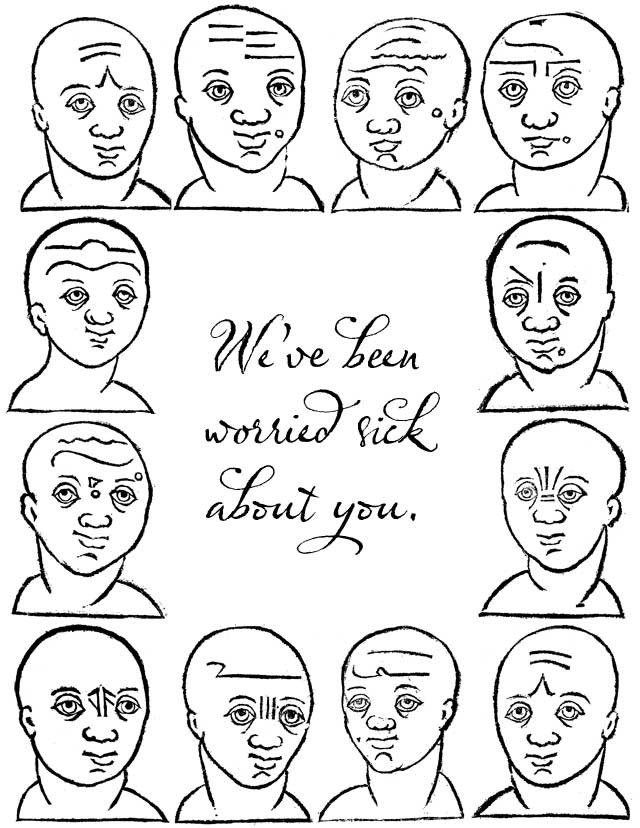
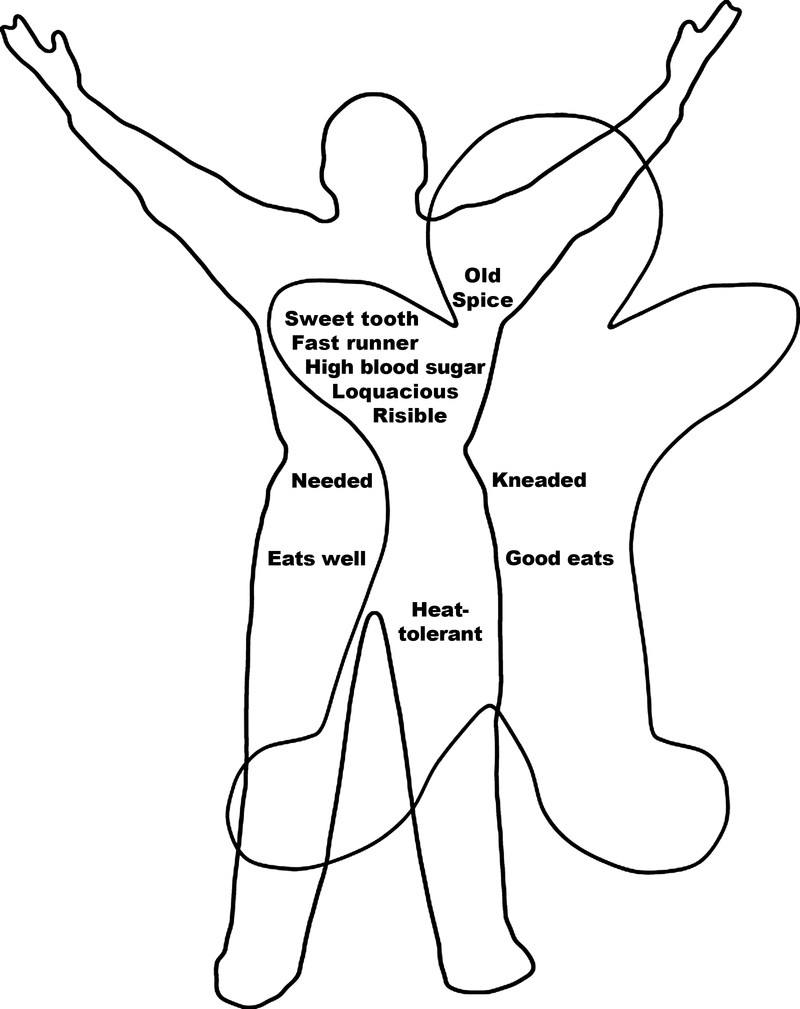
From Prof. Oddfellow's sketchbook, the Venn overlap of a gingerbread man and a man.
|
|
More and more as I grow older I see the beautiful dream of life expanding till it is much more important than gray life itself — a dark, red dream the color of the cockatoo.
—Jack Kerouac, Journal, July 4, 1949; quoted by John Leland in Why Kerouac Matters, 2007.
--- Rick Dale writes: Very cool post! Thank you!
Perhaps you'd enjoy my Kerouac-obsessed blog at www.thedailybeatblog.blogspot.com.
|
|
| I Found a Penny Today, So Here's a Thought |
(permalink) |
|
|
|
  by Gerald DavisonThe Spectral Colors of Brocken Bows and GloriesImagine hiking on a sunny mountain and witnessing an unforgettable phenomenon worthy of a Hollywood special effects team: as a bank of chilly fog rises from a couloir, your shadow grows to gigantic proportion (hundreds of feet high), surrounded by a prismatic halo. 

|
In olden times, the spectre was considered to be of supernatural origin and fearfully ominous in nature. Today, the phenomenon is known as a "Brocken Bow," named after a mountain in Germany. Like a small, circular rainbow, a foggy Brocken Bow tends to last from several seconds to fifteen minutes. Bands of color surround the gigantic shadow at a distance of several feet. The outermost band is red, and the others follow the order of the typical rainbow. In some cases, a Brocken Bow is surrounded by a second bow, whose color order is reversed. A similar phenomenon, known as a Glory, is distinguished by the fact that the bands of color touch the head of the shadow. Glories typically sport seven bands of color and can last for hours at a time. Sometimes Glories are surrounded by glowing white fog bows. 
by bob the lomond
In ideal conditions, the sun shines behind the observer and a cloud of fog rises from a lower elevation in front. The ideal temperature for Brocken Bows and Glories varies between 19 and 56 degrees Fahrenheit. Though the bands of colors are no illusion, the size of the shadow is actually a trick of the eye. Apparently, the shadow appears gigantic due to a distortion of depth caused by moving fog particles at varying distances. For a detailed description of Brocken Bows and Glories from a scientific point of view, see Henry Sharpe's piece for Scottish mountaineers. Also don't miss The Nonist's study on the phenomenon, illustrated with vintage woodcuts and color photographs. 
by bob the lomond
[Read the entire article in my guest blog at ColourLovers.com.]
|
|
There are two types of comedian . . . both deriving from the circus, which I shall call the White Face and the Red Nose. Almost all comedians fall into one or the other of these two simple archetypes. In the circus, the White Face is the controlling clown with the deathly pale masklike face who never takes a pie; the Red Nose is the subversive clown with the yellow and red makeup who takes all the pies and the pratfalls and the buckets of water and the banana skins. The White Face represents the mind, reminding humanity of the constant mocking presence of death; the Red Nose represents the body, reminding mankind of its constant embarrassing vulgarities. . . . The emblem of the White Face is the skull, that of the Red Nose is the phallus. One stems from the plague, the other from the carnival. The bleakness of the funeral, the wildness of the orgy. The graveyard and the fiesta. The brain and the penis. Hamlet and Falstaff. Don Quixote and Sancho Panza. Laurel and Hardy.
—Eric Idle, The Road To Mars, 1999.
|
|
| Puzzles and Games :: Which is Funnier |
(permalink) |
|
|
|
 Which is funnier: An attempt by Lucy to stomp grapes or a “shot to the moon” by Jackie Gleason?
Clue: Which is funnier: An attempt by Lucy to stomp grapes or a “shot to the moon” by Jackie Gleason?
Clue: This is according to a book on how to construct sketch comedy
Answer: Lucy stomping grapes (The answer is in black text on the black background. Highlight it to view.)
Citation: Cherie Kerr, Build to Laugh: How to Construct Sketch Comedy With the Fast and Funny Formula (1998), p. 13
|
|
|
|
|
|
"The more gray and ordinary and undistinguished and commonplace the beginning of this novel is, the more you and the author feel a hint of danger looking over that fraction of 'I' that you have heedlessly invested in the 'I' of a character whose inner history you know nothing about." — Italo Calvino, If On a Winter's Night a Traveler
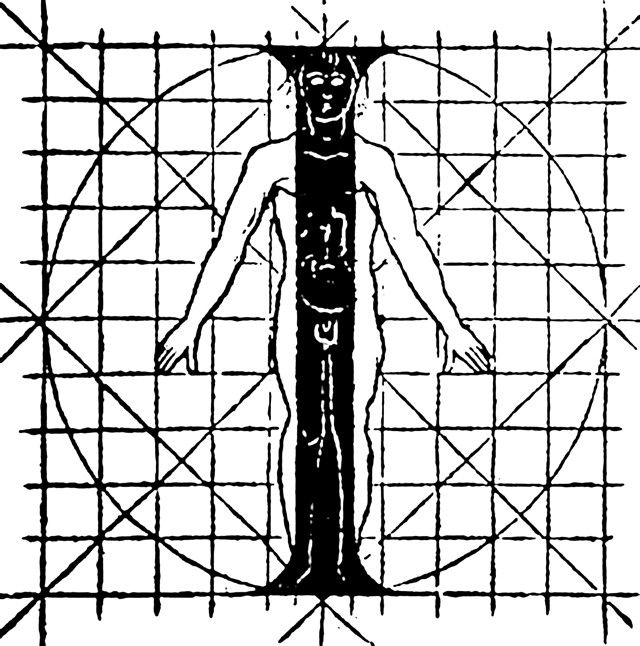
Sixteenth century illustration by Geoffroy Tory. --- Jeff writes: I can relate. How well do we know that other i, really?
Prof. Oddfellow writes: I learned the hard way that the other i's life is dotted with glamorous parties but also secrets and deceptions.
|
|
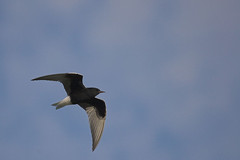
Sometimes Yakov lost sight of the words. They were black birds with white wings, white birds with black wings. He was falling in thoughtless thought, a stupefying white- ness.
—Bernard Malamud, The Fixer, 1966.
--- Jeff writes:
I can relate. Stupefying whiteness is not my friend.
|
|
|
|
|
|
Q: In his song " Humanized," Jon Ryman sings, "I'm half alive, just like a Chinese figurine." Are Chinese figurines indeed sentient? A: Yes—but only the jade statues are sentient. "Living Jade" (Jadeite, as opposed to Nephrite) displays mild intelligence.

Illustration by Prof. Oddfellow
|
|
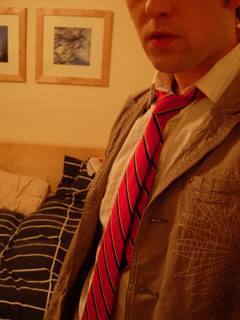
The man had on a brown suit, white shirt, and red tie, all of the same degree of cheapness, and all worn out to the same degree. The color of the suit was reminiscent of an amateur paint job on an old jalopy. The deep wrinkles in the pants and jacket looked as permanent as valleys in an aerial photograph. The white shirt had taken on a yellow tinge, and one button on the chest was ready to fall off. It also looked one or two sizes too small, with its top button open and the collar crooked. The tie, with its strange pattern of ill- formed ectoplasm, looked as if it had been left in place since the days of the Osmond Brothers. Anyone looking at him would have seen immediately that this was a man who paid absolutely no attention to the phenomenon of clothing.
—Haruki Murakami, The Wind-up Bird Chronicle, translated by Jay Rubin, 1997.
|
|
|
|
|
|
"'Questionable' is a splendid word; I have always attached a great philological value to it. It calls up a desire both to pursue and to avoid, or at any rate a very cautious pursuit, and stands in the twofold light shed by what is noteworthy and notorious in a thing—or a person." — Thomas Mann, Doctor Faustus |
Page 2 of 4
> Older Entries...
Original Content Copyright © 2026 by Craig Conley. All rights reserved.
|







 by
by