|
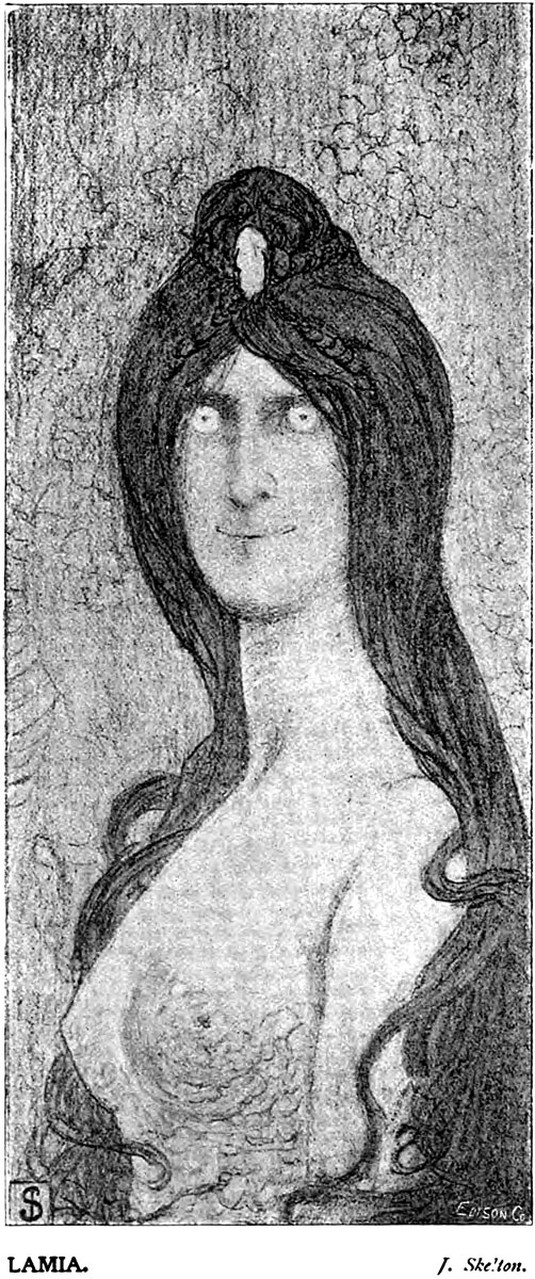
"Lamia": an illustration from a 1900 issue of The Idler magazine and a precursor to the spooky portraits hanging in Disneyland's Haunted Mansion.
|
|
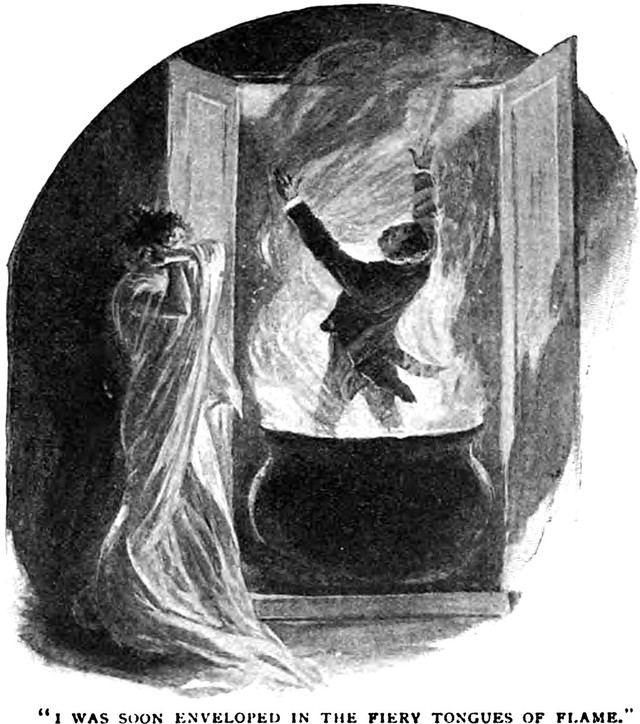
An illustration from a 1905 issue of Wide World magazine. The caption reads: "I was soon enveloped in the fiery tongues of flame."
|
|
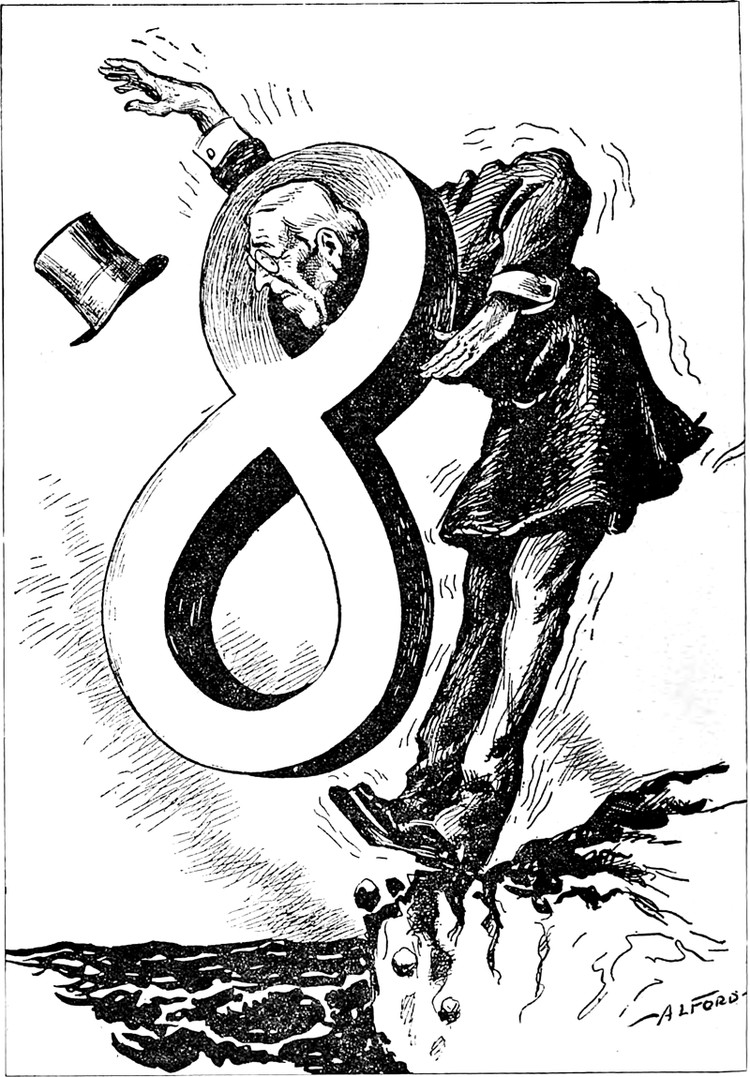
From Cartoons magazine, 1916.
|
|
|
|
|
|
Before Arrested Development introduced us to the fictional self-help book The Man Inside Me (2004), there was The Man Inside (1914). "For there's a man inside me, and only when he's finally out, can I walk free of pain." —Dr. Tobias Fünke

Recreation of The Man Inside Me cover by VIsraWratS.
|
|
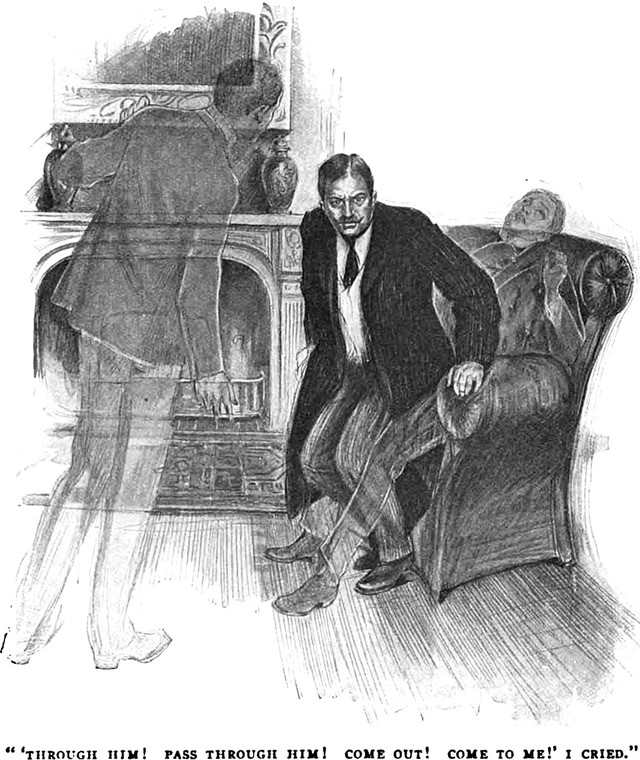
An illustration from a 1904 issue of Metropolitan magazine. The caption reads: "'Through him! Pass through him! Come out! Come to me!' I cried."
|
|
I dreamed again I was allowed to marry another semicolon. Our wedding
was conducted by San Francisco Superior Court Judge James Warren, who
kept saying, "I am not trying to be petty here, but it is a big deal
... That semicolon is a big deal."
Later that night, I dreamed that I discussed my marriage with Rick
Boyer, who said: "Like punctuation marks, milestones break up, to a
degree, the continuity of daily experience. And like those little
black marks, they add dimensions to the text of our lives, extra
meaning that otherwise we would fail to read. Nate's upcoming
wedding day, like a speed bump, to some degree sneaked up on us despite
the fact that we've been looking forward to it. What is it about
weddings, anyway? You have one marked on the calendar for perhaps
a year or two; yet, two weeks before the event all is madness and
pandemonium as both families scramble to get ready. ... Our coming 'big
day' reminds me that milestones - those punctuation marks of life - are
liberally dispersed for all and that life is not one uninterrupted
stream but a book with a beginning and an end. It has sentences
and paragraphs, set apart by punctuation marks, that add up to chapters
which sometimes we don't recognize as such until looking back later
over the nearly completed manuscript."
|
|
An illustration from a 1918 issue of Life magazine.
|
|
|
|
|
|
Even though modern eyes might consider the young lady's skirt to be quite long (in the image below), she's wearing the "short skirt now in vogue," making her vulnerable to casting a disreputable shadow. We generally love that one might be scandalized by one's shadow. A true character must cast a fascinating shadow, one way or another. Note that the tricky "witching hour" here is sunset and not midnight. Jeff shares: After careful analysis of the photograph, I note the following:
1) The trollop's ankles cast the shadow of a wading bird, thus creating the overwhelming sensation of familiarity in the average seaside lothario.
2) The upper portion of the trollop's shadow appears to have a bun in the oven, creating, in the average seaside lothario, the overwhelming desire for family.
3) Neither the lustful dandy nor the translucent salt behind him have shadows of their own, therefore they cannot be true characters. I blame Photoshop.
4) Upon closer inspection, the cad sneaking up the stairs is Puss 'n Boots, not Jack Sparrow.
5) The trollop's right hand is not a hand at all. It is a pincer, leading me to suspect that she is either Crab Woman or Lobster Girl. If the former, she may be harboring a crab cake in the oven instead. If the latter, she has simply lost her mittens.
6) She and the approaching cat in the hat are merely going out for seafood and a movie. It's 1868 after all.
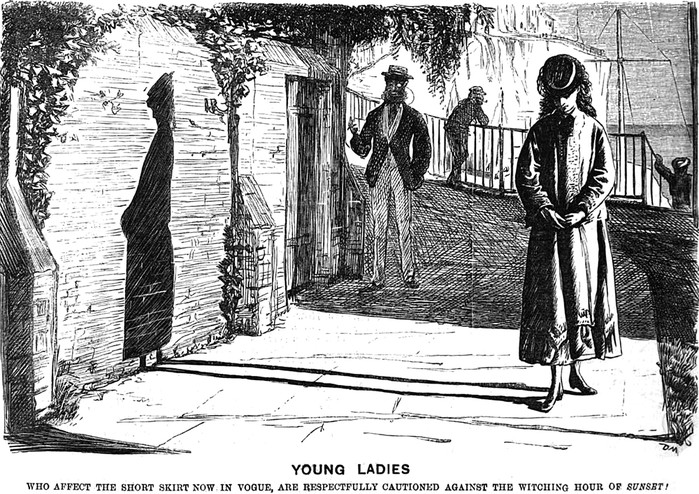
From Punch, 1868. The caption reads, "Young ladies who affect the short skirt now in vogue, are respectfully cautioned against the witching hour of sunset!"
|
|
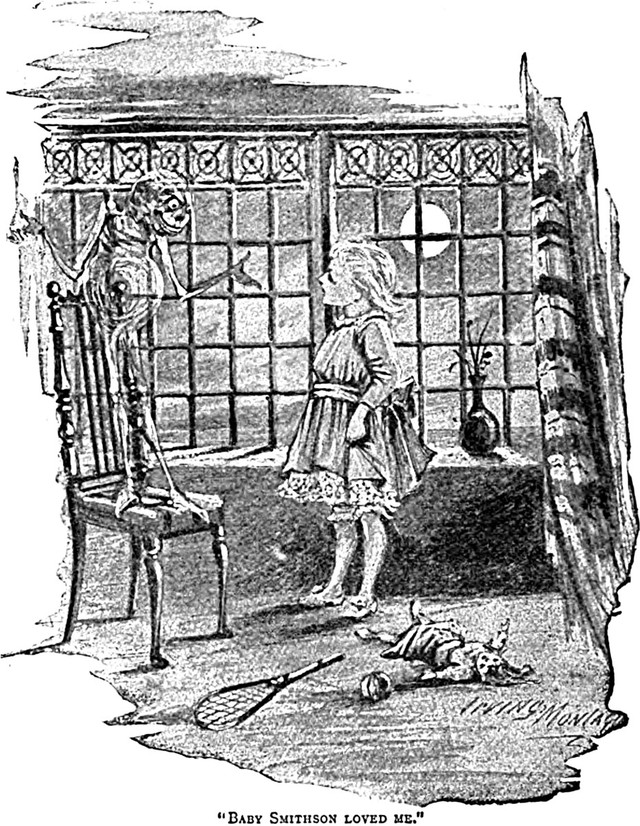
An illustration from an 1892 issue of The Idler magazine. The caption reads: "Baby Smithson loved me."
|
|
|
|
|
|
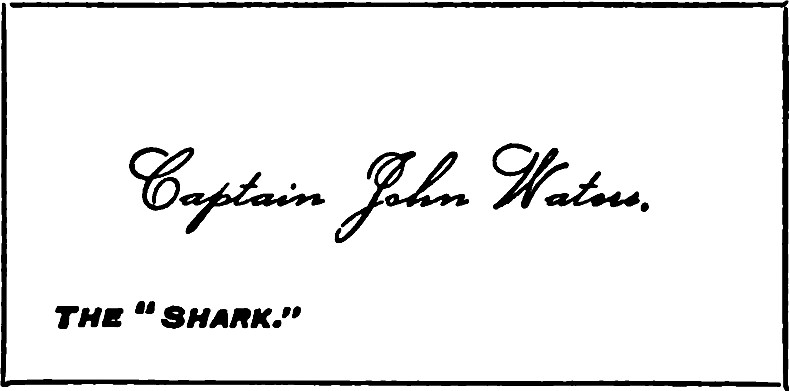
Here's a precursor to filmmaker John Waters "jumping the shark." By the time audiences and auteurs settled into the ’80s, America’s look back in affection at the ’50s had begun to show its age. (When Fonzie jumped the shark in an episode of "Happy Days,” his daredevil stunt soon became shorthand for that precise moment in time when a beloved piece of pop culture begins to overstay its welcome). That didn’t stop "Pope of Trash” John Waters from mining the world of downscale greasers for 1990’s "Cry-Baby.” —Scott Stiffler
Our precursor appears in Frederick Upham Adams' The Kidnapped Millionaires: A Tale of Wall Street and the Tropics (1901). |
|
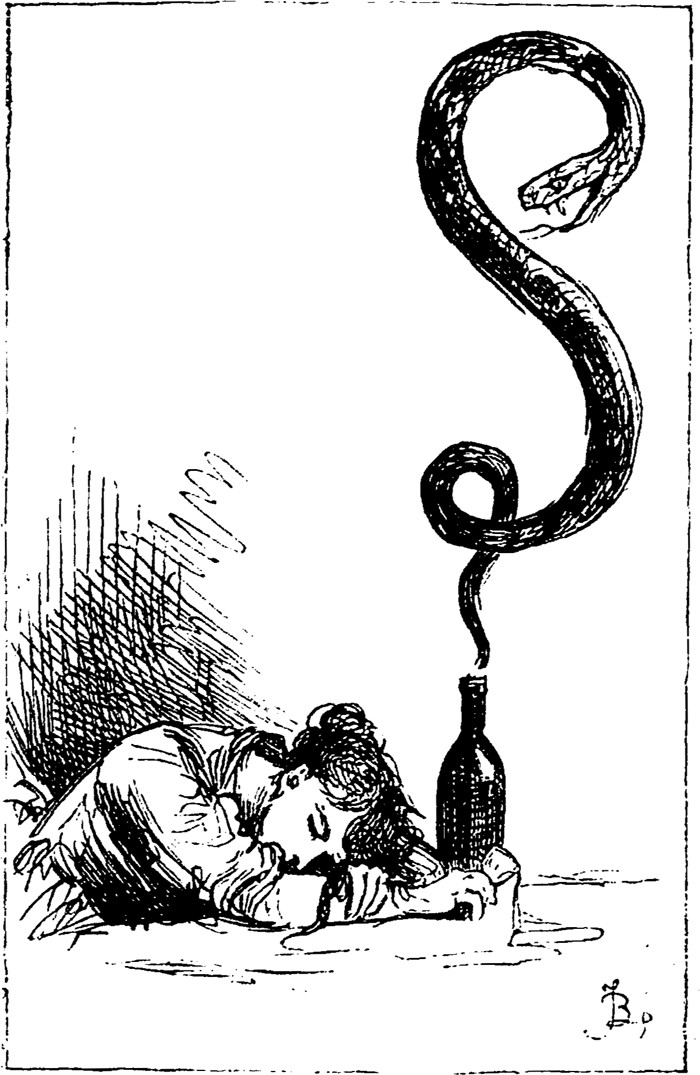
If you ever open a bottle and hear a hissing sound, stand back. This snaky letter S is from Sunday magazine, 1875.
|
Page 2 of 4
> Older Entries...
Original Content Copyright © 2026 by Craig Conley. All rights reserved.
|