|
|
 |
|
| I Found a Penny Today, So Here's a Thought |
(permalink) |
|
|
|
  by SpookygonkMigraines That Erase Color
Chronic pain has its own devastating side effects, even in the absence of medication. Sufferers of migraine headaches sometimes report a phenomenon that amounts to color-blindness. Jeff of the Omegaword blog explains that chronic pain has a peculiar way of removing color from the world. He poetically describes his experience of a reality in which all color has been erased by bursts of red: "Red has never been my favorite color. Bolts of hot pain sear the world, leaving me colorblind but for the shards that stay behind — jagged red reminders of pain past, and pain yet to come. Through the window, beyond the mute interplay of light and shadow on a white kitchen wall, bare branches against a pale sky remind me that it's all in my head. What color are light waves, anyway?" A new study of synesthesia confirms Jeff's observation that the color of the world is all in one's head. Cretian van Campen, author of The Hidden Sense: Synesthesia in Art and Science (2007), explains: "A mysterious aspect of color is that it is created in the brain and seen to exist in the physical environment. But the physical environment contains only light waves and is in fact colorless. The colors are inside our brains, not outside." Color palettes sometimes testify to hues that have been displaced or erased by profound circumstances. For example, COLOURlover Codename Gimmick envisions the frosty onset of winter as a time when "frequencies from red to yellow have been silenced." His "Frost-Over" palette celebrates red and yellow through their striking absence. 
With the palette "Another Migraine?" COLOURlover Stefan depicts a reality reduced to lavender, punctuated by an occasional throb of neon yellow. 
COLOURlover Manekineko envisions a world so desaturated that only dull grays remain. 
Migraine-inspired palettes from the COLOURlovers library testify to the phenomenon that chronic pain can distort or dampen one's experience of color. Luckily, some artists seem able to retain a keen color sensibility even within the confines of a migraine headache. [Read the entire article in my guest blog at ColourLovers.com.] --- Gia writes: Interesting. Migraines are just the opposite to me. Imagine the brightest yellow, neon +++++, electrified, magnified, and shot directly to your brain. Behind the eyes, a violent pink, raw, bleeding and sore. Add some touches of green—outer space green. Glowing and undulating, slowly creeping over the entire length of your body, quieting your every cell.
Yeah.
That's close.
|
|
|
|
|
|
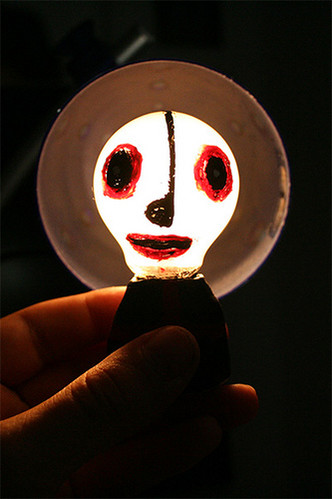
A saint made of plasticine and a light bulb, by Ukrainian artist Eugene Rudyy. |
|
Without the actual use of color or light, the English composer Arthur Bliss wrote ‘A Colour Symphony’ having four movements. Here Bliss sought to convey the musical and emotional impression of four colors.
‘I. Purple: The Colour of Amethysts, Pageantry, Royalty and Death.
II. Red: The Colour of Rubies, Wine, Revelry, Furnaces, Courage and Magic.
III. Blue: The Colour of Sapphires, Deep Water, Skies, Loyalty, and Melancholy.
IV. Green: The Colour of Emeralds, Hope, Youth, Joy, Spring and Victory.’
The symphony was written in 1922, first presented in Gloucester Cathedral, and revised by the composer in 1932.
—Tom Douglas Jones, The Art of Light and Color, 1972.
|
|
Piecing together the secret of the rosary . . . |
|
|
|
|
|
Santa Luiza the PiousPatron of Religious Atheists. Santa Luiza teaches that humanity invented God, and that God is very, very real. Santa Luiza shelters her flock of unbelievers with a canopy of sacred art, symbols, stories, and histories. The photograph depicts Santa Luiza in her incarnation as the only atheist attending a Catholic wedding. The color palette "Saint of the Atheist" was created in her honor.  (Thanks to Luiza de Camargo!)
|
|
Oh if you ain't got the do re mi, folks, If you ain't got the do re mi, Why, you'd better go back to beautiful Texas, Oklahoma, Kansas, Georgia, Tennessee. — Woody Guthrie, "Do Re Mi," a Dust Bowl ballad of the 1930s |
|
|
|
|
|
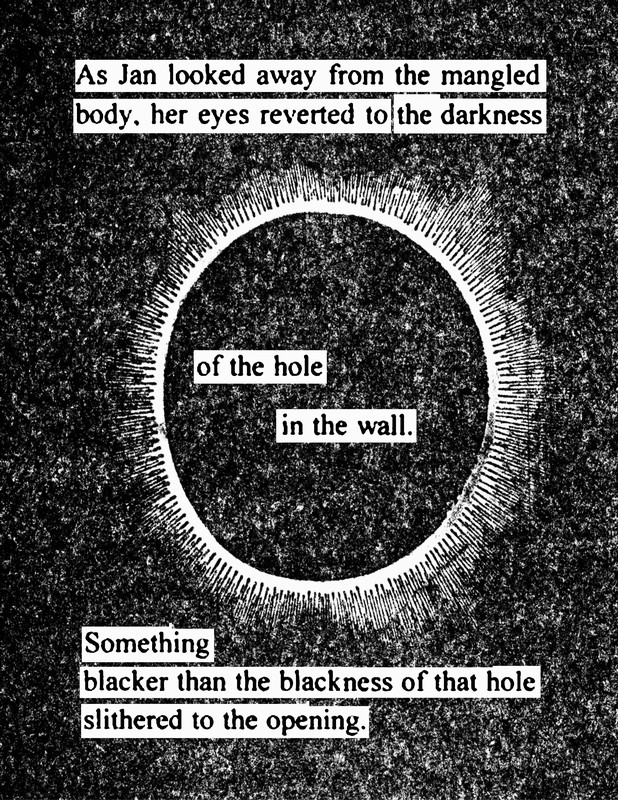
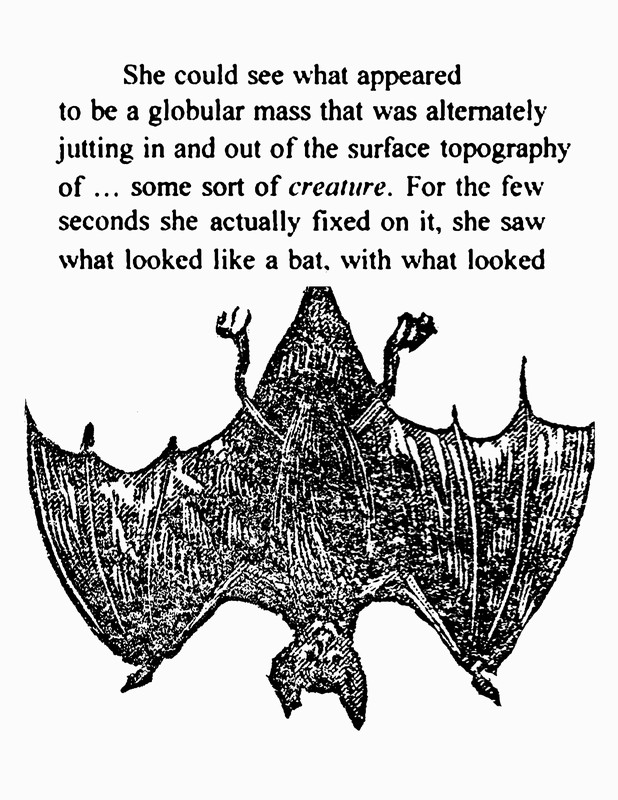
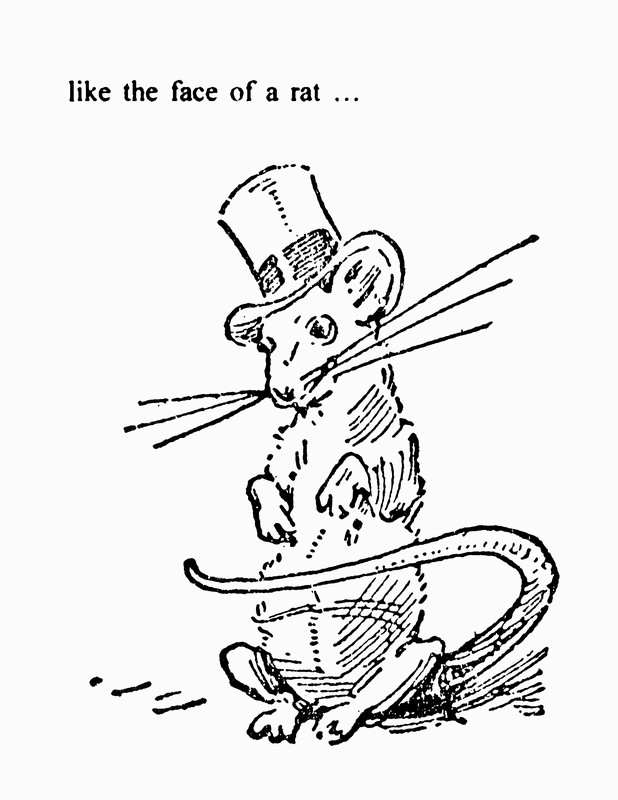
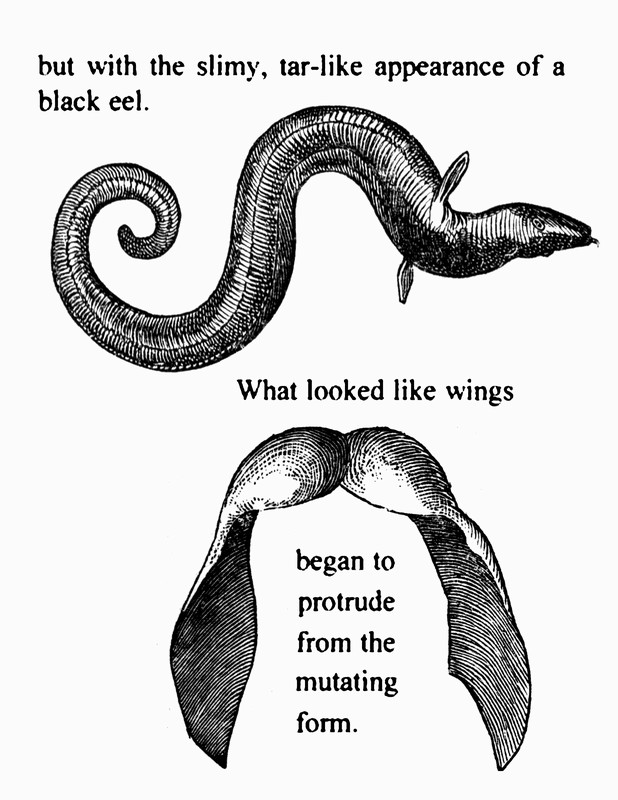
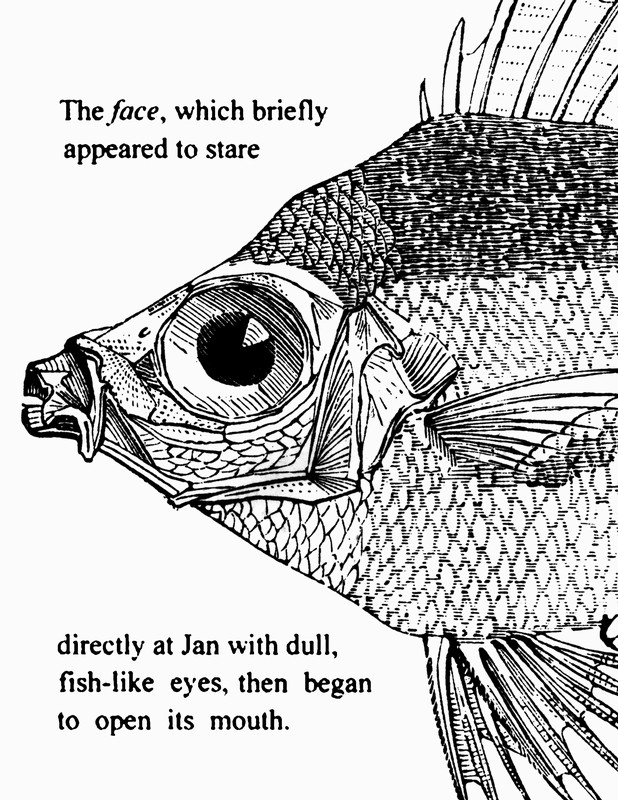
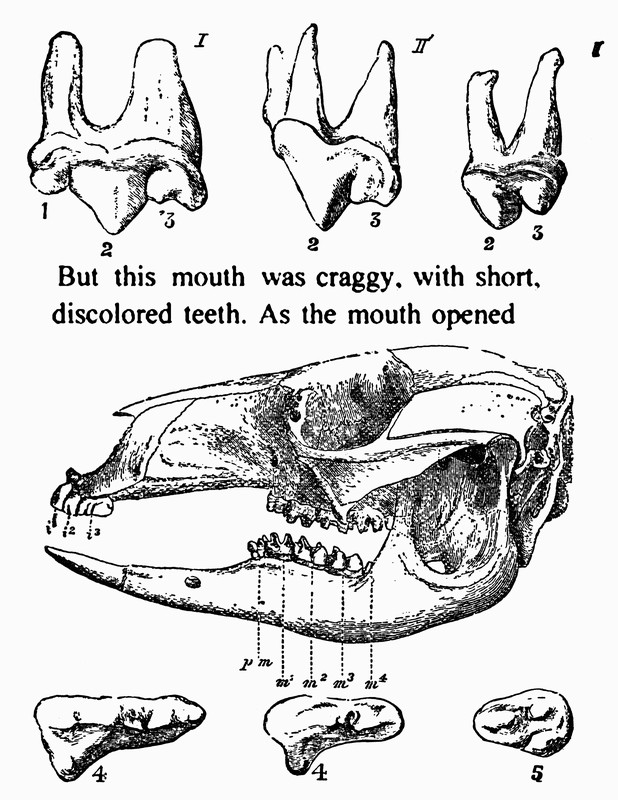
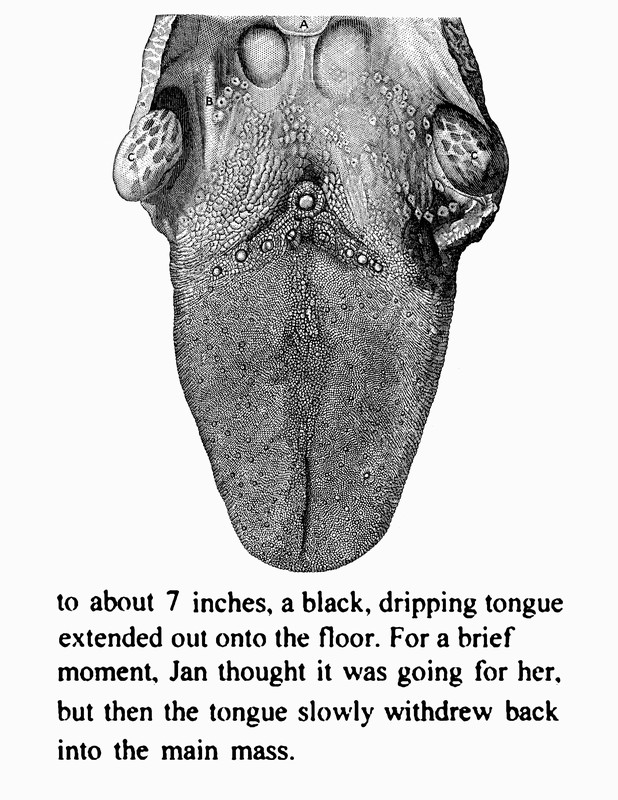
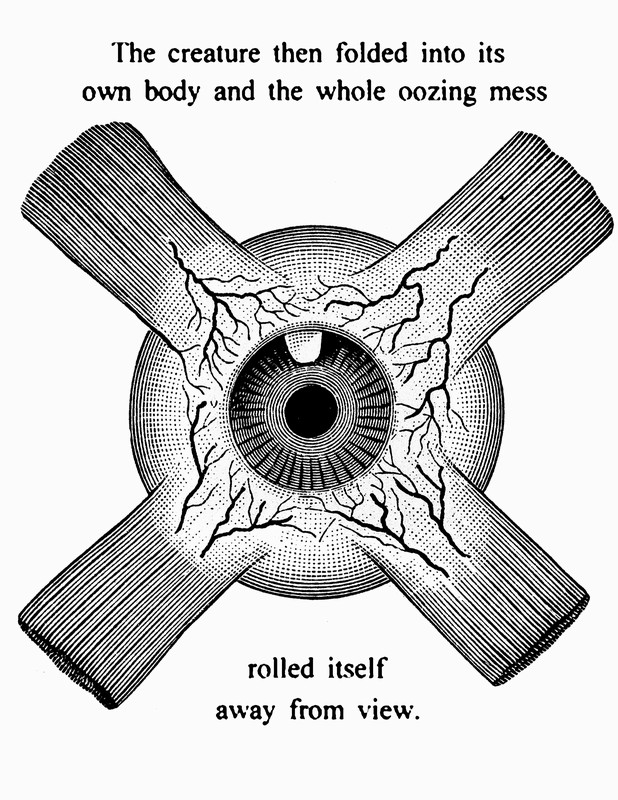
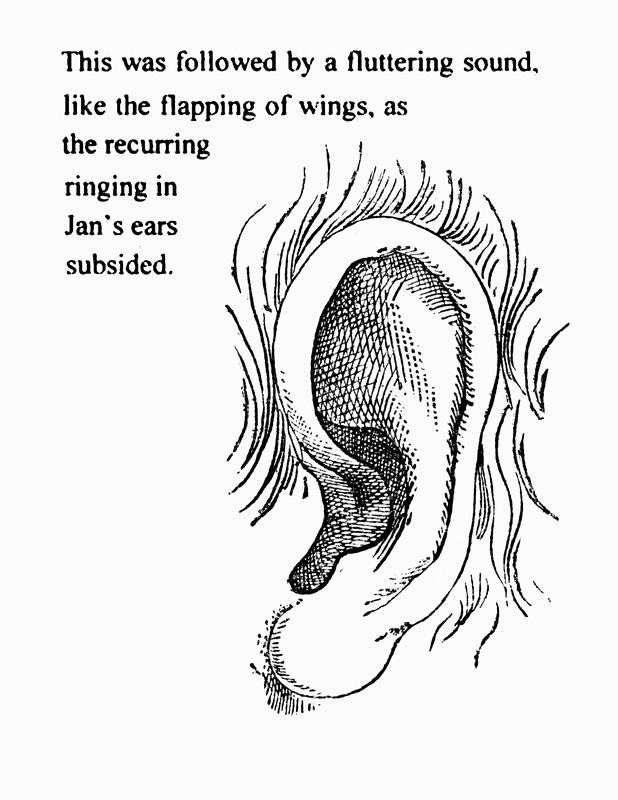
A collaged story we assembled for a singular Jan and henceforth dedicate to all the Jans of the world. Click on the thumbnails below to view an enlarged version in a new window. |
|
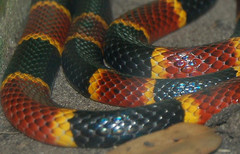
Some folks say that once in a while you’ll find a coral snake in there, he glistening magic in his yellow and vermillion stripes, lying there near your foot like a thing bewitched, the fatal spell of his fangs in his wonderful color: cute thing, pretty little yellow and vermillion snake. Those rattlers in the swamps are of wonderful coloration: white, black, yellow, orange, red, blue, in great diamonds. Not like desert rattlers, dry, dusty in color, but moist in color, refulgent in color.
—Julian Lee Rayford, Cottonmouth, 1941.
|
|
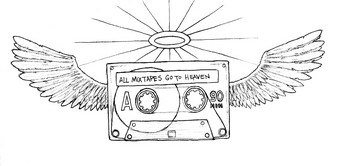
All mixtapes go to heaven. Source. 
Information Prose :: A Manifesto in 47 Points :: Version 1.0 by Jeremy P. Bushnell, jeremy@invisible-city.com 9. You can learn a lot about a person from a mixtape. 10. When at someone’s house for the first time, you tend to look at their bookshelves. 11. Fiction which builds characters without taking this into account has its head in the sand. 12.
The primary goal of the information prose writer is to document the
contemporary mind and environment in a way that takes the contemporary
importance of media and information seriously. 13. Many
contemporary fiction writers are afraid or otherwise unwilling to do
this. I submit as evidence the large numbers of contemporary novels set
in environments which lack informational richness: rural areas, the
past, " magical realism" worlds. 14. Information prose does not
attempt to depict a simplified version of the world. Information prose
attempts to contain as much of the complexity of the world as possible. 15. "Do you understand how tremendously dense? A minute in a room, together." — Don DeLillo, Valparaiso 16.
A fictional American present in which no one watches TV, listens to the
radio, or checks their e-mail is sentimental and false. 17.
Information prose writers should not aim to write work which is
timeless. The value of documentary work never lies in its timelessness. 18.
When writing about characters who inhabit dense fields of information
(both remembered and newly-experienced), the value of quoting,
sampling, and appropriation rapidly becomes apparent. 19.
Creative work utilizing techniques of appropriation has been produced
with regularity for nearly a hundred years now, in all forms of media.
Information prose writers should no longer need to defend these
techniques against charges of novelty. 20. A partial primer,
organized in a rough chronology: the Comte de Lauteamont’s Maldoror,
Dada collages, Tristan Tzara’s cut-up poems, William S. Burroughs’
cut-up and fold-in novels, Robert Rauschenberg’s media silkscreens,
Bern Porter’s found poems, Situationist detournement projects, the
poetry of John Ashbery, Brian Eno and David Byrne’s My Life In the Bush
of Ghosts, the novels of Kathy Acker, the albums of Public Enemy and
Negativland, and the films of Craig Baldwin. 21. All evidence indicates that much of this work is of lasting merit. 22.
All evidence indicates that these techniques of appropriation are
exactly the ones necessary to create a recognizable picture of the
contemporary present. 23. "As artists, our work involves
displacing and displaying bites of publicly available, publicly
influential material because it peppers our personal environment and
affects our consciousness. In our society, the media which surrounds us
is as available, and as valid a subject for art, as nature itself."
—Negativland’s Tenets of Free Appropriation 24. Information
prose writers should not be afraid to plagiarize. It is not their duty
to write citations. Our memories and experiences do not usually come
attended by complete bibliographies. 25. Information prose
writers should not overlook the technique of the fragment. Our
experience of the textuality of the surrounding world is largely
fragmentary; information prose should strive to reflect that. (to be continued) _____ |
|
|
|
|
|
The whole room blazed with light — and not with light alone but with a thousand colours, with all the glories of some painted window; and upon the walls of his room and on the familiar furniture, the glow flamed back and seemed to flow again to its source, the little wooden box. For there upon a bed of soft wool lay the most splendid jewel, — a jewel such as Dyson had never dreamed of, and within it shone the blue of far skies, and the green of the sea by the shore, and the red of the ruby, and the deep violet rays, and in the middle of all it seemed aflame as if a fountain of fire rose up, and fell, and rose again with sparks like stars for drops.
—Arthur Machen, "The Inmost Light," found in the collection Masterpieces of Mystery, 1921.
|
|
|
|
|
|
| I Found a Penny Today, So Here's a Thought |
(permalink) |
|
|
|
 by franz66Test Your Color Memory
Is it possible to accurately remember a given color? Rochester Institute of Technology Professor Mark Fairchild says "no"! Surprisingly, the brain is poorly equipped to remember colors. At best, Dr. Fairchild notes, "we can remember only general categories of color represented by significant color names. That's why there are so many sophisticated ways to name, organize, and measure color." Here's a way to test your own color memory. Close your eyes and imagine a red stop sign at a traffic intersection. It's a color that drivers see every day in the European Union, United States, and many other places. Then open your eyes and see if you can identify the official stop sign color from amongst the following imposters:                    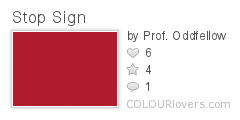 Answer: According to the Manual on Uniform Traffic Control Devices, the official stop sign color is HEX: #B01C2E, RGB: 176, 28, 46, Pantone® 187. It is the last color in our lineup. Did you guess correctly? Here's a second try, with fewer options. Close your eyes and imagine the giant yellow "M" of the McDonald's® franchise. It's an eye-catching yellow known the world over. Then open your eyes and see if you can identify the official McDonald's® yellow from amongst the following imposters:   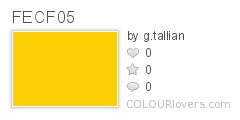   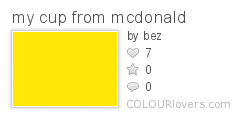   Answer: According to the McDonald's® Global Logo and Trademark Standards Reference Guide, the official yellow is HEX: #FCC917, RGB: 252, 201, 23, Pantone® 123. It is the first color in our lineup. Did you guess correctly? You can explore Dr. Fairchild's research on color perception and imaging at his website. [Read the entire article in my guest blog at ColourLovers.com.]
|
|
Nonexistence contains existence. Love / encloses beauty. Brown flint and gray steel have orange candlelight in them. Inside / fear, safety. In the black pupil of the eye, many brilliancies.
—Jalal al-Din Rumi (1207–1273), from Paradox. The Soul of Rumi: A New Collection of Ecstatic Poems, translated by Coleman Barks, 2001.
Jonathan responds with a dialog between a Zen master and his disciple:
Disciple: Does the cold flint contain the warm flame, Master?
Master: Tiny, sleeping monks with disposable lighters.
|
|
Piecing together the secret of prosperity . . . |
|
|
|
|
|
| I Found a Penny Today, So Here's a Thought |
(permalink) |
|
|
|
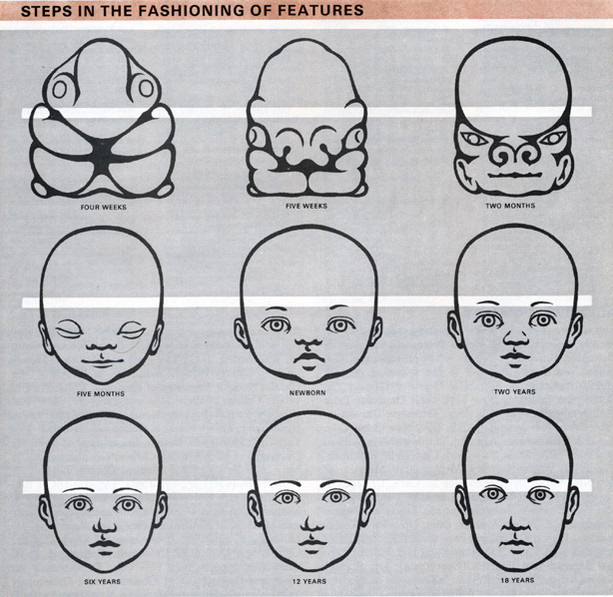
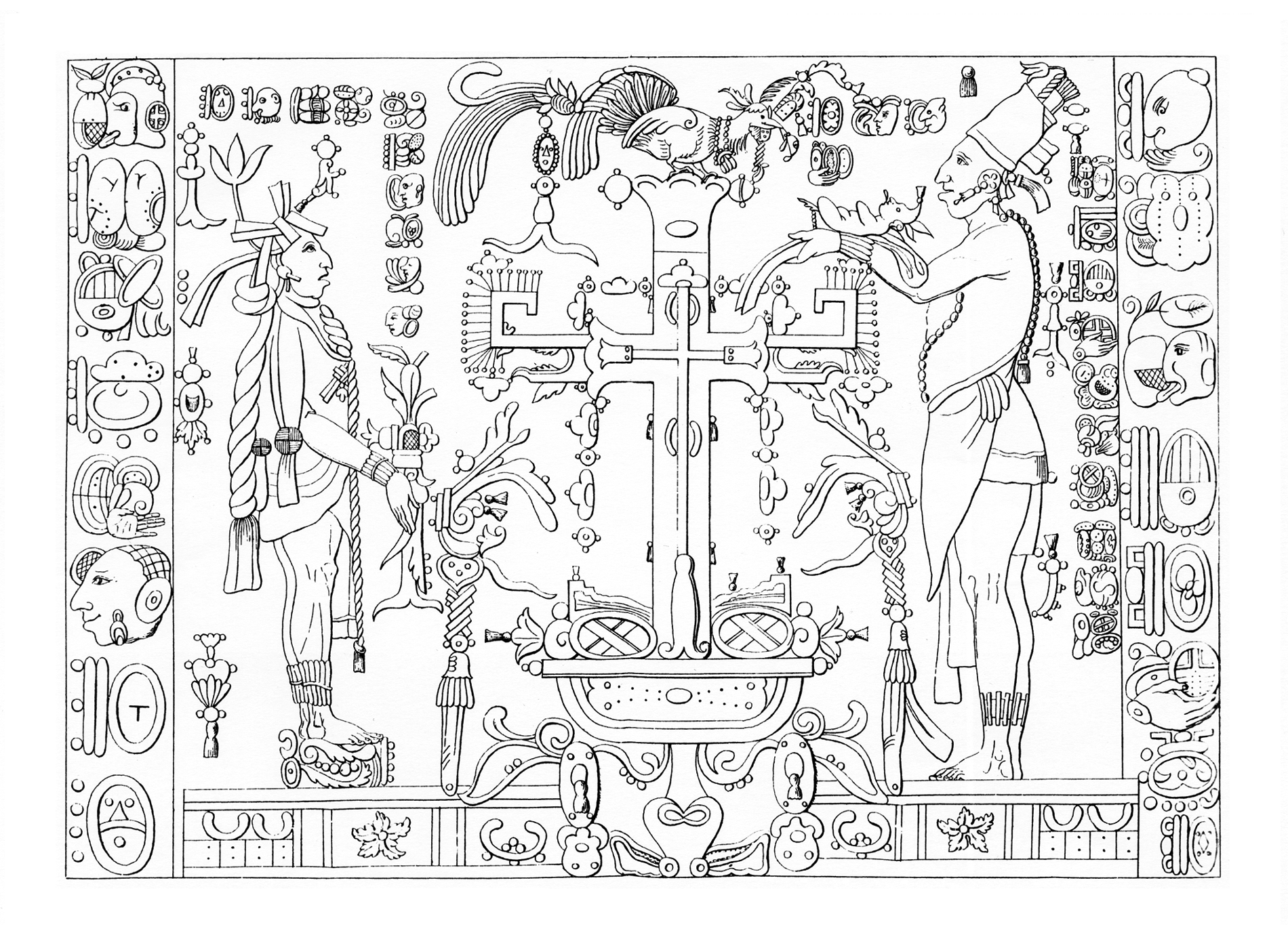
In this diagram of human development, the pictures of the fetus at four and six weeks (top left and middle) bear a striking resemblance to Mayan hieroglyphics. The top right picture, of the fetus at two months, bears an uncanny resemblance to an Olmec head statue.
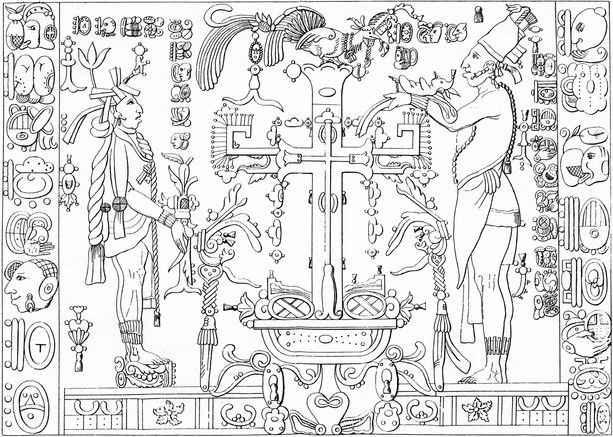
Mayan hieroglyphics. Picture source.
|
Page 1 of 3
> Older Entries...
Original Content Copyright © 2026 by Craig Conley. All rights reserved.
|








 by
by