|
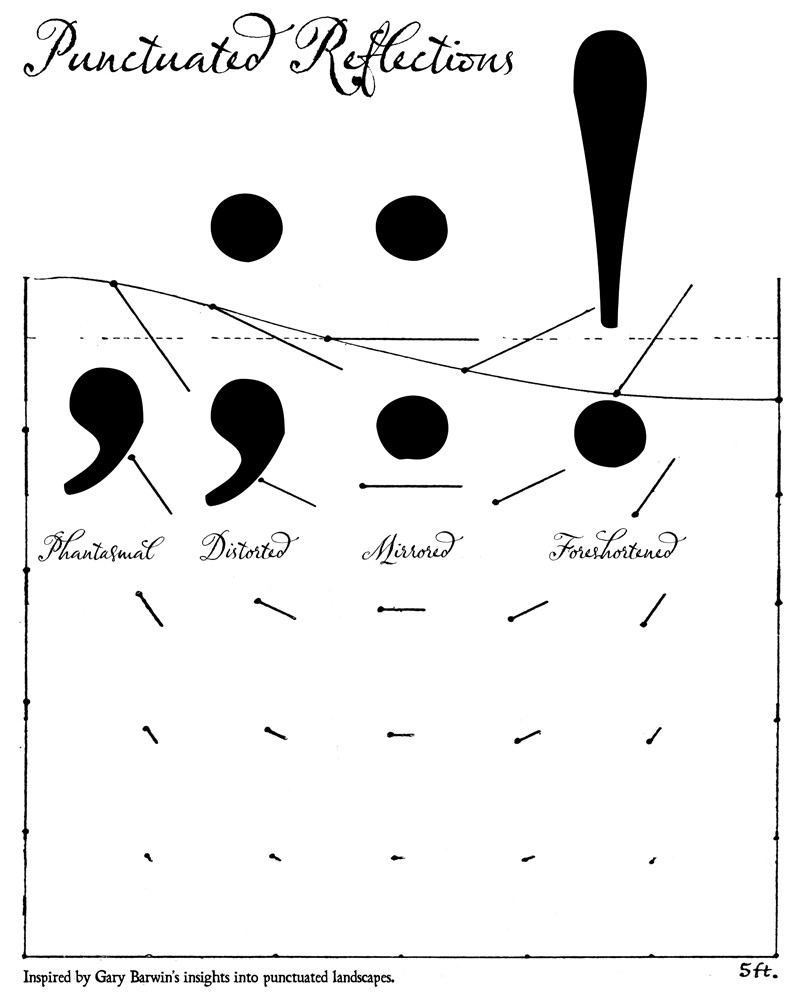
The sunset was magnificent with the intensity and brilliance that can be found only in the tropics. . . . It was a sensual isle, a Biblical land of ruby wines and golden sands and indigo trees. The men stared and stared. The island hovered before them like an Oriental monarch’s conception of heaven, and they responded to it with an acute and terrible longing. It was a vision of all the beauty for which they had ever yearned, all the ecstasy they had ever sought. . . . It could not last. Slowly, inevitably, the beach began to dissolve in the encompassing night. The golden sands grew faint, became gray- green, and darkened. The island sank into the water, and the tide of night washed over the rose and lavender hills. After a little while, there was only the gray- black ocean, the darkened sky, and the evil churning of the gray- white wake. Bits of phosphorescence swirled in the foam. The black dead ocean looked like a mirror of the the night; it was cold, implicit with dread and death. The men felt it absorb them in a silent pervasive terror. They turned back to their cots, settled down for the night, and shuddered for a long while in their blankets.
—Norman Mailer, The Naked and the Dead, 1948.
|
|
|
|
|
|
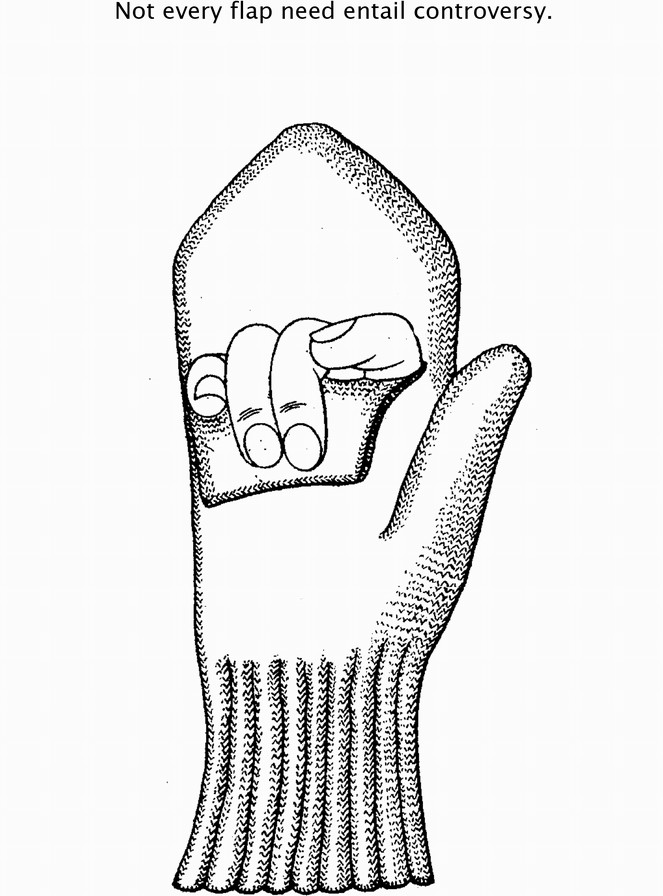
Today we honor Corey Haim, a voice of sanity in an insane world of song-lyric-pronoun abuse. In the film The Lost Boys, Haim sings "Ain't Got No Home" by Clarence "Frogman" Henry. Does Haim butcher the original lyrics? Absolutely not! Haim isn't afraid to "sing like a girl" or even "like a frog"! (Go ahead and gasp!) The PInKSLiP Campaign hereby dares contemporary singers to follow Haim's example. And what a controversial dare it is, apparently! Consider, for example, these lyrics from the song: - "I ain't got a man." According to the ridiculous standards that PInKSLiP actively fights, only a woman (of any orientation) could sing such a line.
- "I ain't got a son." This line could presumably be sung only by a singer with no male heir.
- "I ain't got a daughter." This line is presumably exclusive to daughterless singers.
- "I ain't got no one." Who but the impotent, the deliberately childless, the unmarried, the asexual, or the socially inept would dare to sing such a line?
- "I'm a lonely girl." Grown-up girls would likely need to change the word to "woman," and male singers would need to switch the gender, according to today's ridiculous standards.
- "I ain't got a mother." Only orphans need bother retaining this lyric, apparently.
- "I ain't got a father." This would be exclusive to genetically engineered ("test tube") people.
- "I ain't got a sister." This line is for singletons, apparently.
- "Not even a brother." Ditto.
- "I'm a lonely frog." Human singers need not bother.
- "I ain't got a home." A line for homeless singers, obviously.
Need we say more? As the lyrics of "Ain't Got No Home" beautifully demonstrate, it's ridiculous for a singer to alter song lyrics to correspond to his or her lifestyle. Anyone can sing like a girl, or a frog, or a sisterless singleton without a place to call home. That's because (drumroll, please!) it's just a song! |
|
| I Found a Penny Today, So Here's a Thought |
(permalink) |
|
|
|
Having come up with 100 Ways to Fail to Boil Water, we don't often stumble upon new ones. So imagine our delight to discover this terrific excuse: a recipe with a missing final paragraph! In the recipe for boiled water on page 212, the last paragraph was inadvertently omitted. It should read as follows: "Now pour the water into a kettle or pot, place it on the stove, and turn the burner on ‘high,’ leaving the water on the stove until it boils.” — Dr. Boli's Celebrated Magazine |
|
From Prof. Oddfellow's sketchbook:
|
|
|
|
A guest blog by the inimitable Jeff of Omegaword: Why I Don't Understand What You're Saying
When I was a child, the pediatrician I was forced to visit enjoyed tormenting me with his voice, which he used for making loud, sarcastic remarks concerning the reasons for those visits. When I had athlete's foot, Dr. Blut called it "jungle rot," and reflected, loudly, on the likelihood of it spreading to other areas of my body. Everything he said was delivered at an abnormally high volume because the nurse had ruptured his eardrums.
Nurse Krill always came in immediately after the doctor had finished distressing me with his words, and went straight to the task of measuring my body temperature with one of the infernal appliances she kept in the cabinet of the examination room. After she had selected the appropriate one, she would approach with an air of nonchalance, hiding the mystery behind her back. Then, with a shriek, she would plunge the thing into one of my ear canals while she counted, loudly, to sixty.
At this point, you're probably asking yourself what she might have done to improve her technique. After all, taking a child's temperature with a modern digital thermometer is hardly rocket science, and besides, it isn't so easy to jam one of those little plastic tips so far into an ear canal that the eardrum is ruptured. Right?
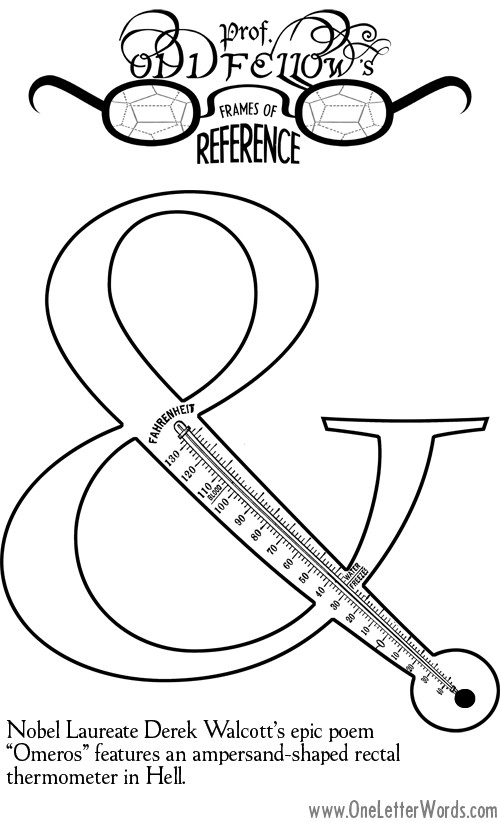
No. You're wrong, as usual. You've conveniently forgotten what year it is in my narrative, and that there's no digital anything, and the rectal thermometer I'm referring to is half a foot long, made of glass, and is filled with tapioca or similarly lethal substance. It obviously wasn't shaped like an ampersand, because that would be silly.*
Continuing on, the main points of my story are simply that (2) you can't assume doctors and nurses aren't demonic entities from Hell, (1) just because Derek Walcott managed to scrawl out a few lines about an ampersand-shaped rectal thermometer doesn't mean he could hear what the doctor was saying about my feet, and (3) it's unwise to trust the accuracy of any temperature measurement when you're surrounded by a bunch of flames.
* |
|
Artwork by Vladstudio, offered in all sorts of desktop wallpaper sizes.
|
|
Simile faces. Happiness is an allusion. --- Jonathan adds: Would an extended simile-face be an emoticonceit?
|
|
|
|
|
|

Would the Annie Lennox of 1983 have given a hoot about pronoun genders? Image via AllPosters.com.
We're appalled over Annie Lennox's gender switching in her cover of the Temptations' "I Can't Get Next to You" (on her album Medusa). The original lyric is, "'Cause girl you're the key to my happiness." Lennox changes the word girl to man. Lennox was one of the seminal gender benders of the 1980's, so we're sincerely puzzled over her newfound need to assert stereotypical relationships. As we explain in our PInKSLiP Campaign, it would be unheard of for a person doing a spoken-word
reading of a literary classic to change the text's gender references
according to whim. It should be equally unheard of for a singer
to alter the lyrics of a song. This all-too-common practice
violates the integrity of the original song and, in fact, often
prevents fresh new subtexts from arising. Counterpoint: Our poetic friend Chris Piuma stands up for singers' rights to have as much fun with lyrics as they want. Certainly, artists can and do have quite a bit of fun altering lyrics, and our PInKSLiP Campaign can and will continue to issue the pinkslips! |
|
From Prof. Oddfellow's sketchbook:
|
|
Saint MeriPatron of Tires. Saint Meri's motto is "Tread in the name of progress." She has been incorrectly linked with the Holy Rollers.
|
|
Among colours, such as are soft and cheerful (except, perhaps, a strong red which is cheerful) are unfit to produce grand images. An immense mountain, covered with a shining green turf, is nothing, in this respect, to one dark and gloomy; the cloudy sky is more grand than the blue, and night more sublime and solemn than day. Therefore in historical painting, a gay or gaudy drapery can never have a happy effect: and in buildings, when the highest degree of the sublime is intended, the materials and ornaments ought neither to be white, nor green, nor yellow, nor blue, nor of a pale red, nor violet, nor spotted, but of sad and fuscous colours, as black, or brown, or deep purple, and the like.
—Edmund Burke, A Philosophical Enquiry into the Origin of Our Ideas of the Sublime and Beautiful, 1806; as quoted by Marjorie Hope Nicolson in Newton Demands the Muse, 1946.
|
Page 3 of 6
> Older Entries...
Original Content Copyright © 2026 by Craig Conley. All rights reserved.
|








 by
by