|
|
 |
|
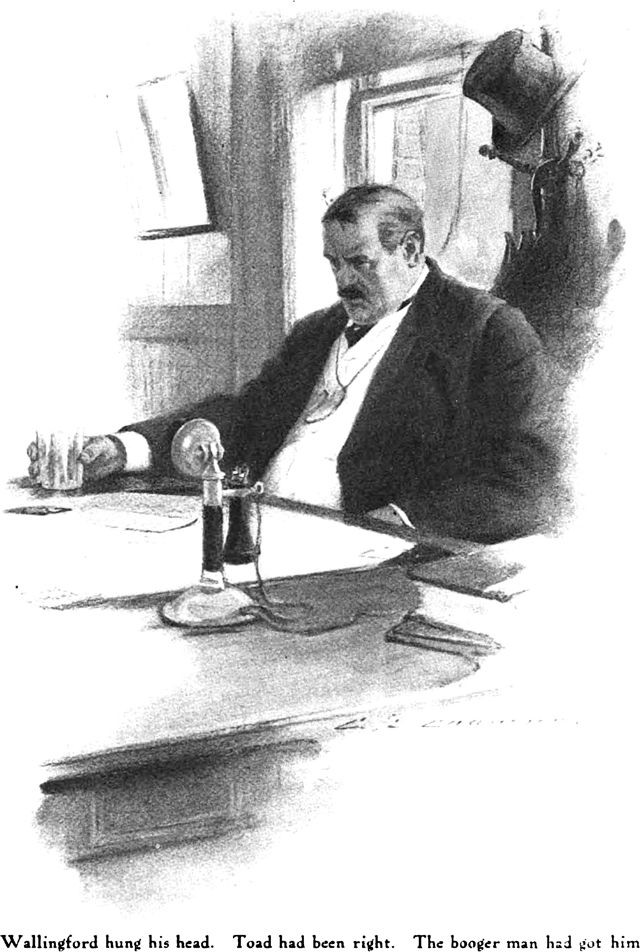
An illustration from a 1910 issue of Cosmopolitan magazine. The caption reads: "Wallingford hung his head. Toad had been right. The booger man had got him."
|
|
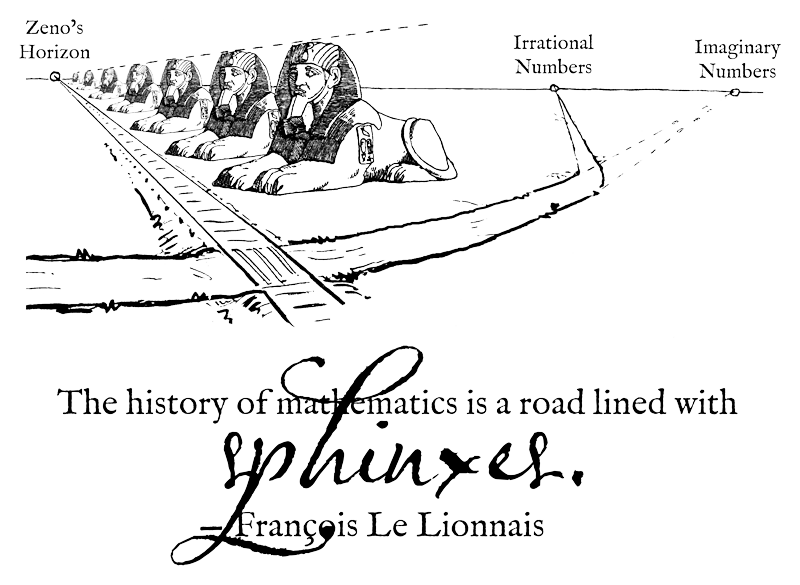
From Prof. Oddfellow's sketchbook (and dedicated to Hugh Thomas):
|
|
|
|
|
|
Not a joke. I found this on the shelf in the bookstore when I was looking at other dictionaries. You can explore it online.
There’s not an awful lot to say about one-letter words, except that there are more than 1000 of them. Many have to do with Roman numerals, music and science, but a fair few have some surprising definitions.
By far the most interesting to me were these ghoulish definitions:
You know the expression, “branded a thief”? To the extent that I had ever thought about it, I’d assumed the phrase was metaphorical. It’s not. Until 1827 in America, thieves were, literally, branded on the thumb with the letter T.
And that is not all. Humans have a long history of shaming and harming each other with branded or incised letters, apparently.
In Colonial America, drunkards were forced to wear the letter D, made of red cloth and sewn onto a white ground, so A is not the only scarlet letter. Civil War deserters were branded with the letter D, as well, on the buttock, hip or cheek. The letter was made with a hot iron or a razor.
Until 1822, the letter F (for “fray-maker”) was branded on the cheeks of people who fought in church. Blasphemers were branded on the forehead with the letter B.
The ancient Romans branded false accusers with a K (for kalumnia, lie), and in England, R was used as a mark for rogues.
And on that cheerful note, I end my month of looking at dictionaries. Happy Halloween, everyone!
|
|
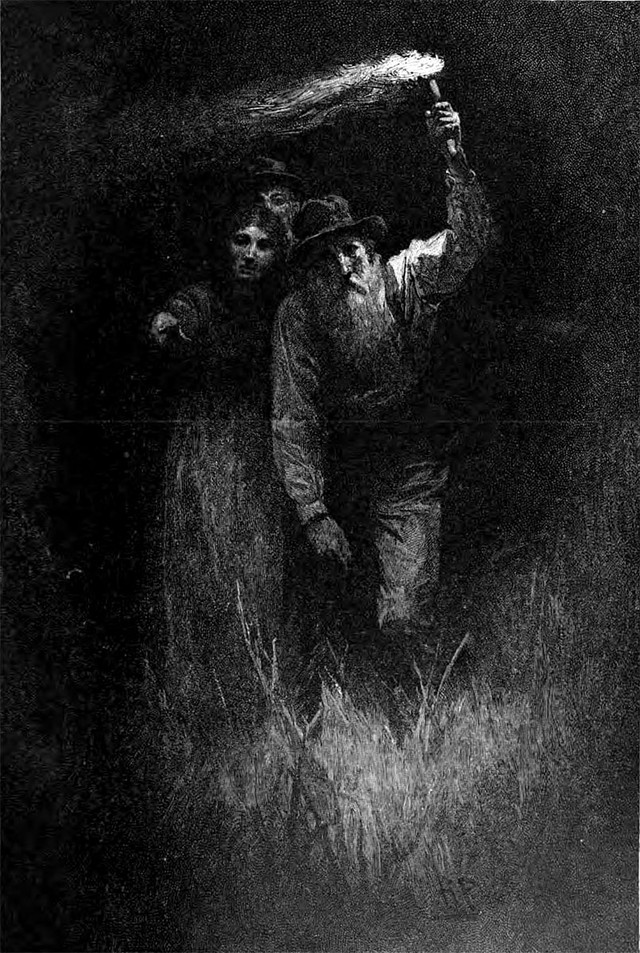
An illustration from an 1884 issue of Harper's magazine.
|
|
 Momus
suggests that there are "few tales which would not be improved by the
addition of the phrase 'suddenly, a shot rang out.'" Decide for
yourself as we alter the opening lines of . . . THE VELVETEEN RABBIT by Margery Williams There was once a velveteen rabbit, and in the beginning he was really splendid. He was fat and bunchy, as a rabbit should be; his coat was spotted brown and white, he had real thread whiskers, and his ears were lined with pink sateen. On Christmas morning, when he sat wedged in the top of the Boy's stocking, with a sprig of holly between his paws, the effect was charming.
Suddenly, a shot rang out. (Thanks, June!)
|
|
| The Ghost in the [Scanning] Machine |
(permalink) |
|
|
|
~ Unsubstantiated Insubstantiality ~ 
Portrait from The Autobiography of Rev. Thomas Conant.
“A dim, indistinct outline of a ghostly face staring out.” —James Coates, Photographing the Invisible
|
|
And the song that you sing Will speak louder than you But always in a different language —Kurt Harlan of Information Society, " The Sky Away" |
|
We love books that take a running start on the excitement. Notice how the period on the half-title page transforms into an exclamation point on the title page. And the narrative hasn't technically begun! |
|
|
|
|
|
"This advice bears repeating. Yes, look up the words you can't spell as you write and those you don't understand as you read." — William Brohaugh, Write Tight
|
|
An illustration from an 1863 issue of Harper's magazine.
|
|

"The answer is simple. All you have to do is to rearrange your present financial life slightly and the money question will take care of itself.”
—Popular Science (Feb. 1929)
|
|
We discovered this curious "ghost in a candle" trick in an issue of The Strand from 1895.
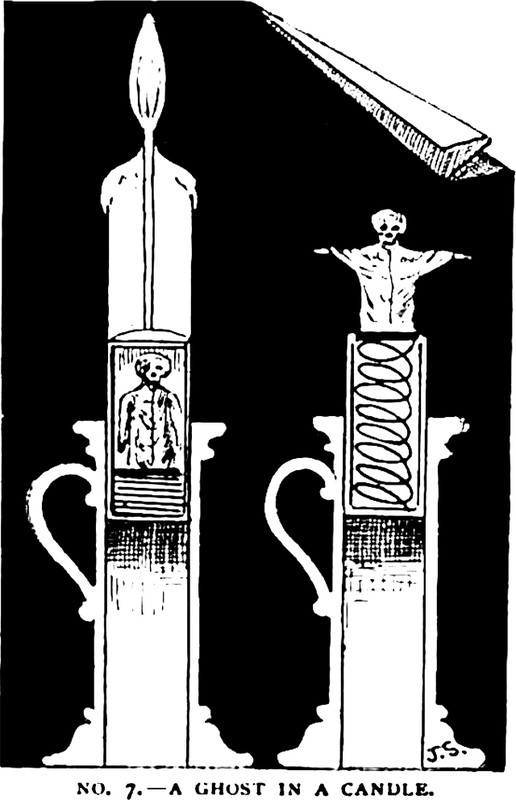
Here's the explanation of the trick candle, "invented by a man as a rather peculiar surprise for a friend. He made that friend a present of some coloured wax candles, one of which contained the affair shown. The receiver was very fond of having a few candles of the coloured kind placed about his drawing-room, in candelabra, and was intensely surprised one night when one of those which he had thankfully accepted from his friend exploded with a loud 'bang,' after having burnt down about half-way, and revealed to view a miniature ghost, with outstretched arms, which had issued from the remaining portion of the candle. To say that the man was puzzled by so extraordinary an apparition is to incompletely describe his feelings. I wonder how the reader would accept such a crisis. I know that I should have been very much astonished. Yet the effect was produced in an exceedingly simple manner, as can be understood by examining the drawings. The lower half of the candle really consisted of a thin cardboard case, containing a spring and a small 'ghost' with spring-arms, which would fly apart immediately upon being released from their bondage. A small portion of gunpowder, separated by a disc of paper from the head of the 'ghost,' completed the apparatus. The outside of the cylinder was waxed to appear as but the continuation of the candle. When the flame burnt to the powder it naturally caused it to explode, and simultaneously with the discharge the spring forced the little image upwards. This device would make an effective toy, I am inclined to think, as the cylinder could be used as often as required, by fixing a half-candle properly to the top of it and concealing the join."
|
|
| The Ghost in the [Scanning] Machine |
(permalink) |
|
|
|
~ Unsubstantiated Insubstantiality ~ 
Title page from A Biography of François Magendie.
“A dark side without a shadow in the open air.” —The Works of John Ruskin
|
Page 4110 of 4336
Original Content Copyright © 2026 by Craig Conley. All rights reserved.
|








 "A rose is a rose is a rose; but the examined rose is a sonnet."





 "I have to remember each time I get poked that the rose is a rose is a rose, no matter how much those thorns hurt."
 "This may surprise you, but some people develop ringworm from . . . of all places . . . the soil."



 "Don't take this the wrong way, but you don't strike me as the homebody type."