|

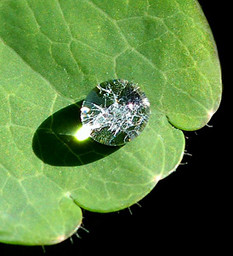
The estuary at Portmeirion, Wales.
|
|
|
|
|
|
|
|
|
|
In a gross disservice to Bavarian history, it is universally said that King Ludwig II constructed his fairy tale castle Neuschwanstein as an escape from "reality." The castle itself is a colossal refutation to such sloppy—if not willful—misrepresentation. Quite the opposite of being trapped in the past or caught up in a romantic dreamworld, Ludwig was so forward thinking, so revolutionary, that he built a portal to access the very framework of the Bavarian ideal. Emblazoned throughout with murals and architecture depicting key scenes from Bavarian folklore, Neuschwanstein castle constitutes an elaborate "War Room" of mythic proportions. Indeed, Neuschwanstein is evidence that Ludwig attained a state of consciousness that Timothy Leary called the "Neurogenetic Circuit." Robert Anton Wilson explains that the Neurogenetic Circuit: processes DNA-RNA-brain feedback systems and is "collective" in that it contains and has access to the whole evolutionary "script," past and future. Experience of this circuit is numinous, "mystical," mind-shattering: here dwell the archetypes of Jung's Collective Unconscious—Gods, Goddesses, Demons, Hairy Dwarfs and other personifications of the DNA programs (instincts) that govern us. [ Prometheus Rising, 1983, p. 41] To properly govern his people, Ludwig positioned himself to draw from the very paradigms of the Bavarian spirit. In other words, he infused his nobility with the high ideals of his country, literally surrounding himself (dome ceilings to floors) with model images of Bavarian enlightenment. Ludwig held a magnifying glass over the Bavarian blueprint, and a ray of sunlight hit the lens to form a hologramatic castle. Far from having his head in the clouds, Ludwig's feet were firmly planted in his culture. That such a visionary was ultimately judged "mad" by his political enemies comes as no surprise. That Neuschwanstein has endured as the Eighth Wonder of the World is a testament to Ludwig's genius.
|
|
|
|
| Puzzles and Games :: Which is Funnier |
(permalink) |
|
|
|
 Which is funnier: Mark Twain or any of his books?
Clue: This is according to a Mark Twain biographer
Answer: Mark Twain. (The answer is in black text on the black background. Highlight it to view.)
Citation: Albert Bigelow Paine, Mark Twain: A Biography (1912), p. 661.
|
|
|
|
|
|
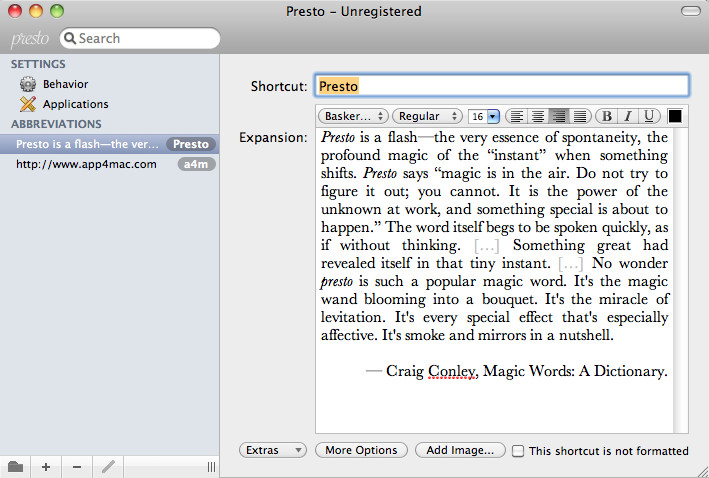
From our Magic Words outpost at Blogger: We just discovered (with help from Gordon) that a Mac app called Presto contains a passage from our Magic Words: A Dictionary. Presto is a utility for quickly pasting in commonly used snippets of text, and the magic word "presto" is the default example. So when one types "presto" into any application, a passage from our dictionary appears, like magic! |
|
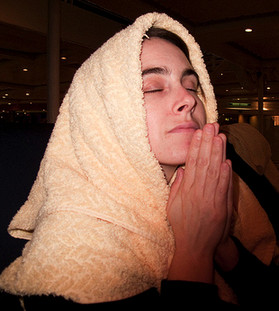
The Patron Saint of Towels
Motto: "Holy absorption of the wring of truth."
|
|
| Puzzles and Games :: Letter Grids |
(permalink) |
|
|
|

This puzzle grid contains several big words. Can you find them?
• 7-letter words: 13
• 8-letter words: 4
• 9-letter words: 2
All letters in the word must touch (in any direction), and no square may be reused.
Click to display solutions
|
| 7-letter words: |
• aftosas
• apposes
• atopies
• bloated
• dopiest
• floated
• folioed |
• fossate
• loathed
• nappies
• opiated
• osteoid
• tapalos |
| 8-letter words: |
• floppies
• loppiest |
• nappiest
• sappiest |
| 9-letter words: |
| • flappiest |
• floppiest |
|
|
|
Yes, you may . . . on condition that:
"you tell me all about it." —R. H. Stoddard, "The Little Monk," 1864
|
|
|
|
|
|
Carly Simon's song "You're So Vain" doesn't identify its subject, yet actor Warren Beatty has asserted that it's about him. Beatty's assertion begs a question: if anyone takes "You're So Vain" personally, is he or she technically correct? The answer is Yes! According to Hugh Everett's " many worlds" interpretation of quantum mechanics, every possible quantum vanity is realized. In the many-branched tree of parallel universes, each and every vain human being is the true subject of Carly Simon's song.
---
J quips:
This is very comforting! Imagine being vain enough to think YSV was about you, but finding out it wasn't. The very world might cease to revolve around one.
Technical question: Does Everett's theory still hold for values of "a" (a = age of vain individual) that are < Y (Y = years elapsed since song was written)? In other words, was Simon farsighted enough to build infinite references to unborn vain people into her song?
Similarly, I note the problematics around individuals who were alive when the song was written but not yet vain, their vanity only to develop later on. In their case, I hypothesize a "critical vanity threshold," or CVT--the discrete moment at which someone's vanity has matured to the point where Simon's song begins to refer to him or her.
|
|
Peace, too, is a living thing and like all life it must wax and wane, accommodate, withstand trials, and undergo changes. — Hermann Hesse, The Glass Bead Game
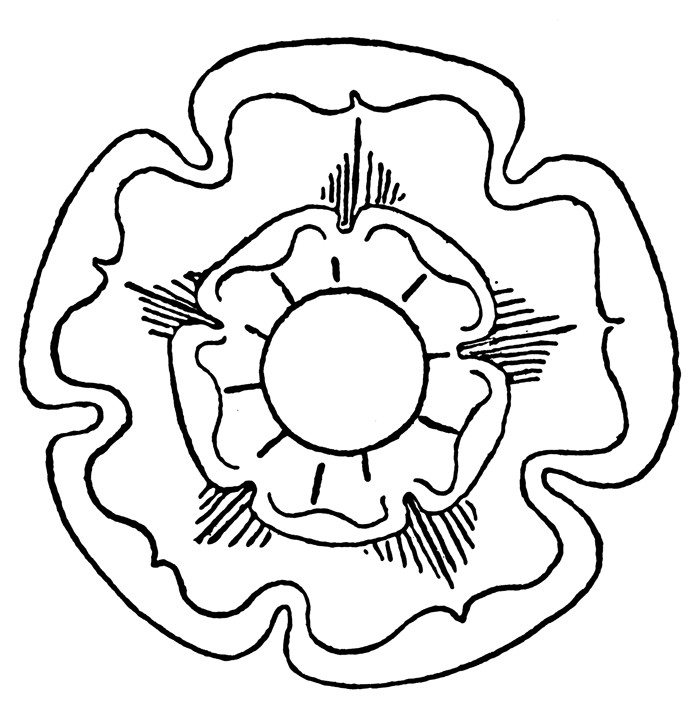
The Guatemalan Rose symbol of peace.
|
Page 4185 of 4337
Original Content Copyright © 2026 by Craig Conley. All rights reserved.
|