|
|
 |
|
| Hindpsych: Erstwhile Conjectures by the Sometime Augur of Yore |
(permalink) |
|
|
|
Today's question:
Gordon asks: "How about a reading for that fateful day for JFK in Dallas?"
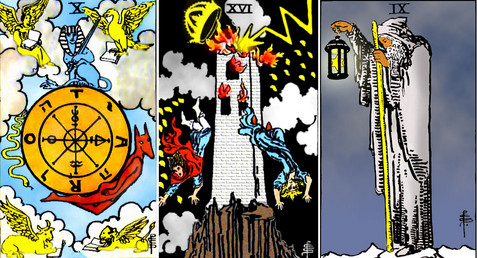
In our hindpsych Tarot spread, the left card, "Wheel of Fortune," is a symbol of fate and marks a turning point. The middle card, "The Tower," symbolizes a sudden crisis and downfall; a king is shown falling from the top of his castle. The right card, "The Hermit," speaks of retreat from society; the isolated philosopher follows his own light. Viewing the spread of cards as a whole, we see that the hermit is looking down toward the falling king. This promotes the theory of a lone gunman, targeting President Kennedy from above. The light of the hermit's lamp becomes the lightning that strikes the tower, suggesting that the assassin's ideology fuels the overthrow. On the opposite side of the spread, facing the falling king is the jackal-headed Anubis (an Egyptian guide to the souls of the dead). This suggests that the crisis will end in death.
Interestingly, the cards echo two aspects of Kennedy's "Camelot" image. The first is obvious: the crowned king in "The Tower." The second is a "round table" suggested by the wheel of fortune. By way of explanation, the "Wheel of Fortune" card is associated with the "Magician" card, as both the wheel and the magician's table feature emblems of the four suits/elements of the Tarot (Fire/Wands, Water/Cups, Earth/Pentacles, Air/Swords). And so we can consider the wheel as an image of the magician's table, viewed from above. It is a round table. In the Camelot story, the round table was designed by the magician Merlin for King Arthur.
Also interestingly, the "Wheel of Fortune" card features open books in the storm clouds at each corner; a book depository is central to the assassination investigation.
|
|
|
|
|
|
Walking on air (as opposed to walking on water, walking on thin ice, or walking on sunshine): This parachuter is taking one giant step, on an invisible current of air. Here's a snapshot of "Sarah and Debbie standing on glass plates in the Auckland Sky Tower about 700 feet up in the air. This was just a few moments before lightning struck the tower." I'd say this counts as "walking on air." These lone Converse shoes hanging on a power line are walking on air. These occupied shoes are walking even higher. And these shoes are higher yet. One attraction of the Macau Tower is the " skywalk," which can be quite scary in cases of strong winds. This Pedestrian Crossing sign would fit in perfectly at Britain's glass-floored Spinnaker Tower. This woman is apparently high on life and is walking on air. These guys in the treetops may be secured by ropes, but they're certainly walking on air. Sports figures are often walking on air. Is this Washington Post photo an optical illusion, a Photoshop job, or genuine walking on air? Back in 1934, Popular Mechanics featured newfangled boots with built-in rubber bladders, promising the sensation of "walking on air." Of course, the masters of walking on air are caterpillars. |
|
|
|
|
|
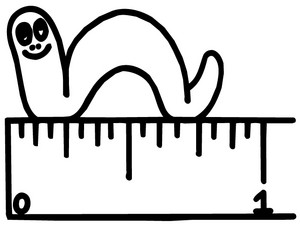
Give an Inch, Take a MileAt Inch Beach (on the Dingle peninsula), the water recedes a mile at low tide. "In what way are an inch and a mile alike?" is a question in a neuropsychological test (from this compendium). In poetry, an inch of verse can traverse miles. Praising T.S. Eliot, Robert Francis wrote: He moved from the Mississippi to the Thames
and we moved with him a few miles or inches.
Speaking of the Thames, the scale of this map of London from 1786 is one inch to a mile. It has been said that at "Mile Zero" of the Oregon Coast, nearly every inch is scenic ( Portland Hikes by Art Bernstein and Andrew Jackman). "Victory is not won in miles but in inches. Win a little now, hold your ground, and later win a little more." —Louis L'Amour Similarly, "Battle is a matter of inches, not miles. The inches that separate a man from his enemy." —Bernard Cornwell, Excalibur: A Novel of ArthurThe immortal inchworm vs. the infinitely stretchy rubber band: An inchworm is at one end of an infinitely stretchy mile-long rubber band. He walks an inch. The rubber band is then stretched to two miles. It stretches evenly along its entire length, so the inchworm has gotten a one-inch free ride, and is now two inches from the end. He walks another inch, and is now three inches from the end. The rubber band stretches another mile, to three miles long. He gets a 1 1/2 inch free ride out of this stretch. The pattern of walking an inch and stretching a mile repeats itself indefinitely. (a) Will the inchworm ever reach the other end? Prove your answer. Hint: Use the asymptotic bounds on harmonic series. (b) Will the inchworm ever reach the other end if, instead of increasing by a mile, the rubber band doubles in length at each step? Prove your answer. —via this test (.pdf) from an Analysis of Algorithms class. However, " a mile wide and an inch deep" involves a different sort of math. Ultimately, "The very idea that space is separated by inches, miles, light-years,
and parsecs is but an illusion, as ephemeral as ephemeral as the
shadows in Plato's cave." —Win Wenger, The Einstein Factor
|
|
|
|
|
|
A councilman in New York City has asked for a "symbolic moratorium on the use of the n-word." Columnist Charles Lee is skeptical of legislating language. He says, "After the n-word, politicians could eradicate the infamous f-word and mark a plethora of other 'one-letter' words on their linguistic hit lists." He concludes, "The n-word is not the only offensive word. Perhaps we can attribute this to the fact that language is, to a certain extent, untamable. Yet surely we can attribute it to the illimitable freedom of speech upon which this country was established." |
|
|
|
|
|
My family once hosted a foreign exchange student--Fabrice from Corsica--and everywhere we went he asked "Is this typical?" His recurrent question became especially annoying when we traveled to St. Augustine, Florida. No, we explained, historic Flagler College is by no means a typical educational institution, as it's a former grand hotel in the style of a Spanish castle! No, we explained, the students there aren't typical, because they get to study at the beach every day and their dorm rooms are in a former grand hotel in the style of a Spanish castle! No, we explained, St. Augustine is by no means a typical American city, even if one were to leave Spanish castles out of the equation! Years have gone by, but I was thinking about Fabrice today, and I decided to honor his memory by searching the Web for "typical" things. Of course, the Web specializes in the strange and unusual, but after a good bit of digging I was able to uncover some typical things that would have brought Fabrice great comfort. For example: A " typical Friday nite." Typical traffic in Bangkok. (Actually a rather pretty picture, with lots of glowing primary colors.) Typical food. (However, I've never seen anything exactly like it.) "Just another typical Shanghai party." A " typical evening in France." A typical cluttered desk of a sports coach. A "typical Japanese police station." " Typical England." (However, my visits to the U.K. somehow always feature delightful weather!) "A typical view from the helicopter during a flight over the ice." A " typical crowd." (However, they seem to be having way more fun than the people in Shanghai.) A typical stone fence. A "typical day" at a typical historical center. A typical maladjusted teenager. (Actually a still from Donnie Darko.) A couple of typical sparrows. Typical weather. (Yep, that's weather.) |
|
|
|
|
|
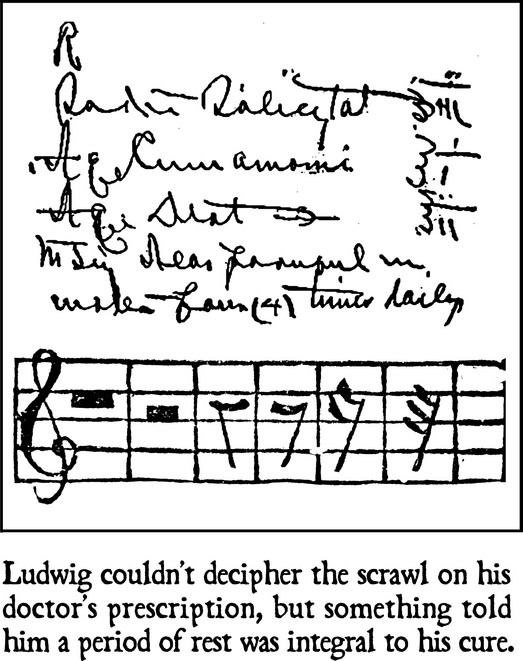
Ann Althouse says: "I'm fascinated by the almost legible. Have you ever imagined there were words somewhere that you could almost read?" She offers this intriguing illustration. This sign has more distinct letters but is equally illegible. "A sky full of stars arranged itself in an unreadable tombstone motto." —Fred Chappell, I Am One of You Forever. Speaking of epitaphs in the sky, the Orion Correlation Theory proposes a relationship between the Egyptian pyramids of Giza and the alignment of stars in the Orion constellation. Here's a big graphic depicting the correlation.
More mundane but equally mysterious, here's an unreadable funeral marker inside a rock-lined grave in Texas. "In places the ink was faded, the script unreadable. It appeared to be a poem." —Kelly Jones, The Seventh UnicornHere's an unreadable 18-line poem, scrawled by Mark W. "He was writing tiny, illegible doodles on big sheets of paper years before anyone else." —Edmund White, My LivesHere's an unreadable page of doodles, with text from an off-world language. "Concrete poems are often close to graphic art and may be unreadable in a conventional way." —Stephen Matterson and Darryl Jones, Studying PoetryHere's unreadable text art, by a program that encodes text as binary and represents the resulting code visually.
|
|
|
|
|
|
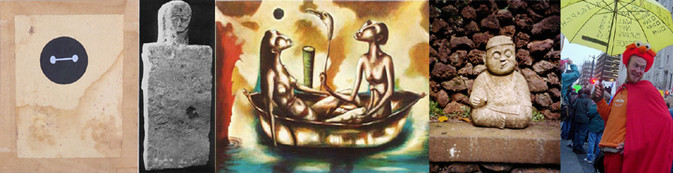
Unknown SignificanceLeft to right: Tantric painting of unknown significance, with unspecified paint on found paper. Limestone statue of unknown significance, discovered in Yemen. Part of a painting entitled "Portent of Unknown Significance" by David Madzo. "A funny little stone figure of unknown significance in the Monte Palace Garden." A costume of unknown significance (via flickr).
|
|
|
|
|
|
| Hindpsych: Erstwhile Conjectures by the Sometime Augur of Yore |
(permalink) |
|
|
|
Today's question:
Refusing to let the American Revolution die, did George Washington cross the Delaware River on Christmas night in 1776?*
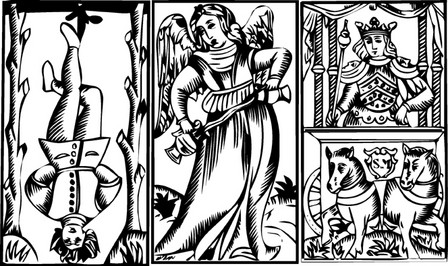
With "hindpsych," the answer is "yes"! In our Tarot spread, note that all of the figures are looking toward the left. Accordingly, we read the cards from right to left. The right card, "The Chariot," is a symbol of conquest, honor, and bravery. The chariot represents Washington's boat and mission. The middle card, "Temperance," depicts a figure pouring water from one vessel to another. This figurative flowing between two realms points to Washington's literal crossing from one bank of the river to the other. The left card is "Hanged Man," symbolizing a hero willing to sacrifice himself for a cause. Note that the hanged man's life is in suspension, but he is not dead. We can say with confidence that Washington heroically crossed the Delaware on Christmas in 1776, and we can now move on.
|
Page 4319 of 4338
Original Content Copyright © 2026 by Craig Conley. All rights reserved.
|