 |
| I Found a Penny Today, So Here's a Thought |
(permalink) |
|
|
|
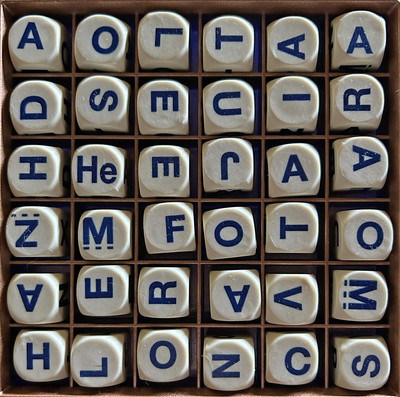
Finding Cleopatra's Needle in a Haystack?Those towering monolithic needles called obelisks, associated with ancient Egypt, are commonly understood to be sundials, memorial tributes, phallic and uprightness symbols, solar monuments, pointers of fixed stars, and/or property line markers. Yet must there be something more to those tapered pillars, something weirder to their origin and purpose? There is! Here's a fragment of an obelisk song that can be heard nowhere else, and then we'll dive right in."Cleopatra's Needle in a Haystack"It's just like Cleopatra's Needle in a haystackSearching for a Stonehenge at the beachIt's a figure of speechIt's just like looking for Grand Canyons in the gutterSearching for the Great Wall through windowsAs they say in mottosI'll roam the town to find pyramidsLook at each sphinx not batting a lidGive the Colossus a takeover bidFor it's all axiomaticI'm finding Cleopatra's Needle in a haystackStumblin' 'pon stone circles in the sandThis is well out of handThe 16th-century astronomer and mathematician Rheticus, famous for convincing Copernicus that the Earth moves around the sun,* came to view the obelisk not only as an astronomical instrument but as a revelatory cult object — an icon said to have come into existence miraculously and not by human hands, known as an acheiropoieton. Rheticus did not believe that human reason was capable in itself of getting to the bottom of the mysteries of the heavens. Rather, there had to be a tool of higher origin and an effect that human inventions couldn't produce. Only by the means of the obelisk, Rheticus concluded, can all the laws of the celestial state be precisely apprehended and described. This idea of divine instruction in fact goes back to history's first mention of an obelisk, in Pliny the Elder's account of the original obelisk being set up according to a vision in a pharaoh's dream.Consider this, from Egyptology Professor Jean Capart in 1920:"Obelisks are not mere ornaments; they were considered as divinities 'of flesh and bone' who needed food offerings which the religious texts meticulously prescribed. The erection of an obelisk constituted a cult ceremony of which representations may be found in the bas-reliefs of the temples."A similar insight has been discovered via an age-old technique for decoding ancient Hebrew texts by arranging the letters in a grid and studying the grid as one would in a search-a-word puzzle for hidden messages. In /The Bible Code 2/, Michael Drosnin shows how he decoded the phrase "mouth of obelisks" not once but twice within the Torah, the odds being a million to one and far beyond chance, according to Israeli mathematician Eliyahu Rips. The phrase "mouth of obelisks" suggested that obelisks are not merely stone pillars but somehow had the power to speak, perhaps like oracles. Crossing "mouth of obelisks" in the grid is the phrase "an object of Heaven," which finds equivalency in the 1700-year-old biblical commentary called the Midrash: "What were these obelisks?" the text asks, then answers: "They were not what a human being had made, but the work of Heaven." The suggestion is that obelisks came from beyond this planet, perhaps from another realm. But the Midrash continues: "They had eyes as a window, were a kind of male and female." Though the ancient text doesn't explicitly say that obelisks are alive, they can yet see and perhaps speak. Might they represent a life form not of this world? Drosnin documents his search for the particular obelisks encoded in the Torah, based upon additional location clues, and Eliyahu Rips was equally convinced of their reality—though he couldn't say if it were a physical or a metaphysical reality. "If it's metaphysical," Rips told Drosnin, "it's more real, closer to the ultimate source of all reality. But maybe what you were seeking can only be seen with spiritual tools, because it requires contact with another realm.""I'm All Alone with a Needle of Stone"I'm all alone with a needle of stoneDown in the Valley of KingsPiercing space-time and attempting to rhyme"Obelisk" with other thingsboggle obelisks .JPG
|






