CRAIG CONLEY (Prof. Oddfellow) is recognized by Encarta as “America’s most creative and diligent scholar of letters, words and punctuation.” He has been called a “language fanatic” by Page Six gossip columnist Cindy Adams, a “cult hero” by Publisher’s Weekly, a “monk for the modern age” by George Parker, and “a true Renaissance man of the modern era, diving headfirst into comprehensive, open-minded study of realms obscured or merely obscure” by Clint Marsh. An eccentric scholar, Conley’s ideas are often decades ahead of their time. He invented the concept of the “virtual pet” in 1980, fifteen years before the debut of the popular “Tamagotchi” in Japan. His virtual pet, actually a rare flower, still thrives and has reached an incomprehensible size. Conley’s website is OneLetterWords.com.
Featured Book
The Young Wizard's Hexopedia
Search Site
Interactive

Breathing Circle
Music Box Moment
Cautious or Optimistic
King of Hearts of War and Peace
As I Was, As I Am
Perdition Slip
Loves Me? Loves Me Not?
Wacky Birthday Form
Test Your ESP
Chess-Calvino Dictionary
Amalgamural
Is Today the Day?
100 Ways I Failed to Boil Water
"Follow Your Bliss" Compass
"Fortune's Navigator" Compass
Inkblot Oracle
Luck Transfer Certificate
Eternal Life Coupon
Honorary Italian Grandmother E-card
Simple Answers

Collections

A Fine Line Between...
A Rose is a ...
Always Remember
Ampersands
Annotated Ellipses
Apropos of Nothing
Book of Whispers
Call it a Hunch
Colorful Allusions
Did You Hear the One I Just Made Up?
Disguised as a Christmas Tree
Do-Re-Midi
Don't Take This the Wrong Way
Everybody's Doing This Now
Forgotten Wisdom
Glued Snippets
Go Out in a Blaze of Glory
Haunted Clockwork Music
Hindpsych: Erstwhile Conjectures by the Sometime Augur of Yore
How to Believe in Your Elf
How to Write a Blank Book
I Found a Penny Today, So Here's a Thought
Images Moving Through Time
Indubitably (?)
Inflationary Lyrics
It Bears Repeating
It's Really Happening
Last Dustbunny in the Netherlands
Neither Saint- Nor Sophist-Led
No News Is Good News
Non-Circulating Books
Nonsense Dept.
Not Rocket Science
Old News
Oldest Tricks in the Book
On One Condition
One Mitten Manager
Only Funny If ...
P I n K S L i P
Peace Symbols to Color
Pfft!
Phosphenes
Postcard Transformations
Precursors
Presumptive Conundrums
Puzzles and Games
Constellations
D-ictionary
Film-ictionary
Letter Grids
Tic Tac Toe Story Generator
Which is Funnier
Restoring the Lost Sense
Rhetorical Answers, Questioned
Rhetorical Questions, Answered!
Semicolon Moons
Semicolon's Dream Journal
Separated at Birth?
Simple Answers
Someone Should Write a Book on ...
Something, Defined
Staring at the Sun
Staring Into the Depths
Strange Dreams
Strange Prayers for Strange Times
Suddenly, A Shot Rang Out
Sundials
Telescopic Em Dashes
Temporal Anomalies
The 40 Most Meaningful Things
The Ghost in the [Scanning] Machine
The Only Certainty
The Right Word
This May Surprise You
This Terrible Problem That Is the Sea
Two Sides / Same Coin
Uncharted Territories
Unicorns
We Are All Snowflakes
What I Now Know
What's In a Name
Yearbook Weirdness
Yesterday's Weather
Your Ship Will Come In

Archives

November 2026
October 2026
September 2026
August 2026
July 2026
June 2026
May 2026
April 2026
March 2026
February 2026
January 2026
December 2025
November 2025
October 2025
September 2025
August 2025
July 2025
June 2025
May 2025
April 2025
March 2025
February 2025
January 2025
December 2024
November 2024
October 2024
September 2024
August 2024
July 2024
June 2024
May 2024
April 2024
March 2024
February 2024
January 2024
December 2023
November 2023
October 2023
September 2023
August 2023
July 2023
June 2023
May 2023
April 2023
March 2023
February 2023
January 2023
December 2022
November 2022
October 2022
September 2022
August 2022
July 2022
June 2022
May 2022
April 2022
March 2022
February 2022
January 2022
December 2021
November 2021
October 2021
September 2021
August 2021
July 2021
June 2021
May 2021
April 2021
March 2021
February 2021
January 2021
December 2020
November 2020
October 2020
September 2020
August 2020
July 2020
June 2020
May 2020
April 2020
March 2020
February 2020
January 2020
December 2019
November 2019
October 2019
September 2019
August 2019
July 2019
June 2019
May 2019
April 2019
March 2019
February 2019
January 2019
December 2018
November 2018
October 2018
September 2018
August 2018
July 2018
June 2018
May 2018
April 2018
March 2018
February 2018
January 2018
December 2017
November 2017
October 2017
September 2017
August 2017
July 2017
June 2017
May 2017
April 2017
March 2017
February 2017
January 2017
December 2016
November 2016
October 2016
September 2016
August 2016
July 2016
June 2016
May 2016
April 2016
March 2016
February 2016
January 2016
December 2015
November 2015
October 2015
September 2015
August 2015
July 2015
June 2015
May 2015
April 2015
March 2015
February 2015
January 2015
December 2014
November 2014
October 2014
September 2014
August 2014
July 2014
June 2014
May 2014
April 2014
March 2014
February 2014
January 2014
December 2013
November 2013
October 2013
September 2013
August 2013
July 2013
June 2013
May 2013
April 2013
March 2013
February 2013
January 2013
December 2012
November 2012
October 2012
September 2012
August 2012
July 2012
June 2012
May 2012
April 2012
March 2012
February 2012
January 2012
December 2011
November 2011
October 2011
September 2011
August 2011
July 2011
June 2011
May 2011
April 2011
March 2011
February 2011
January 2011
December 2010
November 2010
October 2010
September 2010
August 2010
July 2010
June 2010
May 2010
April 2010
March 2010
February 2010
January 2010
December 2009
November 2009
October 2009
September 2009
August 2009
July 2009
June 2009
May 2009
April 2009
March 2009
February 2009
January 2009
December 2008
November 2008
October 2008
September 2008
August 2008
July 2008
June 2008
May 2008
April 2008
March 2008
February 2008
January 2008
December 2007
November 2007
October 2007
September 2007
August 2007
July 2007
June 2007
May 2007
April 2007
March 2007
February 2007
January 2007
December 2006
November 2006
October 2006
September 2006
August 2006
July 2006
June 2006
May 2006
April 2006

Links

Magic Words
Jonathan Caws-Elwitt
Martha Brockenbrough
Gordon Meyer
Dr. Boli
Serif of Nottingblog
dbqp
Phantasmaphile
Ironic Sans
Brian Sibley's Blog
Neat-o-Rama
Abecedarian personal effects of 'a mad genius'
A Turkish Delight of musings on languages, deflations of metaphysics, vauntings of arcana, and great visual humor.

Found 10 posts tagged ‘obelisk’


Restoring the Lost Sense – September 22, 2030 (permalink)

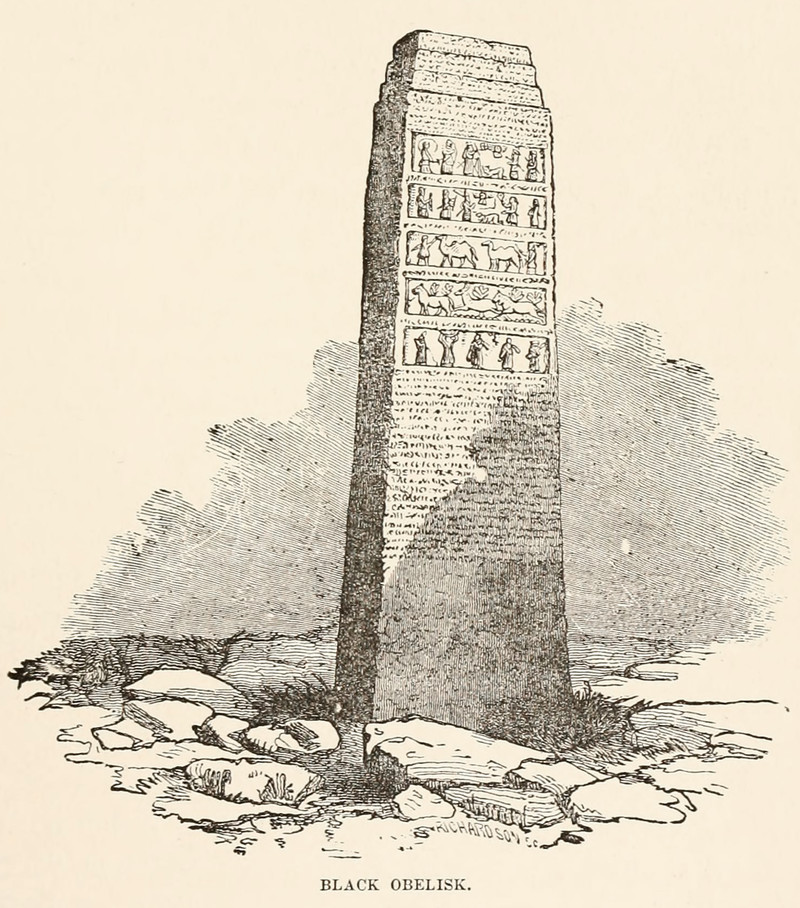
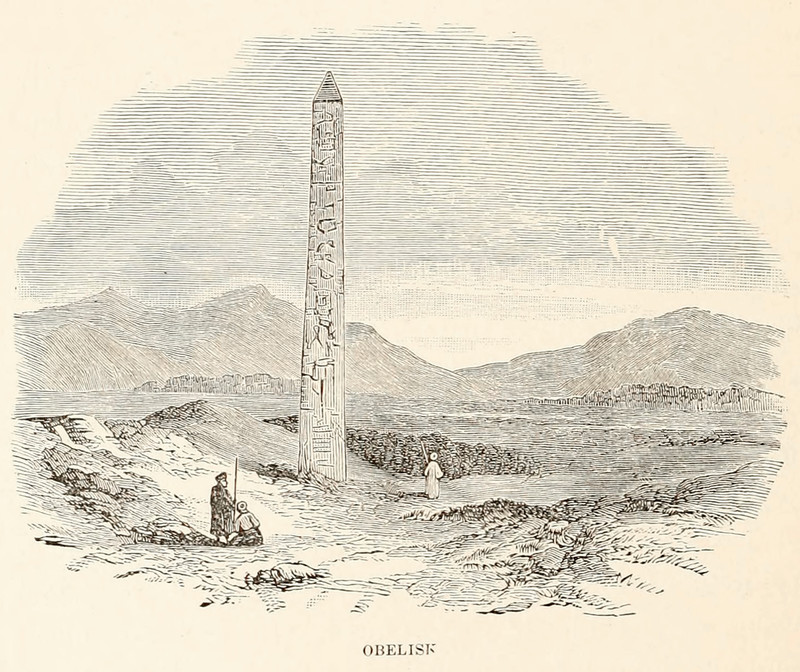
From Buried Cities Recovered by Frank De Hass, 1882.
> read more from Restoring the Lost Sense . . .
#vintage illustration #monolith #illustration #1880s #obelisk
Tumblr Twitter Facebook Pinterest

Restoring the Lost Sense – July 19, 2030 (permalink)

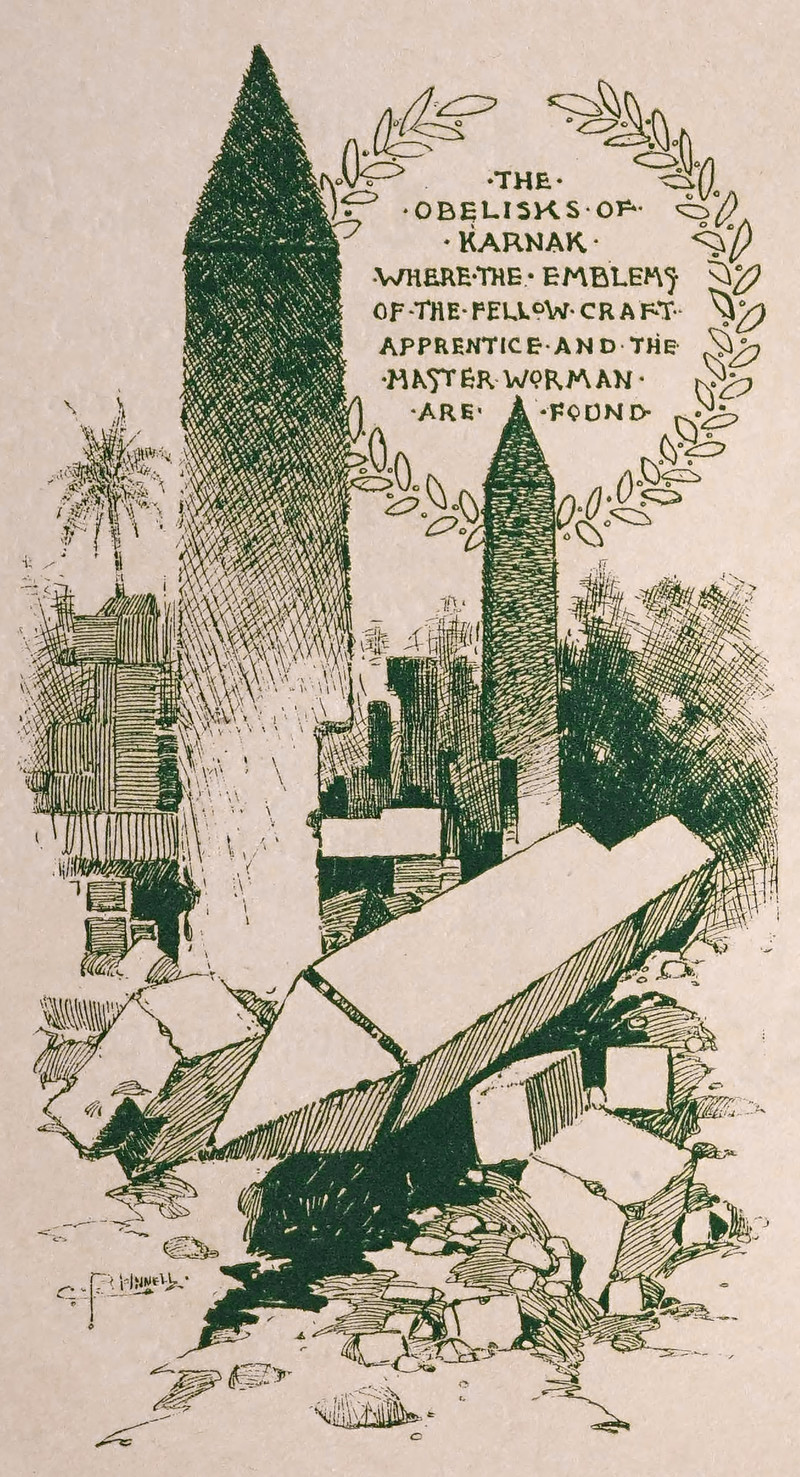
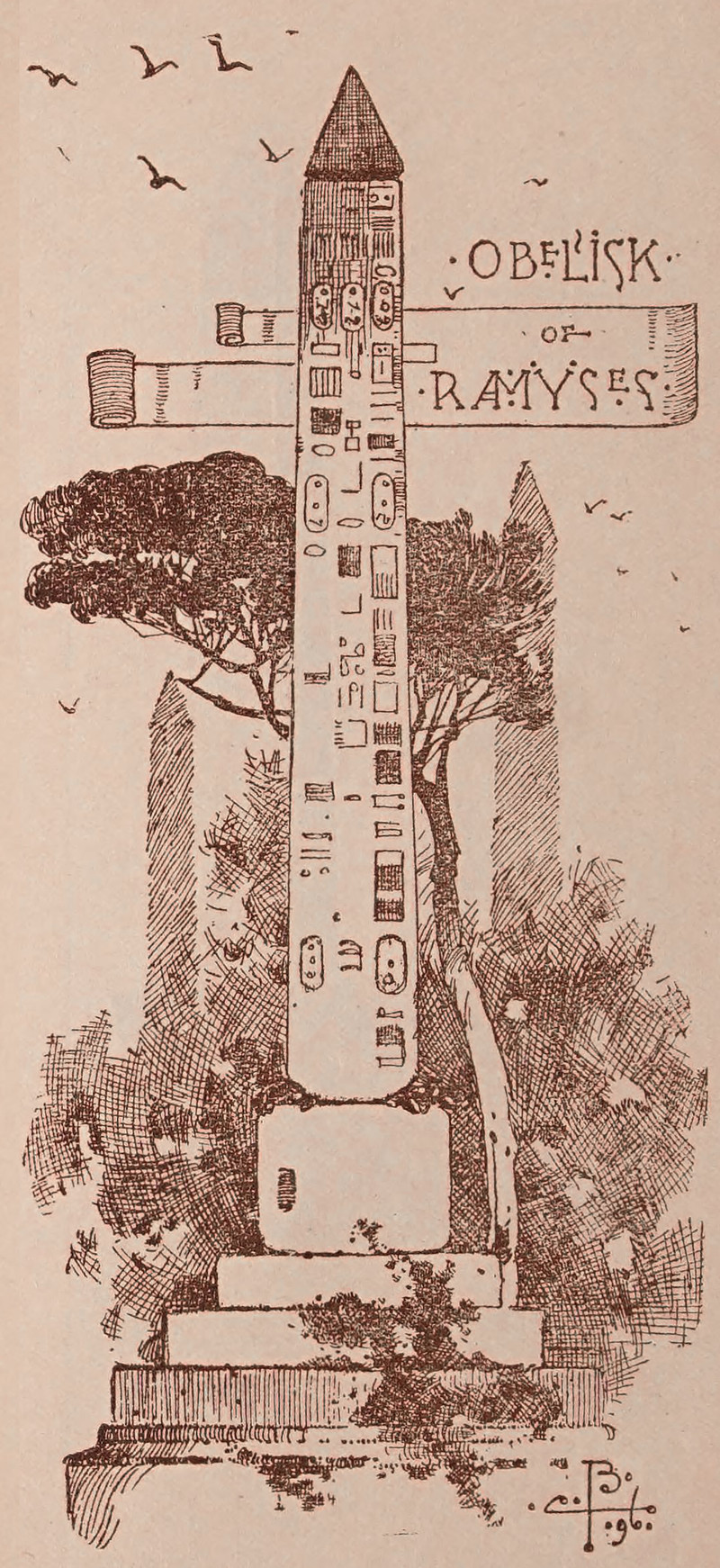
From Transparent & Colored Lacquers for Metal Goods by Egyptain Lacquer Manufacturing, 1896.
> read more from Restoring the Lost Sense . . .
#vintage illustration #egypt #1890s #illustration #obelisk #karnak
Tumblr Twitter Facebook Pinterest

Yearbook Weirdness – May 29, 2030 (permalink)

From Southern Illinois University's 1964 yearbook.
> read more from Yearbook Weirdness . . .
#vintage illustration #vintage yearbook #vintage book #yearbook #book #1960s #illustration #obelisk
Tumblr Twitter Facebook Pinterest

Restoring the Lost Sense – March 2, 2030 (permalink)

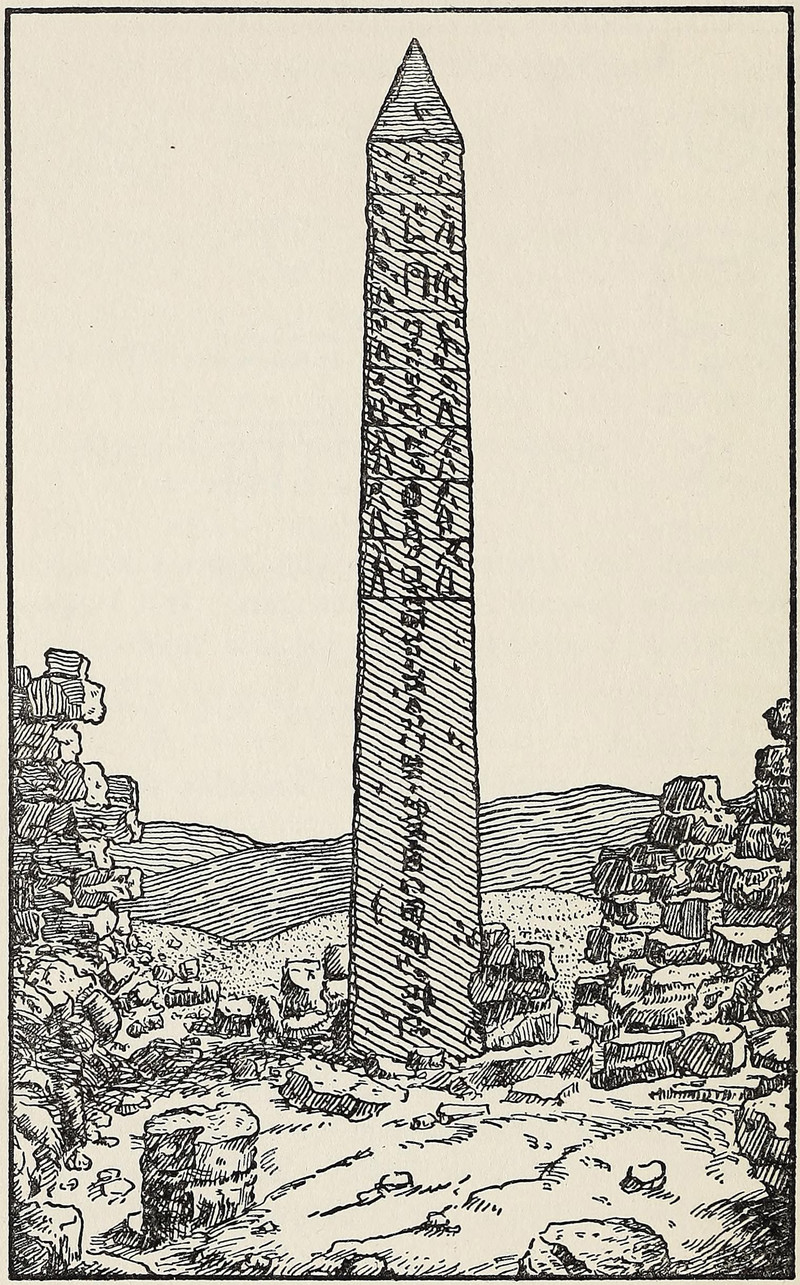
From School Boys of Long Ago by Beatrice Hurley & Ina Sartorius and illustrated by Henry Rood, 1935.
> read more from Restoring the Lost Sense . . .
#vintage illustration #egyptian #egypt #ruins #1930s #illustration #obelisk
Tumblr Twitter Facebook Pinterest

Restoring the Lost Sense – April 17, 2028 (permalink)

From Buried Cities Recovered by Frank De Hass, 1882.
> read more from Restoring the Lost Sense . . .
#vintage illustration #egyptian #desert #illustration #1880s #obelisk
Tumblr Twitter Facebook Pinterest

Restoring the Lost Sense – December 10, 2027 (permalink)

From Transparent & Colored Lacquers for Metal Goods by Egyptain Lacquer Manufacturing, 1896.
> read more from Restoring the Lost Sense . . .
#vintage illustration #egyptian #1890s #illustration #obelisk
Tumblr Twitter Facebook Pinterest

I Found a Penny Today, So Here's a Thought – August 23, 2027 (permalink)

Finding Cleopatra's Needle in a Haystack?

Those towering monolithic needles called obelisks, associated with ancient Egypt, are commonly understood to be sundials, memorial tributes, phallic and uprightness symbols, solar monuments, pointers of fixed stars, and/or property line markers.  Yet must there be something more to those tapered pillars, something weirder to their origin and purpose?  

There is!  Here's a fragment of an obelisk song that can be heard nowhere else, and then we'll dive right in.

"Cleopatra's Needle in a Haystack"

It's just like Cleopatra's Needle in a haystack
Searching for a Stonehenge at the beach
It's a figure of speech

It's just like looking for Grand Canyons in the gutter
Searching for the Great Wall through windows
As they say in mottos

I'll roam the town to find pyramids
Look at each sphinx not batting a lid
Give the Colossus a takeover bid
For it's all axiomatic

I'm finding Cleopatra's Needle in a haystack
Stumblin' 'pon stone circles in the sand
This is well out of hand

The 16th-century astronomer and mathematician Rheticus, famous for convincing Copernicus that the Earth moves around the sun,* came to view the obelisk not only as an astronomical instrument but as a revelatory cult object — an icon said to have come into existence miraculously and not by human hands, known as an acheiropoieton.  Rheticus did not believe that human reason was capable in itself of getting to the bottom of the mysteries of the heavens.  Rather, there had to be a tool of higher origin and an effect that human inventions couldn't produce.  Only by the means of the obelisk, Rheticus concluded, can all the laws of the celestial state be precisely apprehended and described.  This idea of divine instruction in fact goes back to history's first mention of an obelisk, in Pliny the Elder's account of the original obelisk being set up according to a vision in a pharaoh's dream.

Consider this, from Egyptology Professor Jean Capart in 1920:

"Obelisks are not mere ornaments; they were considered as divinities 'of flesh and bone' who needed food offerings which the religious texts meticulously prescribed.  The erection of an obelisk constituted a cult ceremony of which representations may be found in the bas-reliefs of the temples."

A similar insight has been discovered via an age-old technique for decoding ancient Hebrew texts by arranging the letters in a grid and studying the grid as one would in a search-a-word puzzle for hidden messages.  In /The Bible Code 2/, Michael Drosnin shows how he decoded the phrase "mouth of obelisks" not once but twice within the Torah, the odds being a million to one and far beyond chance, according to Israeli mathematician Eliyahu Rips. The phrase "mouth of obelisks" suggested that obelisks are not merely stone pillars but somehow had the power to speak, perhaps like oracles.  Crossing "mouth of obelisks" in the grid is the phrase "an object of Heaven," which finds equivalency in the 1700-year-old biblical commentary called the Midrash: "What were these obelisks?" the text asks, then answers: "They were not what a human being had made, but the work of Heaven."  The suggestion is that obelisks came from beyond this planet, perhaps from another realm.  But the Midrash continues: "They had eyes as a window, were a kind of male and female."  Though the ancient text doesn't explicitly say that obelisks are alive, they can yet see and perhaps speak.  Might they represent a life form not of this world?  Drosnin documents his search for the particular obelisks encoded in the Torah, based upon additional location clues, and Eliyahu Rips was equally convinced of their reality—though he couldn't say if it were a physical or a metaphysical reality.  "If it's metaphysical," Rips told Drosnin, "it's more real, closer to the ultimate source of all reality.  But maybe what you were seeking can only be seen with spiritual tools, because it requires contact with another realm."

"I'm All Alone with a Needle of Stone"

I'm all alone with a needle of stone
Down in the Valley of Kings
Piercing space-time and attempting to rhyme
"Obelisk" with other things

boggle obelisks .JPG
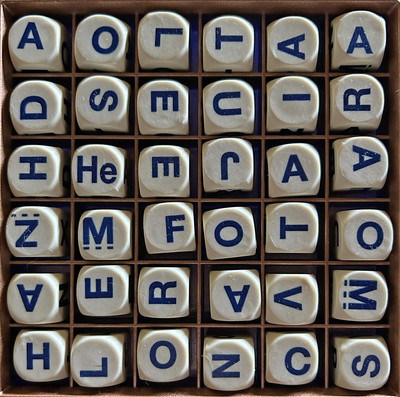
Stranger realms would indeed seem to require singular devices to unlock them.  One of the oracular Dice Methods developed by Jim Girouard involves using letter cubes from the game of Boggle to form a grid of random letters.  Words are formed by connecting any adjoining letters in any directions.  In the 6x6 grid we created with these cubes, our eye immediately caught on something in particular — the only cube sporting double letters here is "He," and above it is an S, so we see both a "he" and a "she," as if echoing the Midrash's observation that obelisks are a kind of male and female.  S connecting to He to M, A, L and E spells "shemale," further suggesting a hermaphroditic nature.  Other words that present themselves are: LORE, FEEL, SEE, SCAN, LOADS, ARIA, FOTO, ROLE,  TIARA, SOLE, and SHEET.   Letters that all touch but whose words are slightly scrambled, like SCNOR suggesting SCORN, are encouraged in Girouard's method.  Hence, we also see LEARN, ROAM, REAL, FRAME, SMART, FREE, SEED, LOST, FROM, ROSE, LONER, ROOT, ORAL, ALSO, and SCALER.  The words we find are then arranged into sentences or poetic phrases, and in this case we find that "a SMART LONER can SEE LOST LORE and LEARN FROM the SEED and ROOT the REAL ROLE of the ROSE and TIARA."  A crowned rose is of course the symbol of England's Tudor dynasty.  But the rose symbol traces to Roman times and presumably beyond as a symbol of the womb.  The crown traditionally symbolizes supreme power, victory over death, and the celestial heavens.  To expand or improve upon this reading, create your own letter grid and discover what further messages emerge from the obelisk.

Throughout history, lines traced on astronomical charts, holy letter grids, and even tabletop gaming maps all keep pointing to obelisks.  In the Dungeons and Dragons adventure "Rahasia," an obelisk speaks in a deep, hollow voice: "Answer me and I'll answer thee in truth."

"Are You From Heaven?"

They must have sent obelisks down
To light my weary way
To make my darkest hour bright as day
My life was just an empty dream
Till you came here below
Obelisk, I want to know

Are you from Heaven? My glad heart sings
Are you an angel? Where are your wings?
Whom were you sent for? Whom were you meant for?
I’ll tell you, I’ll tell you, For me alone
Your tower in sunshine, like old Khufu
You point at starlight, visibly true
Your godly splendor, your soul so tender
Are you from Heaven? Please tell me, do

*For an account of Rheticus' views on obelisks, see The Genesis of the Copernican World by Hans Blumenberg, 1987.
> read more from I Found a Penny Today, So Here's a Thought . . .
#obelisk
Tumblr Twitter Facebook Pinterest

Strange Dreams – August 25, 2026 (permalink)

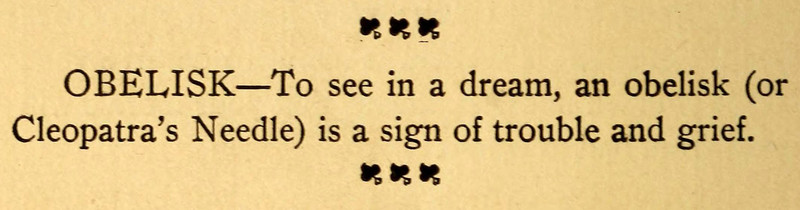
May you not dream of an obelisk tonight.  From The Gates of the Future Thrown Open by Carlotta de Barsy, 1899.
> read more from Strange Dreams . . .
#dream #symbol #obelisk
Tumblr Twitter Facebook Pinterest

Yearbook Weirdness – May 21, 2026 (permalink)

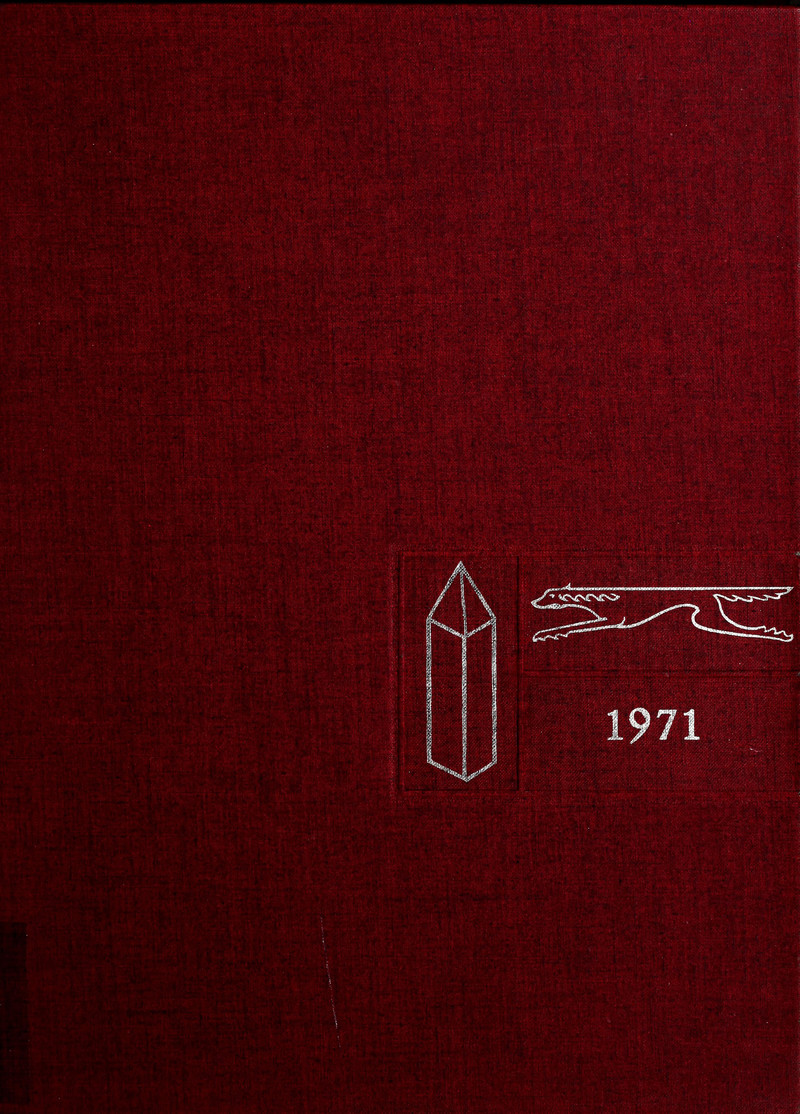
Today's Egyptian hunting dog flying toward an obelisk is from Southern Illinois University's 1971 yearbook.
> read more from Yearbook Weirdness . . .
#vintage illustration #dog #vintage yearbook #vintage book #old book #obelisk
Tumblr Twitter Facebook Pinterest

Restoring the Lost Sense – September 19, 2024 (permalink)

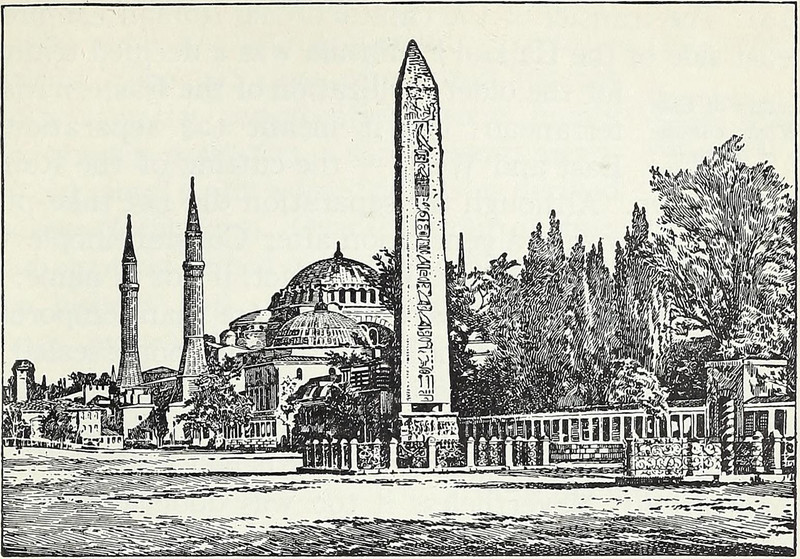
From Ancient Times, A History of the Early World, Second Edition by James Henry Breasted, 1935.
> read more from Restoring the Lost Sense . . .
#vintage illustration #egyptian #1930s #monument #illustration #obelisk #constantinople
Tumblr Twitter Facebook Pinterest


Original Content Copyright © 2026 by Craig Conley. All rights reserved.