Go Out in a Blaze of Glory
|

|
|
|
|
|
|
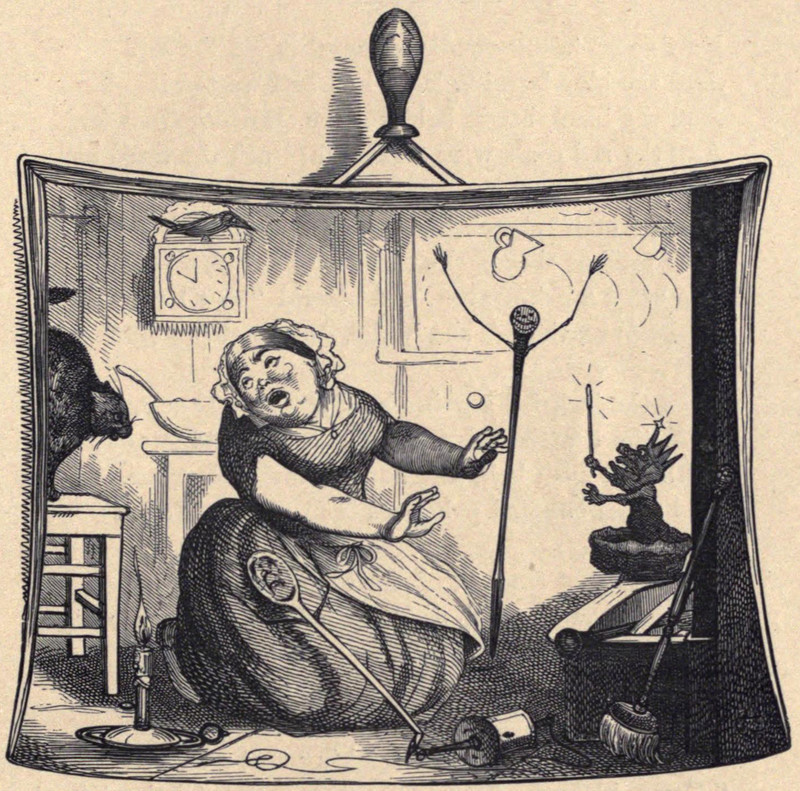
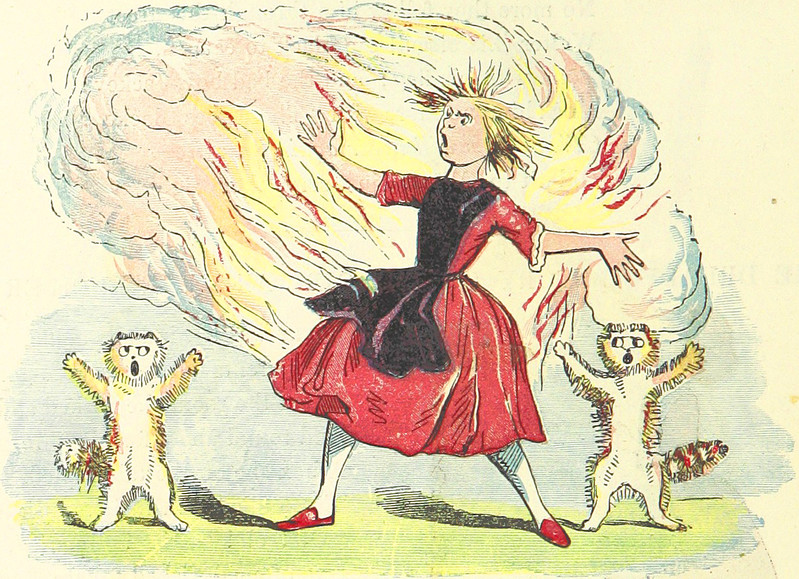
Illustration from Poets' Wit and Humour by William Henry Wills, 1860.
There's a macabre old fairy tale about an animated fireplace poker entitled "The Cinder King." The story's syntax is antiquated, but the plot is simple (if fantastic). A sobbing woman named Betty watches the fireplace, expecting either purses of money or coffins to fly out. It seems that Betty had recently been jilted by her lover, a tailor named Bob Scott. He took another bride to the altar, so Betty has resolved to woo the dark Cinder King for his riches. The clock is about to chime the hour of one, and the moment is described very evocatively: spent tallow-candle grease is seeping into the floor, a blue-burning lamp has wasted half its oil, a black beetle comes crawling from afar, and the red coals of the fire are sinking beneath their grate. Betty's life is clearly descending to the Underworld. When the clock strikes "one," it's not the cuckoo bird who sings but rather a grim raven. Betty's cat wakes up but keeps its claws retracted. The jack [which we here interpret as the figure of the man striking the bell on the clock] falls into a bowl as if it's time to dine. The earth trembles, and as if empowered by the fuel of Hell, the fireplace poker animates in a burst of flame. It shoots forth an enormous cinder that hisses three times like a serpent. Where the cinder lands there appears a large coffin containing a "nondescript thing." The thing croaks for Betty to embrace her true Cinder King, noting that three more kings (his brothers) are also waiting to greet her and will, at four o'clock, eat her. He explains that he and his "element brothers" have a feast and a wedding every night and that they devour each other's new wives. Betty begs not to wed, but cinders crunch in her mouth and cascade upon her head. She sinks into the coffin, strewn with cinders, never to be seen again.
THE CINDER KING
by Anon., c. 1801
Who is it that sits in the kitchen and weeps,
While tick goes the clock, and the tabby-cat sleeps, —
That watches the grate, without ceasing to spy,
Whether purses or coffins will out of it fly?
'Tis Betty; who saw the false tailor, Bob Scott,
Lead a bride to the altar; which bride she was not.
'Tis Betty; determined, love from her to fling,
And woo, for his riches, the dark Cinder-King.
Now spent tallow-candle-grease fattened the soil,
And the blue-burning lamp had half wasted its oil,
And the black-beetle boldly came crawling from far,
And the red coals were sinking beneath the third bar;
When "one!" struck the clock — and instead of the bird
Who used to sing cuckoo whene'er the clock stirred,
Out burst a grim raven, and uttered "caw! caw!"
While Puss, though she woke, durst not put forth a claw.
Then the jack fell a-going as if one should sup,
Then the earth rocked as though it would swallow one up;
With fuel from Hell, a strange coal-scuttle came,
And a self-handled poker made fearful the flame.
A cinder shot from it, of size to amaze,
(With a bounce, such as Betty ne'er heard in her days,)
Thrice, serpent-like, hissed as its heat fled away,
And, lo! something dark in a vast coffin lay!
"Come, Betty," quoth croaking that nondescript thing,
"Come, bless the fond arms of your true Cinder-King!
Three more Kings, my brothers, are waiting to greet ye,
Who — don't take it ill — must at four o'clock eat ye.
"My darling, it must be! do make up your mind;
We element brothers, united, and kind,
Have a feast and a wedding, each night of our lives,
So constantly sup on each other's new wives."
In vain squalled the cook-maid, and prayed not to wed;
Cinder crunched in her mouth, cinder rained on her head.
She sank in the coffin with cinders strewn o'er,
And coffin nor Betty saw man any more.
|
|
|
|
|
|
|
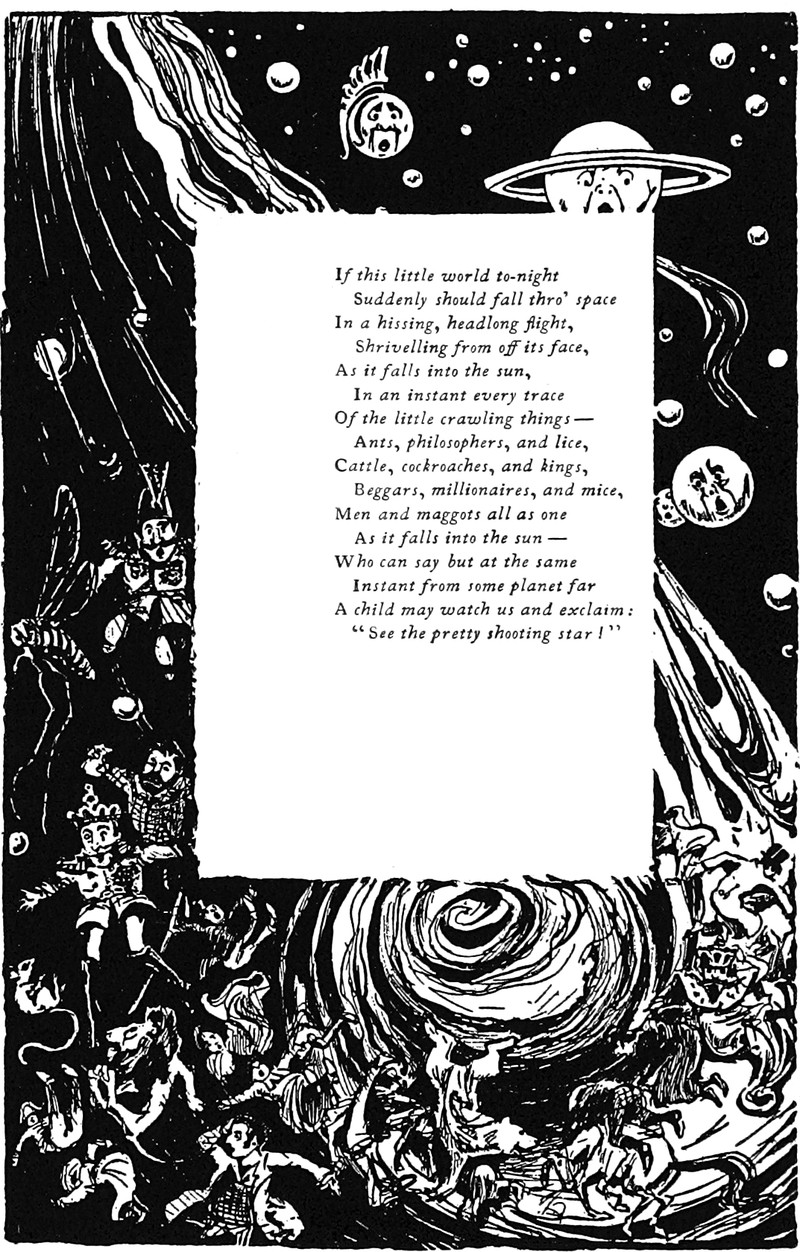
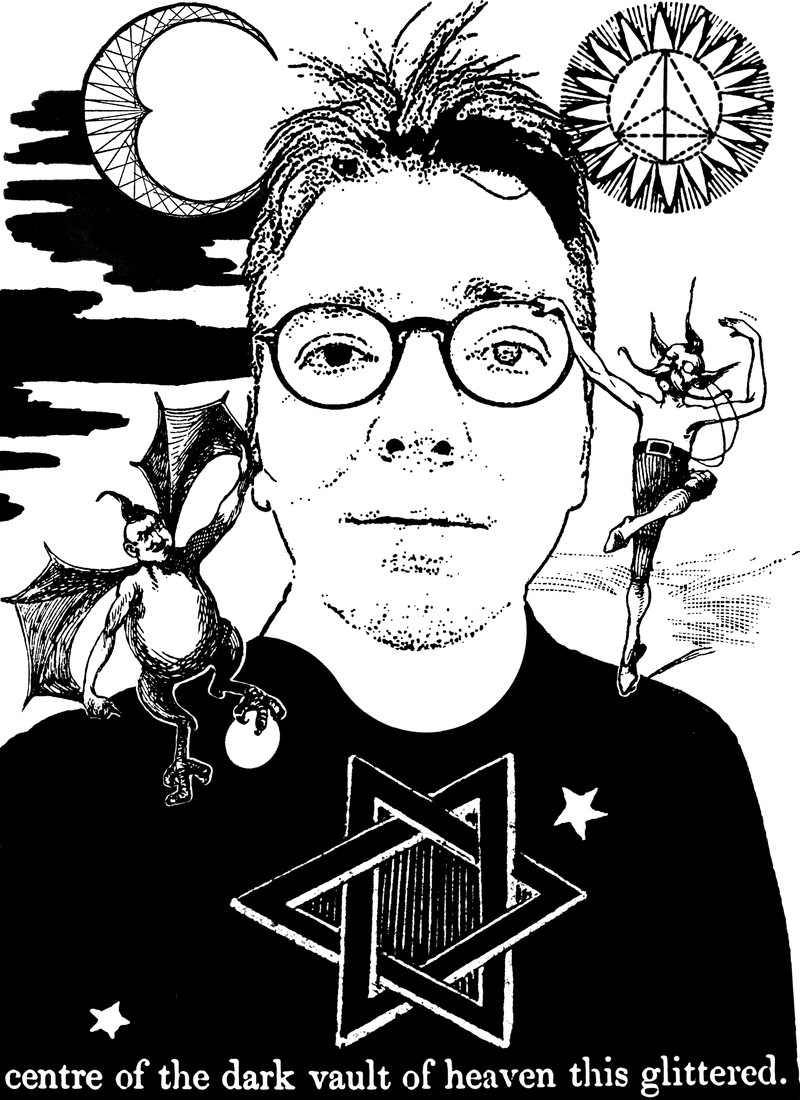
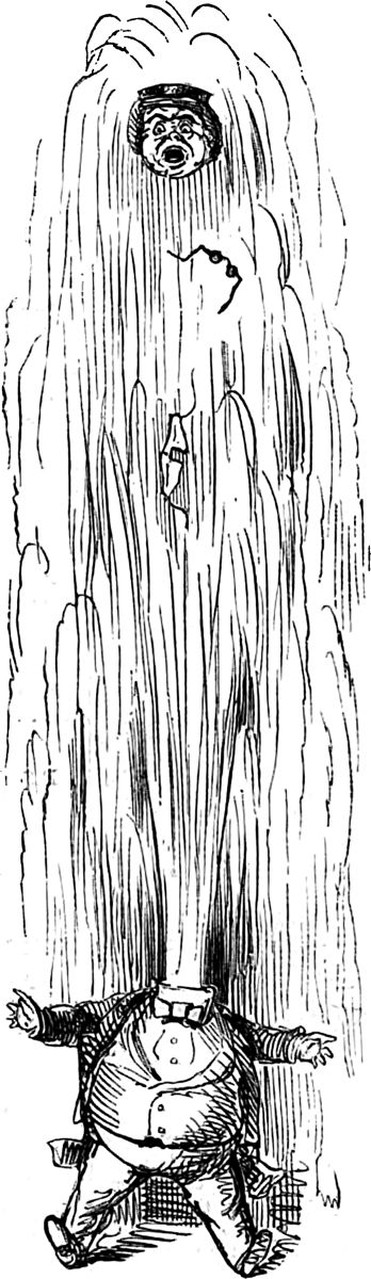
The text reads:
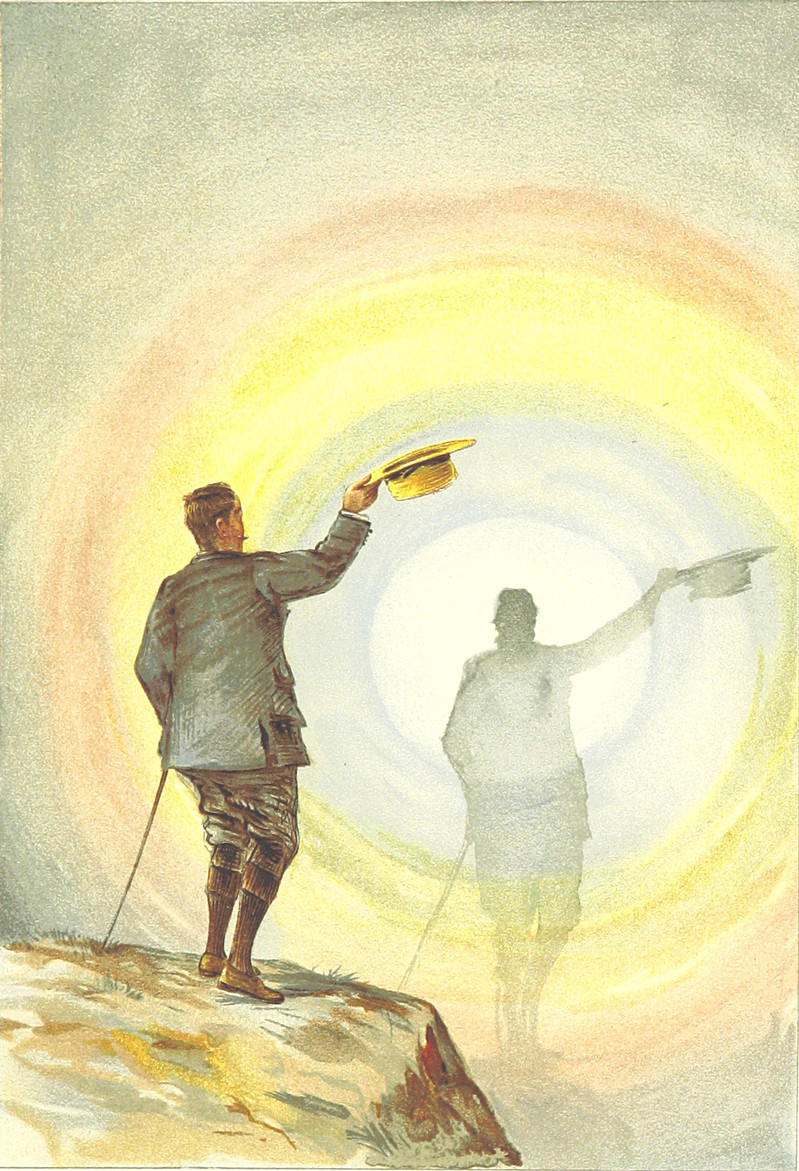
If this little world to-night
Suddenly should fall through space
In a hissing, headlong flight,
Shrivelling from off its face,
As it falls into the sun,
In an instant every trace
Of the little crawling things—
Ants, philosophers, and lice,
Cattle, cockroaches, and kings,
Beggars, millionaires, and mice,
Men and maggots all as one
As it falls into the sun—
Who can say but at the same
Instant from some planet far
A child may watch us and exclaim:
"See the pretty shooting star!"
|
|
|
|
|
|
|
Thanks to USA TODAY's 10Best for featuring two of our photographs of La Cañada's Descanso Gardens. (See larger versions of the shots here and here.) |
|
|
|
|
|
|
To our utter delight, Dr. Menachem Feuer analyzes our Franzlations according to Schlemiel Theory. Here's just a snippet:
They have created a book that speaks to anyone who is interested not just in reading Kafka but in, so to speak, taking his work as the basis for new texts, images, and interpretations that "open” up the text to play and new meaning. Moreover, this book speaks to people who are well versed in what is called "intertextuality.” And by this I mean the textual practice of moving between texts which, in effect, offers new meanings (I will return to this below). But I would argue that since Franzlations also includes images, one text doesn’t simply translate into another; it also translates a text into another image (or rather a set of images which harken back to the early 20th century). By doing this, this book takes the work of Kafka into a wholly other sphere of meaning with an entirely different register of connotations. And for someone like myself, who loves textual play, this is doubly exciting. It brings us into the zone where Walter Benjamin, in his book Berlin Childhood around 1900, wanted to go; namely, to a space where the imagination can be freed by virtue of the play of images, text, and history. In this space, one becomes like a man-child, interpreting text, images, and history while at the same time playing with them. This touches on depths by way of traveling across different surfaces. I’d like to take a look at the interplay between text and text and text and (historical) image to illustrate how these texts open up horizons that I have not experienced in any previous academic readings or fictional plays on Kafka’s novels, short stories, or parables (as in Phillip Roth, Paul Celan, or Aharon Appelfeld’s work—to mention only a few examples of writers who engage in intertextuality with Kafka’s work).
|
|
|
|
|
|
|
Here's the secret of dying happily, courtesy of E. V. Lucas, Windfall's Eve (1930): Keep on altering your will. Every time you alter it, you make it more amusing and thus become the more ready to pop off in order that the joke may begin. It's infallible.
|
Page 17 of 22
> Older Entries...
Original Content Copyright © 2026 by Craig Conley. All rights reserved.
|