I Found a Penny Today, So Here's a Thought
|

|
|
|
|
|
|
As the BBC didn't caption this hilarious Scottish comedy sketch for the hard of hearing, we transcribed the script below:
You know, I never even saw his Snapchat. It was her that saw his Snapchat. He says it’s on my Snapchat, but I’d never even done a Snapchat that night. It was him that did the Snapchat, and she saw it. She took a screen grab of her Snapchat, and he tried to deny it. He was like, “I didnae like her Instagram,” and I was like, “Oh, you did like her Instagram.” And he was like, “No, I just liked the Facebook post. It was a screen grab of her Instagram. It wasnae her actual Instagram.” But Amy... Amy... a like’s a like.
Amy: A like’s a like.
I was raging! I was like, “You favorited her tweet, and you liked her Instagram by proxy by liking her Facebook post that was a screen grab of her Instagram... You shared her Tumblr, and she saw your Snapchat, she took a screen grab of your Snapchat, and she tweeted it and you favorited it.” And he was like, “No, no, listen... I only favorited her tweet because it was a screen grab of my Snapchat, no’ because it was her that took the screen grab. And I only liked her Facebook post because it was a screen grab of Instagram, and I like Instagram, no’ because I like her Instagram. I only shared her Tumblr because I like that meme, that thing frae Twitter that she’d Tumbled about.” Because earlier that day on Facebook, apparently somebody had posted a screen grab frae Instagram, and he liked it. “No’ because I like her,” ’e said. “No’ because I like her.” But Amy, what am I always sayin’?
Amy: A like’s a like.
A like is a like. Ugh! Amy, listen... Never fall in love with a liker.
|
|
|
|
|
|
|
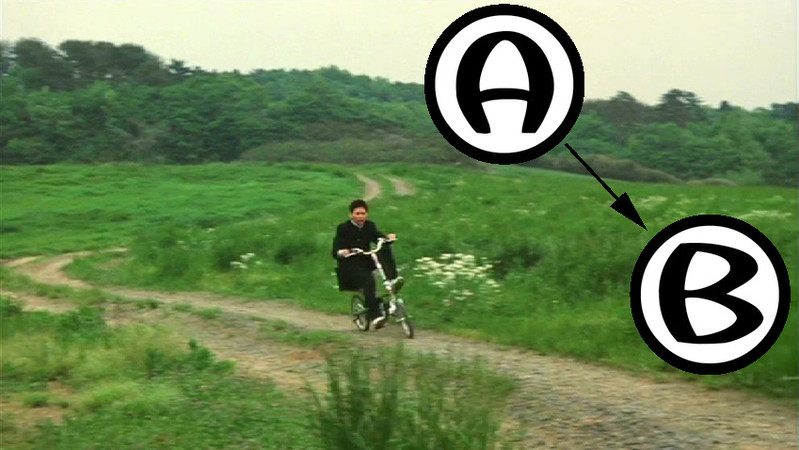
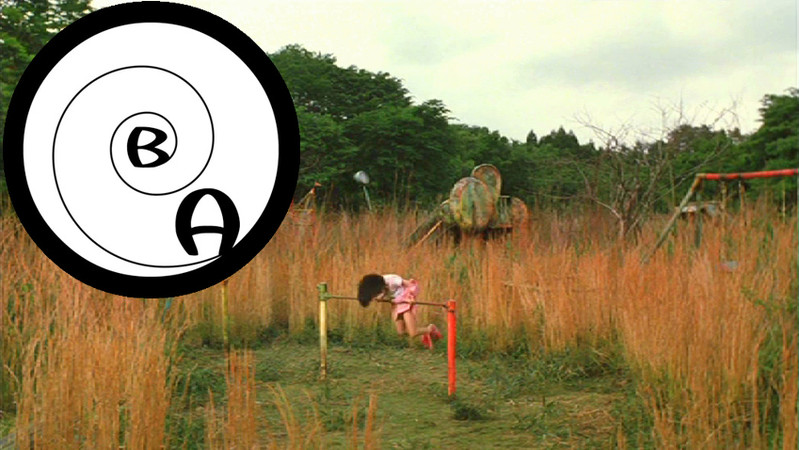
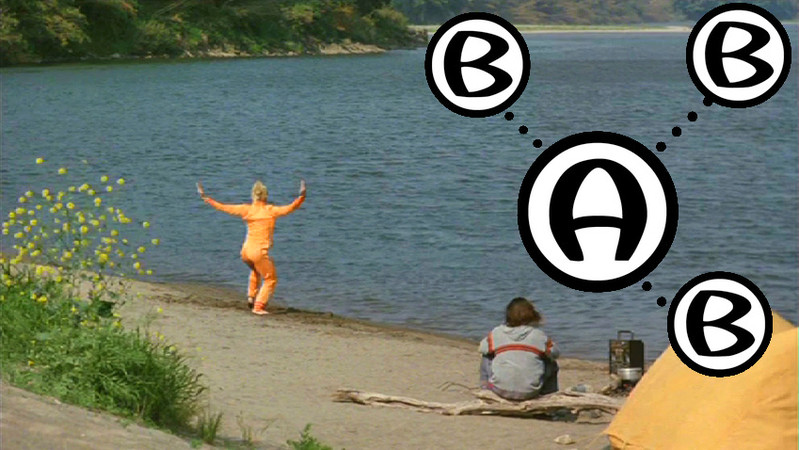
Getting from A to B in Katsuhito Ishii's The Taste of Tea
In the sublime film The Taste of Tea ( 茶の味, 2004), each family member depicts a distinctive way to go from A to B. (This binary perspective is of course reinforced through the many games of Go throughout the film.)
We see the son running after a bus, biking with all his might, and riding a train between home and school, always seeking to bridge the gap between the A of himself and an external goal on the horizon, B. Whether it's his education, the gaming club after school, or pursuit of a love interest, he's trying to get somewhere.
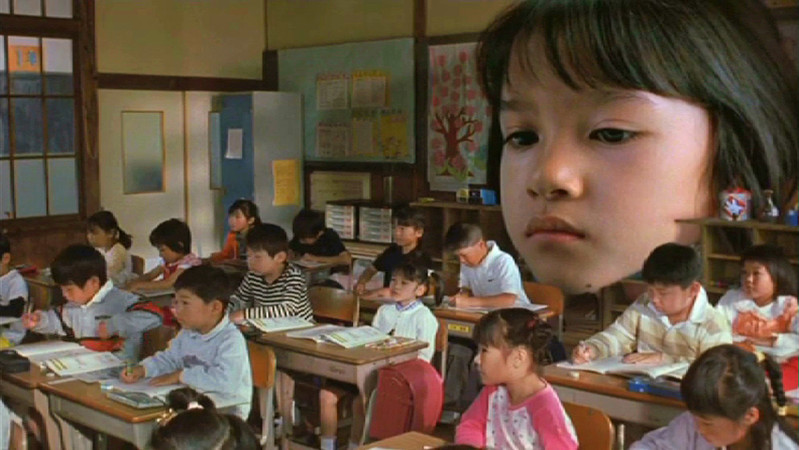
The daughter's quest for B is quite the opposite of her brother's. Her B is within herself, symbolized by her persistence in teaching herself to perform her first flip. Instead of an arrow between her A and an external B, the daughter follows an inward spiral. Indeed, she has such a horror of externalized consciousness that her own personal demon is an enormous version of herself that she disconcertingly sees through the corner of her eye.
The uncle is visiting on a break from work and seeks no B whatsoever. Yet as he strolls and minds his own business, fascinating B's pop up unexpectedly all around him, in the form of a lost love, a yakuza playing baseball with river rocks, and a camping interpretive dancer. So instead of seeking a B within himself or in the external world, he passively becomes a magnet that attracts the B's toward him.
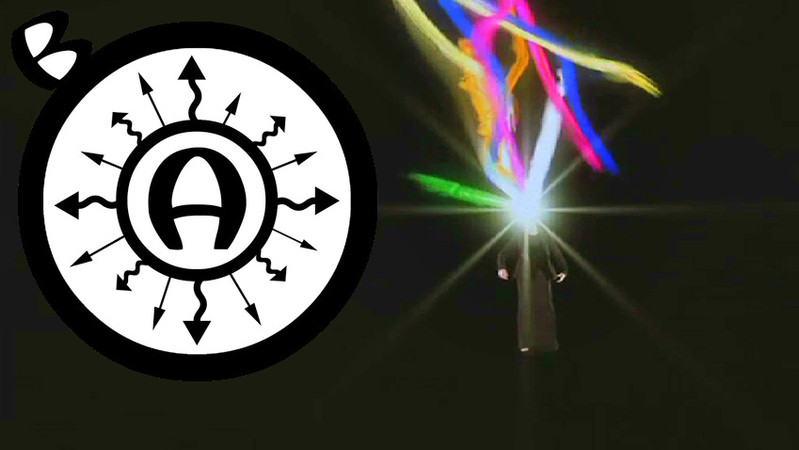
The mother is trying to find a way to preserve her career in anime even as she raises her children. She works from home and seeks to be at the center of an encircling world of B's. This image is reinforced in a vision she has during a hypnotic trance, in which colored streams of light burst outward from her head.
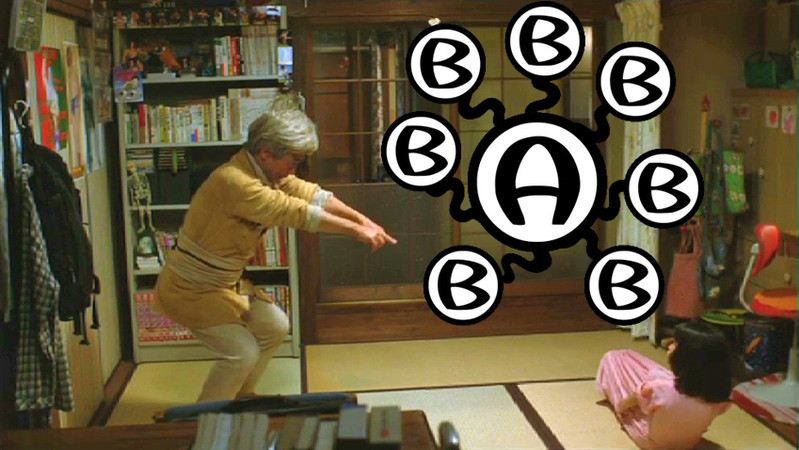
The grandfather overlaps his A with whatever B he encounters. As his daughter-in-law draws in the kitchen, he strikes fighting poses as her model. He records an album with one of his sons. He plays ninja with his grandson. He improvises a song about his granddaughter when she forms herself into a pink triangle within her nightgown. Like the tentacles of the squid he begs for at dinner, he reaches out to and connects with every B in his path. Indeed, he makes no obvious distinction between himself and others.
|
|
|
|
|
|
|
"The aim of our secret society must be to scare. Not evil, because that's necessary for producing good (evil is, so to speak, the midwife of good)—no, we want to scare away stupidity. Is the devil stupid? Certainly not. The devil is evil, evil is creative. Stupidity, on the other hand, is the death of all creativeness. The worst of all sins! And it's all-powerful. Accident and crime can both be laid to its account. Stupidity means a lack of the most important quality of all—not reason, because stupid people are quite capable of being reasonable—no, stupidity means a complete lack of imagination." —Ernst Kreuder, The Attic Pretenders
|
|
|
|
|
|
|
From the wise-dome of Gary Barwin (whose 2016 novel Yiddish for Pirates casts everything in a new light [and things do seem mysteriously different lately, don't they? That's because, to paraphrase Powys, if a book's illumination precedes, the unknown future into which it advances will luminesce]):
Q: Is two spaces after a period standard?
A: Thoughe suche standerds dost applye as have inne truthe beene borne from these oure moderne tymes withe its interynettes and wordly processores, I beliefe thate in one's owne hande and indeede in the londe of one's owne paypr, one canne scribe and thinke and write as thou doste wish. No dominione shalte have the grande hyghe worde auto correcte. The space tween fulle stoppe and firste letter whene the wordes againe beginne ist its owne a to izzard, ist thate bryghte espace tween sheepe and field, between star and earthe, thougyhte and possibilitie, bodye, soule, beloved, and tongue. Ist thate sweete silence when we holde our breathe in thee stilleness of wonder, inspiration, glee, or joye or greate sadnesse. In oure owne booke let thynges bee as we most wish, and damn thee the house style or moderne conventione. If I shalte desyre my bluebirds shalle have three winges in mine owne garden.
|
|
|
|
|
|
|
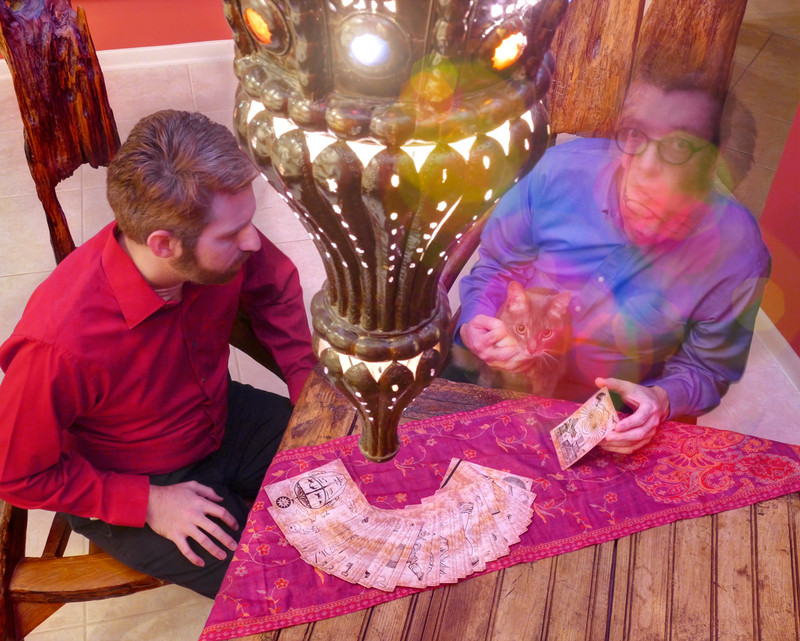
I'm nearing the point of obsession. I can’t look away, and don’t want to. Like Tarot cards, but with built-in illumination, and much more fun. Brilliant, says I! —Jeff Hawkins
A few years ago, we collaborated on a deck of "wide-awake dreaming" cards for the celebrated mentalist Kenton Knepper. Kenton occasionally demonstrated this deck at gatherings of the magical underground in Las Vegas, and that's how the cards got the street names of "Waking Dream Cards," "Metaphor Cards," "Subconscious Communication Cards," "Transformation Cards," and "K-Kards." But their official name is "[Self-Intuiting] Polarity Cards." The deck long-remained one of Kenton's best-kept secrets, but we can now reveal that they're finally available to anyone who wishes to experience a mind-blowing insight that they verifiably didn't have before. Unlike Tarot cards or other well-known reading decks, Polarity Cards are wholly free of dogma and therefore allow for fresh, intuitive understandings that are neither influenced nor hindered by preconceptions. Deeply rooted in coded principles from the Mystery traditions, the cards also work as powerful meditational tools, unlocking a greater sense of harmony and well-being. Lots more information about the deck is at TheGameCrafter.
|
|
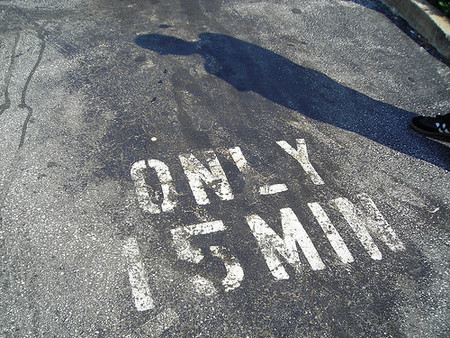
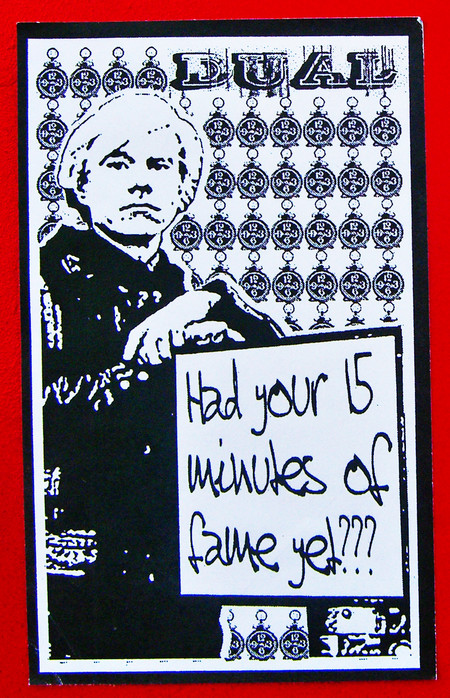
Perhaps Andy Warhol Was Wrong, For a Fascinating Variety of Reasons
[Updated with new wrongness!]
Andy Warhol famously predicted that in the future, everyone would be famous for fifteen minutes. Now that the future is already here, there are those who beg to differ with Andy, and for a fascinating variety of reasons!
In his novel Rant (2007), Chuck Palahniuk suggests that "Andy Warhol was wrong. In the future, people won't be famous for fifteen minutes. No, in the future, everyone will sit next to someone famous for at least fifteen minutes."
Movie critic Frank Schneck posits that the word should be film, not fame: "Andy Warhol was wrong. It's not just that everyone is going to have 15 minutes of fame. In the not-so-distant future, every person on the planet is going to have a film made about him or her" (Hollywood Reporter, 2000). Others seem to agree, in a roundabout way:
" Andy Warhol was wrong. Today it seems that anyone can parlay their 15 minutes of fame into 15 cable episodes, with an option for a second season." —"It's Unreal How Easily Reality Shows Pop Up," Rocky Mountain Daily News, July 20, 2002 " Andy Warhol was wrong. Everyone's not going to be famous for 15 minutes; instead, we will all have our own talk shows." —"Ex-Dancer, Ex-First Son Tries a New Career: Talk Show Host," Buffalo News, Aug. 16, 1991
Then there are those who argue that the 15 minutes are recurring:
"The couple who wrote and performed the theme to the 1970s TV series "Happy Days" are on a media blitz in Colorado Springs this weekend, proving that Andy Warhol was wrong. Not only will everyone in the world get 15 minutes of fame, they'll get another 15 minutes when the nostalgia factor kicks in a couple of decades later."
—"These Days Are Happy for Couple," The Gazette, March 6, 1997
"Andy Warhol was wrong ... People don't want 15 minutes of fame in their lifetime. They want it every night."
—"Pseudo's Josh Harris," BusinessWeek, Jan. 26, 2000
"Andy Warhol was wrong. With the release of the film, Factory Girl, he and his 'superstars' are about to get another 15 minutes of fame."
—"Straight to the Point," Daily Mail, Sept. 27, 2006
"As it turns out, Andy Warhol was wrong: not everybody will be famous for 15 minutes. But with bad prospects and a good agent, those who once were can now extend the clock thanks to unprecedented TV demands for the vaguely familiar."
—Vinay Menon, "More Dancing with Quasi-Celebs," Toronto Star, March 19, 2007
Not fame, but Hitler:
"Andy Warhol was wrong. In the future, everyone will be Hitler for 15 minutes."
—"Originality is the First Casualty of War," Austin American-Statesman, April 1, 1999
"Andy Warhol got it wrong. It's not fame everyone will have in the future; It's a chance to scream at someone else on TV."
—"Clinton Vs. Dole About Ratings, Not Discourse," Witicha Eagle, March 11, 2003
Not fame, but privacy:
"Andy Warhol was wrong. The wild-eyed artist boldly proclaimed that in the future everyone would have 15 minutes of fame. Warhol's fortune-telling skills were nowhere as visionary as his art. Warhol should have predicted with the explosion of reality television that in the future everyone will have 15 minutes of privacy."
—"One Day, We'll Beg for Privacy," Fresno Bee, Aug. 3, 2000
Not fame, but Colorado citizenship:
"Andy Warhol was wrong. It turned out we were all from Colorado."
—Barry Fagin, "Montel Williams and Me," Independence Institute, Nov. 1, 2000
Not fame, but hostage crisis:
"In the future, everyone will be a hostage for fifteen minutes." —William Keckler
Fame, yes, but in the past, not in the future:
"Andy Warhol was wrong. Everybody already has been famous––some time last week. It just depends on who’s telling it and who’s listening."
—"The Remembering Game," Depot Town Rag, Sept. 1990
Fame, yes, but not 15 minutes exactly:
"The culture-shock doctor explained that science had discovered that Andy Warhol was wrong about fame; He had the right idea, but his figures were off."
—"The Sting of Cable Backlash," Miami Herald, Oct. 9, 1983
"'Andy Warhol was wrong,' Neal Gabler said. 'He was right when he said everyone will be famous, but wrong about the 15 minutes.'"
—Marjorie Kaufman, "Seeking the Roots of a Celebrity Society," New York Times, Dec. 11, 1994
"Andy Warhol got it wrong by 12 minutes. People have three minutes of fame; long enough to walk down a catwalk and back."
—Guardian, July 7, 2002
"Warhol was wrong ... cos he was 10 minutes off; it's really five minutes now."
—"Meat Loaf Criticises Academic 'Laziness,'" TVNZ, March 9, 2010
Fame, yes, but for more like 15 seconds:
"Andy Warhol was wrong. Everyone can be famous these days, all right, but the renown lasts more like 15 seconds, not minutes."
—"Smile! You're Part of a Video Society," Greensboro News and Record, May 20, 1990
"Andy Warhol was wrong when he said that everyone would have 15 minutes of fame; extras can look forward to having only seconds of movie glory."
—"12 Hours' Extra Work for a Brief Moment of Glory," Derby Evening Telegraph, Nov. 9, 2006
"[A cuckoo clock bird speaking:] Andy Warhol was wrong; I only get 15 seconds of fame."
—Mike Peters, "Mother Goose and Grimm," July 27, 2005
"Andy Warhol was wrong. In my case, at least, fame clocked in at only 6:42 minutes, and that was before the final cut."
—Wilborn Hampton Lead, "Confessions of a Soap Opera Extra," New York Times, Dec. 31, 1989
"Andy Warhol was wrong when he said that everyone will enjoy their fifteen minutes of fame. The time frame he referred to might one day be measured in seconds."
—Warren Adler, "The Dividing Line," Aug. 10, 2009
" Little did I realize that not only would there be no money, but that your star would flicker for two seconds and that was it." —Holly Woodlawn, quoted in her NY Times obituary, Dec. 7, 2015Fame, yes, but for more than 15 minutes:
"Andy Warhol was wrong. You can be famous for a lot longer than 15 minutes, if you're clever enough." —"Oliver's Brand of Revitalisation," Marketing Week, April 7, 2005 "'We were sure that Andy Warhol was wrong, that it would last more than 15 minutes,' says Hilary Jay.'" —"Maximal Art and Its Rise from the Ashes," Philadelphia Inquirer, July 25, 1993 "When it comes to the Super Bowl, Andy Warhol was wrong. Its cast of characters has been famous for 25 years, and will be 25 years from now." —"Simply the Best," Denver Post, Jan. 27, 1991 "Andy Warhol was wrong. Long after the buzzer sounded on Mark Fuhrman's 15 minutes of fame, he just won't go away." —"Fuhrman Overstaying His Welcome," June 10, 2001 "Andy Warhol was wrong: sometimes you do get more than 15 minutes of fame, even if you're not Greg Louganis." — National Review, Dec. 10, 2004 "Andy Warhol was wrong. Not everyone gets 15 minutes of fame. Many people get more than that. Like Dr. Bernie Dahl." — The Nashua Telegraph, Dec. 3, 2000 "Andy Warhol was wrong. In the Ultimate universe we’ve got more than 15 minutes." —"Hack Meets Hacker," Aspen Magazine, Midsummer 1996 "Andy Warhol was wrong … you can have 45 minutes of fame, not just 15!" —"Invitation to Present at the OTM SIG Conference in June 2009," Dec. 22, 2008 "Andy Warhol was wrong in my case; my fifteen minutes of fame have been more like three hours." — Ken Eichele, My Best Day in Golf: Celebrity Stories of the Game They Love, 2003 "Andy Warhol was wrong; I was a hero for at least fifteen hours." —Gene GeRue, "Tomato Madness," Dec. 17, 2006 "Andy Warhol was wrong. People aren't famous for fifteen minutes; they're famous forever." — Arthur Black, Black & White and Read All Over, 2004
Fame, yes, but "in" 15 minutes, not "for" 15 minutes:
"Andy Warhol was wrong, when he predicted that in the future, people would become famous for 15 minutes. This is the future. Now people become famous in 15 minutes. Take Duran Duran."
—Ethlie Ann Vare, "New Echoes of Duran Duran," New York Times, Nov. 24, 1985
Fame, yes, but without measure:
"Andy Warhol was wrong. In the future, everyone will not be famous for 15 minutes. Everyone will just be famous."
—"Cooking Up Celebrity Storm," Boston Globe, Jan. 21, 2000
"Andy Warhol was wrong. No one Is famous for just 15 minutes. These days you get to be famous whenever you feel like it. Just like everyone else."
—"Now, Everyone is Famous! Who Knew?" Associated Press, July 16, 1999
"'Andy Warhol was wrong,' says Newman, who completed his trek in 1987. 'If I wanted to be boring, I could live on this for the rest of my life."
—"Book Lists Sometime-Dubious Firsts," Dallas Morning News, July 31, 1988
"Andy Warhol was wrong about one thing: His own 'fifteen minutes of fame' have never ended."
—Barnes & Noble, review of Andy Warhol Treasures, 2009
"In the internet age, bad headlines no longer go away and Andy Warhol was wrong about his fifteen minutes of fame. If you are infamous now, you are infamous forever."
—Peter Walsh, "Curtis Warren: the Celebrity Drug Baron," Telegraph, Oct. 7, 2009
The opposite of fame:
"Milwaukee futurist David Zach says Andy Warhol was wrong: We aren't going to get that 15 minutes of fame after all. 'It's just the opposite,' Zach says."
—Tim Nelson, "The Skinny," St. Paul Pioneer Press, Aug. 27, 1998
"I think Andy Warhol got it wrong: in the future, so many people are going to become famous that one day everybody will end up being anonymous for 15 minutes."
—Shepard Fairey, Swindle #8, 2006
"Andy Warhol was wrong. Most of us will never come close to being famous—even for 15 minutes."
—"Stepping into the Spotlight," Wall Street Journal, Nov. 8, 1999
Fifteen, yes, but not minutes:
"Andy Warhol was wrong: not everyone deserves 15 minutes of fame. Some people deserve 160 words of recognition ..."
—"Unsung Heroes," What Magazine, Jan. 1, 2004
"Andy Warhol was wrong: for 15 minutes, everybody gets to be a starting quarterback for The Saints."
—"Tyson Still Has Issues," Atlanta Journal, Oct. 16, 1998
"Andy Warhol was wrong: in the future, everyone won't be famous for 15 minutes, but everyone will have their own Web site."
—"Book Review: The Non-Designer's Web Book," Information Management Journal, July 1, 1999
"Andy Warhol was wrong. We've all had our 15 minutes, now we all want a mini-series!"
—"Boy First Believed On Runaway Balloon Found After Frantic Search," New York Post, Oct. 16, 2009
"Andy Warhol was wrong. Everyone won't just have 15 minutes of fame. One day—soon, I suspect—we all will have our very own talk shows."
—Linda L.S. Schulte, "Word's Worth," Baltimore Sun, Jan. 31, 1996
"In the future, we'll all have 15 minutes of future."
—Nein Quarterly
"In the future, everyone will be offended for 15 years."
—Sean Tejaratchi
Fame, yes, but perhaps 30 minutes:
"There are times in life when you just hope that Andy Warhol was wrong and that a merciful God will grant you a second 15 minutes of fame."
—"Confessions of an Embarrassed Viagra Expert," University Wire, Sept. 24, 1998
Just plain wrong:
"The endless parade of disposable rock bands, special-effects movies, potboiler thriller novels and TV sitcoms makes me think that Andy Warhol was wrong."
—"Longtime Newsweek Art Critic Peter Plagens is Also a Painter," Newsweek, April 25, 2002
"A TV producer played by Joe Mantegna muses that Andy Warhol was wrong about everybody being famous for 15 minutes."
—"Allen's 'Celebrity' Witty, Wicked But Shallow," Wichita Eagle, Dec. 9, 1998
"Andy Warhol was wrong - everyone does NOT have their 15 minutes of fame and the overwhelming majority of You're a Star hopefuls would have told him that."
—"The Fame Game's Just Not Worth It," The Mirror, Aug. 25, 2006
"Andy Warhol was wrong. When you’re a Vanderbilt running back, you’re not famous for 15 minutes."
—Anthony Lane, Nashville City Paper, Nov. 5, 2004
"My main conclusion: Andy Warhol was wrong—we won't all get 15 minutes of fame."
—"Using the Internet to Examine Patterns of Foreign Coverage," Nieman Reports, Sept. 22, 2004
"Warhol was wrong! He neglected to factor in the 15 minutes of one's own alter-egos."
—"Warhol was Wrong," GenderFun.com, May 29, 2009
"Warhol was wrong. The message is clear: we do not want your 15 minutes of fame, you can shove it."
—Alix Sharkey, "Saturday Night: The Techno Ice-Cream Van is on its Way," The Independent, June 26, 1993
---
Stefan writes:
Awesome post on Warhol. I never really liked the guy and his art, but I give credit where credit is due, he was a great coordinator and inspiration for other better artists and musicians. Much like Sex Pistols, I don’t find them good but they did inspire much better bands to get together and create wonderful albums. So I agree he was wrong however he didn’t anticipate the connectivity and subcultural activity we have today which shatters his definition and value of fame. Also nowadays with youtube clips and Jersey Shores fame and infamy seem to be interchangeable. But what I liked about the article was how Warhol’s idea was refuted from different perspectives. Here’s mine: "Warhol was wrong about his theory on the 15 minutes of fame. The time frame is the maximum length of a video you can post on YouTube.” Mine is of course valid for today, just like Warhol’s and those quoted in your post are valid in their own cultural Zeitgeists.
|
Page 148 of 177
> Older Entries...
Original Content Copyright © 2026 by Craig Conley. All rights reserved.
|