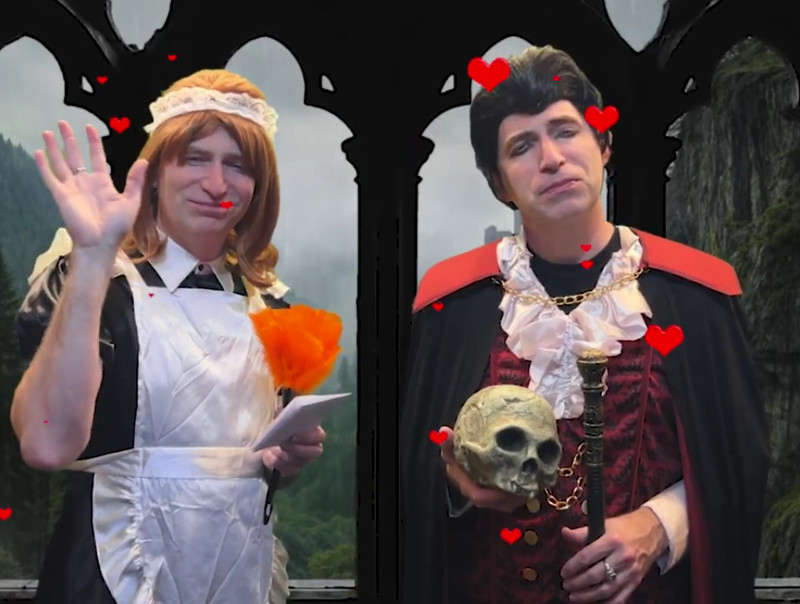
I Found a Penny Today, So Here's a Thought
|
|
|
 |
 |
 |
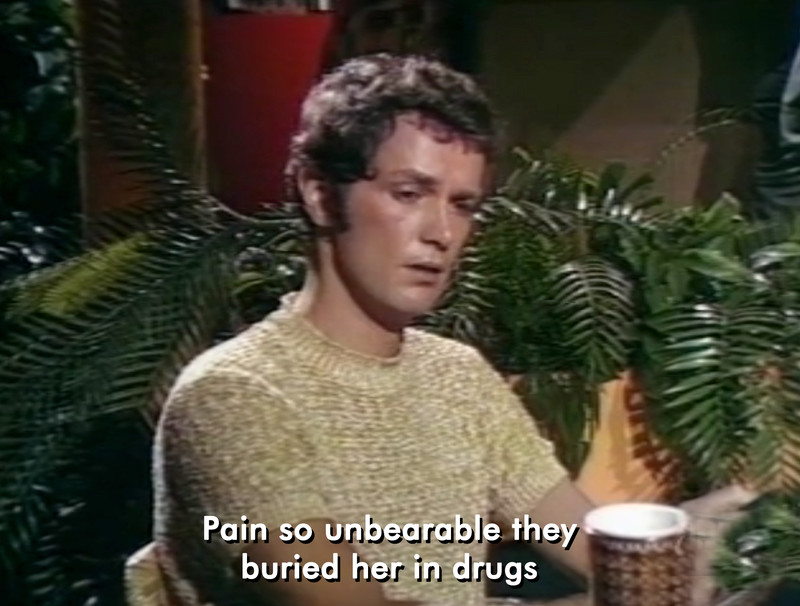
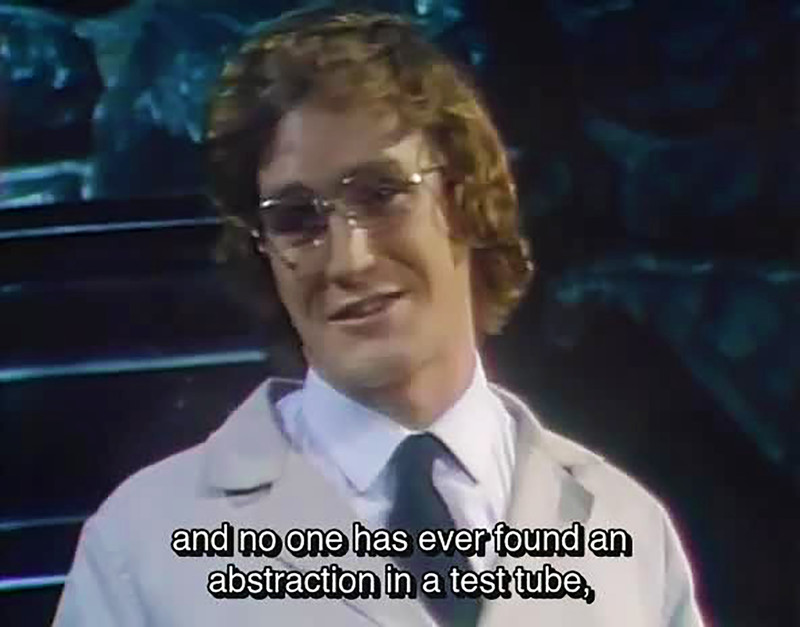
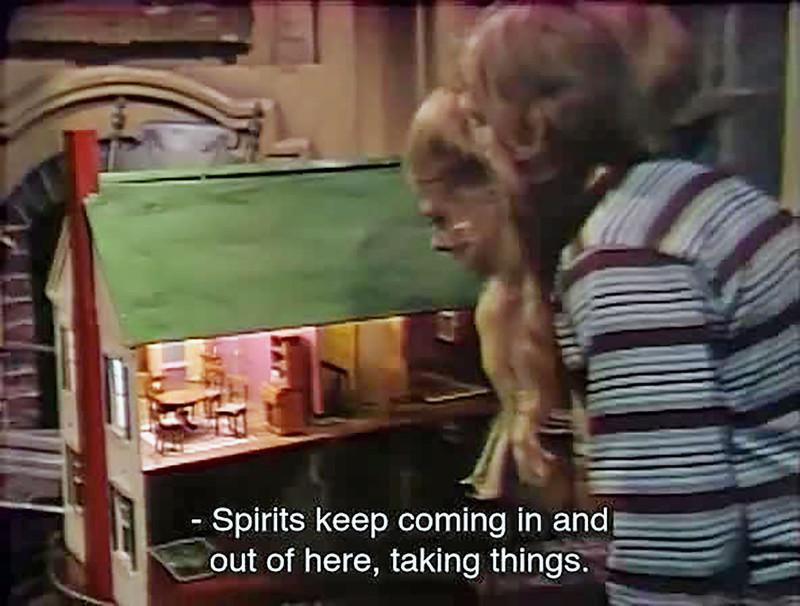
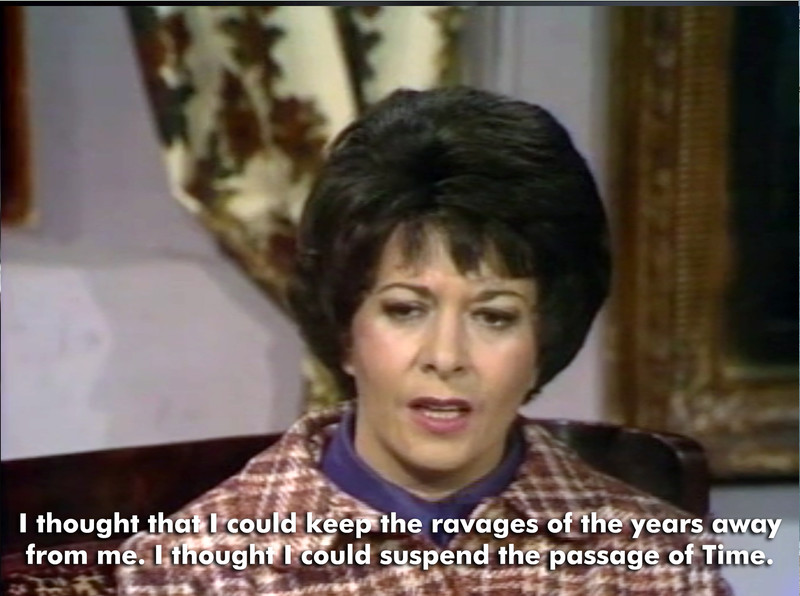
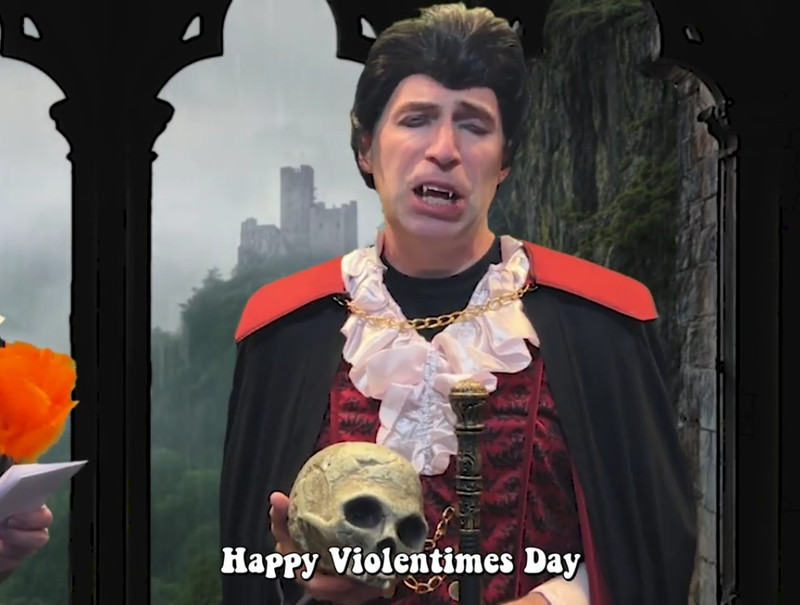
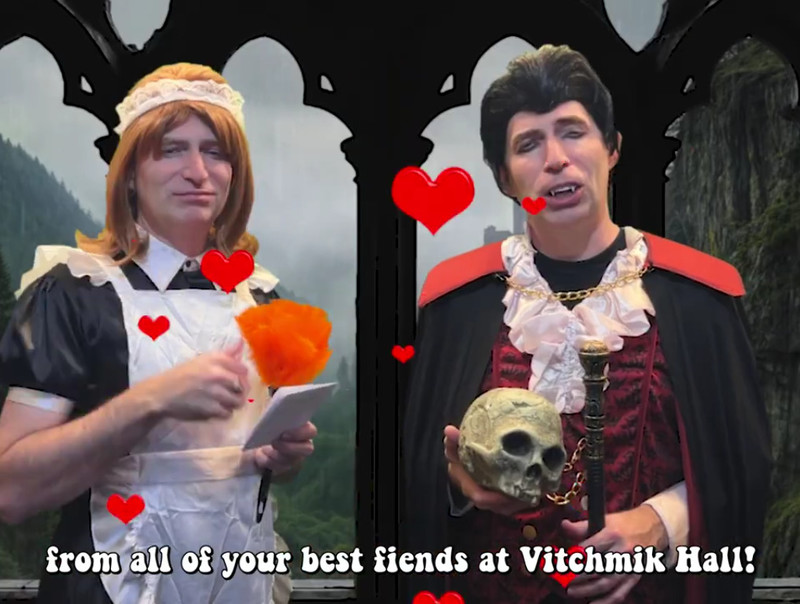
Stills from this episode of Grave Mood Rings, courtesy of Dare-g on Tumblr.
|


 |
|
|
 |
 |
 |
Possibly Supernatural, Surely Today's Most Inspiring Artist
“Vampire photographer”? “Archaeologist of the soul”? Some artists figuratively “walk through the valley of the shadow of death.” Nadine Dinter of Berlin very literally does, and she has the pictures to prove it. Outside of her day job, her work as a necropolis photographer, recording artist, perfumer, and model invariably touches upon love and death, beauty and decay, doom and elation, mourning and resurrection. You’ve heard of human energy fields, but Nadine seeks to capture the auras of statues and the uncanny glamor of hidden doorways and atmospheric pathways in the gothic world she navigates. Then, her music and her perfume ensure a richly sensual experience of her visual work. These are just some of the reasons Nadine Dinter is being called the most inspiring artist working today. But let’s dive deeper into her world.

In the process of sharing her creativity online and in art galleries, Nadine teaches, too, by helping her audience to understand how a photographer sees the world and how the composition of a shot can utterly transform the viewer’s reaction to a scene. She even offers videos of locations, to give a sense of the greater environment before showing the still photograph she ultimately captured. More context is offered in the captions, including historical backgrounds as well as notes on easily missed details, symbolism, and Nadine’s own emotional experience of each place. The viewer is invited to see through Nadine’s eyes, even while learning to discern with more sensitivity.
As an independent creator, Nadine has her hands in a lot of pots, or more like one big cauldron that encompasses the artistic witchery of her many-faceted world. Let’s seek to better understand how all the elements began to coalesce:
1. Nadine began traveling to Paris and Madrid to explore sculpture photography in the late 1990s. By 2024, that genre had merged with model portraiture into a "TransMutation" series. Her photography of cemetery statuary is frequently exhibited in galleries such as this one.
2. Last year, to add an acoustic dimension to her work, she became a gothic recording artist called d1ntr, collaborating with the post-punk band Hex Formes. Her lyrics and vocals are rooted in the emotions that spring from life’s transformations, addressing her holistic approach to turning pain into beauty, darkness into light.
3. This year, to capture the moods and smells of the statuary gardens and cemeteries she visits, so as to bring more dimensions to the sensual experience of her photography, she crafted a signature scent, “TransMutations,” through the Warsaw perfume lab Mo61.
4. As a muse to other artists, she has inspired songs like “Vampyre Everything” by Scott Baker Graham and imagery by Boris Eldagsen.
5. As a supporter of fellow artists, she began conducting interviews in 2019 (such as this one with Paolo Ventura).
6. As a collector of exotic jewelry selected and collected from all over the world, she makes guest appearances (as in this episode of Grave Mood Rings). Most of her rings feature pentagrams, scarabs and snakes, tied to her fascination with ancient Egypt.
7. Simultaneously, as a model, Nadine has been compared to Isabella Rossellini and has posed for photographers like Greg Gorman, George Holz, Thomas Karsten, Martin Eder, Boris Eldagsen, Catrine Val, Just Loomis, Katja Ruge, Steven Kohlstock, Gerhard Kassner, Felix Lammers and others. Eder's portrait was recently used for the album cover "Tales of Immortality." This portrait by fellow cemetery photographer and darkwave scene promoter DominiQ.D is a personal favorite of mine.
Even while juggling so very many projects, Nadine is friendly, accessible, outgoing, and proactively helpful to others. She truly lives by her motto, “consult, communicate, connect,” as I learned firsthand when she first reached out to me via her Instagram to express supportiveness of my own indie endeavors.
Photo credits: © Greg Gorman (top portrait), Boris Eldagsen (snake portrait), Felix Lammers (graffiti portrait). By permission.
—Hailed by the art world as the most unusual scholar working today, Craig Conley fled academia to author Weiser Books' Magic Words: A Dictionary, HarperCollins' One-Letter Words: A Dictionary, and The Young Wizard's Hexopedia. Even more esoteric publications include Books of the Dead, Magic Archetypes, The Care and Feeding of a Spirit Board, Seance Parlor Feng Shui, How to Hoodoo Hack a Yearbook, Heirs to the Queen of Hearts: Tracing Magical Genealogy, Astrogalomancy, The One-Minute Mystic, and Divination by Punctuation. His work has been profiled in the New York Post, the New York Times, The Wall Street Journal, The Chicago Tribune, National Public Radio, The Dallas Morning News, Publishers Weekly, The Associated Press, and dozens of others.
|


 |
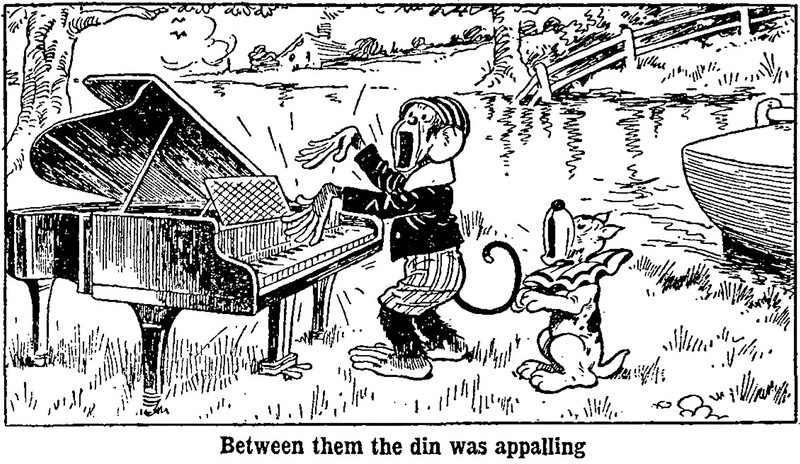
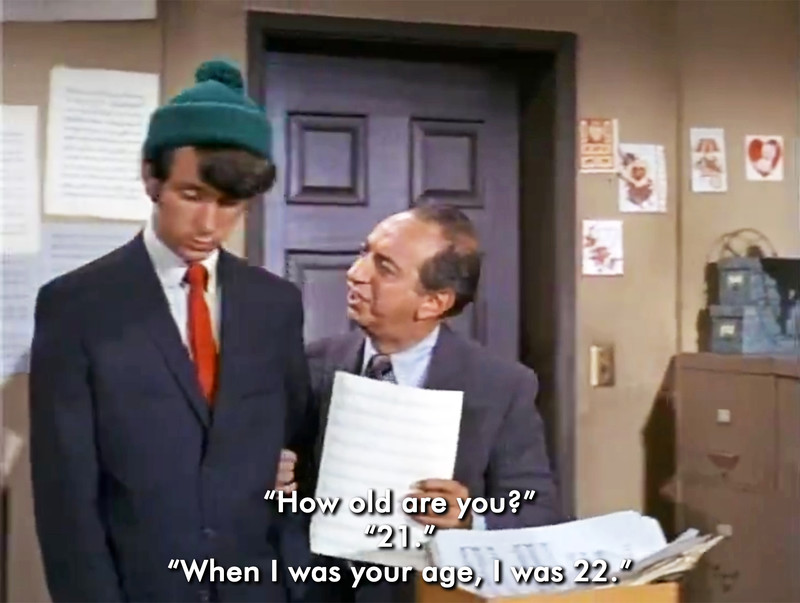
"Peter Puck wants to know if men who get on are better off." From The Children's Newspaper, 1932.
|


 |
|
|
 |
 |
 |
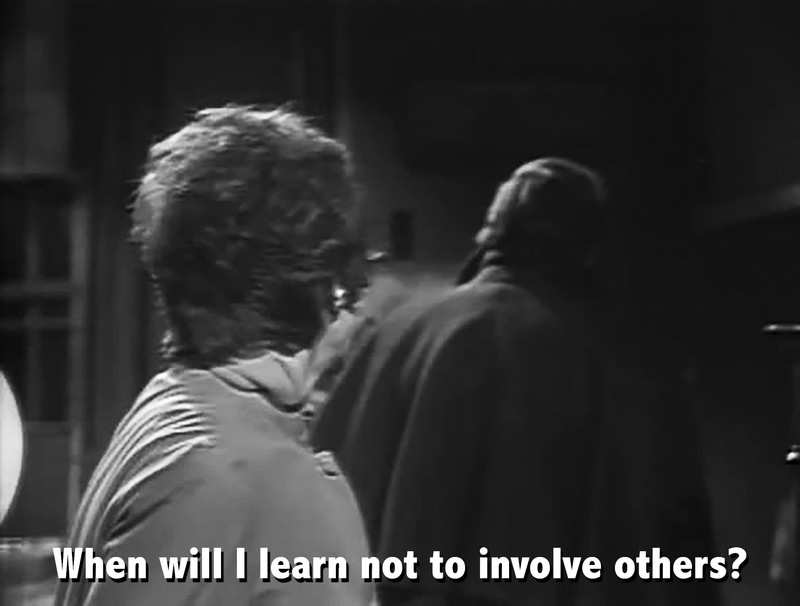
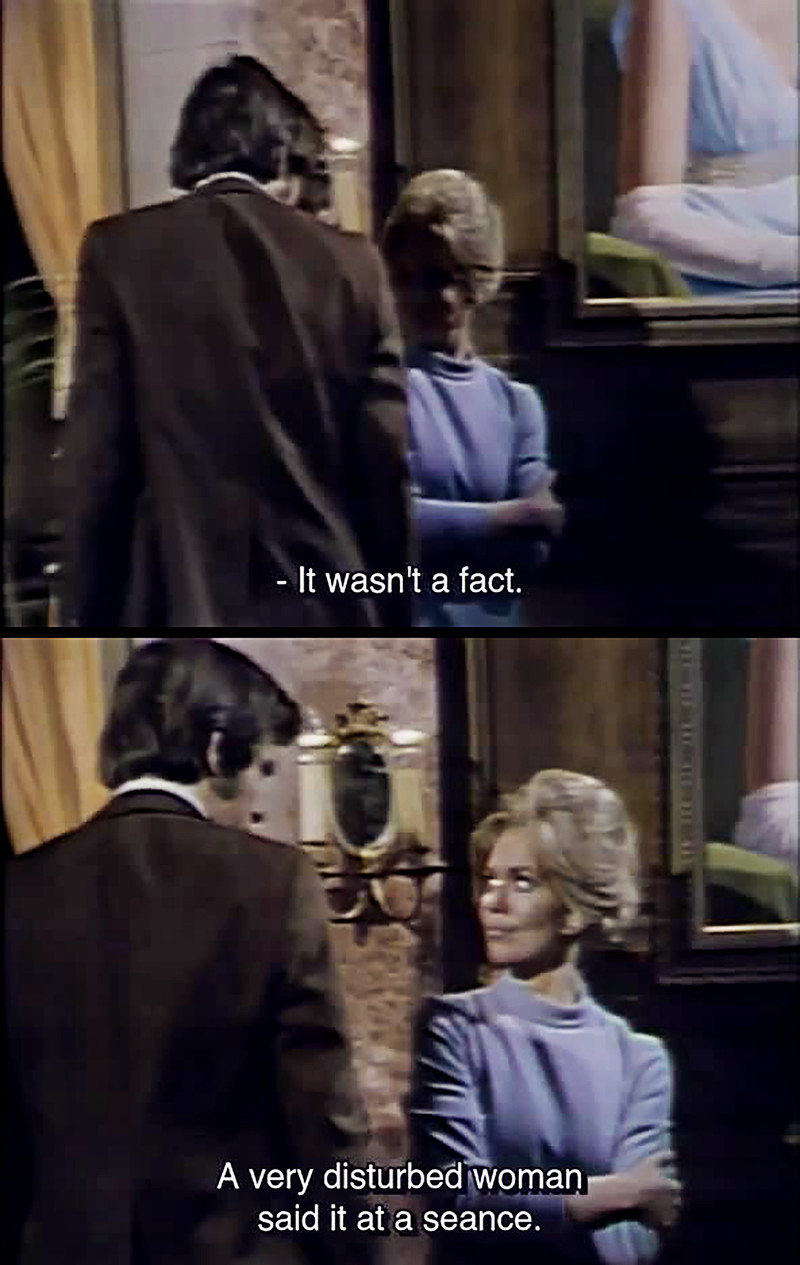
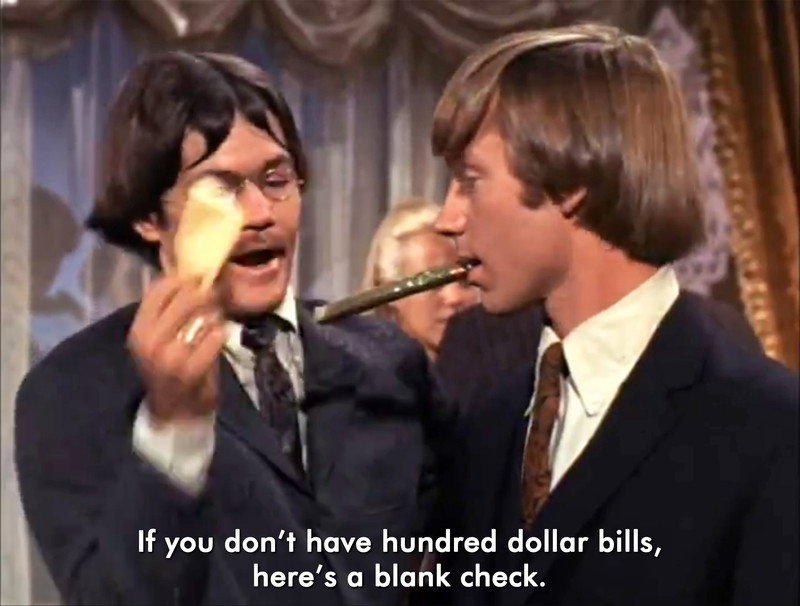
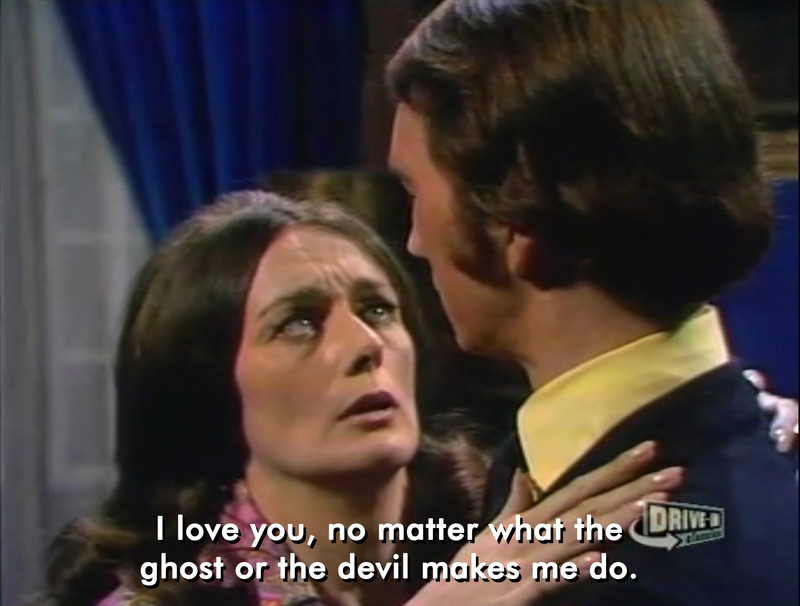
From Canada's answer to Dark Shadows, Strange Paradise episode 114.
|

 |
|
|
 |
 |
 |
Shifting Consciousness to a Magical State
Being a lifelong student of esoteric sciences, I was just asked by a friend how best to shift one's consciousness to a magical state without using psychedelics. Don't let the photo above mislead you — no cone or candle is required (unless you'd like to use them!) If you're ready to see the world in a whole new way, there's a proven approach. As we'll explore below, the first step is to be very specific about what sort of magical world you wish to access. Do you wish to operate less constrained by the flow of time? Are you intrigued to see evidence of fairies at work in your environment, or the overlapping of parallel dimensions, or the existence of energetic portals, or sleeping dragons, or doorways into the Otherworld? As we'll also explore, an adventurous "quest" will be requisite for bringing your magical perspective to life.
To shift one's consciousness to a magical or otherwise parallel state requires, of course, an ability to perceive from a fresh perspective. It sounds lovely to "see the world through the eyes of a child" (that goes back at least to 1914's Ampleforth Journal), yet one's first question might be, "How, exactly?" Forget that advice, as well as rose-colored glasses for the time being at least. What seems crucial is a specific intention to penetrate an alternate reality, coupled with what might constitute a form of highly mindful, active meditation.
A real-world example of a magical consciousness? Toward the creation of the Tarot of Portmeirion, I visited that eccentric architectural garden in Wales tasked with the daunting goal of finding 78 visual representations of the swords, cups, pentacles, wands, and major arcana. This required experiencing the village as a pop-up book of Tarot archetypes. I saw every building, cobblestone, statue, topiary, fencepost and fountain with new eyes as I sought very literal imagery for each card. The decision to see everything in terms of the Tarot led to a self-working process, with all 78 images presenting themselves within a two-week visit. Though I'd previously spent several holidays at Portmeirion, the quest for Tarot cards opened an entirely new way of enjoying the place, leading to the discovery of untold nooks and crannies as well as appreciating the artistry on display from literally new angles.
Another real-world example springs from a more casual project—seeking out "temporal anomalies" during road trips. This involves following highway exits into small towns and sleuthing for clock towers or other town square timepieces that are telling the wrong time, then exploring the environs for weirdness that might account for a timewarp. As with Portmeirion, this has proven to be a self-working process, for the decision to see the fabric of spacetime riddled with quirks opens a window into such a world. One favorite example was at the Ocala National Bank, where all four directional clock faces told a different time. An investigation of the building revealed two nearby portals to nowhere on separate brick walls — doors installed up to two-stories high, like windows, but with no steps or ladders to access them. Such a spacewarp was possibly tied to the temporal anomaly. My shift of consciousness has yielded the documentation of fifty such peculiarities to date.
Experience would suggest that a clear-cut definition of a magical universe in conjunction with a related quest of sorts will yield the best results. A few further examples might illuminate.
The Blissymbolics Communication Institute, which teaches its ideographic system to people with speech impairments, suggests that "the whole world can be seen as a giant Blissymbol Board" (Communicating Together, 1984). Hence, one could begin mapping the system's one-hundred shapes mirrored in natural and artificial structures, perhaps gaining insights into a sort of world language at play in the landscape as individual geometric shapes communicate fundamental concepts. A message and grammar of a discrete area could be documented. Similarly, "the world can be seen as a great alphabetic writing, analogous to what a writer inscribes, letter by letter, on a manuscript page" (Laurene De Looze, The Letter and the Cosmos, 2016). Hence, some seek a consciousness of the world as a literary text that "takes on a life which is independent of its author, so that the interpretive process at the receiver's end makes a real contribution to the whole communicative enterprise" (Gabriel Daly, Creation and Redemption, 1989).
Rabbi Adin Steinsaltz encourages shifting one's consciousness to grasp the world as a "vast orchestra in which each of the creatures has a distinct voice and sound" (Simple Words, 1999). This form of mindfulness might call for the development of a playbill, crediting the individual "players" one hears in concert throughout one's day.
A weirder and darker side of reality can be better processed through consciousness shifts. Buddhism famously describes waking reality as one of six dreamlike Bardo states and specifies techniques for sidestepping what the Tibetan Book of the Dead calls the ambuscades at every turn. Similarly, science fiction's luminary Philip K. Dick developed eyes to see the world's aspect as a Black Iron Prison and wrote about finding ways to break free. Along the lines of quantum physics calling reality a simulation, it can be rather mind-blowing to view daily life as a glorified video game, for one will begin noticing identical-looking "non-player characters" in unlikely places as one seeks to accumulate experience, stamina, and other points along the way.
Any number of other consciousness shifts are possible, the key being an activity component akin to walking meditation or the spiritual sand paintings of Native Americans and Tibetan Buddhists.
|

 |
|
|
 |
 |
 |
How to Stay Motivated in the Face of False Friends, Absent Funding, Pathetic Stats, and the Gaping Void
As a creator, I hope you aren't in similar dire straits:
- a minus zero budget
- no promise of funding
- inadequate equipment or setup for production
- not enough hours in the day for seriously pursuing the dream
- can't qualify for "monetization" due to a snail's pace of new followers
- supportive commenters suddenly drift away with no polite goodbyes
- so-called friends drop away when you dare to express your frustrations
- leaky viewer/listener retention
- potential collaborators break promises or outright ghost you
In the face of all these challenges (and more), during free moments over the last 2 years I've somehow yet filmed over 200 episodes and recorded over 70 theme tunes for my horror-comedy web series Grave Mood Rings, and the production goes on. There's likely no one formula for staying motivated, since no two creator situations are exactly the same. B
1670954383.0828.2594

Key players dropping out: Past script writers for Grave Mood Rings have retired themselves, but I couldn't let that kill my momentum, so I made the conscious decision to feel freer. I had to choose to flip the negatives into positives, so instead of being left in a lurch, I manifested heightened creativity in their absence. Sure, there was disillusionment and dismay to process, but I could also celebrate saying "good riddance" to those who weren't, at the end of the day, genuine supporters of the project. They may have dallied with the idea, they may have contributed according to their own comfort levels, but they ultimately got left behind because they simply weren't running fast enough. The thing is, art takes on its own impetus. My show may seem like my "baby" that I nurture, but babies develop according to their own natures. I have to keep running, too, to see where the project is going. Sure, I try to steer things, but it would be delusional for any creator to feel in total control of a work of art.
Headaches of collaboration: Collaboration has been the lifeblood of my show. I could work in a vacuum, shooting hoops by myself in my own driveway, as it were, but that feels too lonely. Grave Mood Rings isn't an egotistic pet project, and I'd much rather showcase additional talents by making the show a game with multiple players or (since I don't really know sports metaphors) a soup improved by lots of interesting spices. To date, the show has featured 40 guests. But, oh, the headaches involved! There have been uncountable collaborators who never responded to queries, who made false promises (sometimes repeatedly!), who had enough time to type out complex excuses in the time it would have taken to film the 10-second clip for the show, and those who did in fact follow through but took a year to deliver. Project management could be a full-time job in itself, for without follow-ups and cajoling, disappointment is all but guaranteed. It's fascinating to see just how precious people can be with their time and supportiveness. No judgement (well, maybe some!).
Money issues: Dealing with a zero budget can lead to greater innovations, so I actually embrace not being funded (though, let's face it, I wouldn't turn down money if it were ever offered). Incrementally over 2 years, I have spent $1000 on props, costumes, and a green screen. The phone's camera and the tripod I already had. A family member has gifted me an occasional prop, wig, and even the costume for a haunted tree character. A co-writer who fired himself bought a branded t-shirt we needed for a particular theme, but that apparently drained his entire fund for investing in our production. I haven't factored what my time has been worth over the course of producing 200+ episodes. The editing alone averages to 8 hours per 3 minutes of completed footage, and work on pre-production easily doubles that. My partner, who plays all the characters except for my own Prof. Oddfellow, takes time away from his paying job to complete the post-production, and I haven't tallied the money he'd technically be owed for over 2,000 hours should we ever secure funding. We're both dedicating our time and our own money to make Grave Mood Rings happen, and we're the only ones doing that because we're the only ones who believe in the show enough to do that. All the boo-hoo-hoos aside, it's actually pretty cool because it puts us in a class of our own. We'd prefer to be who we are than to trade places with anybody who has let us down or let us go along the way.

The numbers game of stats and followers: Here's something that ought to adjust one's attitude. The digital marketing company Chaotic Good’s founders said the following in a Billboard interview: “Everything on the internet is fake. ... It’s an open secret in the music industry that all the numbers—play counts, followers, stats—are fake or at least obfuscated. ... Bots and 'streaming farms' have become a marketing expense." So this is a great reminder not to compare our own apparent success to other people's. We can't even trust the numbers on our own stats, since the powers that be not only inflate the "success" of artists being pushed on the public but also deflate the stats of those in obscurity. It's a terrible situation, and it would be great if we could really know just how many people are ever seeing or hearing what we create, but for the time being we must be content with working in something of a gaping void. Like tossing messages in bottles into the sea, we must maintain a bit of blind hopefulness, since the current state of the internet does not allow us to know much if anything about our audience share. By the way, here's a little laugh: my creations aren't even followed by bots! I watch my follower counts very carefully, and I can track almost every single one of them because they are each the result of painstaking direct marketing. I spend hours every day searching for people who might be interested in what I'm doing, for me to reach out to. This is an excruciatingly difficult and too-often unsatisfactory process, especially when hard-won new viewers end up dropping away over time. If and when I discover the secret of retaining a loyal audience, I will share it gladly.
Bottom line: I admit to being an artistic failure at: making money, keeping colleagues, and maintaining followings. But I'm a winner at not letting the setbacks defeat me or slow down my productivity. When I don't dare to buy another prop, I craft my own out of whatever trash is lying about (best or worst example: a stethoscope fashioned out of scrap paper). When a scriptwriter fails me, I write my own. When my partner has no free time to film or edit, I research future possible collaborations and channels to keep the momentum. My goal is to write and film 3 new episodes each week; sometimes it's just 1 episode, which is still okay. It all seems to come down to a decision or an intention: keep going anyway, undistracted by so-called setbacks. Losing two co-writers ended up breathing new life in the series, so we can't ever judge stumbling blocks as they occur since we can't know where they'll end up leading us. A very supportive horror host just said: "[Grave Mood Rings] has always been good, but it seems like since that one writer dropped you, you've just really spread your wings. Like a phoenix! Kudos coming out of a difficult situation and making it better."

Onward and upward!
|


Page 18 of 174

> Older Entries...

Original Content Copyright © 2026 by Craig Conley. All rights reserved.
|