|
|
 |
 |
 |
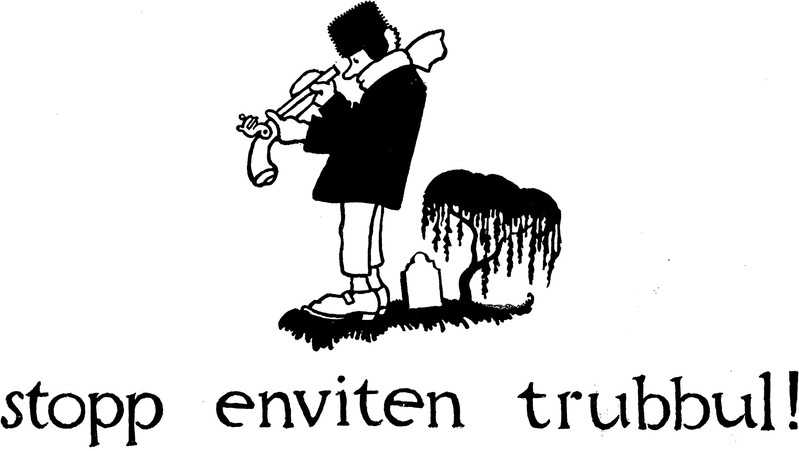
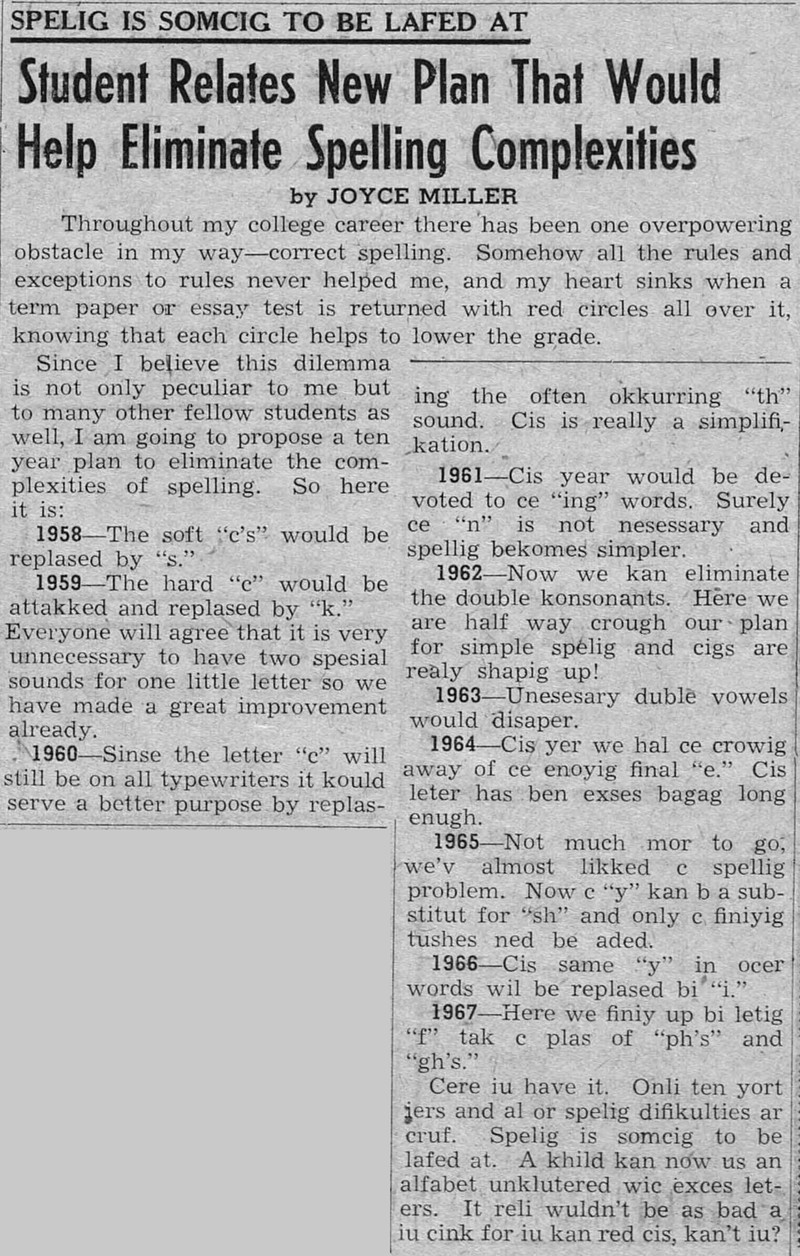
We're often asked, "is it teepee or tepee?" You'll see tepee everywhere, but "popularity is only of temporary moment ... a vulgar struggling for supremacy" ( Chamber's Edinburgh Journal, 1849). Indeed, California's Wigwam Motel (on both the historic registry and alongside the ghostly vestiges of Route 66) spells it teepee. That's surely definitive. For further proof, we offer our own graphical evidence (heehee).
|


 |
|
|
 |
 |
 |
Here's a trick for spelling Constantinople:
It's a C and an I and a constanti, and a steeple and a stople and a constantinople.
—Rupert Hughes, Gift Wife, 1910
|


 |
|
|
 |
 |
 |
Today we call them "paranormal investigators," "ghost hunters," or Ghostbusters, but in the early 1900s they were known as "ghost breakers." Our image is from the title page to The Ghost Breaker by Charles Williams Goddard & Paul Dickey, 1915.
|


 |
|
|
 |
 |
 |
I'm not generally the kind of writer who reads dictionaries cover to cover. But I couldn't put this one down. This dictionary reminds you that not only is language a living, changing, entity -- it's also creative and powerful and personal. Just a few pages of this book will encourage you to lighten up and bravely approach your own prose.
Thank you, Gordon — your review made our day!
Collecting as it does hundreds and hundreds of all-vowel and all-consonant words from literature, Webster's Dictionary of Improbable Words is a word gamer's secret weapon. Pioneering lexicographer Noah Webster published his first Compendious Dictionary of the English Language in 1806. He spent decade after decade expanding his dictionary to make it more comprehensive. Webster's Dictionary of Improbable Words is a testament to the great wordsmith’s dedication.
|


 |
|
|
 |
 |
 |
Is a dictionary a guidebook or a rulebook? Does it tell you where you can go or what you should do? In this fascinating compendium of improbable words comprised either entirely of consonants or entirely of vowels, Craig Conley takes guidebook lexicography (or descriptivism) to an extreme that is comic and informative in succession. "Comic" because it is at first amusing to read a dictionary with entries like "oooooo ooooo" ("a wail of wanton depravity") or "whrr" ("an emphatic spoken by a rat"). Yet it soon becomes clear that Conley is after more than jokes: like the OED, his Dictionary of Improbable Words generously quotes published instances of usage, which leads the book to read like a tribute to literary creativity in domains from video games and comics to classical and experimental fiction to straightforward ornithology—any type of writing whose authors were not satisfied with the words in the standard dictionaries and had to devise their own representations of how the world sounds ("trrt-trrt," "mm," "brrrm," etc.). As such, Conley's dictionary may be used as a rulebook for writers in search of elegant and inventive onomatopoeia for purposes ranging from the whimsical to the scientific. Conley also, by the way, reveals that the world contains more rivers, streams, and towns with all-vowel names than you might expect, and in that way his intriguing lexicon approaches the status of a literal guidebook!
The new Webster's Dictionary of Improbable Words collects hundreds and hundreds of all-vowel and all-consonant words from literature. It's a word gamer's secret weapon. Pioneering lexicographer Noah Webster (October 16, 1758 – May 28, 1843) published his first Compendious Dictionary of the English Language in 1806. He spent decade after decade expanding his dictionary to make it more comprehensive. Webster's Dictionary of Improbable Words is a testament to the great wordsmith’s dedication.
|


Page 36 of 74

> Older Entries...

Original Content Copyright © 2025 by Craig Conley. All rights reserved.
|