CRAIG CONLEY (Prof. Oddfellow) is recognized by Encarta as “America’s most creative and diligent scholar of letters, words and punctuation.” He has been called a “language fanatic” by Page Six gossip columnist Cindy Adams, a “cult hero” by Publisher’s Weekly, a “monk for the modern age” by George Parker, and “a true Renaissance man of the modern era, diving headfirst into comprehensive, open-minded study of realms obscured or merely obscure” by Clint Marsh. An eccentric scholar, Conley’s ideas are often decades ahead of their time. He invented the concept of the “virtual pet” in 1980, fifteen years before the debut of the popular “Tamagotchi” in Japan. His virtual pet, actually a rare flower, still thrives and has reached an incomprehensible size. Conley’s website is OneLetterWords.com.
Featured Book
The Young Wizard's Hexopedia
Search Site
Interactive

Breathing Circle
Music Box Moment
Cautious or Optimistic
King of Hearts of War and Peace
As I Was, As I Am
Perdition Slip
Loves Me? Loves Me Not?
Wacky Birthday Form
Test Your ESP
Chess-Calvino Dictionary
Amalgamural
Is Today the Day?
100 Ways I Failed to Boil Water
"Follow Your Bliss" Compass
"Fortune's Navigator" Compass
Inkblot Oracle
Luck Transfer Certificate
Eternal Life Coupon
Honorary Italian Grandmother E-card
Simple Answers

Collections

A Fine Line Between...
A Rose is a ...
Always Remember
Ampersands
Annotated Ellipses
Apropos of Nothing
Book of Whispers
Call it a Hunch
Colorful Allusions
Did You Hear the One I Just Made Up?
Disguised as a Christmas Tree
Do-Re-Midi
Don't Take This the Wrong Way
Everybody's Doing This Now
Forgotten Wisdom
Glued Snippets
Go Out in a Blaze of Glory
Haunted Clockwork Music
Hindpsych: Erstwhile Conjectures by the Sometime Augur of Yore
How to Believe in Your Elf
How to Write a Blank Book
I Found a Penny Today, So Here's a Thought
Images Moving Through Time
Indubitably (?)
Inflationary Lyrics
It Bears Repeating
It's Really Happening
Last Dustbunny in the Netherlands
Miscellanies of Mr. Jonathan
Neither Saint- Nor Sophist-Led
No News Is Good News
Non-Circulating Books
Nonsense Dept.
Not Rocket Science
Old News
Oldest Tricks in the Book
On One Condition
One Mitten Manager
Only Funny If ...
P I n K S L i P
Peace Symbols to Color
Pfft!
Phosphenes
Postcard Transformations
Precursors
Presumptive Conundrums
Puzzles and Games
Constellations
D-ictionary
Film-ictionary
Letter Grids
Tic Tac Toe Story Generator
Which is Funnier
Restoring the Lost Sense
Rhetorical Answers, Questioned
Rhetorical Questions, Answered!
Semicolon Moons
Semicolon's Dream Journal
Separated at Birth?
Simple Answers
Someone Should Write a Book on ...
Something, Defined
Staring at the Sun
Staring Into the Depths
Strange Dreams
Strange Prayers for Strange Times
Suddenly, A Shot Rang Out
Sundials
Telescopic Em Dashes
Temporal Anomalies
The 40 Most Meaningful Things
The Ghost in the [Scanning] Machine
The Only Certainty
The Right Word
This May Surprise You
This Terrible Problem That Is the Sea
Two Sides / Same Coin
Uncharted Territories
Unicorns
We Are All Snowflakes
What I Now Know
What's In a Name
Yearbook Weirdness
Yesterday's Weather
Your Ship Will Come In

Archives

December 2025
November 2025
October 2025
September 2025
August 2025
July 2025
June 2025
May 2025
April 2025
March 2025
February 2025
January 2025
December 2024
November 2024
October 2024
September 2024
August 2024
July 2024
June 2024
May 2024
April 2024
March 2024
February 2024
January 2024
December 2023
November 2023
October 2023
September 2023
August 2023
July 2023
June 2023
May 2023
April 2023
March 2023
February 2023
January 2023
December 2022
November 2022
October 2022
September 2022
August 2022
July 2022
June 2022
May 2022
April 2022
March 2022
February 2022
January 2022
December 2021
November 2021
October 2021
September 2021
August 2021
July 2021
June 2021
May 2021
April 2021
March 2021
February 2021
January 2021
December 2020
November 2020
October 2020
September 2020
August 2020
July 2020
June 2020
May 2020
April 2020
March 2020
February 2020
January 2020
December 2019
November 2019
October 2019
September 2019
August 2019
July 2019
June 2019
May 2019
April 2019
March 2019
February 2019
January 2019
December 2018
November 2018
October 2018
September 2018
August 2018
July 2018
June 2018
May 2018
April 2018
March 2018
February 2018
January 2018
December 2017
November 2017
October 2017
September 2017
August 2017
July 2017
June 2017
May 2017
April 2017
March 2017
February 2017
January 2017
December 2016
November 2016
October 2016
September 2016
August 2016
July 2016
June 2016
May 2016
April 2016
March 2016
February 2016
January 2016
December 2015
November 2015
October 2015
September 2015
August 2015
July 2015
June 2015
May 2015
April 2015
March 2015
February 2015
January 2015
December 2014
November 2014
October 2014
September 2014
August 2014
July 2014
June 2014
May 2014
April 2014
March 2014
February 2014
January 2014
December 2013
November 2013
October 2013
September 2013
August 2013
July 2013
June 2013
May 2013
April 2013
March 2013
February 2013
January 2013
December 2012
November 2012
October 2012
September 2012
August 2012
July 2012
June 2012
May 2012
April 2012
March 2012
February 2012
January 2012
December 2011
November 2011
October 2011
September 2011
August 2011
July 2011
June 2011
May 2011
April 2011
March 2011
February 2011
January 2011
December 2010
November 2010
October 2010
September 2010
August 2010
July 2010
June 2010
May 2010
April 2010
March 2010
February 2010
January 2010
December 2009
November 2009
October 2009
September 2009
August 2009
July 2009
June 2009
May 2009
April 2009
March 2009
February 2009
January 2009
December 2008
November 2008
October 2008
September 2008
August 2008
July 2008
June 2008
May 2008
April 2008
March 2008
February 2008
January 2008
December 2007
November 2007
October 2007
September 2007
August 2007
July 2007
June 2007
May 2007
April 2007
March 2007
February 2007
January 2007
December 2006
November 2006
October 2006
September 2006
August 2006
July 2006
June 2006
May 2006
April 2006

Links

Magic Words
Jonathan Caws-Elwitt
Martha Brockenbrough
Gordon Meyer
Dr. Boli
Serif of Nottingblog
dbqp
Phantasmaphile
Ironic Sans
Brian Sibley's Blog
Neat-o-Rama
Abecedarian personal effects of 'a mad genius'
A Turkish Delight of musings on languages, deflations of metaphysics, vauntings of arcana, and great visual humor.
The Right Word

April 15, 2008 (permalink)

The poet Chris Piuma scours our Dictionary of All-Consonant Words for three obscure, vowelless words from Ezra Pound's "Canto IX" (grnnh! rrnnh, pthg).  Does he find them, or will Pound's curious expressions resist interpretation for another ninety years?  Read about the spirited adventure here:
------

There is a curious line in Ezra Pound's "Canto IX": grnnh! rrnnh, pthg.

The typical dictionary is not terribly helpful at elucidating this line, so we must consult a more specialized work. Craig Conley'sAll-Consonant Words Dictionaryoffers a more likely source for discovering the meanings of such obscure and vowelless words.

And yet, none of those three words appear. At first, it seems that yet another dictionary has failed us. But this is where we can use skills picked up by working with medieval texts: Perhaps these are scribal errors, mistakes in the transmission, or else they might be variants of already familiar words. Can we, then, find similar words in this dictionary?

gnnnh.
interj. a groan of pain.
<“Gnnnh!” he said, and drew himself up into a ball to escape the pain of his emergent teeth. —Diana Gabaldon,The Fiery Cross.

It is easy to misread a hastily written "n" for an "r", and we can posit with great confidence that "grnnh", especially with its exclamation point, is actually "gnnnh", this pain cry.

rrrrrrrnnng.
n. the ring of a telephone.
<When he woke up, the killer headache hadn’t gone away and the phone was ringing. A fourth ring. A fifth. He still made no move to pick it up. Rnnnnnnnnngagain. —Morrie Ruvinsky,Dream Keeper: Myth and Destiny in the Pacific Northwest.>

At first this seems an unlikely reading of "rrnnh", what with Pound's word having so fewer Rs, and an H instead of a G. But then we recall that this Canto would have been written in the late 1910s or early 1920s, when telephony was in its early stages, and ringer boxes -- which at that point weren't even in the telephones proper -- had not been perfected. There were, we can see, too few Rs. The final "ng", which we pronounce as a satisfying /ŋ/, was then the softer /ɲ/, which Pound spelt the Portuguese way, "nh".

Pthr.
n. the title of a work of art by Michael Paulus based upon illuminated eye charts of the 1800s but modified so that “clinical function is surpassed by style and frivolity” (MichaelPaulus.com).

This one is the most problematic. We can write off the capital P being in minuscule as Modernist poetic license. The "r" becoming a "g" -- it seems unlikely to be a scribal error, and you'd have to be Russian to hear those sounds as related. And, worst of all, this art work did not exist yet, and Ezra Pound's ability to foresee the future was demonstrably not that great. We must reject the dictionary's offering as untenable.

Instead I'd like to suggest that it is a transliteration, done to obscure its origins, as a kind of code. You can map "p" onto "π", "th" onto "θ", and "g" onto "γ". "πθγ", of course, isn't a word in Greek -- would that there were some Greek All-Consonant Words Dictionary that I could consult to confirm this! -- but capitalize those letters, "ΠΘΓ", and you get Pi Theta Gamma, perhaps nothing more than the name of some obscure fraternity.

Now, I am no Pound scholar, nor a member of any such fraternity, so the possible connections or the exactly meaning of this reference is still unclear. But the scenario being described in the Canto is now reasonably clear: Pound is in pain because the phone is ringing and he is sure it is just the boys down at the frat calling him again, perhaps hoping to get him to come by the house, have a few beers, whereas all he wants to do is work on his epic poem, the one that would change history, the one that would explain history, and yet he knows they will keep calling to try to get him to go, and so he cries out in pain. The birthing of an epic poem is like getting one's baby teeth in, a painful process that will change everything about how you interact with the world. But for Pound there was no one who cared enough to apply Anbesol on his tender gums -- certainly his fraternity brothers wouldn't! And so this deftly coded message was inserted into The Cantos and resisted interpretation for ninety years.

Tumblr Twitter Facebook Pinterest


The Typographer and the Dingbat

One fine evening a strolling man heard an exclamation for help from the bottom of a deep well.  "What's the matter?" he called down.

"I am a typographer," came the reply.  "I was taking a slash, dropped my dagger, and descended into this grave."

"Calm down, dear sir, or you'll have a stroke," said the man.

"One moment, please!" called the typographer.  "It's not a stroke; it's a virgule!"

"In that case, I'll go for a long dash," said the man.

"Ellipsis, you dingbat!" cried the typographer, but the man was long gone, and for good.

(We were inspired by a Sufi tale told by Rumi, as collected in Tales of the Dervishes by Idries Shah.  Our retelling is dedicated to Paul Dean.)
Tumblr Twitter Facebook Pinterest

April 12, 2008 (permalink)

From A Surrealist Dictionary by J. Karl Bogartte:

CHAOS: A fleshy, succulant fruit—the seeds of which are often used as umbrellas.
Tumblr Twitter Facebook Pinterest

April 8, 2008 (permalink)


Photo by Tayler Aubin.
The 19th-century visionary Andrew Jackson Davis predicted the typewriter in 1856, picturing it as a "soul-writer" for poets:

I am almost moved to invent an automatic psychographer; that is, an artificial soul-writer.  It may be constructed something like a piano; one brace or scale of keys to represent the elementary sounds; another and lower tier, to represent a combination; and still another, for a rapid recombination; so that a person, instead of playing a piece of music, may touch off a sermon or a poem!

For his vision of the future automobile, see Futility Closet.

---

Sara Soares writes:

What a brilliant idea!
I'm sure you are the right person to build such a thing.
Tumblr Twitter Facebook Pinterest

April 6, 2008 (permalink)

Finally, the "I'm with Stupid" t-shirt of yesteryear has been given its digital-age incarnation, courtesy of literary rapscallion Jonathan Caws-Elwitt.

The new t-shirt is not to be confused with a book on the market called im with stupid(no apostrophe, no capitals). It's by the artist Jeremy Fish.


© J. Caws-Elwitt
#jonathan caws-elwitt
Tumblr Twitter Facebook Pinterest

April 1, 2008 (permalink)


Album art: Rina Aiuchi.
"In the end, we may be in love with books, but it’s words that have truly won our hearts. It’s words that whisper into our ear and transform us, that make us believe in other worlds or new emotions we didn’t know existed; it’s words that keep us company in . . . planes, on subway trains, or our comfy couches. It is words, not books, paper, papyrus of vellum pages that transform our lives."

Jeff Gomez, Print is Dead; Books in Our Digital Age, 2008
Tumblr Twitter Facebook Pinterest

March 29, 2008 (permalink)

From A Surrealist Dictionary by J. Karl Bogartte:

DANCE: An invisible doorway in a wall to which sleepwalkers are invariably drawn.
Tumblr Twitter Facebook Pinterest

March 23, 2008 (permalink)

Information Prose :: A Manifesto in 47 Points :: Version 1.0

by Jeremy P. Bushnell, jeremy@invisible-city.com

26. Our daily thoughts appear whole only within contexts which run deep and often go unthought: were anyone to inspect the running ticker of our mental dialogue, much of it would seem to be fragments. Writing which purports to be interested in the complexity of other human beings must reflect this.

27. Incorporating uncited or decontextualized fragments and samples into a creative work brings a certain level of noise into the signal. This admittedly runs the risk of creating confusion in the mind of the audience.

28. The initial communication of new information always creates some confusion. But that confusion indicates promise to certain recipients.

29. There is no evidence that what audiences want most from a creative work is the clear transmission of simple information. Audiences will accept high levels of noise in a creative work if the creative work is achieving other effects or satisfying other needs.

30. "[We take] the text, with its unreliable transmission of information, to be a component of a larger system, that of cultural circulation, in which what seemed like a dysfunction at a first level of communication would turn out to be a positive element contributing to the complexity of the larger system." —William Paulson, The Noise of Culture

31. To remove it from a creative context for a moment, consider: one reason meeting new people is appealing is because they may know things that you don’t know, or they may understand things in a different way from you. The process of communicating with someone who thinks differently from you (because their thoughts are defined by different contexts) carries with it a necessary degree of noise, but the process of translating that noise into new meaning can be immensely rewarding, intellectually, emotionally, and creatively.

32. "[Disorder and noise] can become information to us, can bring us to more subtle forms of understanding, because it is the unexpected, the radically different to which we can respond only because we are already complex beings capable of yet more complexity." —William Paulson, The Noise of Culture

33. Experiencing characters in a work of fiction should be rewarding in that same fashion. Reducing the noise in the signal simplifies out human difference for the sake of accessibility and creates work that is pleasant but does not bring us to new understanding.

34. Information prose writers must write for an audience that finds noise and its attendant uncertainty stimulating. Much contemporary writing neglects them.

35. "[Young people] are more tolerant of being out of control, more tolerant of that exploratory phase where the rules don’t all make sense and few goals have been clearly defined. The hard work of tomorrow’s interactive design will be to explore that tolerance — that suspension of control — in ways that enlighten us." —Steven Johnson

36. Currently, the writers doing the most work towards some of information prose’s goals are hypertext writers.

37. Hypertext writers are not necessarily information prose writers, and not all information prose writers will seek to be hypertext writers, but hypertext has merits that should be considered by writers of information prose.

38. Some hypertexts consist solely of navigable webs of interlinked fragments. Some information prose writers may find this approach fruitful. But hypertextuality need not be incompatible with more traditional narrative. Utilizing hypertext does not mean that writers need to relinquish the many obvious merits of a linear story; the comfort of a prescribed order, of a beginning, middle, and end.

(to be continued)
Tumblr Twitter Facebook Pinterest

March 20, 2008 (permalink)

"It's not like someone could steal the words right off the page."
Terry Goodkind, Chainfire

"Lift the words off the page in order to make them go right."
—Richard Chase, quoted in Who Says? by Carol Birch and Melissa Heckler

"Interaction with literary language implies lifting the words off the page to new levels of creativity, connections, and criticism in collaboration with others."
Shelby Anne Wolf, Interpreting Literature with Children

"Let the words jump off the page and land in my heart."
John Steger, Spiritual Joe

"The Typography of Paper Cutting" by Hina Aoyama.  Source.  Via ffffound.
Tumblr Twitter Facebook Pinterest

March 16, 2008 (permalink)

From A Surrealist Dictionary by J. Karl Bogartte:

SOLSTICE: The luminous blue fog surrounding a human body when the mind is elsewhere.
Tumblr Twitter Facebook Pinterest

March 14, 2008 (permalink)

"When the smoke from the fire seeps in through the nostrils, irritates the throat, and stings the eyes, we shut out the world of burning text, unable to remember what letterforms once lived on those sheets curling into ash."
Geof Huth

Suns & Book Burning, from Hartmann Schedel, ‘Nuremberg Chronicle’ (1493), XCIIv.  Via.
#sun #smoke #book
Tumblr Twitter Facebook Pinterest

February 24, 2008 (permalink)


All mixtapes go to heaven.  Source.

Information Prose :: A Manifesto in 47 Points :: Version 1.0

by Jeremy P. Bushnell, jeremy@invisible-city.com

9. You can learn a lot about a person from a mixtape.

10. When at someone’s house for the first time, you tend to look at their bookshelves.

11. Fiction which builds characters without taking this into account has its head in the sand.

12. The primary goal of the information prose writer is to document the contemporary mind and environment in a way that takes the contemporary importance of media and information seriously.

13. Many contemporary fiction writers are afraid or otherwise unwilling to do this. I submit as evidence the large numbers of contemporary novels set in environments which lack informational richness: rural areas, the past, "magical realism" worlds.

14. Information prose does not attempt to depict a simplified version of the world. Information prose attempts to contain as much of the complexity of the world as possible.

15. "Do you understand how tremendously dense? A minute in a room, together." — Don DeLillo, Valparaiso

16. A fictional American present in which no one watches TV, listens to the radio, or checks their e-mail is sentimental and false.

17. Information prose writers should not aim to write work which is timeless. The value of documentary work never lies in its timelessness.

18. When writing about characters who inhabit dense fields of information (both remembered and newly-experienced), the value of quoting, sampling, and appropriation rapidly becomes apparent.

19. Creative work utilizing techniques of appropriation has been produced with regularity for nearly a hundred years now, in all forms of media. Information prose writers should no longer need to defend these techniques against charges of novelty.

20. A partial primer, organized in a rough chronology: the Comte de Lauteamont’s Maldoror, Dada collages, Tristan Tzara’s cut-up poems, William S. Burroughs’ cut-up and fold-in novels, Robert Rauschenberg’s media silkscreens, Bern Porter’s found poems, Situationist detournement projects, the poetry of John Ashbery, Brian Eno and David Byrne’s My Life In the Bush of Ghosts, the novels of Kathy Acker, the albums of Public Enemy and Negativland, and the films of Craig Baldwin.

21. All evidence indicates that much of this work is of lasting merit.

22. All evidence indicates that these techniques of appropriation are exactly the ones necessary to create a recognizable picture of the contemporary present.

23. "As artists, our work involves displacing and displaying bites of publicly available, publicly influential material because it peppers our personal environment and affects our consciousness. In our society, the media which surrounds us is as available, and as valid a subject for art, as nature itself." —Negativland’s Tenets of Free Appropriation

24. Information prose writers should not be afraid to plagiarize. It is not their duty to write citations. Our memories and experiences do not usually come attended by complete bibliographies.

25. Information prose writers should not overlook the technique of the fragment. Our experience of the textuality of the surrounding world is largely fragmentary; information prose should strive to reflect that.

(to be continued)
_____

Urileye writes:

#21
good one!
#list
Tumblr Twitter Facebook Pinterest

February 14, 2008 (permalink)

"An Abecedary" by Paul Dean:

Tumblr Twitter Facebook Pinterest

February 13, 2008 (permalink)


Tossed aside like an old cone.
How many ways can one get tossed aside?  John Walkenbach checked Google and discovered the following:
  • Tossed aside like a 7th grade boyfriend
  • Like a forgotten dream
  • Like a worn-out pair of boots
  • Like a rag doll
  • Like a useless bag of linseed
  • Like a dog after his job was done
  • Like a soiled tissue
  • Like a dirty mop
  • Like a master artist's sketch
  • Like a broken appliance
  • Like a taco wrapper
  • Like a child's doll
  • Like a piece of trash
  • Like a wad of yesterday's news
  • Like a used play thing
  • Like a spent cigarette
  • Like a sack of pork chops
  • Like a Big Mac box
  • Like a fat pedestrian
  • Like a fad
  • Like a goddamn rubber glove
  • Like a moldy beanbag chair
  • Like a dirty napkin
(Via J-Walk Blog.  Linked illustrations courtesy of Abecedarian.)
#bullet list #list
Tumblr Twitter Facebook Pinterest

February 3, 2008 (permalink)


Thought bubbles.  Original size here.
Information Prose :: A Manifesto in 47 Points :: Version 1.0

by Jeremy P. Bushnell, jeremy@invisible-city.com

1. Human beings are thinking creatures. In order to write about human beings in a complete fashion, one needs to write about how human beings think.

2. The ability of language-based stories to depict thought is precisely what keeps them competitive in a world flooded with stories. Image-based stories— movies, television programs —can depict how people act in ways that are seductive and successful, but very few possess an aesthetic mechanism complex enough to reliably depict the nuances of human thought.

3. Human thought reacts to its environment. Writing accurately about the way people think therefore involves writing accurately about the environment in which people live.

4. Human beings live surrounded by information. To write completely about human beings therefore means taking on the duty of writing about information.

5. The human mind references its own memory banks incessantly. Writing that seeks to document the human mind will reflect this.

6. The literary device of the extended flashback is not an illustration of the way we actually experience memory. We live in a perpetual wash of microflashbacks.

7. The memory stores remembered experience in the form of a collage of information drawn from hundreds of thousand of sources. Many of these sources are media sources. Many of our stored experiences are experiences of watching, reading, or listening to media, in either a primary or a supplementary capacity.

8. Media matters to people. It contributes to how we define and understand ourselves.

(to be continued)
Tumblr Twitter Facebook Pinterest

February 2, 2008 (permalink)


Picture source.
From the atlas of humorist Jonathan Caws-Elwitt:

I was puzzled to note that there is a place in Nebraska called Town in Ohio, Nebraska.  But it turns out there is a simple explanation -- it seems they named it after a town in Ohio.

Little-known fact #1: The total number of soldiers who died on the American side during the Revolution was "no more than the population of a small town in Ohio or Nebraska" (Ray Raphael, A People's History of the American Revolution, 2002, p. 89).

Little-known fact #2: "For every NYU kid [who has trouble adjusting to adult life], there's another student from a small town in Nebraska who goes to college in a small town in Ohio in hopes of fitting in" (Spiny, commenting on this blog posting.)

Meanwhile, Columbiana claims the distinction of being "the Biggest Little Town in Ohio," but not necessarily in Nebraska.
Tumblr Twitter Facebook Pinterest

January 31, 2008 (permalink)

The author of A Surrealist Dictionary [no longer online but archived by the WaybackMachine] once explained to us that "Words have begun to make up their own meanings, simply because they desire to be free and live their own lives, outside of normal human convention and assigned stereotypes."  Here is a selection from the now-vanished dictionary:

AARDVARK: The long, intricately shaped glass tube used in the distillation of a widow's veil.
ABBREVIATE: An opiate derivative of tears.
ABLUTION: A rainbow reassembled inside a nightgown and used for starting fires.
AFTERBIRTH: A spark-yielding mist.
APHRODISIAC: Light given off between carnivorous plants as a form of communication.
AURA: A very dangerous species of moth attracted to human blood.
AURORA: Nocturnal animal similar to a jellyfish and noted for its high-pitched screams.
  
BICYCLIST: One of several long, white-haired creatures resembling Llamas that emit cooing, voice-like sounds.
BODICE: A prism used only in the dark as a weapon, and closely resembling a hunting knife.
BOAR: A vessel used for transporting reflections.
BREATH: Spoons repulsed by the geraniums.
 
CABAL: A very fast vehicle powered by cocoons.
CHAOS: A fleshy, succulant fruit - the seeds of which are often used as umbrellas.
CORMORANT: Chemical found in the human body during moments of contentment.
CORONA: A wind-powered honeycomb.
CORPSE: A luminous green flower that reflects the moon.
CUNNILINGUS: The sudden metamorphosis of a chair into a great bird.
  
DANCE: An invisible doorway in a wall to which sleepwalkers are invariably drawn.
DESIRE: The glow of bathing lunatics.
DIAMOND: Nocturnal animal similar to a jellyfish, but much larger and more ferocious.
DIVINING ROD: A dangerous device used to attract stars for digestive purposes.
DREAM: A dress to which the eyes of bicyclists are attached; robe worn by messengers.
 
EEL: The corners of a room where the walls meet the ceiling to form an escape route.
ELEVATOR: A soft, spongy mass that consumes its weight in gold.
EROS: A species of hunting dog with bright red feathers.
ESTROGEN: Wishbone used for rearranging constellations.
ETHER: Female reproductive organ.
 
FACULA: A large net used to catch enchanted stockings.
FEMALE: One of several species of fur-covered tripods used for stimulating rubies.
FLAME: A violin powered by the eyelids of sleeping girls.
FOETUS: Form of hysteria contracted while moving around in a solar eclipse.
 
GLANCE: A bitter tasting fungus often used for catching shadows.
GOWN: A joyful humming sound given off by spider webs during electrical storms.
GRACE: The art of luring ravenous dogs into a state of springtime.
GYROSCOPE: Human female milk-producing gland.
 
HEMOPHILIA: A very sweet herbal drug that causes spontaneous, undirected human flight.
HONEY: A sexual perversion involving a dolphin and a pharmaceutical cabinet.
HOCUS POCUS: The buzzing sound that characterizes a flaw in the universe.
HYPNOSIS: Music produced when a chrysalis and a flame exchange places.
 
INCENDIARY: An obscene gesture or position with intent to elude color by emitting an inky, jet black substance.
INCEST: A psychology of the body based on the oysters of space travel.
ISOSCELES: Insects that gather to form a doorway in a tropical forest.
 
LACONIC: A vanishing cream.
LOOM: A golden dust used for hypnotizing wolves.
LUNATION: The sound of tongues caressing before eating fowl.
 
MASOCHISM: Sparks given off by oyster-beds when the tides come in.
MENSTRUATION: The sound produced when rubbing two swans together.
MIRROR: The stillness preceding a flash-fire that never arrives.
 
NEGLIGEE: A fly-swatter similar to a bee's nest and used to fend off an attack of pianos.
NEBULA: A psychological condition in which the very essence of one's being feels constructed of sound rather than flesh and bone.
 
PLEASURE: A sundial that uses the wings of bats to attract forests.
  
SADISM: Moments during the vernal equinox when sunlight turns into honey.
SEX: A small white furry animal that attracts windows.
SHADOW: A hairless mammal that generates rainbows instead of saliva.
SOMNAMBULISM: A cleaning solution.
SOLACE: A large triangular oven in which fighting wolves surpass the speed of light.
SOLSTICE: The luminous blue fog surrounding a human body when the mind is elsewhere.
STARLIGHT: Liquid used to power a whispering machine.
SWIMMING POOL: A kind of mist secreted by pyramids when fending off an attack of vicious glow-worms.  
 
VESTAL: Bright yellow flowers that grow out of mummies.
VULVA: Wind chimes that use the bones of children.
 
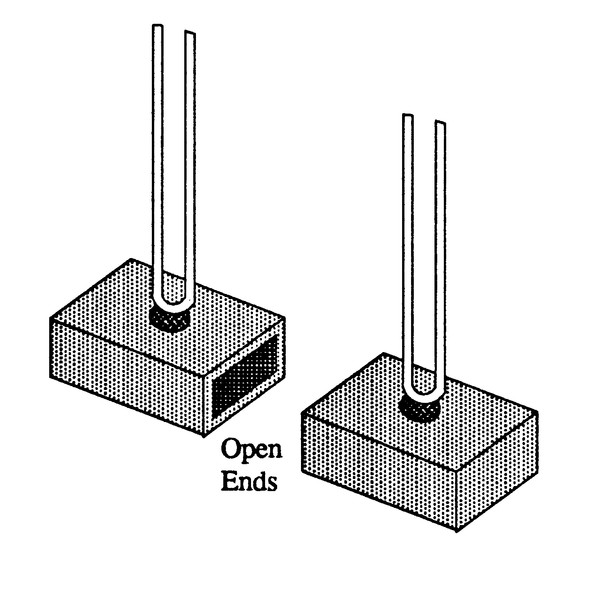
WHORE: Apparatus for telling the future; similar to a tuning-fork.
 
X-RAY: A sewing machine that uses sparks instead of thread.
 
YAWN: A species of seagoing plant.
YGGDRASIL: A golden frog that howls during the full moon.
 
ZOMBI: A glass slipper.
Tumblr Twitter Facebook Pinterest

January 22, 2008 (permalink)

Q: "Who wants to play the ghost of Hamlet's father?"
A: "I."

First Person Ominous

---

Q: "Who is impartial?"
A: "I."

First Person Objective

---

Q: "Who feels invincible?"
A: "I."

First Person Omnipotent

---

Q: "Who can bi-locate?"
A: "I."

First Person Omnipresent

---

Q: "Who here can referee?"
A: "I."

First Person Adjudicative
Tumblr Twitter Facebook Pinterest

January 18, 2008 (permalink)

The Corsair Ergonomic Keyboard For Pirates

From PlanetDan.  Via ffffound.com.
Tumblr Twitter Facebook Pinterest

January 17, 2008 (permalink)

Redundant: "exhibitionistic streak"
Tumblr Twitter Facebook Pinterest


Page 68 of 74

> Older Entries...

Original Content Copyright © 2025 by Craig Conley. All rights reserved.