|
|
 |
|
|
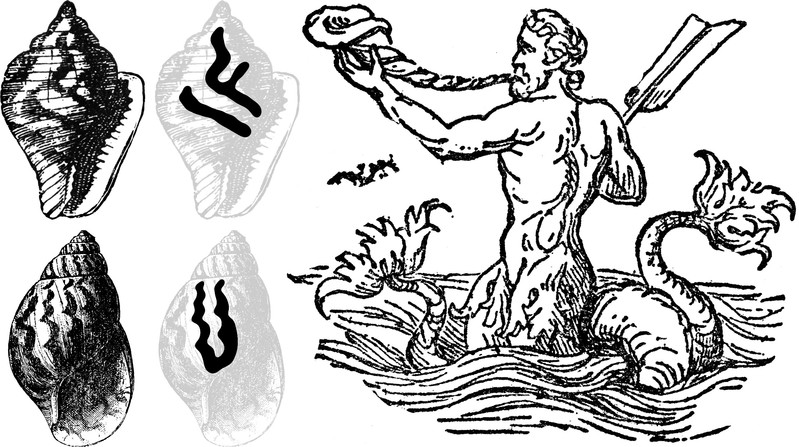
[This posting is in honor of Wilfried at Crystalpunk.) It is poetically said that when one raises a shell to the ear, one hears the ocean. Could it also be said that when one raises a shell to the eye, one reads poetry? In his masterpiece Doctor Faustus, Thomas Mann holds a magnifying glass to the "indecipherable hieroglyphics on the shells of certain mussels" and conchs, questioning whether Mother Nature expresses herself in an organized, written code, and whether ornament can ultimately be distinguished from meaning. Mann describes the calligraphy on a shell that practically begs to be understood: "The characters, as if drawn with a brush, blended into purely decorative lines toward the edge, but over large sections of the curved surface their meticulous complexity gave every appearance of intending to communicate something." The shell's calligraphy bears a strong resemblance to "early Oriental scripts, much like the stroke of Old Aramaic." But how is one to get to the bottom of such symbols? Mann admits that "They elude our understanding and, it pains me to say, probably always will." Yet this elusion need not be a source of discouragement. Mann explains that ornament and meaning are like conjoined twins: "When I say they 'elude' us, that is really only the opposite of 'reveal,' for the idea that nature has painted this code, for which we lack the key, purely for ornament's sake on the shell of one of her creatures--no one can convince me of that. Ornament and meaning have always run side by side, and the ancient scripts served simultaneously for decoration and communication. Let no one tell me nothing is being communicated here! For the message to be inaccessible, and for one to immerse oneself in that contradiction--that also has its pleasure." In other words, the shell calligraphy communicates a profound mystery, pregnant with meaning and delightful to behold. Mann admits that, "were this really a written code, nature would surely have to command her own self-generated, organized language," adding that nature's fundamental illiteracy is "precisely what makes her eerie." Mann's allusion to "early Oriental scripts" reminds us of the lost "shell" style of calligraphy discovered in Shang culture artifacts (14th - 11th centuries BCE). That ancient system of writing, more stylized than the early picture words, was brushed onto shells in vermilion ink. (For a full discussion of shell-style calligraphy, see Chinese Brushwork in Calligraphy and Painting by Kwo Da-Wei, 1990.) In our collage below, we imagine King Triton conjuring the Platonic ideals of shell calligraphy.
|
|
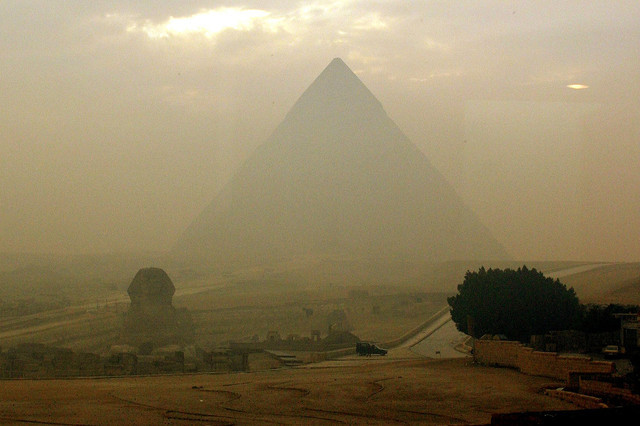
From A Surrealist Dictionary by J. Karl Bogartte: SWIMMING POOL: A kind of mist secreted by pyramids when fending off an attack of vicious glow-worms.
|
|
|
|
|
|
|
SIGH[from our Magic Words blog] The music of a sigh, the magician of a momentary joy.
—F.G., "British Poetry: the Drama,” The British Controversialist and Literary Magazine (1862) The most profound meaning of a sigh is invariably absent from dictionaries. A sigh is an invocation. It is an audible expression of a deep yearning for someone or something beyond one’s reach. A sigh is an aspiration in both senses of the word: an exhalation of breath and a heartfelt wish. A sigh typically trails off into a deep silence, just as in meditation the intention carried by a sutra is allowed to germinate in the wordless void. In Irish lore we find the fairy name sigh or sidh (pronounced "shee”), originating from the blast of wind sidhe that carries the vital spirit (comparable to the magician siddha and magic siddhi of Hindu belief).* For Laplander shamen, a profound sigh seems to carry across the threshold to the otherworld to signal an awakening of oracular powers: After some preparatory ceremonies, the magician falls senseless and motionless, as if the soul had really abandoned the body. After a lapse of twenty-four hours, the soul returning, the apparently inanimate body awakens as if out of the profound sleep, and utters a deep-drawn sigh, as if emerging from death to life. Thus brought to himself, the magician answers questions put to him, and, to remove all doubt in regard to the character of his responses, he names and describes the places where he has been, with minute circumstances well known to the interrogator.
—John Campbell Colquhoun, An History of Magic, Witchcraft, and Animal Magnetism (1851) In "Ej Haj,” the Hungarian fairy tale by Zsuzsanna Palkó, the titular magician’s name not only sounds like but also means "a sigh.”† The word haj is possibly related to Xai, a Vogul shaman’s "invocation to the supernatural at ritual ceremonies.”† In the tale "János Teddneki,” the King of Devils is named "Hájháj,”† like a double sigh. A double sigh conjures a magician in this exemplary passage: A deep sigh escaped his parched lips, and that sigh was echoed by another. He looked up, and standing beside him, in the hush of solemn midnight, he beheld Grimwald the Magician!
—E.B. Clarke, "A Legend of Charlemagne,” The American Monthly Magazine (1837) A sigh accomplishes a magical effect in this passage: Jack Starhouse could make [cats] dance wild dances, leaping about upon their hind legs and casting themselves from side to side. This he did by strange sighs and whistlings and hissings.
—Susanna Clarke, Jonathan Strange & Mr. Norrell (2004) Sometimes, an intricate incantation is expressed through sighs: He raised his arms, holding them out to her. ‘Kum [kunka] yali, kum buba tambe,’ and more magic words, said so quickly, they sounded like whispers and sighs. The young woman lifted one foot on the air. Then the other. She flew clumsily at first, with the child now held tightly in her arms. Then she felt the magic, the African mystery. Say she rose as free as a bird. As light as a feather.
—Virginia Hamilton, The People Could Fly (1985) In the following passage, a sigh surrounds a magician like a spectral aura as he explains the limits of his art: The shadow of a sigh penetrated the wall. "I am a magician indeed, with knowledge of every spell yet devised, the sleight of runes, incantations, designs, exorcisms, talismans. I am Master Mathematician, the first since Phandaal, yet I can do nothing to your brain without destroying your intelligence, your personality, your soul—for I am no god. A god may will things to existence; I must rely on magic, the spells which vibrate and twist space.”
—Jack Vance, The Dying Earth (1982) * Abram Smythe Palmer, Folk-Etymology (1882) † Linda Degh, Folktales and Society (1989) [Special thanks to Gordon Meyer, for inspiration!]
|
|
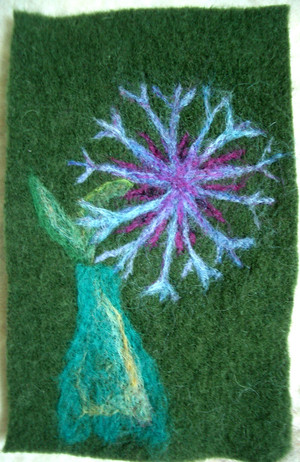
A felt Centaurea Montana, via HomeWork blog.
|
|
|
|
|
|
|
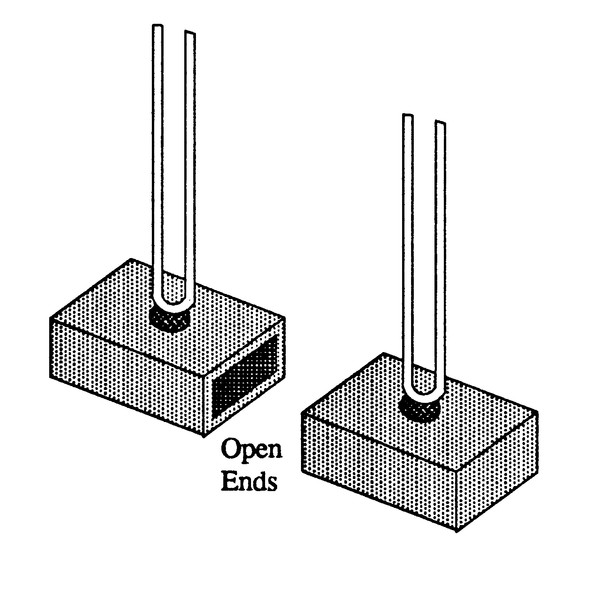
From A Surrealist Dictionary by J. Karl Bogartte: WHORE: Apparatus for telling the future; similar to a tuning-fork.
|
|
|
|
|
|
|
The visual poet extraordinare Geof Huth has been "defining shapes." Some favorite examples: … three reasons to suspend disbelief
∞ a conclusion of forever
* a star in the mind
? the hook that catches
- a stitch of text
) the end of whispers
{ a crumpled page
! surprising the ending
\ the path to
: two eyes that follow
; two eyes and one grain of sand
^ the hat of the missing
$ the sibilance of sermons
` a grave way of speaking
• dividing the string into threads
† the graveyard of the second thought
§ the pregnancy of sections
For many more, see Geof's " Defining Shapes." Also see Gary Barwin's equally enchanting " Anus Porcupine Eyebrow." |
|
|
|
|
|
|
Lynda Barry has said, "Keep in mind as you read these words that you are paying no attention at all to the letters of the alphabet" ( What It Is, 2008, via DJMisc). We say, "Speak for yourself!" We pay all sorts of attention to the letters of the alphabet as we read, as our body of work makes abundantly clear. We thought everybody read that way! |
|
|
|
|
|
|
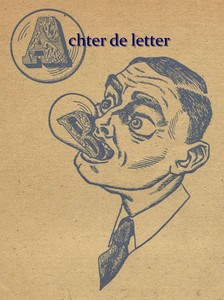
Diedrik van der Wal, custodian of one-letter words in the Netherlands, promises a Dutch dictionary of single letters by September. The book will most probably be called: Achter de letter: het eerste Nederlandse eenletterwoordenboek. The poet Geof Huth is our fellow custodian of English one-letter words. We'd still love to see his unfinished dictionary some day. |
|
|
|
|
|
|
A new softcover edition of the groundbreaking Magic Words: A Dictionary is available for pre-order at Amazon.com at a 34% discount (plus an additional 5% pre-order discount). For the skinny on this beguiling reference, see our sister site MysteryArts.com. |
|
|
|
|
|
|
|
|
Information Prose :: A Manifesto in 47 Points :: Version 1.0
by Jeremy P. Bushnell, jeremy@invisible-city.com
39. There is nothing about hypertext that
demands that a story incorporating it must be written with forking
paths and multiple endings.
40. Hypertext writers who write
"closed" hypertexts — works that only contain links to other parts of
themselves — deprive hypertext of its most radical feature: the ability
to refer to information outside of itself. The bibliography is the
model here.
41. Information prose writers should embrace the
elements of hypertextuality which aid documentary. Think of the
hypertextual features long used by encyclopedias (cross-references).
42.
Information prose writers should, furthermore, embrace the elements of
multimedia which amplify the power of documentary. Compare an
encyclopedia with illustrations to one without. Compare a traditional
encyclopedia to Encarta.
43. To put it in the words of a friend: "You can now footnote a sound."
44.
Inasmuch as the Web supports hypertextuality and (to a lesser extent)
multimedia, the Web helps to make information prose possible.
45.
However, the Web is not the only thing that makes information prose
possible. Information prose is not dependent on hypertextuality, and
hypertextuality is not dependent upon computers. Think of indexes,
think of tables of contents, think of the numbers in the corners of
pages.
46. Aside from the merits of supporting hypertextuality
and multimedia, there are other advantages of writing for the Web, two
of the most obvious being the ability to make unlimited copies and the
ability to distribute copies worldwide at minimal (or no) expense.
These merits have been amply written on elsewhere. There are obvious
disadvantages as well. Information prose writers should support and
contribute to efforts to overcome these, which will help to secure the
Web as a vital medium for their future expression.
47. The present is here. It it time to begin. Pass it on.
|
|
|
|
|
|
|
The poet Chris Piuma scours our Dictionary of All-Consonant Words for three obscure, vowelless words from Ezra Pound's " Canto IX" ( grnnh! rrnnh, pthg). Does he find them, or will Pound's curious expressions resist interpretation for another ninety years? Read about the spirited adventure here:------
There is a curious line in Ezra Pound's "Canto IX": grnnh! rrnnh, pthg.
The typical dictionary is not terribly helpful at elucidating this line, so we must consult a more specialized work. Craig Conley'sAll-Consonant Words Dictionaryoffers a more likely source for discovering the meanings of such obscure and vowelless words.
And yet, none of those three words appear. At first, it seems that yet another dictionary has failed us. But this is where we can use skills picked up by working with medieval texts: Perhaps these are scribal errors, mistakes in the transmission, or else they might be variants of already familiar words. Can we, then, find similar words in this dictionary?
- gnnnh.
- interj. a groan of pain.
<“Gnnnh!” he said, and drew himself up into a ball to escape the pain of his emergent teeth. —Diana Gabaldon,The Fiery Cross.
It is easy to misread a hastily written "n" for an "r", and we can posit with great confidence that "grnnh", especially with its exclamation point, is actually "gnnnh", this pain cry.
- rrrrrrrnnng.
- n. the ring of a telephone.
<When he woke up, the killer headache hadn’t gone away and the phone was ringing. A fourth ring. A fifth. He still made no move to pick it up. Rnnnnnnnnngagain. —Morrie Ruvinsky,Dream Keeper: Myth and Destiny in the Pacific Northwest.>
At first this seems an unlikely reading of "rrnnh", what with Pound's word having so fewer Rs, and an H instead of a G. But then we recall that this Canto would have been written in the late 1910s or early 1920s, when telephony was in its early stages, and ringer boxes -- which at that point weren't even in the telephones proper -- had not been perfected. There were, we can see, too few Rs. The final "ng", which we pronounce as a satisfying /ŋ/, was then the softer /ɲ/, which Pound spelt the Portuguese way, "nh".
- Pthr.
- n. the title of a work of art by Michael Paulus based upon illuminated eye charts of the 1800s but modified so that “clinical function is surpassed by style and frivolity” (MichaelPaulus.com).
This one is the most problematic. We can write off the capital P being in minuscule as Modernist poetic license. The "r" becoming a "g" -- it seems unlikely to be a scribal error, and you'd have to be Russian to hear those sounds as related. And, worst of all, this art work did not exist yet, and Ezra Pound's ability to foresee the future was demonstrably not that great. We must reject the dictionary's offering as untenable.
Instead I'd like to suggest that it is a transliteration, done to obscure its origins, as a kind of code. You can map "p" onto "π", "th" onto "θ", and "g" onto "γ". "πθγ", of course, isn't a word in Greek -- would that there were some Greek All-Consonant Words Dictionary that I could consult to confirm this! -- but capitalize those letters, "ΠΘΓ", and you get Pi Theta Gamma, perhaps nothing more than the name of some obscure fraternity.
Now, I am no Pound scholar, nor a member of any such fraternity, so the possible connections or the exactly meaning of this reference is still unclear. But the scenario being described in the Canto is now reasonably clear: Pound is in pain because the phone is ringing and he is sure it is just the boys down at the frat calling him again, perhaps hoping to get him to come by the house, have a few beers, whereas all he wants to do is work on his epic poem, the one that would change history, the one that would explain history, and yet he knows they will keep calling to try to get him to go, and so he cries out in pain. The birthing of an epic poem is like getting one's baby teeth in, a painful process that will change everything about how you interact with the world. But for Pound there was no one who cared enough to apply Anbesol on his tender gums -- certainly his fraternity brothers wouldn't! And so this deftly coded message was inserted into The Cantos and resisted interpretation for ninety years.
|
Page 69 of 75
> Older Entries...
Original Content Copyright © 2026 by Craig Conley. All rights reserved.
|