Found 230 posts matching ‘Radio’ |

|
|
I Found a Penny Today, So Here's a Thought –
December 31, 2026 |
(permalink) |
|
|
|
|
A Refutation of the "Say Yes and Never Do It" Philosophy
Film director Mel Brooks shared his survival trick in his memoir: "say yes and never do it." For example, when a studio executive told him to fire Gene Wilder, Brooks answered that Wilder would never be seen again, all the while keeping him as the star of the film. Brooks smiled and said "yes" to all demands, then completely ignored them. Brooks' logic was that trying to explain or convince another of your perspective rarely works, so it's easier to seem agreeable and do what one will anyway. Yet aren't there at least two problems with Brooks' advice?
Brooks was right that explaining isn't the thing to do. Even so, as a Hollywood elite, it's unlikely that Brooks was ever truly anyone's flunky, and so he could get away with never following orders from higher up. That's the problem with celebrity advice: it comes from places of privilege and is addressed to people in general as if they, too, could apply it and get away with it. The rules simply aren't the same in different social spheres. Still, there might be something to learn from the first half of Brooks' survival trick.
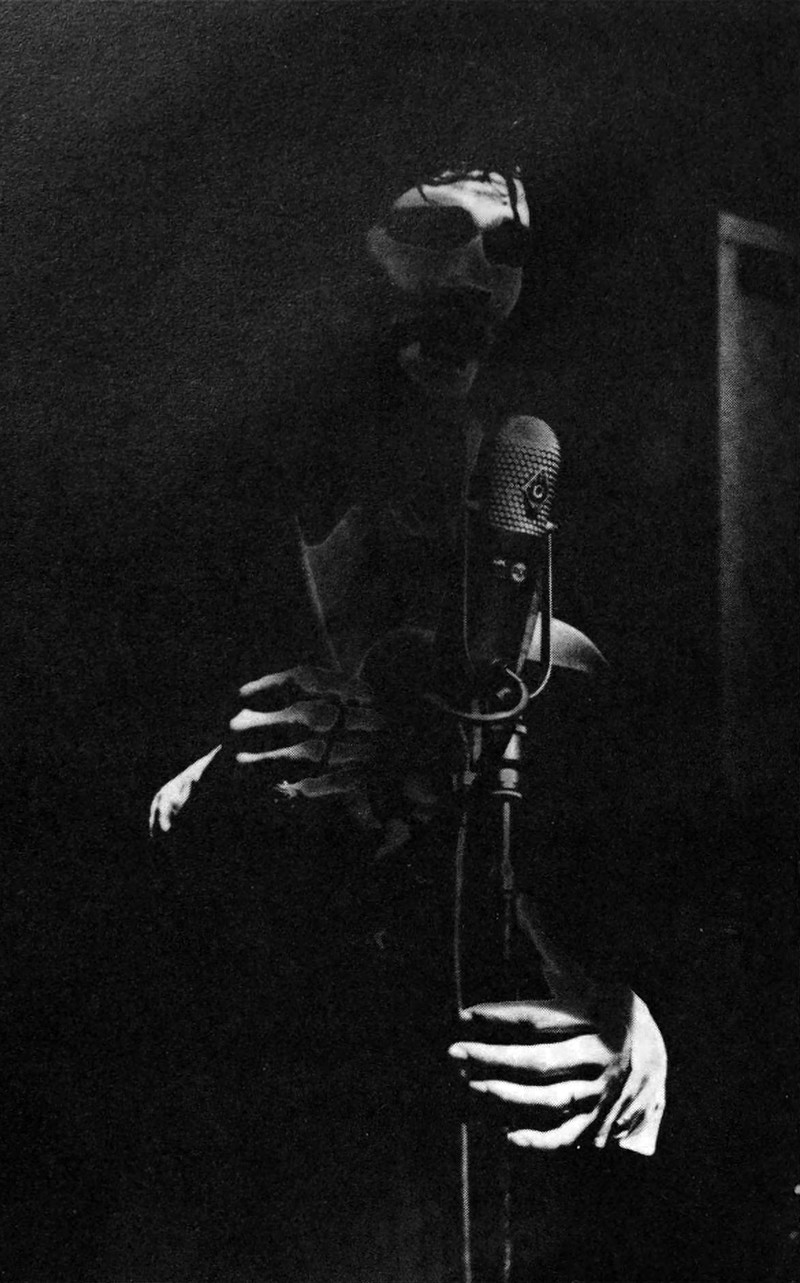
What if one says "yes" to any demand, no matter how disagreeable, and then seeks to work with those demands as challenges to make an even better product? It may feel impossible to imagine Brooks' Young Frankenstein without Gene Wilder, but that doesn't mean that another actor couldn't have offered a more brilliant performance. Consider director Lars von Trier's interesting documentary The Five Obstructions, in which he challenges another filmmaker to remake a favorite movie five times, each according to a different "obstruction" or obstacle. One obstruction was to film in Cuba but to use no set. Others were to never show a main character, to film in the worst place in the world but not show that place on screen, and to present everything as a cartoon. The premise, of course, was that arbitrarily imposed obstacles would stimulate better art. We might relate this concept to the wisdom teaching that life is full of challenges and suffering precisely because we don't spiritually evolve without them. Laboratory rats who are placed in utopian environments with plentiful food and no predators live shorter lives, presumably bored to death by lack of stimulation. So the question is, what if we say "yes" to a demand we don't like and then follow through anyway, dropping our egos and our insistence that our preconceived notions can be the only way. It's not that some executive behind a desk should necessarily dictate how art is made — it's more about an artist embracing even misguided suggestions as challenges to be embraced so as to elevate the art. On a personal note, though I'm now intrigued by the power of saying "no" to every question (addressed in this article), I've very many times said "yes" to requests that I'd otherwise never pursue, just because such requests would take my art down avenues that would never have otherwise been accessed. My band Neons Gone Mad has been asked to use our Tesla spirit radio and haunted grandfather clockwork to transmogrify all sorts of famous songs that we're not especially fond of, but having said "yes" to those suggestions, some amazing recordings transpired. For our horror comedy series Grave Mood Rings, we've followed through on viewer and co-writer suggestions that we were personally quite skeptical of, but those ideas ended up manifesting some of our favorite episodes to date. In the face of such personal experience as well as von Trier's Five Obstructions documentary, the advice to "say yes and never do it" rings of myopic, elitist egomania.
|
|
|
I Found a Penny Today, So Here's a Thought –
December 30, 2026 |
(permalink) |
|
|
|
|
Possibly Supernatural, Surely Today's Most Inspiring Artist
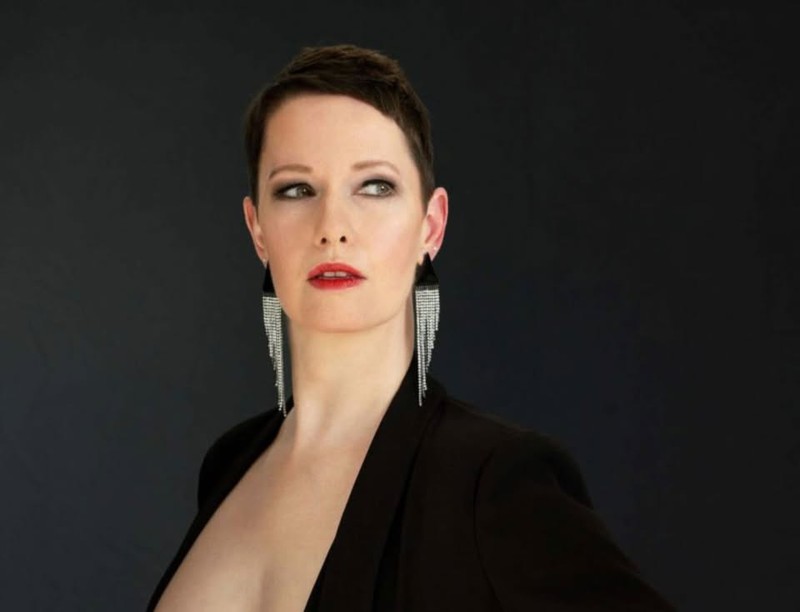
“Vampire photographer”? “Archaeologist of the soul”? Some artists figuratively “walk through the valley of the shadow of death.” Nadine Dinter of Berlin very literally does, and she has the pictures to prove it. Outside of her day job, her work as a necropolis photographer, recording artist, perfumer, and model invariably touches upon love and death, beauty and decay, doom and elation, mourning and resurrection. You’ve heard of human energy fields, but Nadine seeks to capture the auras of statues and the uncanny glamor of hidden doorways and atmospheric pathways in the gothic world she navigates. Then, her music and her perfume ensure a richly sensual experience of her visual work. These are just some of the reasons Nadine Dinter is being called the most inspiring artist working today. But let’s dive deeper into her world.
 In the process of sharing her creativity online and in art galleries, Nadine teaches, too, by helping her audience to understand how a photographer sees the world and how the composition of a shot can utterly transform the viewer’s reaction to a scene. She even offers videos of locations, to give a sense of the greater environment before showing the still photograph she ultimately captured. More context is offered in the captions, including historical backgrounds as well as notes on easily missed details, symbolism, and Nadine’s own emotional experience of each place. The viewer is invited to see through Nadine’s eyes, even while learning to discern with more sensitivity.
As an independent creator, Nadine has her hands in a lot of pots, or more like one big cauldron that encompasses the artistic witchery of her many-faceted world. Let’s seek to better understand how all the elements began to coalesce:
1. Nadine began traveling to Paris and Madrid to explore sculpture photography in the late 1990s. By 2024, that genre had merged with model portraiture into a "TransMutation" series. Her photography of cemetery statuary is frequently exhibited in galleries such as this one.
2. Last year, to add an acoustic dimension to her work, she became a gothic recording artist called d1ntr, collaborating with the post-punk band Hex Formes. Her lyrics and vocals are rooted in the emotions that spring from life’s transformations, addressing her holistic approach to turning pain into beauty, darkness into light.
3. This year, to capture the moods and smells of the statuary gardens and cemeteries she visits, so as to bring more dimensions to the sensual experience of her photography, she crafted a signature scent, “TransMutations,” through the Warsaw perfume lab Mo61.
4. As a muse to other artists, she has inspired songs like “Vampyre Everything” by Scott Baker Graham and imagery by Boris Eldagsen.
5. As a supporter of fellow artists, she began conducting interviews in 2019 (such as this one with Paolo Ventura).
6. As a collector of exotic jewelry selected and collected from all over the world, she makes guest appearances (as in this episode of Grave Mood Rings). Most of her rings feature pentagrams, scarabs and snakes, tied to her fascination with ancient Egypt.
7. Simultaneously, as a model, Nadine has been compared to Isabella Rossellini and has posed for photographers like Greg Gorman, George Holz, Thomas Karsten, Martin Eder, Boris Eldagsen, Catrine Val, Just Loomis, Katja Ruge, Steven Kohlstock, Gerhard Kassner, Felix Lammers and others. Eder's portrait was recently used for the album cover "Tales of Immortality." This portrait by fellow cemetery photographer and darkwave scene promoter DominiQ.D is a personal favorite of mine.
Even while juggling so very many projects, Nadine is friendly, accessible, outgoing, and proactively helpful to others. She truly lives by her motto, “consult, communicate, connect,” as I learned firsthand when she first reached out to me via her Instagram to express supportiveness of my own indie endeavors.
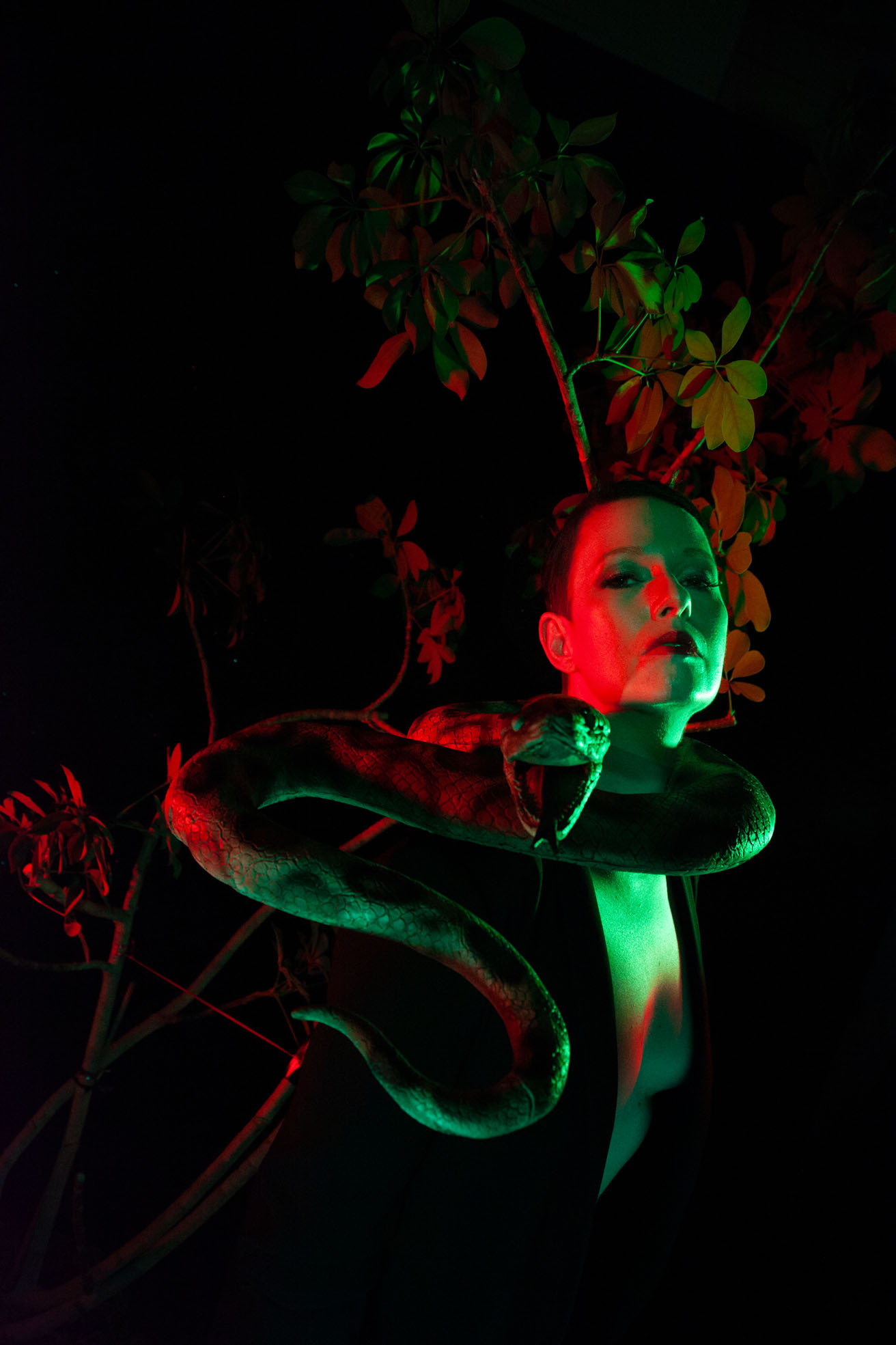
Photo credits: © Greg Gorman (top portrait), Boris Eldagsen (snake portrait), Felix Lammers (graffiti portrait). By permission.
—Hailed by the art world as the most unusual scholar working today, Craig Conley fled academia to author Weiser Books' Magic Words: A Dictionary, HarperCollins' One-Letter Words: A Dictionary, and The Young Wizard's Hexopedia. Even more esoteric publications include Books of the Dead, Magic Archetypes, The Care and Feeding of a Spirit Board, Seance Parlor Feng Shui, How to Hoodoo Hack a Yearbook, Heirs to the Queen of Hearts: Tracing Magical Genealogy, Astrogalomancy, The One-Minute Mystic, and Divination by Punctuation. His work has been profiled in the New York Post, the New York Times, The Wall Street Journal, The Chicago Tribune, National Public Radio, The Dallas Morning News, Publishers Weekly, The Associated Press, and dozens of others.
|
|
|
Restoring the Lost Sense –
October 11, 2026 |
(permalink) |
|
|
|
|
|
|
|
I Found a Penny Today, So Here's a Thought –
October 7, 2026 |
(permalink) |
|
|
|
|
The Real Horrors Are Always Backstage, Plus Notes on Managing Inner Demons
Horror-comedy is a bizarre genre. Most of the laughs are on camera, but most of the horrors occur behind-the-scenes. As writer / producer / director of the cult series Grave Mood Rings, I've endured horrors beyond comprehension, all rooted in terrifying reality. "Real horror is a fragile, glass-boned thing" (Carlos Clarens). Forget so-called friends cancelling you for being honest about your discomforts, or the excruciations of struggling against a system that automatically suppresses original voices. Forget crucial cheerleaders dropping away, or the irony of being unable to either sell or give away your labors of love. Profounder horrors leave a creator as fragile as a glass skeleton.
"The real horror is that unless we stop it, it's just a prologue" (Uncanny X-Men Vol. 1). Whereas a film or miniseries has a conclusion, an open-ended series can stop only if its creators decide to terminate it. In the absence of a finish line, the show takes on its own momentum, turning the crew into minions. It's not so much like riding an endless roller coaster but rather like building the diabolical track into infinity. With no network to threaten cancellation, no viewership numbers of consequence, no budget to run out of, and no reliance on outside talent, an indie production can die only by its own hand, and that is a real horror. Such a show is kept alive by intravenous feedings, by the very machine it has morphed into. With no promotion or backing, the show is essentially incapacitated, impotent, in its own sort of pain and unfit to communicate. Is it the show's life that's being prolonged, or is it the show's death? What a horrible thing to contemplate.
"The real horror is what drove you onto that alien shore in the first place" (Jay Amberg). Fellow creators may be able to relate — we might find ourselves in the midst of a project whose precise origin is hazy. Even if we can pinpoint its genesis, we're all-too-aware that we couldn't foresee exactly where it was all leading, how complicated it would turn out to be, how big it would strive to become, or how it would morph along the way. Though technically at the helm of our own undertakings, we are in fact strangers in a strange land. The feeling is its own form of horror.
"The real horror is not in the shadows, but in that twisted little world inside our own skulls" (Jovanka Vuckovic). "There is no force, no power from without which threatens me. ... The real horror is that which lies in myself" (Henrik Ibsen). When we stop blaming the system, selfish "friends," and fickle audiences, we might confront the very personal tribulations that come with producing a long-running minus-zero-budget tv series. Undistracted by outside voices, one must face and finesse one's inner demons. Here are some tips I've developed along the way, in no special order:
1. As an Inhuman Resources Manager, remember to fill every vacancy within yourself with self-motivated inner demons possessing leadership abilities. Realistically, we are living in a less-than-perfect world with less-than-perfect inner demons, but if we simply take steps toward improvement, we will move in the direction of world domination.
2. This might be a good time to invoke the serenity prayer: "Lord of Storms, give me the grace to accept with serenity the atrocities I must commit, the courage to pass the spawn of my enemies through fire, and the wisdom to distinguish gargoyles from cheap garden ornaments."
3. Being your own life coach, enable your inner demons to move toward their potential, both as individuals and as a legion. It's not enough to preach about teamwork or stand on the murky borderlands acting like a cheerleader. You must work to achieve the grand vision that lies over the scorched horizon. You'll have to join your own team, become a team player, and even place the teeming hoard's goals above your own.
4. Let your team of inner demons choose its own leader to manage infernal affairs. Ideally, each position should be rotated periodically, including whichever demon happens to be skewered on the rotisserie. Be sure to empathize with your inner demons, and let them know that you are all in the same sinking ship.
"The real horror is still to come" (Famous Monsters of Filmland #162). The beat goes on. Grave Mood Rings continues to laugh its way through the horrors. Check it out at MysteryArts.com, Roku, and wherever you watch videos online. —Hailed by the art world as the most unusual scholar working today, Craig Conley a.k.a. Prof. Oddfellow fled academia to author Weiser Books' Magic Words: A Dictionary, HarperCollins' One-Letter Words: A Dictionary, and The Young Wizard's Hexopedia. Esoteric publications include Books of the Dead, Magic Archetypes, The Care and Feeding of a Spirit Board, Seance Parlor Feng Shui, How to Hoodoo Hack a Yearbook, Heirs to the Queen of Hearts, Astrogalomancy, The One-Minute Mystic, and Divination by Punctuation. He produces, directs, and writes both Grave Mood Rings and Prof. Oddfellow's Penetralia. His work has been profiled in the New York Post, the New York Times, The Wall Street Journal, The Chicago Tribune, National Public Radio, The Dallas Morning News, Publishers Weekly, The Associated Press, and dozens of others. His website is MysteryArts.com
|
|
|
Restoring the Lost Sense –
September 19, 2026 |
(permalink) |
|
|
|
|
|
|
|
Restoring the Lost Sense –
August 6, 2026 |
(permalink) |
|
|
|
|
|
|
|
Restoring the Lost Sense –
June 7, 2026 |
(permalink) |
|
|
|
|
|
|
|
Restoring the Lost Sense –
May 11, 2026 |
(permalink) |
|
|
|
|
|
|
|
Restoring the Lost Sense –
May 8, 2026 |
(permalink) |
|
|
|
|
|
|
|
Restoring the Lost Sense –
May 7, 2026 |
(permalink) |
|
|
|
|
|
|
|
Restoring the Lost Sense –
April 27, 2026 |
(permalink) |
|
|
|
|
|
|
|
Restoring the Lost Sense –
April 27, 2026 |
(permalink) |
|
|
|
|
|
Page 3 of 12
> Older Entries...
Original Content Copyright © 2026 by Craig Conley. All rights reserved.
|