|
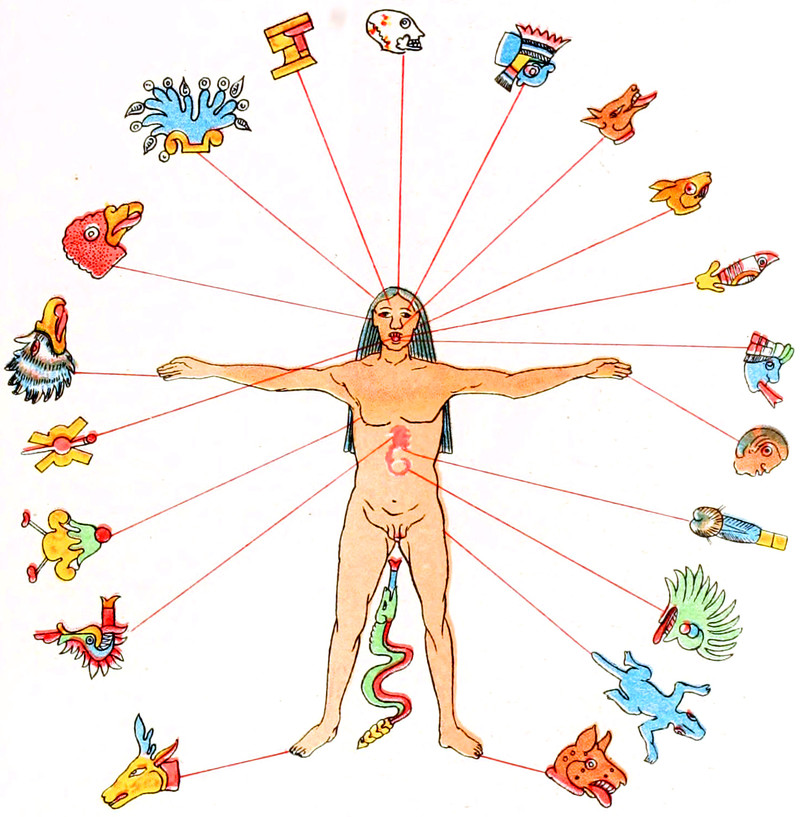
The Codex Vaticanus explains that these ancient Mexican symbols are the twenty figures that rule over men [deer or stag, wind, rose, earthquake, eagle, vulture, water, house, skull or death, rain, dog, rabbit, flint, air, monkey, cane, grass or herb, lizard, tiger, and serpent] and that cure in a corresponding manner those who become ill or suffer pains in any part of the body. "The sign of the wind is assigned to the liver; the rose to the breast; the earthquake to the tongue; the eagle to the right arm; the vulture to the right ear; the rabbit to the left ear; the flint to the teeth; the air to the breath; the monkey to the left arm; the cane to the heart; the herb to the bowels; the lizard to the womb of women; the tiger to the left foot; the serpent to the male organ of generation, as that from which their diseases proceed in their commencement; for in this manner they consider the serpent, wherever it occurs, as the most ominous of all their signs." From the Annual Report of the Bureau of Ethnology, 1889.
|