|
|
 |
|
| Did You Hear the One I Just Made Up? |
(permalink) |
|
|
|
Did you hear about the Zen Nudist Monastery ? They meditate on volleyball. |
|
|
|
|
|
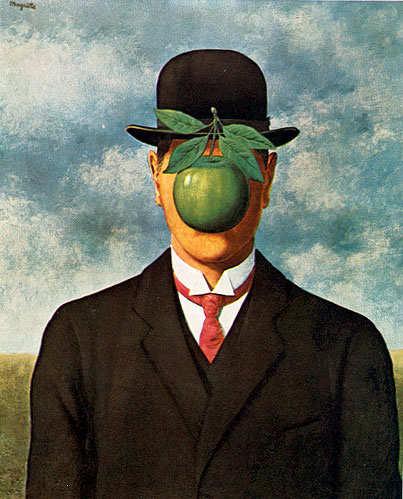
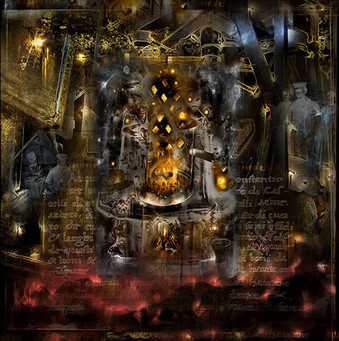
I sometimes dream of reading a book. It's a poetic, insightful, vastly important work. As I continue reading, I begin to become lucid. At first, I think myself capable of remembering this dreambook upon waking. I vow to memorize the words and transcribe them. Then, as consciousness slowly refracts the light of the dreamtime, my comprehension of the text begins to slip away. Sentences that made perfect sense moments ago now seem cryptic or utterly indecipherable. Finally, I realize I've lost all grasp of this vital dreambook's meaning, and I reluctantly open my eyes. Elusive though it may be, I've never given up on one day remembering the dreambook or, perhaps more extraordinarily, stumbling upon it in waking life. I'm gratified (though admittedly astonished) to report that, in a roundabout fashion too complex to detail here, I have finally located a physical copy of the dreambook. It will come as no surprise that the author is an avant-garde artist and a literary savant who possesses a direct line to the unconscious mind. J. Karl Bogartte's prose is so imbued with dream logic that the conscious mind is initially mystified, then simply enchanted and drawn into a vision. The reason the physical copy is decipherable by the conscious eye is simple: physical pages don't tend to display the volatile calligraphy of dreambooks. In the physical copy, we can read the same sentence twice and nothing will have changed (save our appreciation of the text's resonance). If you've ever regretted forgetting what you're certain was a marvelous dream, it may be time to (re)discover the work of J. Karl Bogartte. |
|
Piecing together the secret of the philosophers . . .

Larger version available here.
|
|
|
|
|
|
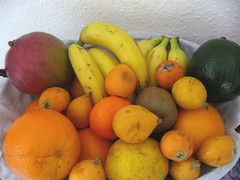
We entered the room, and my eyes fell at once on the picture. I looked at it for a long time. It was a pile of mangoes, bananas, oranges, and I know not what. . . . The colours were so strange that words can hardly tell what a troubling emotion they gave. There were sombre blues, opaque like a delicately carved bowl in lapis lazuli, and yet with a quivering lustre that suggested the palpitation of mysterious life; there were purples, horrible like raw and putrid flesh, and yet with a glowing, sensual passion that called up vague memories of the Roman Empire of Heliogabalus; there were reds, shrill like the berries of holly — one thought of Christmas in England, and the snow, the good cheer, and the pleasure of children — and yet by some magic softened till they had the swooning tenderness of a dove’s breast; there were deep yellows that died with an unnatural passion into a green as fragrant as the spring and as pure as the sparkling water of a mountain brook. . . . They belonged to a Polynesian garden of the Hesperides.
—W. Somerset Maugham, The Moon and Sixpence, 1919, a novel inspired by the life of Paul Gauguin.
|
|
|
|
|
|
| I Found a Penny Today, So Here's a Thought |
(permalink) |
|
|
|
  by InfectedProjectHeterochromia: Eyes of Different Colors
Heterochromia is an eye condition in which each iris is a different color. It occurs when an iris has either excess or deficient pigmentation. The condition is hereditary, but it can also manifest after an injury or disease. Because the effect is rather striking, some people without the condition use differently colored contact lenses to simulate heterochromia. Famous people with the condition include English singer/songwriter David Bowie, American actor Christopher Walken, English actress Jane Seymour, American baseball pitcher Max Scherzer, Israeli basketball coach Oded Kattash, American actress Kate Bosworth, American singer Tim McIlrath, American actor Dan Aykroyd, and the Greek king Alexander the Great. [Read the entire article in my guest blog at ColourLovers.com.]
|
|
| Did You Hear the One I Just Made Up? |
(permalink) |
|
|
|
Did you hear about the scandal at the Ephemera society? Apparently, their journal is printed on acid-free paper. No doubt there'll be a high turnover on their board of directors ... again. (Note to the Ephemera Society: just kidding!) |
|
Piecing together the secret of the philosopher's stone . . .

See a large version of this illustration here.
|
|
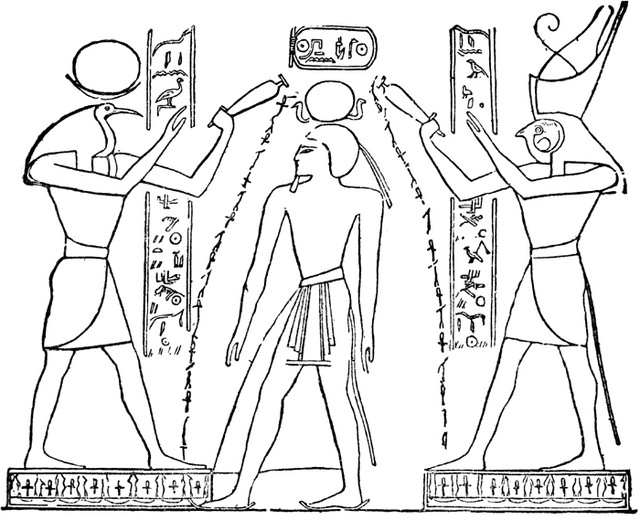
Piecing together the secret of the pharaoh . . . |
|

Thought bubbles. Original size here.
Information Prose :: A Manifesto in 47 Points :: Version 1.0 by Jeremy P. Bushnell, jeremy@invisible-city.com 1. Human beings are thinking creatures. In order to write about human beings in a complete fashion, one needs to write about how human beings think. 2. The ability of language-based stories to depict thought is precisely what keeps them competitive in a world flooded with stories. Image-based stories— movies, television programs —can depict how people act in ways that are seductive and successful, but very few possess an aesthetic mechanism complex enough to reliably depict the nuances of human thought. 3. Human thought reacts to its environment. Writing accurately about the way people think therefore involves writing accurately about the environment in which people live. 4. Human beings live surrounded by information. To write completely about human beings therefore means taking on the duty of writing about information. 5. The human mind references its own memory banks incessantly. Writing that seeks to document the human mind will reflect this. 6. The literary device of the extended flashback is not an illustration of the way we actually experience memory. We live in a perpetual wash of microflashbacks. 7. The memory stores remembered experience in the form of a collage of information drawn from hundreds of thousand of sources. Many of these sources are media sources. Many of our stored experiences are experiences of watching, reading, or listening to media, in either a primary or a supplementary capacity. 8. Media matters to people. It contributes to how we define and understand ourselves. (to be continued) |
|
|
|
|
|
| I Found a Penny Today, So Here's a Thought |
(permalink) |
|
|
|
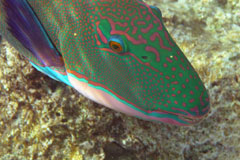
 by Jon HansonParrotfish: Colorful and Helpful
The key to saving the Caribbean's coral reefs could be the vividly colored parrotfish, according to the journal Nature. Reef ecosystems are increasingly strangled by encroaching seaweed, fertilized by agricultural runoff. However, parrotfish graze on seaweed, using parrot-like beaks. Since sea urchin numbers have dwindled in the Caribbean, parrotfish are the primary grazers. Scientists now believe that protecting the fish could help strangled reefs to recover. Parrotfish need protection because they are a sought-after delicacy in Caribbean culture and are easily caught in fish traps. Parrotfish are as colorful as macaws. In fact, they are so variably colored that they are often mistaken for different species. Male and female parrotfish sport different colors. Females tend to feature browns, greens, silvers, and grays, while males have more vibrant colors such as pink, aqua, orange, yellow, red, and electric blue. However, in the Mediterranean, the coloration is reversed, with females sporting vivid hues and males drab ones. To learn more about the role of parrotfish in coral reef ecosystems, see the BBC News report. [Read the entire article in my guest blog at ColourLovers.com.]
|
Original Content Copyright © 2026 by Craig Conley. All rights reserved.
|









 by
by