|
|
 |
|
"The comma and the apostrophe are one. The comma punctuates the sentence, and the apostrophe punctuates the word." — Geof Huth |
|
|
|
|
|
| I Found a Penny Today, So Here's a Thought |
(permalink) |
|
|
|
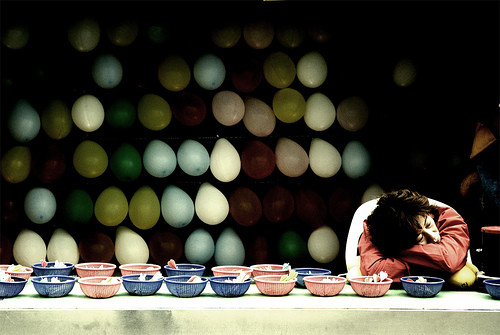
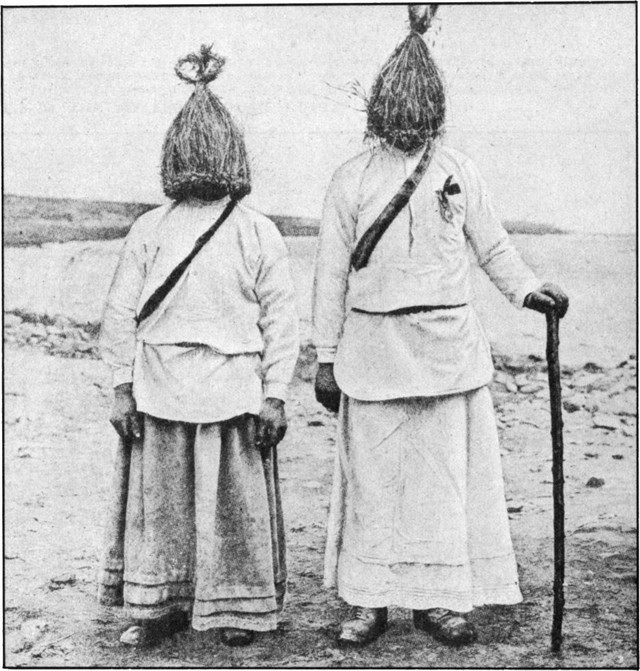
First came the mischievous Irish Straw Boys, the original party crashers. Now comes the rascally German "Zerrissen Jungen" (shredded boys), sporting masks of shredded paper.
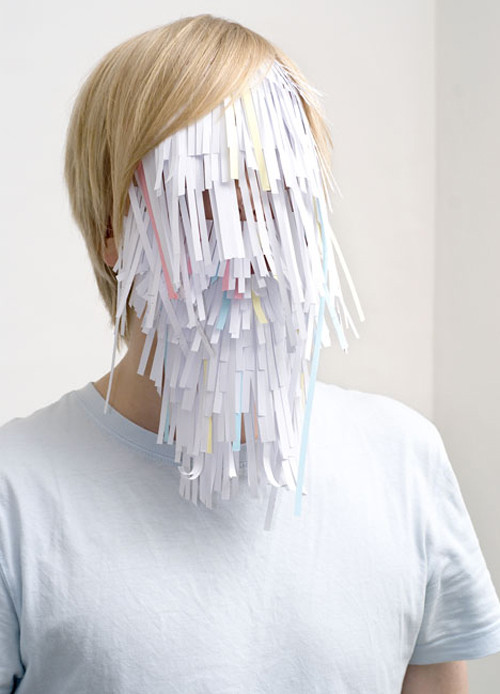
This photo is actually by Frankfurt's Pixelgarten. We made up the stuff about "Zerrissen Jungen."
|
|
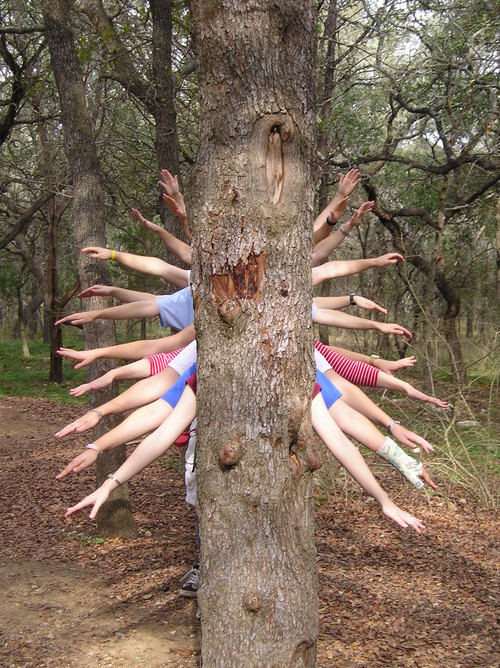
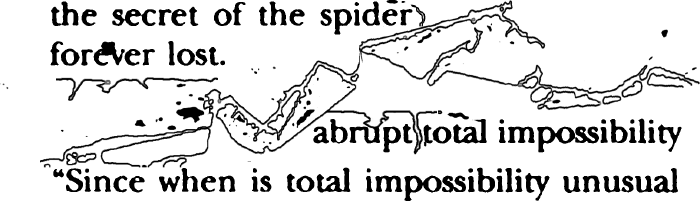
Piecing together the secret of the spider . . . |
|
At the bottom of the hill, the woods opened suddenly onto a pasture dotted here and there with black and white cows and sloping down, tier after tier, to a broad orange stream where the reflection of the sun was set like a diamond.
—Flannery O’Connor, The River, A Good Man Is Hard To Find And Other Stories, 1955.
|
|
|
|
|
|
We're proud (and somewhat astonished) to announce the World Premiere of Erik Satie's beguiling 18-hour composition "Vexations," performed in the style of a music box. The poet Chris Piuma requested this unprecedented performance, in anticipation of a cross-country train expedition.
Listener take note: Satie's composition is eerie, mind-bending, and hallucinatory. Please don't play while operating heavy machinery.
What does this highly unusual performance sound like? The first listener likened it to "the uncanny valley between creepy and pleasant, between soothing and agitating, between meditative and disturbing. And I'm sure 15 hours into it I will be in some other state entirely. . . . I've wanted to hear an uninterrupted performance of this piece for over a decade, and now here it is!"
The second listener praised music box maestro Ken Clinger for capturing "the continual, unrelieved dissonance, with no obvious sense of direction or tonal centre, and the total chromaticism. I think anyone listening to this for 18 hours and 40 minutes would definitely hallucinate. . . . I suppose it would be curious if for the next 18 hours I kept writing a response. I'm not sure if it would reveal the anguish over unreciprocated affection that I feel listening to this aural Auschwitz. Maybe I should instead podcast. . . . Hours have passed and my hands feel like balloons, my feet like stars, and my hair has turned gray. . . . The 17th repetition I have designated as the Schwarzschild radius. See how slowly I appear to move? Do not be fooled. . . . My elbows tingle in calliopeic sympathy (or that may just be an odd manifestation of the carpal tunnel). . . . I can't stop crying. And laughing."
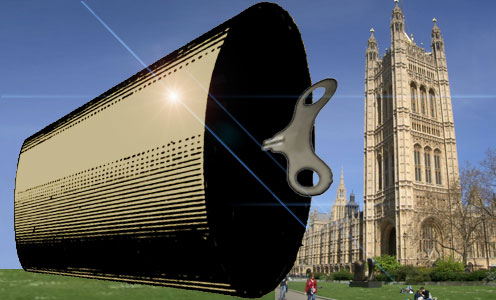
Fun fact: A music box cylinder containing the full score (with all 840 repetitions) would measure 4,032 inches in diameter (336 feet), which is the same height as the Victoria Tower at London’s Westminster Palace.
 |
In addition to streaming audio, a 63 MB mp3 of "Vexations" is available. --- Dankitti writes: 18 hours? The best I could do was Guru Sven, which is only 12 hours.
|
|
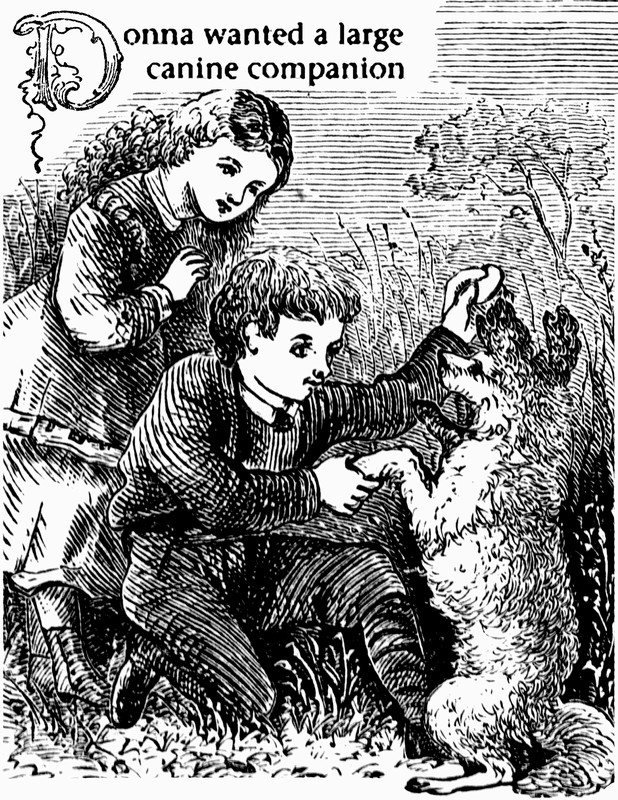
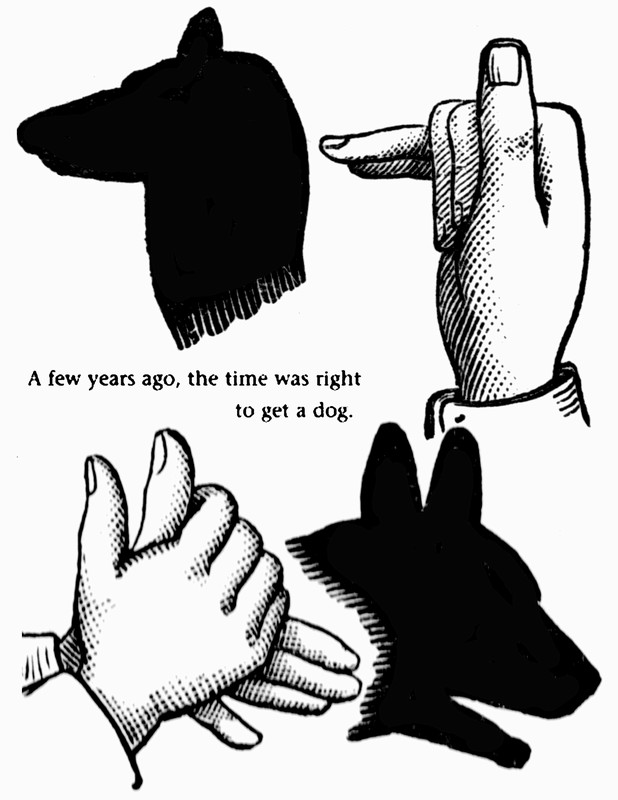
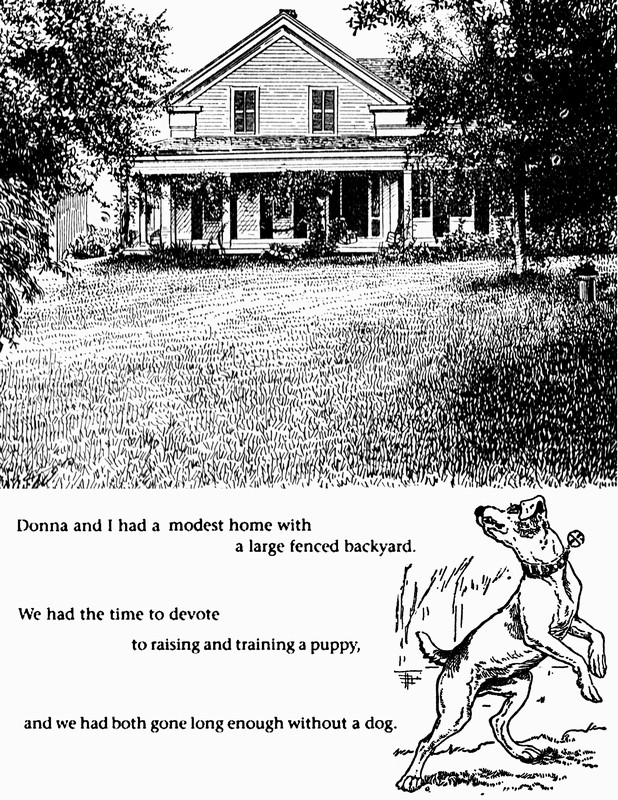
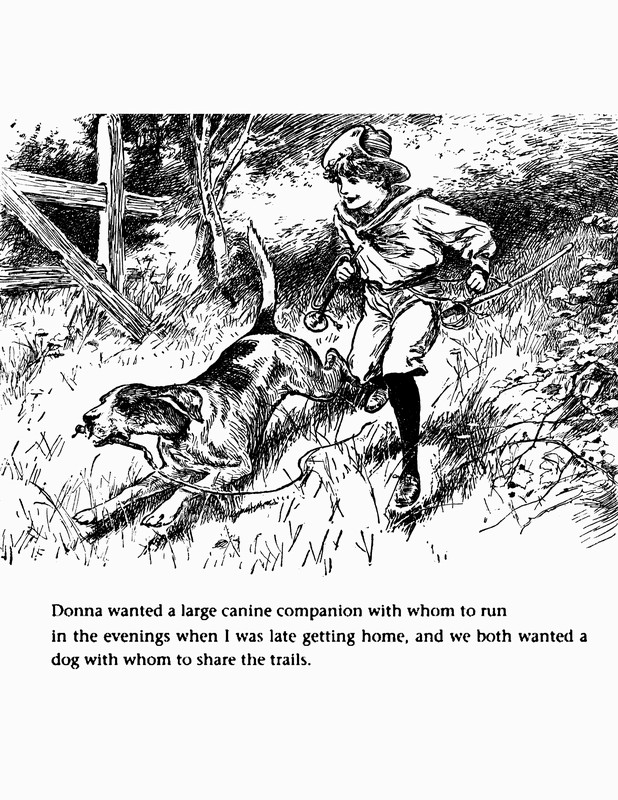
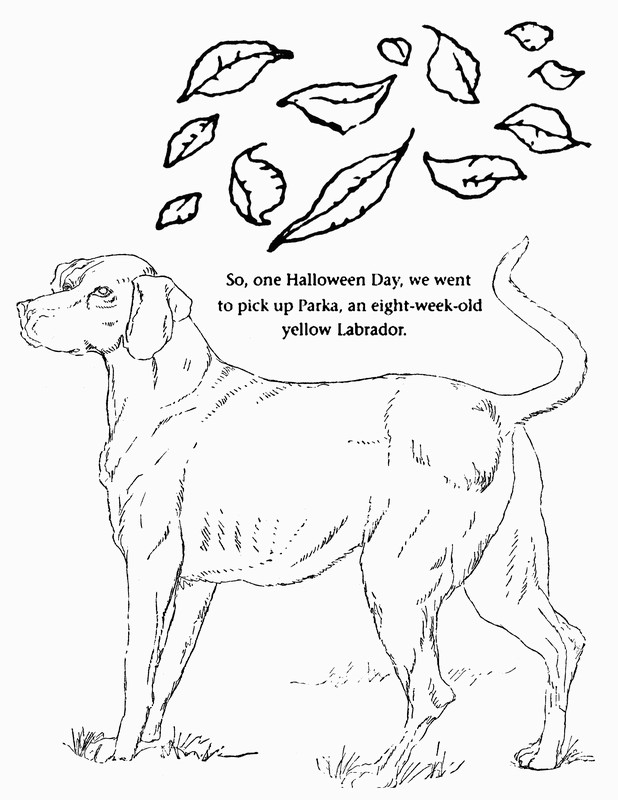
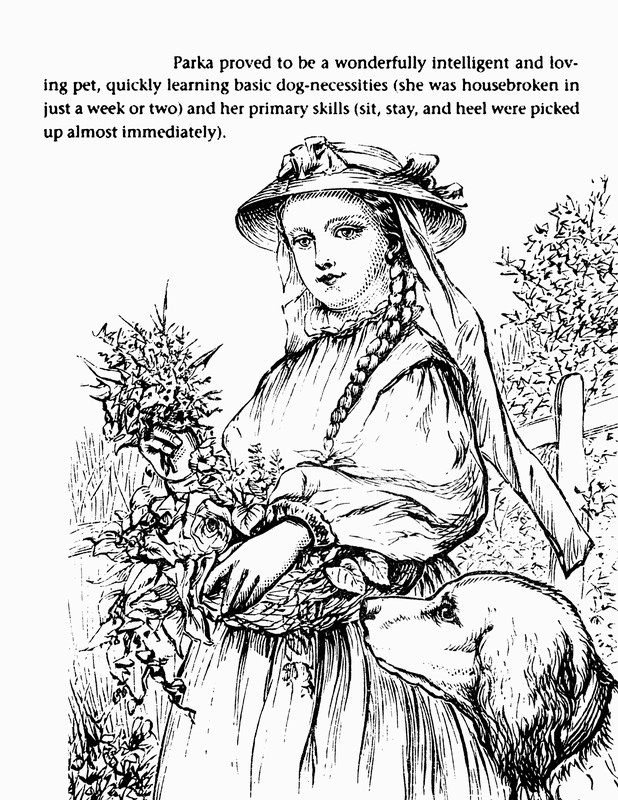
A collaged story we assembled for a singular Donna and henceforth dedicate to all the Donnas of the world. Click on the thumbnails below to view an enlarged version in a new window. |
|
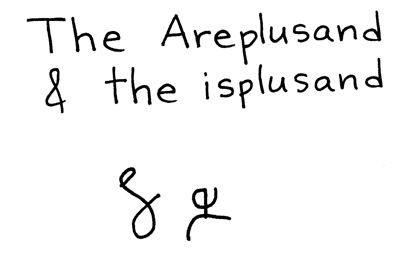
I dreamed that Geof Huth introduced me to the "areplusand" and the "isplusand." We gossiped together, but the ampersand's name never came up. |
|
Years pass by and leave things unaltered. The same narrow, red roads run through cotton- and cornfields. The same time- grayed cabins send up threads of smoke from their red- clay chimneys, doorways, and china- berry and crape- myrtle blossoms to drop gay petals on little half- clothed black children.
—Julia Peterkin (1880–1961), “Ashes,” from Green Thursday: Stories by Julia Peterkin, first published in 1924.
|
|
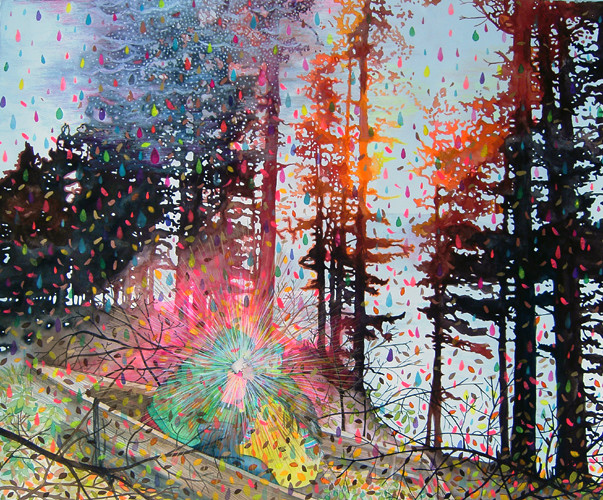
Her face lit up like a rainbow.
|
|
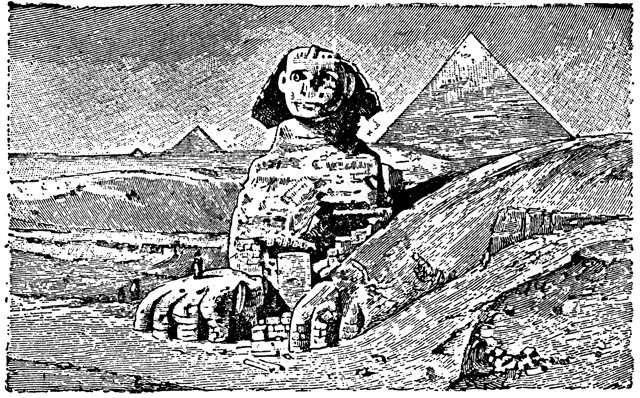
Piecing together the secret of the Sphinx . . . |
|
| I Found a Penny Today, So Here's a Thought |
(permalink) |
|
|
|
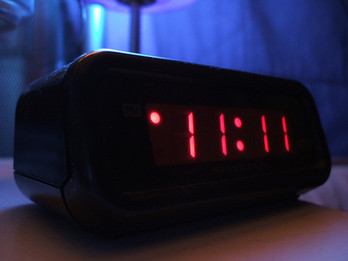
The poet Geof Huth offers this lovely commentary on why we notice and in fact need "11:11": 11:11 At certain points in measured time, the world seems to come into alignment, concepts tend to clarify, ideas gel. But we know in our hearts that this is false, that midnight is as meaningless a concept as the idea that a new year begins at a certain second after a particular midnight. We cannot believe fully in these ideas because we understand that we worship and are guided by arbitrary signs created by humans: sequences of numbers, sounds, or letters. ||:|| But we continue to follow these signs because they direct our lives so well. Their meaningless is the source of their meaning and their power. We imbue them with their significance, so we believe them. Even if they become twisted out of shape, we continue to believe them, we continue to see them, we continue to understand them. |||| We can reduce the information in a sign and still be able to read it, still be able to make sense of it, to add sense to it. We do this to eradicate ambiguity, to make sense. The world is a mass of contradictory signs, so we must choose the ones to read, how to read them, the ones to believe. :::: In the end, we have only ourselves to blame. We look for symmetry. It pleases us. That is what we like about architecture, a metrical poem, crossword puzzles, seemingly deft plotting in a story. And the only thing that makes the asymmetrical interesting is that it runs counter to an existing symmetry. We need symmetry. We need symmetry to give beauty to the surprisingly asymmetrical. .... We need 11:11 to find ourselves an idea to play with. We need 11:11 to feel our lives are temporarily in balance. We need 11:11 to feel human. Without 11:11, the world just runs away from us, untamed, untameable, even unsought. ---------- Sexy Girl responds: 11:11 is my fav time. To me it represents dimensional unity... like playing two octaves at once on the piano. Same but different. Somehow the harmonious moment is magnified when the two are played as one. Kinda like love relationships are meant to be ... yeah.
|
|
|
|
|
|
The poet Chris Piuma scours our Dictionary of All-Consonant Words for three obscure, vowelless words from Ezra Pound's " Canto IX" ( grnnh! rrnnh, pthg). Does he find them, or will Pound's curious expressions resist interpretation for another ninety years? Read about the spirited adventure here:------
There is a curious line in Ezra Pound's "Canto IX": grnnh! rrnnh, pthg.
The typical dictionary is not terribly helpful at elucidating this line, so we must consult a more specialized work. Craig Conley'sAll-Consonant Words Dictionaryoffers a more likely source for discovering the meanings of such obscure and vowelless words.
And yet, none of those three words appear. At first, it seems that yet another dictionary has failed us. But this is where we can use skills picked up by working with medieval texts: Perhaps these are scribal errors, mistakes in the transmission, or else they might be variants of already familiar words. Can we, then, find similar words in this dictionary?
- gnnnh.
- interj. a groan of pain.
<“Gnnnh!” he said, and drew himself up into a ball to escape the pain of his emergent teeth. —Diana Gabaldon,The Fiery Cross.
It is easy to misread a hastily written "n" for an "r", and we can posit with great confidence that "grnnh", especially with its exclamation point, is actually "gnnnh", this pain cry.
- rrrrrrrnnng.
- n. the ring of a telephone.
<When he woke up, the killer headache hadn’t gone away and the phone was ringing. A fourth ring. A fifth. He still made no move to pick it up. Rnnnnnnnnngagain. —Morrie Ruvinsky,Dream Keeper: Myth and Destiny in the Pacific Northwest.>
At first this seems an unlikely reading of "rrnnh", what with Pound's word having so fewer Rs, and an H instead of a G. But then we recall that this Canto would have been written in the late 1910s or early 1920s, when telephony was in its early stages, and ringer boxes -- which at that point weren't even in the telephones proper -- had not been perfected. There were, we can see, too few Rs. The final "ng", which we pronounce as a satisfying /ŋ/, was then the softer /ɲ/, which Pound spelt the Portuguese way, "nh".
- Pthr.
- n. the title of a work of art by Michael Paulus based upon illuminated eye charts of the 1800s but modified so that “clinical function is surpassed by style and frivolity” (MichaelPaulus.com).
This one is the most problematic. We can write off the capital P being in minuscule as Modernist poetic license. The "r" becoming a "g" -- it seems unlikely to be a scribal error, and you'd have to be Russian to hear those sounds as related. And, worst of all, this art work did not exist yet, and Ezra Pound's ability to foresee the future was demonstrably not that great. We must reject the dictionary's offering as untenable.
Instead I'd like to suggest that it is a transliteration, done to obscure its origins, as a kind of code. You can map "p" onto "π", "th" onto "θ", and "g" onto "γ". "πθγ", of course, isn't a word in Greek -- would that there were some Greek All-Consonant Words Dictionary that I could consult to confirm this! -- but capitalize those letters, "ΠΘΓ", and you get Pi Theta Gamma, perhaps nothing more than the name of some obscure fraternity.
Now, I am no Pound scholar, nor a member of any such fraternity, so the possible connections or the exactly meaning of this reference is still unclear. But the scenario being described in the Canto is now reasonably clear: Pound is in pain because the phone is ringing and he is sure it is just the boys down at the frat calling him again, perhaps hoping to get him to come by the house, have a few beers, whereas all he wants to do is work on his epic poem, the one that would change history, the one that would explain history, and yet he knows they will keep calling to try to get him to go, and so he cries out in pain. The birthing of an epic poem is like getting one's baby teeth in, a painful process that will change everything about how you interact with the world. But for Pound there was no one who cared enough to apply Anbesol on his tender gums -- certainly his fraternity brothers wouldn't! And so this deftly coded message was inserted into The Cantos and resisted interpretation for ninety years.
|
|
The Typographer and the Dingbat
One fine evening a strolling man heard an exclamation for help from the bottom of a deep well. "What's the matter?" he called down.
"I am a typographer," came the reply. "I was taking a slash, dropped my dagger, and descended into this grave."
"Calm down, dear sir, or you'll have a stroke," said the man.
"One moment, please!" called the typographer. "It's not a stroke; it's a virgule!"
"In that case, I'll go for a long dash," said the man.
"Ellipsis, you dingbat!" cried the typographer, but the man was long gone, and for good.
(We were inspired by a Sufi tale told by Rumi, as collected in Tales of the Dervishes by Idries Shah. Our retelling is dedicated to Paul Dean.)
|
|
|
|
|
|
The poet Chris Piuma offers this inflationary update to the Minutemen's album title "Double Nickels on the Dime": Double Bits on the Quarter
|
Page 2 of 4
> Older Entries...
Original Content Copyright © 2026 by Craig Conley. All rights reserved.
|










 by
by