|
|
 |
|
Piecing together the secret of the white buffalo . . . |
|
|
|
|
|
|
|
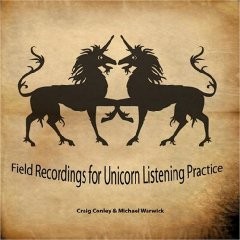
We're delighted to announce that our brand new guided audio tour of unicorns in the field is now available in fancy CD and budget MP3 formats at Amazon.com. TRACK 1 - Guided Tour of Unicorns in the Field (easy, narrated) Subtle nature sounds (birds, crickets, distant chimes, hoofbeats) offer practice sessions for those unable to easily access nature. TRACK 2 - Guided Meditational Listening (easy, narrated) Unicorn sounds within the ambience (birds, insects, snapping twigs, wind) signal the listener to go deeper into restful alertness. TRACK 3 - Field Practice Area 1 (advanced, nature only) Suitable for self-guided meditation, bedtime relaxation, and advanced deep listening practice. TRACK 4 - Field Practice Area 2 (advanced, nature only) Suitable for self-guided meditation, bedtime relaxation, and advanced deep listening practice. |
|
Piecing together the secret of the whispering spring . . . |
|
SONG: The World Has Its Shine
ARTIST: Cobra Starship
ORIGINAL LYRIC:
The world has its shine
But I would drop it on a dime for you
ADJUSTED FOR INFLATION:
The world has its flash
But I would drop it on some cash for you
|
|
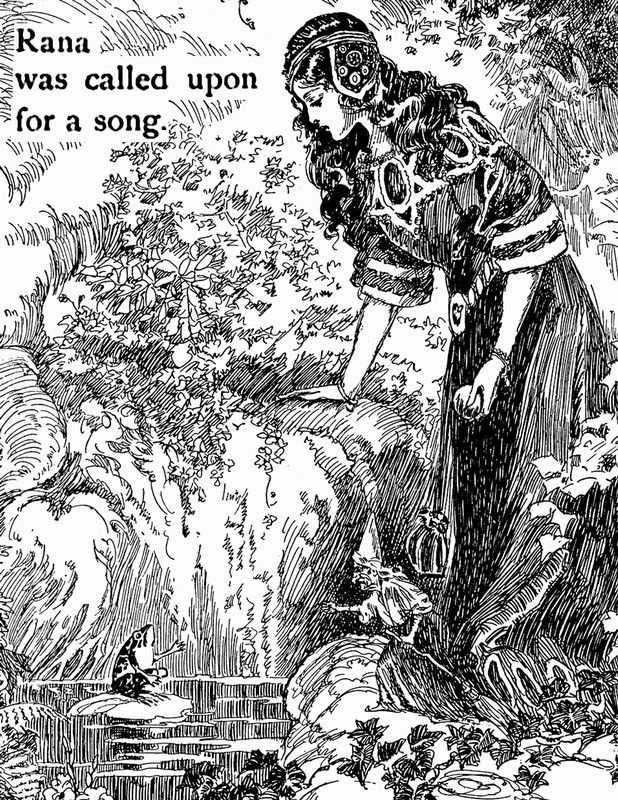
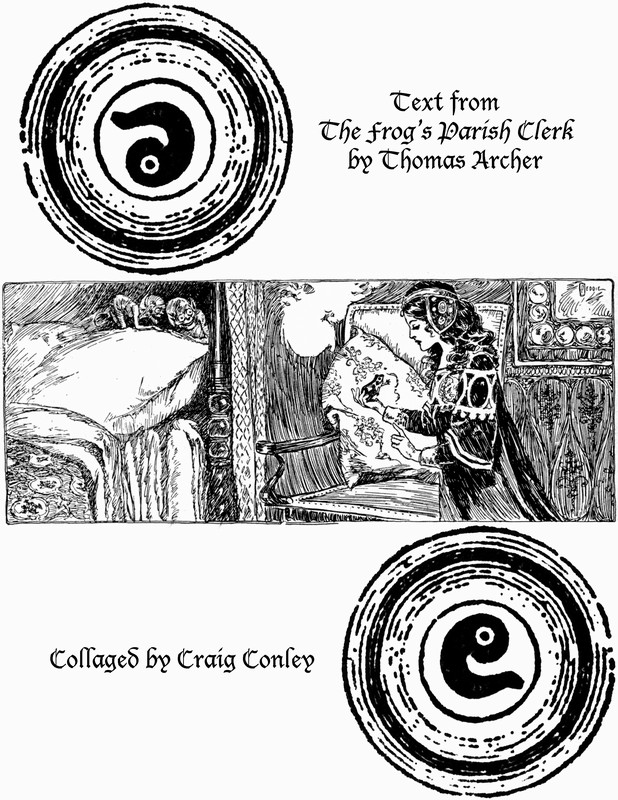
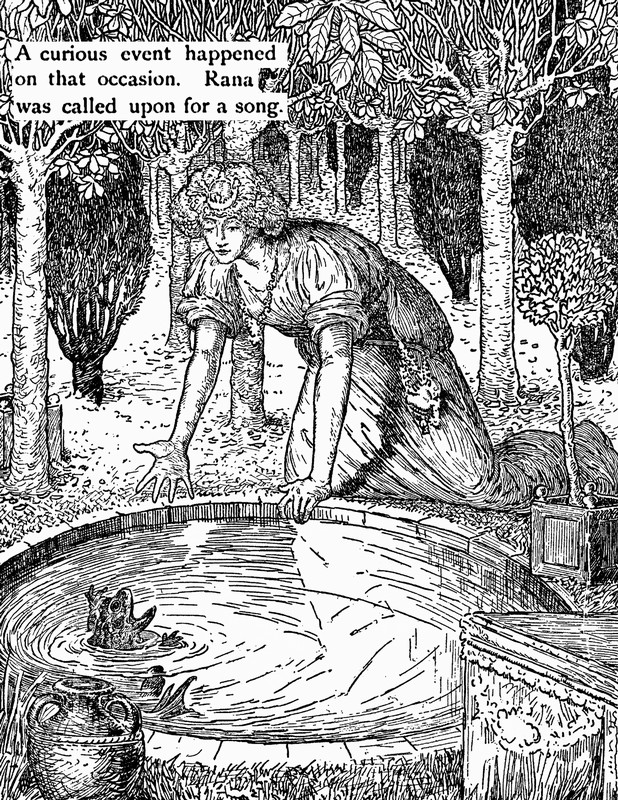
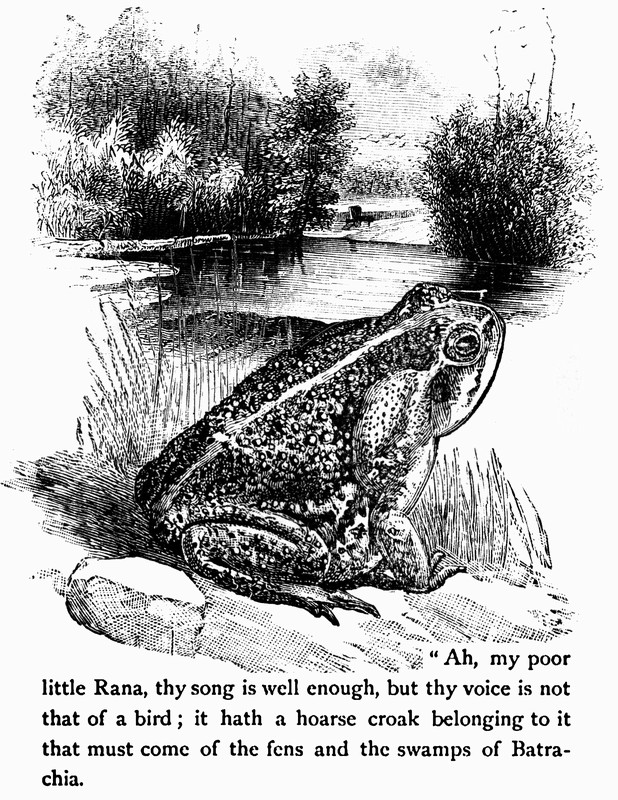
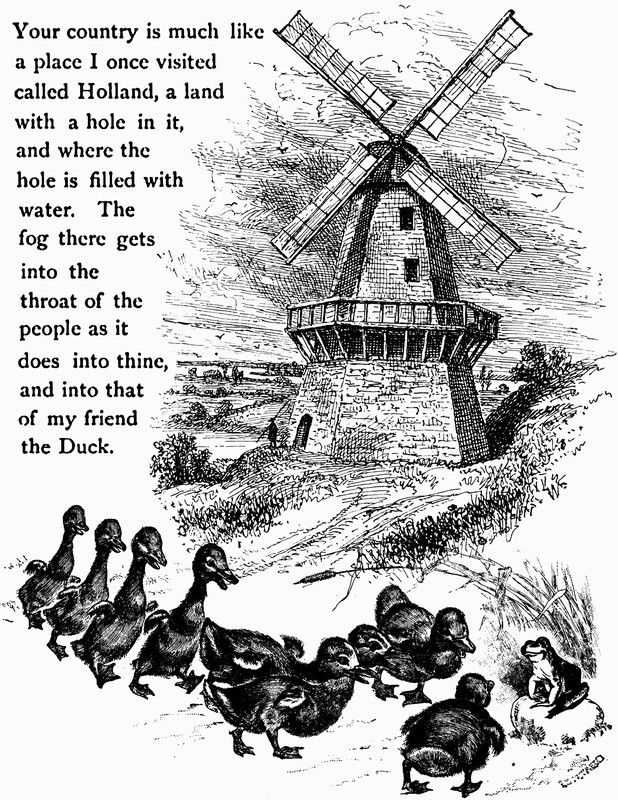
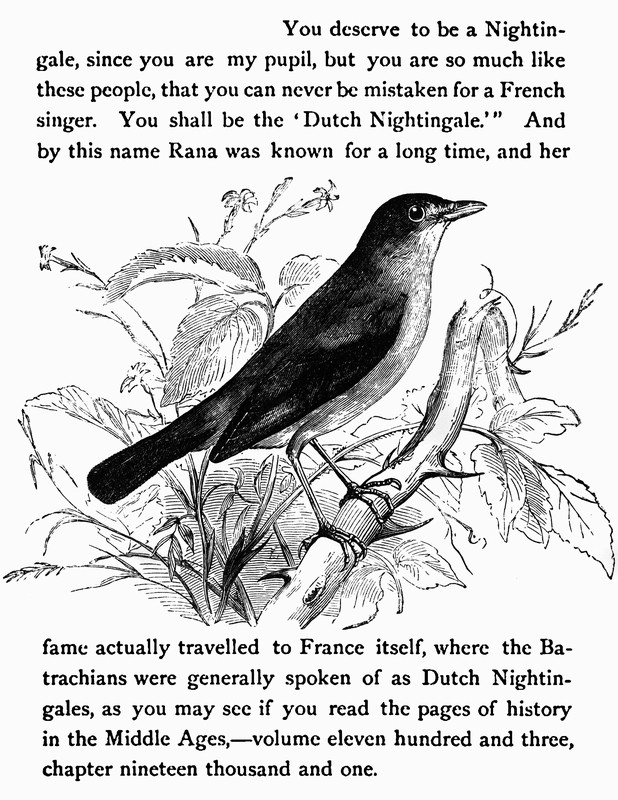
A collaged story we assembled for a singular Rana and henceforth dedicate to all the Ranas of the world. Click on the thumbnails below to view an enlarged version in a new window. |
|
These are the kind of things that I wish to have — engraved amethysts, rosaries of black, amber and gold, blue cloth for a camora, black cloth for a mantle, such as shall be without a rival in the world, even if it costs ten ducats a yard; as long as it is of real excellence, never mind! If it is only as good as those which I see other people wear, I had rather be without it!
—seventeen-year-old Marchioness of Mantua, April, 1491. From a letter to Girolamo Zigliolo, about to leave for France. Quoted and translated from the Italian by Evelyn Welch in Shopping in the Renaissance: Consumer Cultures in Italy, 1400—1600, 2005.
|
|
|
|
|
|
SIGH[from our Magic Words blog] The music of a sigh, the magician of a momentary joy.
—F.G., "British Poetry: the Drama,” The British Controversialist and Literary Magazine (1862) The most profound meaning of a sigh is invariably absent from dictionaries. A sigh is an invocation. It is an audible expression of a deep yearning for someone or something beyond one’s reach. A sigh is an aspiration in both senses of the word: an exhalation of breath and a heartfelt wish. A sigh typically trails off into a deep silence, just as in meditation the intention carried by a sutra is allowed to germinate in the wordless void. In Irish lore we find the fairy name sigh or sidh (pronounced "shee”), originating from the blast of wind sidhe that carries the vital spirit (comparable to the magician siddha and magic siddhi of Hindu belief).* For Laplander shamen, a profound sigh seems to carry across the threshold to the otherworld to signal an awakening of oracular powers: After some preparatory ceremonies, the magician falls senseless and motionless, as if the soul had really abandoned the body. After a lapse of twenty-four hours, the soul returning, the apparently inanimate body awakens as if out of the profound sleep, and utters a deep-drawn sigh, as if emerging from death to life. Thus brought to himself, the magician answers questions put to him, and, to remove all doubt in regard to the character of his responses, he names and describes the places where he has been, with minute circumstances well known to the interrogator.
—John Campbell Colquhoun, An History of Magic, Witchcraft, and Animal Magnetism (1851) In "Ej Haj,” the Hungarian fairy tale by Zsuzsanna Palkó, the titular magician’s name not only sounds like but also means "a sigh.”† The word haj is possibly related to Xai, a Vogul shaman’s "invocation to the supernatural at ritual ceremonies.”† In the tale "János Teddneki,” the King of Devils is named "Hájháj,”† like a double sigh. A double sigh conjures a magician in this exemplary passage: A deep sigh escaped his parched lips, and that sigh was echoed by another. He looked up, and standing beside him, in the hush of solemn midnight, he beheld Grimwald the Magician!
—E.B. Clarke, "A Legend of Charlemagne,” The American Monthly Magazine (1837) A sigh accomplishes a magical effect in this passage: Jack Starhouse could make [cats] dance wild dances, leaping about upon their hind legs and casting themselves from side to side. This he did by strange sighs and whistlings and hissings.
—Susanna Clarke, Jonathan Strange & Mr. Norrell (2004) Sometimes, an intricate incantation is expressed through sighs: He raised his arms, holding them out to her. ‘Kum [kunka] yali, kum buba tambe,’ and more magic words, said so quickly, they sounded like whispers and sighs. The young woman lifted one foot on the air. Then the other. She flew clumsily at first, with the child now held tightly in her arms. Then she felt the magic, the African mystery. Say she rose as free as a bird. As light as a feather.
—Virginia Hamilton, The People Could Fly (1985) In the following passage, a sigh surrounds a magician like a spectral aura as he explains the limits of his art: The shadow of a sigh penetrated the wall. "I am a magician indeed, with knowledge of every spell yet devised, the sleight of runes, incantations, designs, exorcisms, talismans. I am Master Mathematician, the first since Phandaal, yet I can do nothing to your brain without destroying your intelligence, your personality, your soul—for I am no god. A god may will things to existence; I must rely on magic, the spells which vibrate and twist space.”
—Jack Vance, The Dying Earth (1982) * Abram Smythe Palmer, Folk-Etymology (1882) † Linda Degh, Folktales and Society (1989) [Special thanks to Gordon Meyer, for inspiration!]
|
|
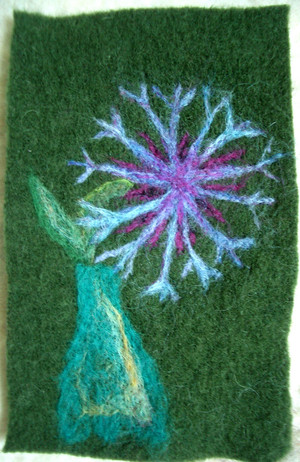
A felt Centaurea Montana, via HomeWork blog.
|
|
Piecing together the secret of water . . . |
|
|
|
|
|
I dreamed of Lord Whimsy's elegant quill pen, its down-like barbs quavering between waggish quips. "Call me partisan," I recall him saying, "but I've always enjoyed the brief conversational pauses [semicolons] create. They also allow for a complexity and artistry in the text; without them, language seems to devolve into a series of hard, curt, declarative chirps." |
Page 3 of 4
> Older Entries...
Original Content Copyright © 2026 by Craig Conley. All rights reserved.
|









 by
by