|
|
|
|
|
| I Found a Penny Today, So Here's a Thought |
(permalink) |
|
|
|
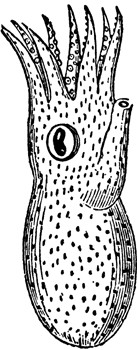
" Every science is a mutilated octopus. If its tentacles were not clipped to stumps, it would feel its way into disturbing contacts. To a believer, the effect of the contemplation of a science is of being in the presence of the good, the true, and the beautiful. But what he is awed by is Mutilation. To our crippled intellects, only the maimed is what what we call understandable, because the unclipped ramifies away into all other things." —Charles Fort ( Wild Talents), on every science's propensity to dismiss anything that doesn't fit its dogma |
|
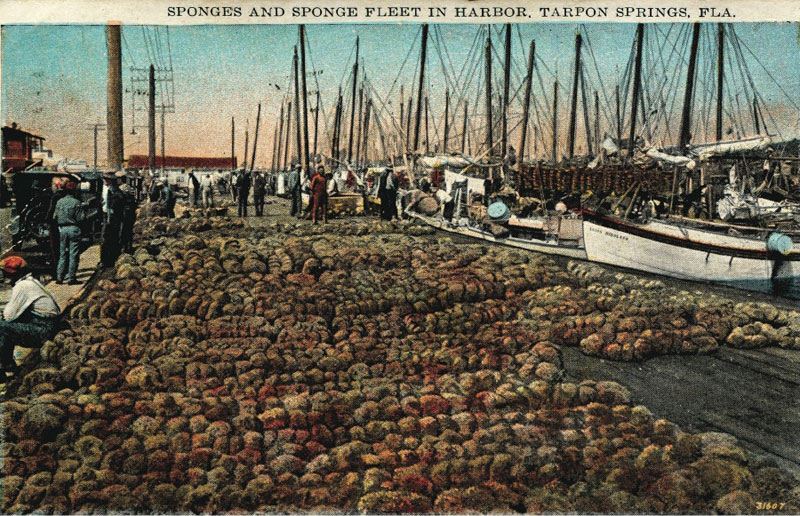 “Your ship will come back to you laden with all the precious, divine gifts.” —Annalee Skarin “Your ship will come back to you laden with all the precious, divine gifts.” —Annalee Skarin
|
|
|
|
|
|
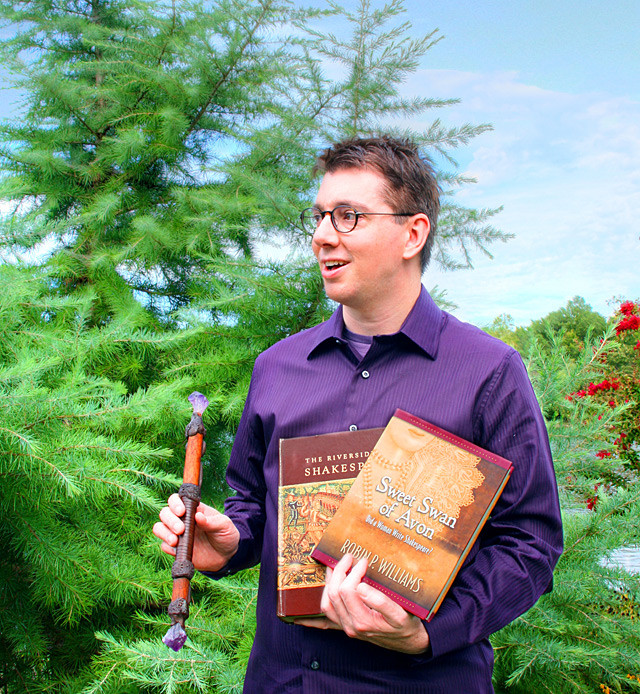
Our 14th great-grandmother, Mary Sidney, Countess of Pembroke, has many distinctions, not the least of which is her likelihood of having written the Shakespeare plays and sonnets. (For compelling evidence, see Sweet Swan of Avon: Did a Woman Write Shakespeare?) In this photo, we embrace our literary heritage. The purple shirt and magic wand are in honor of the Irish branch of the family, which traces back to mytho-historical High Kings and fairy folk.
--- E West writes: Love the shirt!
That's a wand? Quite wonderful!
A Riverside Shakespeare? Are you near the Charles River?
"Sweet Swan of Avon: did a woman write Shakespeare?" -- oh, very sweet, indeed! Bravo!
--- Prof. Oddfellow writes: Thank you! The purple shirt reflects the hefty
responsibility that comes with owning one’s exalted heritage. When one's ancestors are of royal
and/or magical origin, some rather profound questions
and challenges suggest themselves. To what crown(ing
glory) is one the natural successor?
To what dignities? What
traditions are one's responsibility to keep alive? What untapped powers?
If one's Weltanschauung does not account for an Otherworld, how can one
reconcile one's nymph-glands? ;-) The Riverside Shakespeare was my favorite text from graduate school. (It's the book I referenced while composing this rarefied research.) I'm not near the Charles River, though I understand it's quite lovely.
|
|
| Someone Should Write a Book on ... |
(permalink) |
|
|
|
"If somebody should like to write a book, but is like millions of persons who would like to write books, but fortunately don't know just what to write books about, I suggest a study of scares, with the idea of showing that they were not altogether hysteria and mass psychology, and that there may have been something to be scared about." —Charles Fort, Wild Talents (1932) |
|
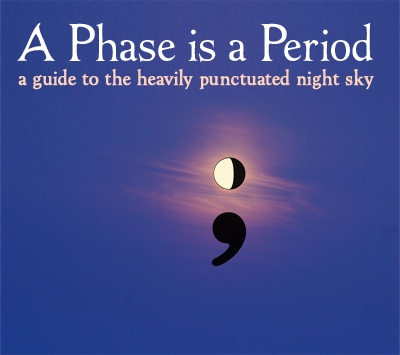
LAST QUARTER (FUTURE)"As if to punctuate the point, divine shafts of moonlight stream down." —Mark I. Pinsky, The Gospel According to Disney (2004)
|
|
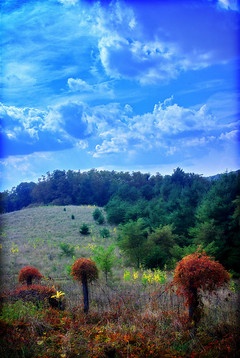
This bright and cheerful September afternoon, with the strong greens and browns all around him and the ethereal, gentle misted tones of blue verging into violet in the distance.
—Hermann Hesse, The Glass Bead Game, translated by Richard and Clara Winston
|
|
From Prof. Oddfellow's sketchbook:
|
|
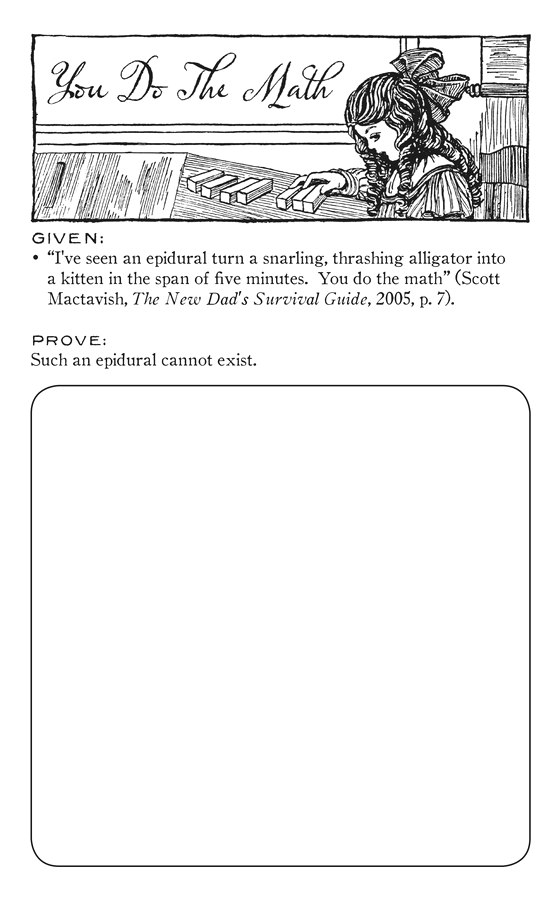
INSTRUCTIONS: Click on the puzzle image below to reveal one possible solution.
|
|
|
|
|
|
Charles Fort explains his eerily marvelous theory that ours is a ghostly realm—that when spirits die they become human beings: My suspicion is that we've got everything reversed; or that all things that have the sanction of scientists, or that are in agreement with their myths, are ghosts: and that things called 'ghosts,' are, because they are not in agreement with the spooks of science, the more nearly real things. I now suspect that the spiritualists are reversedly right—that there is a ghost-world—but that it is our existence—that when spirits die they become human beings. I now have a theory that once upon a time, we were real and alive, but departed into this state that we call 'existence'—that we have carried over with us from the real existence, from which we died, the ideas of Truth, and of axioms and principles and generalizations—ideas that really meant something when we were really alive, but that, of course, now, in our phantom-existence—which is demonstrable by any X-ray photograph of any of us—can have only phantom-meaning—so then our never-ending, but always frustrated, search for our lost reality. We come up chimera and mystification, but persistently have beliefs, as retentions from an experience in which there were things to believe in. I'd not say that all of us are directly ghosts: most of us may be the descendants of the departed from a real existence, who, in our spook-world, pseudo-propagated. ( Wild Talents, 1932) |
|
| Puzzles and Games :: Which is Funnier |
(permalink) |
|
|
|
 What’s funnier than death?
Clue: What’s funnier than death?
Clue: This is according to a novel entitled A Stranger in My Grave
Answer: Nothing. “There's nothing funnier than death, really, especially if you have an advanced sense of humor.” (The answer is in black text on the black background. Highlight it to view.)
Citation: Margaret Millar, A Stranger in My Grave (1960), p. 11
|
|
|
|
|
|
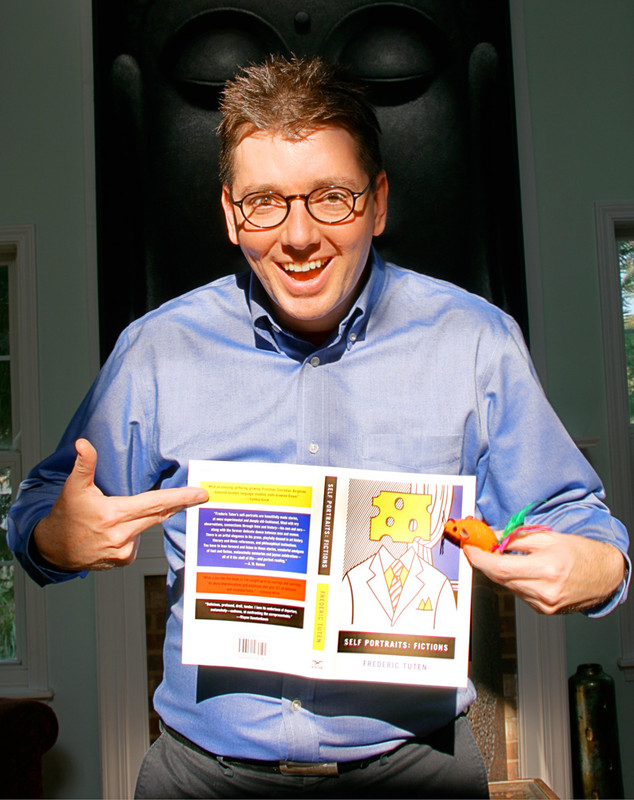
Do blurbs sell books? With a blurb like this one, how could Prof. Oddfellow refuse? "An amazing, glittering, glowing, Proustian, Conradian, Borgesian, diamond-faceted, language-studded, myth-drowned dream!" — Cynthia Ozick, describing this book(That's Prof. Oddfellow's catnip mouse enjoying the Swiss cheese on the dust jacket. Thanks in a roundabout way to Hilary's mom for the tip!) |
Page 3 of 4
> Older Entries...
Original Content Copyright © 2026 by Craig Conley. All rights reserved.
|









 by
by