Found 560 posts tagged ‘castle’ |
|
|
 |
 |
 |
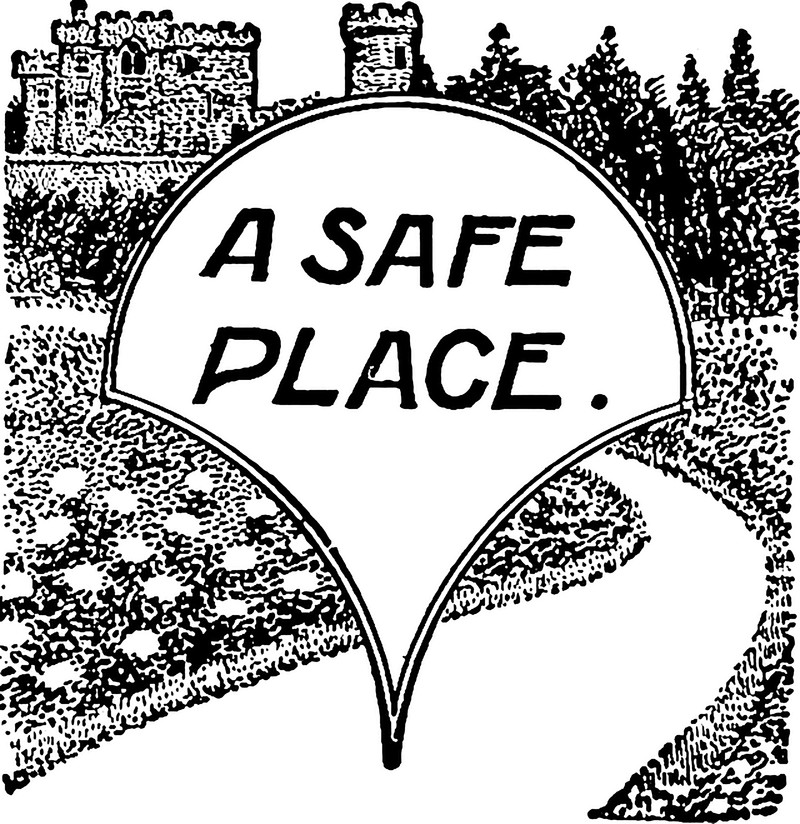
Here's a precursor to the pushpin marker in Google Maps, from Millsaps College's Bobashela yearbook, 1905. (For some unbelievably weird yearbook imagery, see our How to Hoodoo Hack a Yearbook.)
|

 |
|
Did You Hear the One I Just Made Up? –
June 30, 2015 |
(permalink) |
|
 |
 |
 |
|


 |
|
Restoring the Lost Sense –
April 17, 2015 |
(permalink) |
|
 |
 |
 |
|


 |
|
Restoring the Lost Sense –
January 25, 2015 |
(permalink) |
|
 |
 |
 |
|


 |
|
Restoring the Lost Sense –
August 9, 2012 |
(permalink) |
|
 |
 |
 |
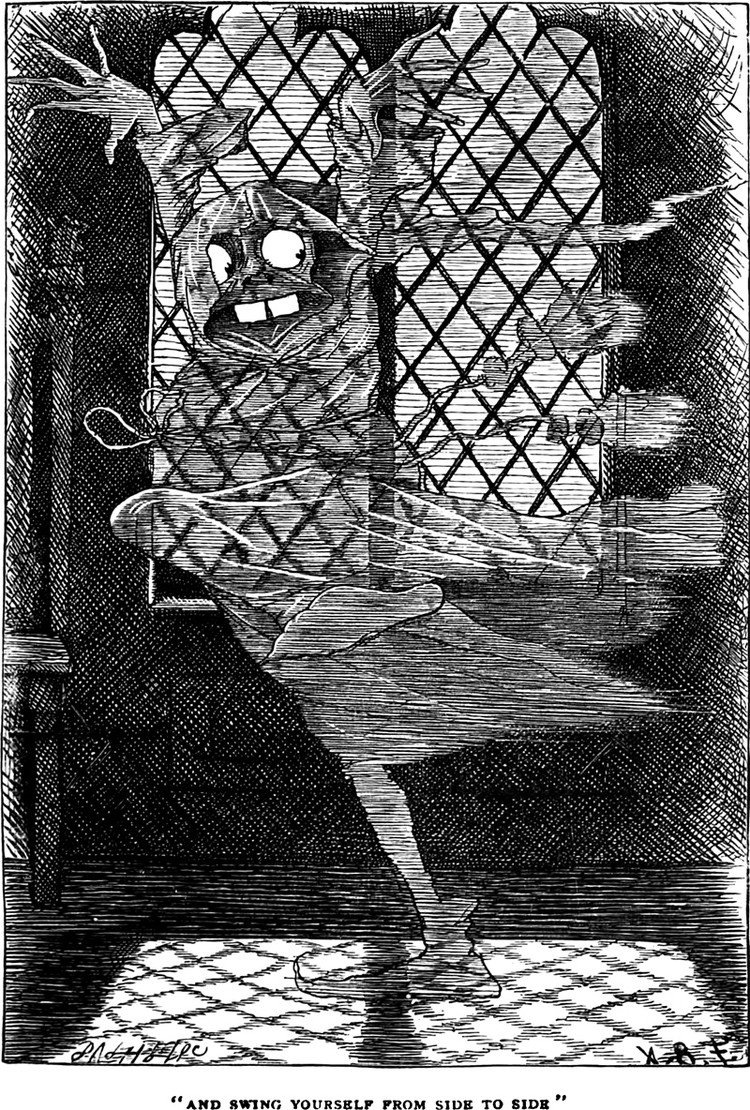
From Rhyme? and Reason? by Lewis Carroll, 1884. The caption reads, "And swing yourself from side to side."
|


 |
|
|
 |
 |
 |
In a gross disservice to Bavarian history, it is universally said that King Ludwig II constructed his fairy tale castle Neuschwanstein as an escape from "reality." The castle itself is a colossal refutation to such sloppy—if not willful—misrepresentation. Quite the opposite of being trapped in the past or caught up in a romantic dreamworld, Ludwig was so forward thinking, so revolutionary, that he built a portal to access the very framework of the Bavarian ideal. Emblazoned throughout with murals and architecture depicting key scenes from Bavarian folklore, Neuschwanstein castle constitutes an elaborate "War Room" of mythic proportions. Indeed, Neuschwanstein is evidence that Ludwig attained a state of consciousness that Timothy Leary called the "Neurogenetic Circuit." Robert Anton Wilson explains that the Neurogenetic Circuit:
processes DNA-RNA-brain feedback systems and is "collective" in that it contains and has access to the whole evolutionary "script," past and future. Experience of this circuit is numinous, "mystical," mind-shattering: here dwell the archetypes of Jung's Collective Unconscious—Gods, Goddesses, Demons, Hairy Dwarfs and other personifications of the DNA programs (instincts) that govern us. [ Prometheus Rising, 1983, p. 41]
To properly govern his people, Ludwig positioned himself to draw from the very paradigms of the Bavarian spirit. In other words, he infused his nobility with the high ideals of his country, literally surrounding himself (dome ceilings to floors) with model images of Bavarian enlightenment. Ludwig held a magnifying glass over the Bavarian blueprint, and a ray of sunlight hit the lens to form a hologramatic castle. Far from having his head in the clouds, Ludwig's feet were firmly planted in his culture. That such a visionary was ultimately judged "mad" by his political enemies comes as no surprise. That Neuschwanstein has endured as the Eighth Wonder of the World is a testament to Ludwig's genius.
|


Original Content Copyright © 2026 by Craig Conley. All rights reserved.
|