|
|
 |
|
The Surprising Meanings of the All-Vowel Word OOO in the Televisual Treasure Kamen Rider OOO
Arguably the greatest television show ever fashioned (but unfairly obscure outside its native Japan), Kamen Rider OOO (2010-11) charms from moment one with the intriguing word "OOO" in its title. This all-vowel word has a surprisingly diverse array of meanings within the context of the series. In no particular order:
- infinity with an additional circle or infinity times the letter O (as written in cake icing in episode one of the series; referred to in the theme song as "Skip the addition—multiply your way up").
- the unstoppable progression of the idiom "anything goes" (referred to in the theme song as "Anything goes, goes on: ooo's, ooo's, ooo's, ooo's").
- one thousand (the letter O's symbolizing zeros, as the series sports the one-thousandth episode of the Kamen Rider franchise).
- three medallions (referring to an ancient coin-shaped technology for artificial life that acquired consciousness; the three coins are inserted into the hero's belt to trigger a transformation).
- the name of a masked hero (sometimes also spelled Os, pronounced like the oes in goes).
- multiple kings (from the Japanese pronounciation Ozu).
- a joyous bouquet (an allusion to the idiom that "everything is coming up roses," referred to in the theme song as "Coming up OOO").
- the "three of pentacles" in the Tarot (symbolizing coordinating with others, finding all the needed elements, functioning as a unit, cooperating, meeting goals, knowing what to do and how to do it, and proving one's ability, as per Learn Tarot).
- rarity (as in the old Celtic "Chant of Arcady" sung at harvest gatherings: "I'll sing the three O's. What means the three O's? Three, three's the rare O!" —A. S. Harvey, Ballads, Songs and Rhymes of East Anglia, 1936, page 107).
- a winning move ("A single line of three 'O's is worth more than anything because a move that produces this result is a winning move!" —Mike James, Artificial Intelligence in Basic, page 30).
- omnipotence, omniscience, and optimization ("The three O's, omnipotence, omniscience, and optimization ... continue to appear in modern times in the way we conceive of ourselves through the social sciences. Mortal beings figuring out how to act in the world are routinely modeled as if they have unlimited computational power, possess complete information about their situation, and compute the optimal plan of action to take." —Peter M. Todd & Gerd Gigerenzer, Ecological Rationality: Intelligence in the World, pp. 496-7).
- outflanked, outfoxed, overwhelmed ("The 'Three O's': a defence must be either Outflanked, Outfoxed, or Overwhelmed." —Current Research on Peace and Violence, 1987, page 129).
- continual practice ("Whenever anyone asks why our name is spelled with three O's, we remind them that to be good at picking there is no other path than to practice Over and Over and Over again." —Deviant Ollam, Practical Lock Picking, 2012, page xi).
- the possibility of different combinations ("The three O's tempt the reader to explore the possibilities of different combinations." —Guillaume Apollinaire & Anne Hyde Greet, Calligrammes, 1908, page 407).
- decimalization ("For every three O's added to the given number, we shall have one place of decimals. And, in general, since the nth power of ten has no O's we shall always have, in extracting the nth root, one place of decimals for every n O's added to the given number." —Silas Totten, A New Introduction to the Science of Algebra, 1836, page 225).
- a belt, as in the three stars of the constellation Orion. ("The three o's [are part of a] densely woven mesh of triplets [that] constellates this moving poetic object." —Michael Golston, Poetic Machinations, 2015).
- rising to a challenge ("As soon as the ball is served, the three O's come out to challenge." —Jacob Daniel, The Complete Guide to Coaching Soccer Systems and Tactics, 2004).
- seizing the day; embracing the world ("The three o's are a circular microcosm of the day, or, of the world." —Robert Greer Cohn, The Poetry of Rimbaud, page 60).
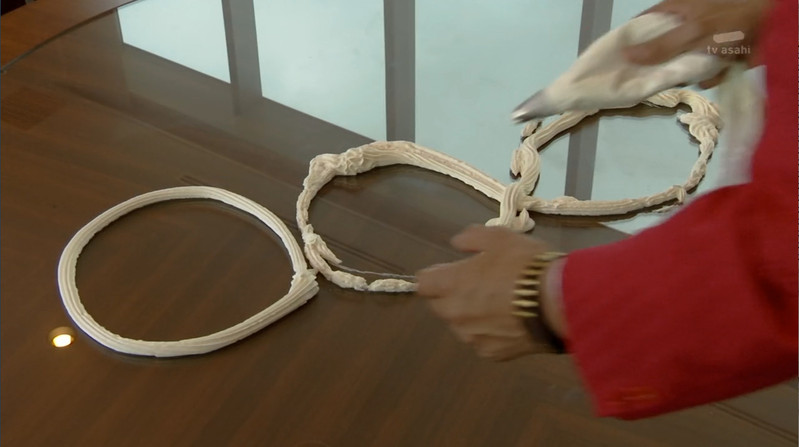
The letter O and the lemniscate form the all-vowel word OOO in Kamen Rider OOO.
|
|
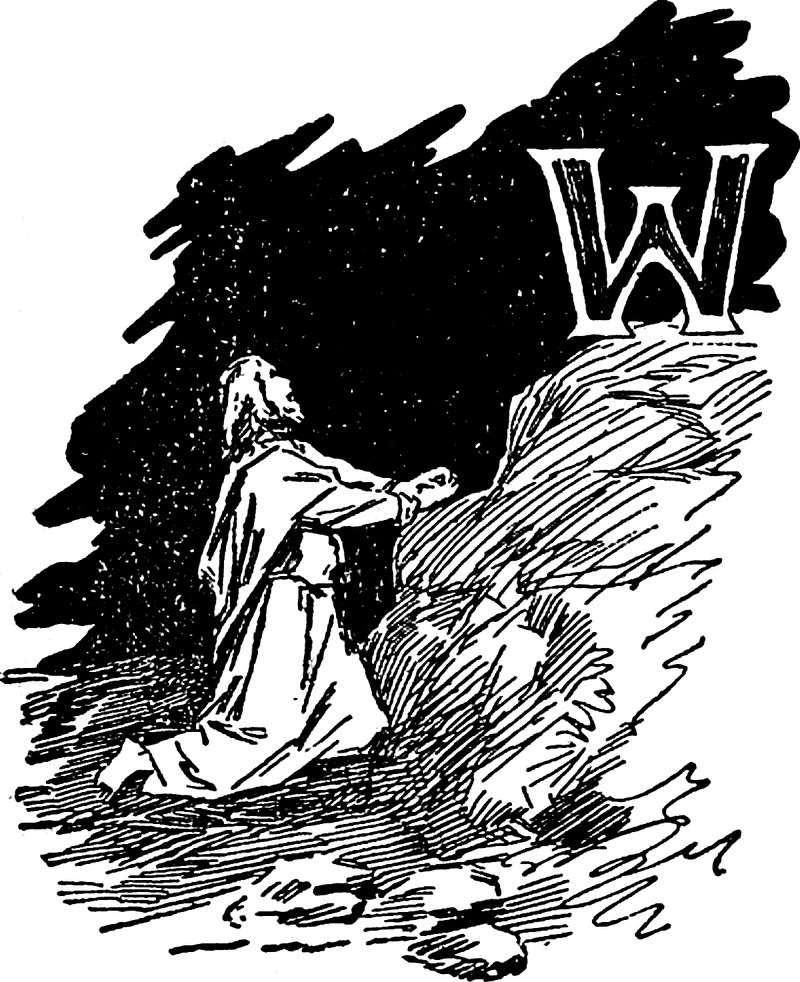
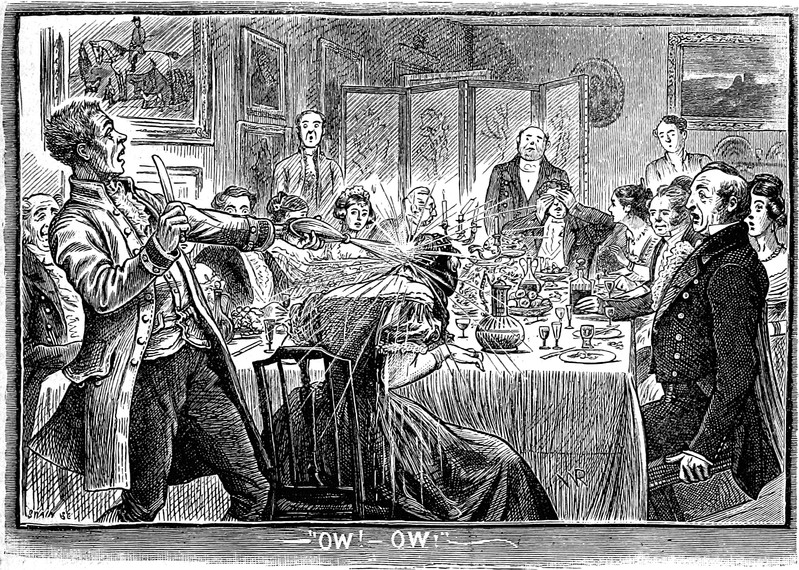
On bended knee before the W, from Blasts from The Ram's Horn, 1902. This might be why:
"W is the only letter of the alphabet formed from two letters, U and U, two equals. It is both a co-equal, and a concordant one. In union they are the U U, the two in one, the single one" ( Sir Francis Bacon's Own Story by John Elisha Roe, 1918). |
|
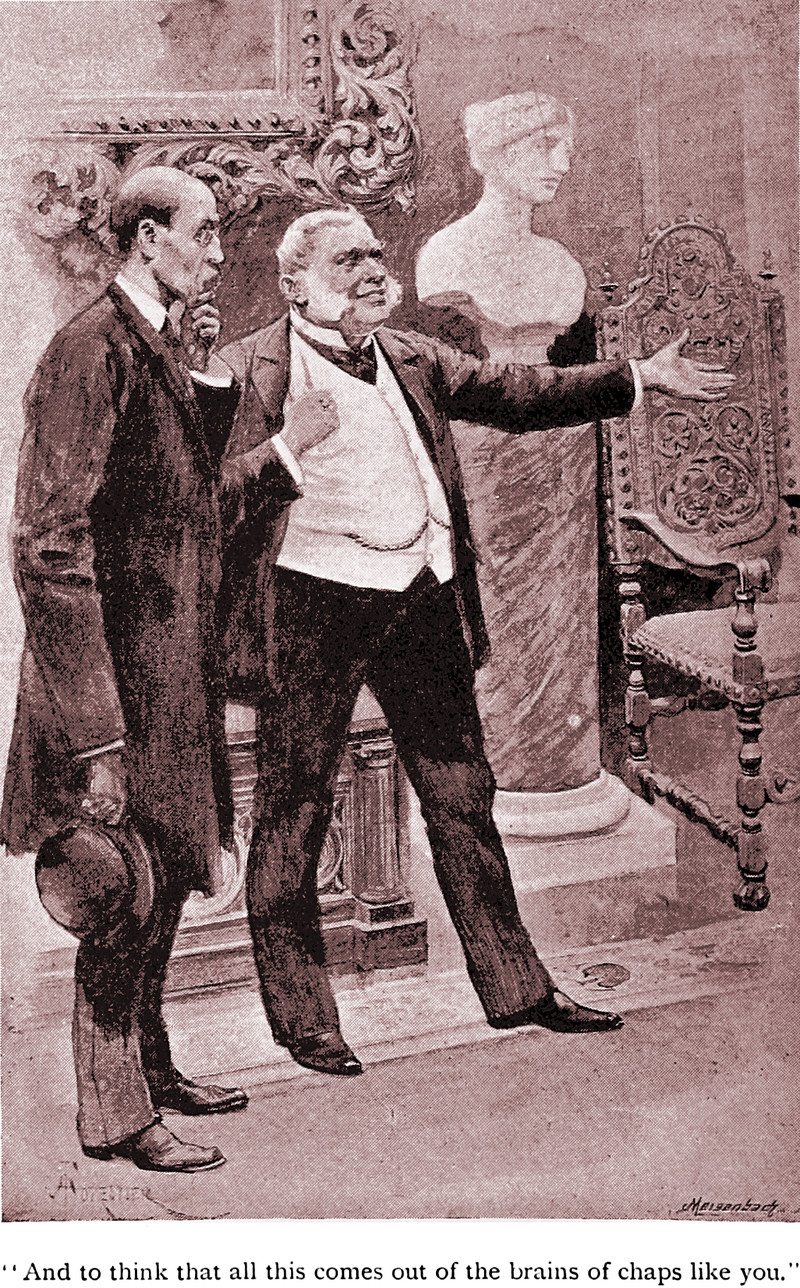
"And to think that all this comes out of the brains of chaps like you," from Mr. Meeson's Will by Henry Rider Haggard, 1894. |
|
I dreamt I met the author of six asterisks.
|
|
|
|
|
|
|
|
| I Found a Penny Today, So Here's a Thought |
(permalink) |
|
|
|
On the basis of two bits of evidence (but please send us more examples), we've determined that British humo[u]r can move any mountain (to the tune of The Shamen's "Move Any Mountain" or not). Exhibit A: In Maurice Dolbier's Nowhere Near Everest: An Ascent to the Height of the Ridiculous, we find a character who boldly "contrived the removal of Mount Everest and the substitution of a smaller peak, in an attempt to create an international incident." Exhibit B: In the series one, episode two of Absolutely Fabulous, a character is sued by British Heritage for shifting some ancient standing stones out of the way:
Eddie: Sued? Why are being sued, darling?
Bubble: Well, that last fashion shoot you organised. Apparently, someone moved a couple of rocks, or something.
Patsy: Moved a couple of old rocks? My God!
Eddie: Stonehenge, Pats. Anyway...
Patsy: So? They should be glad of the publicity.
Britain's effortless ability to move any mountain through humo[u]r is unmistakable.
|
|
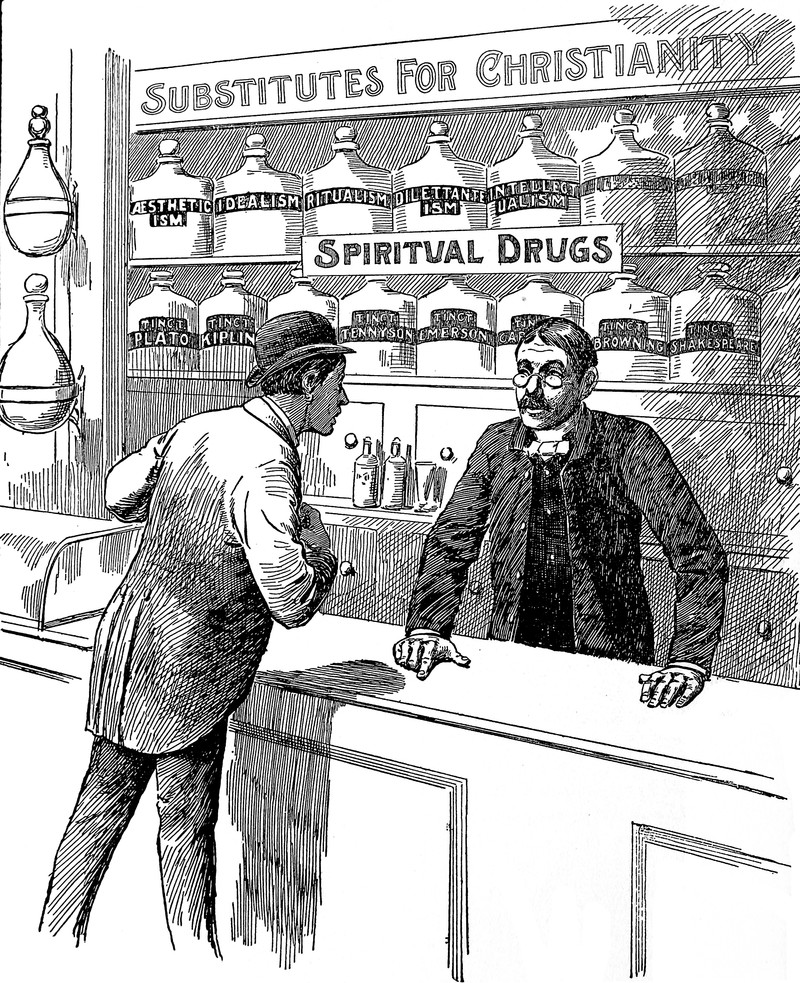
Substitutes for Christianity here include the spiritual drugs of aestheticism, idealism, ritualism, dilettantism, and intellectualism, as well as tinctures of Plato, Kipling, Tennyson, Emerson, Carlyle, Browning, and Shakespeare. From Blasts from The Ram's Horn, 1902. |
|
|
|
|
|
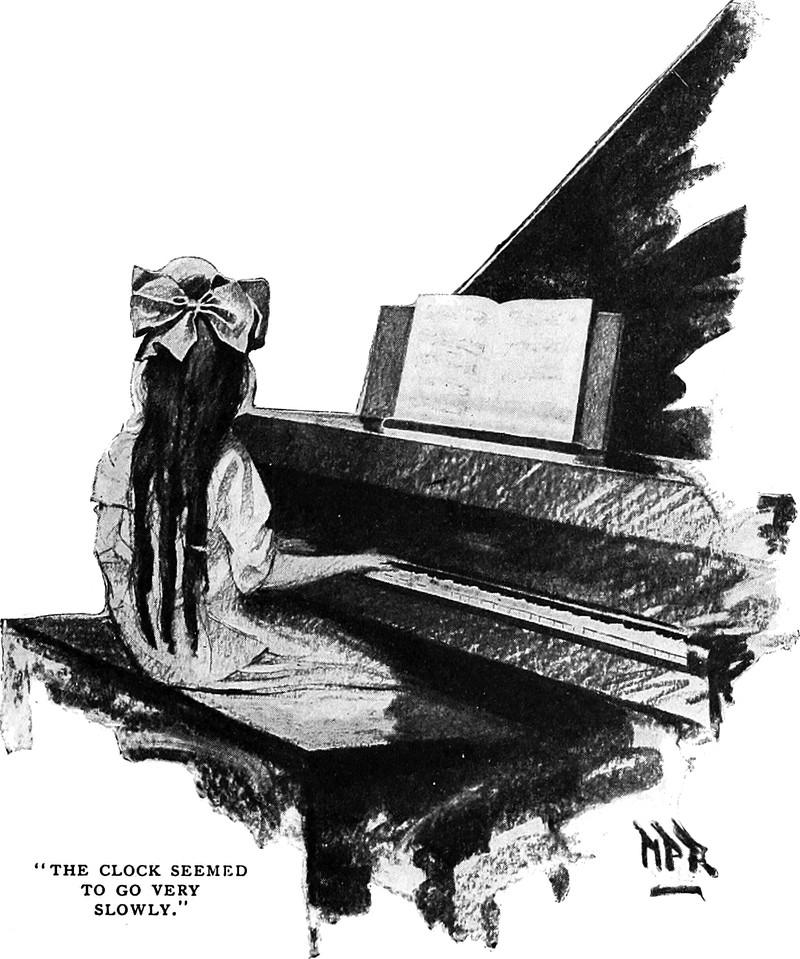
Here's some time-bending via music, from St. Nicholas magazine. The caption reads, "The clock seemed to go very slowly."
|
|
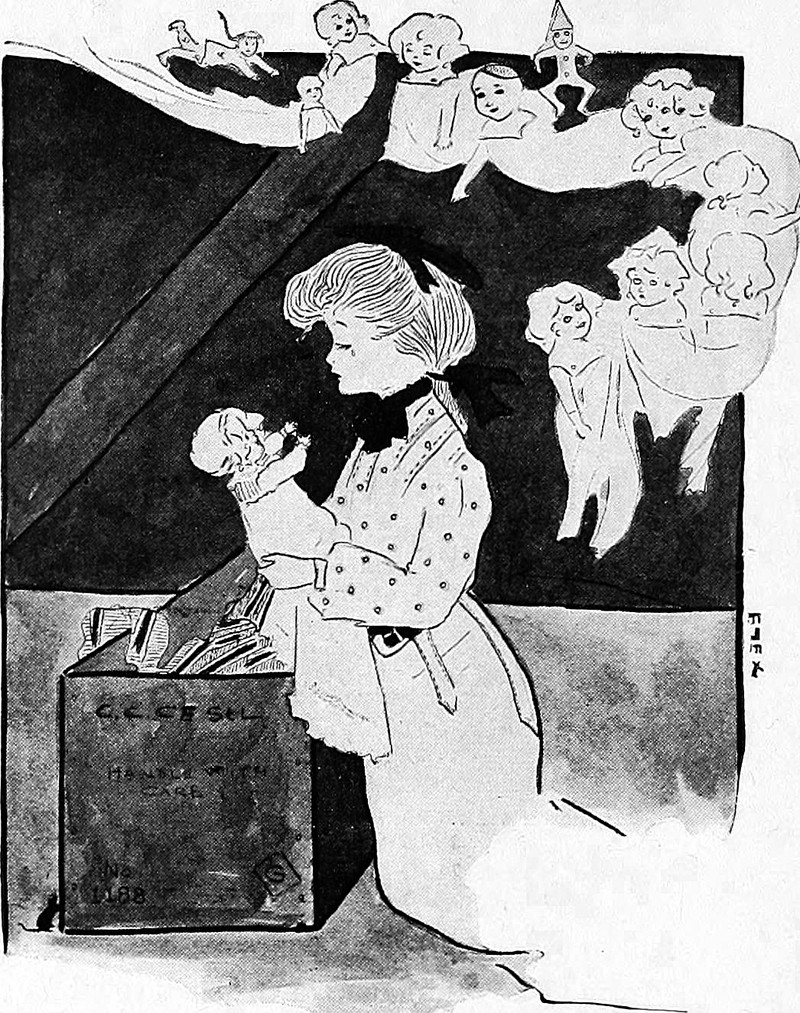
The phrase "ghosts of dead toys" delivers just one Google result from 1908. Our illustration appears fours years earlier, in St. Nicholas magazine, 1904.
|
Page 3900 of 4335
Original Content Copyright © 2026 by Craig Conley. All rights reserved.
|