|
|
 |
|
Nobody ever walked across the bridge, not on a night like this. The rain was misty enough to be almost fog- like, a cold gray curtain that separated me from the pale ovals of white that were faces locked behind the steamed- up windows of the cars that hissed by. Even the brilliance that was Manhattan by night was reduced to a few sleepy, yellow lights off in the distance.
—Mickey Spillane, One Lonely Night, as quoted by Ayn Rand in The Romantic Manifesto: A Philosophy of Literature.
|
|
|
|
|
|
| I Found a Penny Today, So Here's a Thought |
(permalink) |
|
|
|
Having created a coloring book that requires no crayons, an atlas of blank maps, and a dictionary of one-letter words, our new article on " one-bead rosaries" should come as no (or at least minimal) surprise. Here's an excerpt: A standard multi-bead rosary is symbolic of advancement, one bead progressing to the next. The one-bead rosary is an escape from the endless loops and recurring dramas of life. It is symbolic of arrival. How can one know one has arrived if one hasn't pinpointed a destination? The one-bead rosary encapsulates the power to seize destiny and make it one’s own.
Here's the online article. |
|
| I Found a Penny Today, So Here's a Thought |
(permalink) |
|
|
|
"In the psychological development of the child, there is a step-by-step progression from the primal smile to the smile of embarrassment, joyful laughter, laughter at a comic situation, laughter in a group, aggressive laughter at an outsider, and finally (a somewhat depressing climax) the laugher of Schadenfreude. ... [A]t each step laughter signifies an experience of relief ( Entlastung), both physically and psychologically." — Peter Berger, Redeeming Laughter: The Comic Dimension of Human Experience (1997)
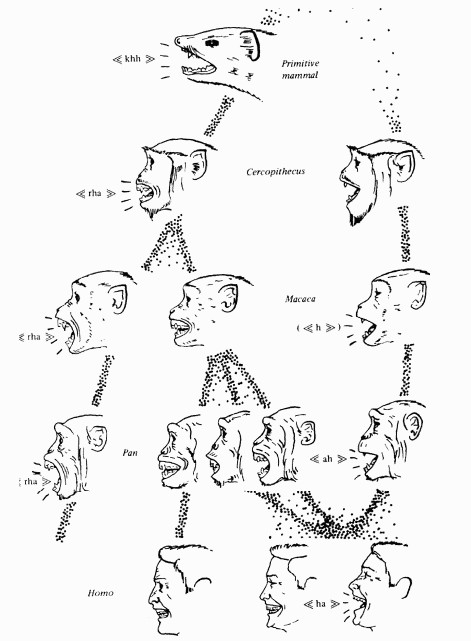
The evolution of the smile and laugh, from Frans de Waal's "Darwin's Legacy and the Study of Primate Visual Communication" ( PDF), via Cystalpunk.
|
|
Piecing together the secret of the unicorn horn . . . |
|
|
|
|
|
| I Found a Penny Today, So Here's a Thought |
(permalink) |
|
|
|
  by Sarah ReedConceptions of Color in a Colorless WorldA world devoid of color, posited John Arthur Thomson, "would not be uninteresting; but it would be very difficult and dull" (Riddles of Science, 1932). Even on the grayest of days, the human mind struggles to imagine a life destitute of color. However, sometimes imagination isn't required. Damage to the visual cortex can bring about Central Achromatopsia, a defect in color perception that renders the world into a "dull, dirty, faded, gray, washed out" wasteland like something on a black and white television (Alex Byrne and David Hilbert, Readings on Color, 1997). Besides being less pleasurable, a colorless world would be more difficult to navigate. Color experts Vernon Lee and C. Anstruther-Thompson explain how inhabitants of a colorless world would be strangers in a strange land: "Color gives the eye a grip, so to speak, on shape, preventing its slipping off; we can look much longer at a colored object than an uncolored; and the coloring of architecture enables us to realize its details and its ensemble much quicker and more easily. For the same reason colored objects always feel more familiar than uncolored ones, and the latter seem always to remain in a way strange and external; so that children, in coloring their picture-books, are probably actuated not so much by the sensuous pleasure of color as such, as by a desire to bring the objects represented into a closer and, so to speak, warmer relation with themselves" (qtd. in The Enjoyment and Use of Color by Walter Sargent, 1964). 

by WTL Photos
Even people without the faculty of sight must take color into account, Walter Sargent notes, "because they hear about it as one of the distinguishing qualities of objects." He cites the American activist Helen Keller, the first person with deafblindness to graduate from college. Keller used her imagination, analogies, and senses of touch, smell, and taste to develop her own conceptions of color. As she explained: I understand how scarlet can differ from crimson because I know that the smell of an orange is not the smell of a grape-fruit. I can also conceive that colors have shades and guess what shades are. In smell and taste there are varieties not broad enough to be fundamental; so I call them shades. There are half a dozen roses near me. They all have the unmistakable rose scent; yet my nose tells me they are not the same. The American Beauty is distinct from the Jacqueminot and La France. Odors in certain grasses fade as really to my senses as certain colors do to yours in the sun. . . . I make use of analogies like these to enlarge my conceptions of colors. . . . The force of association drives me to say that white is exalted and pure, green is exuberant, red suggests love or shame or strength. Without the color or its equivalent, life to me would be dark, barren, a vast blackness. (qtd. in The Enjoyment and Use of Color by Walter Sargent, 1964. Emphasis mine.) Though blind to the physical world around her, Keller could not and would not allow her thoughts to remain colorless. She always asked for things to be described to her in terms of color, so that she could imagine their resonance. "The unity of the world demands that color be kept in it whether I have cognizance of it or not," she explained. "Rather than be shut out, I take part in it by discussing it, happy in the happiness of those near me who gaze at the lovely hues of the sunset or the rainbow." The COLOURlovers library testifies to the fact that even colors and palettes seemingly devoid of pigment can be interesting. [Read the entire article in my guest blog at ColourLovers.com.]
|
|
The fires from the foundry chimneys burning high and glaringly into the night, / Casting their flicker of black contrasted with wild red and yellow light over the tops of houses, and down into the clefts of streets.
—Walt Whitman, from "A Song of Joys"; quoted in Silences: Classic Essays on the Art of Creating, by Tillie Olsen, 1978.
|
|
|
|
|
|
|
|
 by GiantChess.comTaking Chess Beyond Black and WhiteThere's an age-old debate in the Chess world over whether Black or White is the "superior" color. Because White makes the first move, White wins an overwhelming percentage of the time. But what if both sides were Grandmasters? Would there still be a color advantage, or would every game end in a stalemate? The Surrealist artist Marcel Duchamp found his own way to break free of this philosophical "gray area." In 1920, he invented a color version of his favorite board game in an attempt to turn Chess into an artistic activity. Duchamp's color choices weren't arbitrary. Indeed, as Duchamp expert Francis Naumann points out, the color of each piece served as a "continuous visual reminder of its movement and strategic power." Duchamp's two Rooks were light blue and dark blue. The Bishops were light and dark yellow. As the Queen is a combination of the Rook and Bishop (in terms of power and movement), she blended blue and yellow to form light and dark green. The Knights, sharing no characteristics with other chessmen, were light and dark red. Kings were white and black, and pawns were also white and black. Naumann notes that Duchamp compared the black and white game of chess to a "pen and ink drawing," likening chess players to painters who created black and white artwork out of pre-existing forms. "Extending Duchamp's analogy," Naumann suggests, "we could then say that playing on the chromatic set would be the equivalent of drawing in color." Though eyewitnesses recorded seeing Duchamp's painted chessmen in the early 1920s, the remarkable set seems to have become lost in the mists of time. We are left only with anecdotes and our own imaginations. Today, specialty chess piece manufacturers offer a rainbow of colorful pieces for clients who wish to assemble custom sets. For example, Chaos creates pieces in purple, green, blue, red, white and black, while Giant Chess offers 16 hues including "Edelweis," "white milk," silver, vermillion, chestnut brown, Olympia gold, silver, and soft violet. [Read the entire article in my guest blog at ColourLovers.com.]
|
|
Piecing together the secret of two hearts . . . |
|
An unpowdered complexion pale as any woman’s, / Unrouged lips rosy as any maiden’s. / Eyebrows so long as to meet his eyes, / A form so delicate as hardly to bear his clothes. / A jet- black crepe- silk cap he had, / Matching his face like a crown of jade. / Bright red tapestry- silk shoes he wore, / And stepped as lightly as if walking on clouds.
—Li Yu (1610–1680), The Carnal Prayer Mat, translated by Patrick Hanan, 1990.
|
|
|
|
|
|
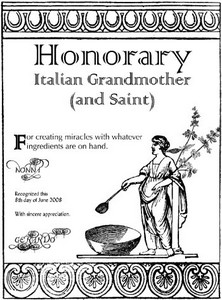
Our Honorary Italian Grandmother (and Saint) certificate generator was featured at The Generator Blog this week. Italian grandmothers are famous for being dauntless, affectionate, and inspirational. The spirit of Nonna, the archetypal Italian Grandmother, is the zest for life. Nonna is present whenever a family and guests are well fed and whenever something is created by hand, with care and love. The Honorary Italian Grandmother (and Saint) certificate is for those rare individuals with a flair for maintaining tradition, improvising without blinking, and turning anything into a nurturing experience. The certificate is personalized in fine calligraphy, easy for you to generate, and completely free! |
|
The ‘best clothes’ donned for Sunday and formal occasions might be of dark material, but daily garb ran the spectrum of colors. Russet was favored, at least in New England, but reds, yellows, blues, and greens were also common. . . .
The lively colored outfits of the first settlers became more subdued as men moved into the backcountry. As James Axtell has remarked, ‘Colonial woodsmen quickly found that for stalking wild game or enemies — or being stalked — red coats, blue trousers, and yellow waistcoats were signal failures. Far better were the forest’s natural dull shades of brown and green.’
—David Freeman Hawke, Everyday Life in Early America, 1989.
|
|
|
|
|
|
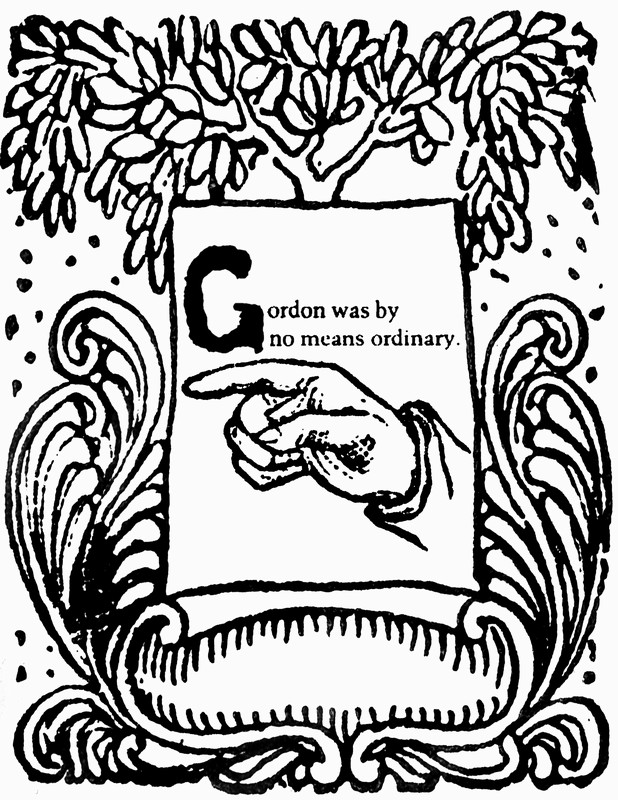
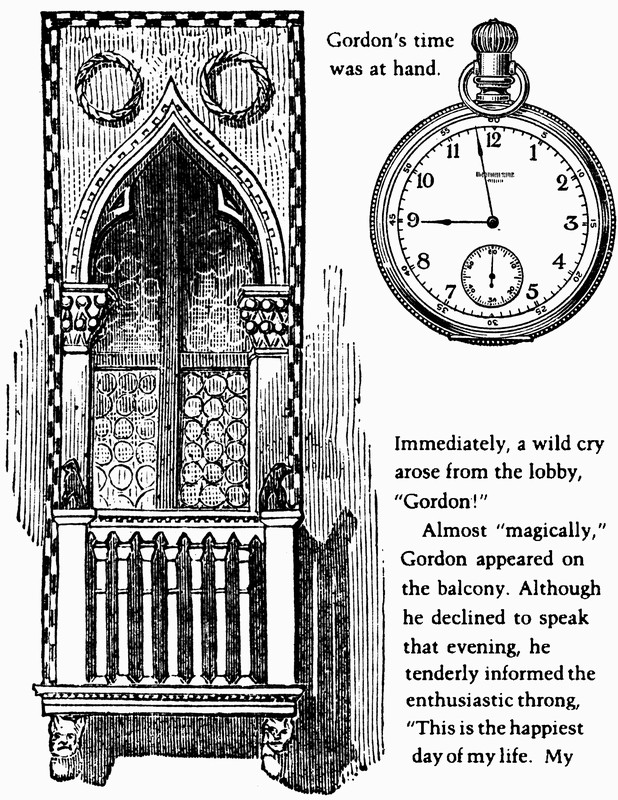
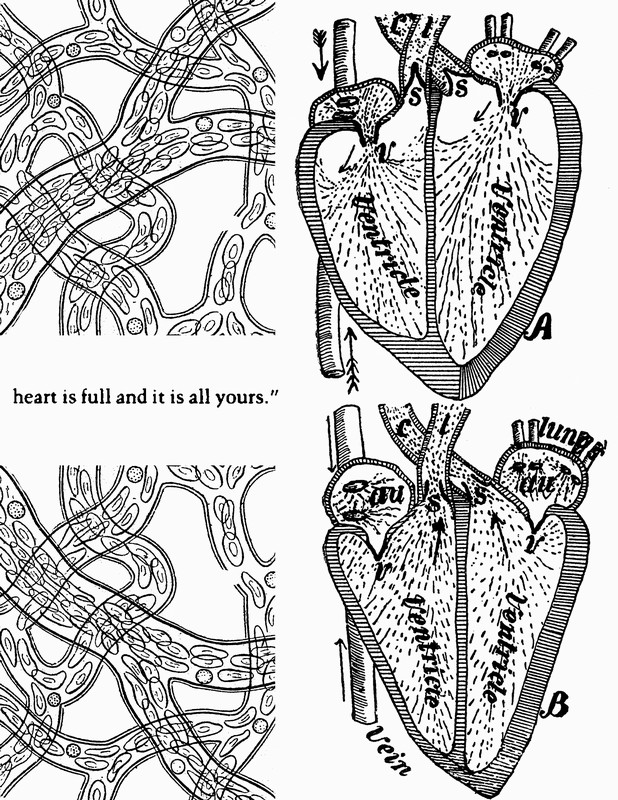
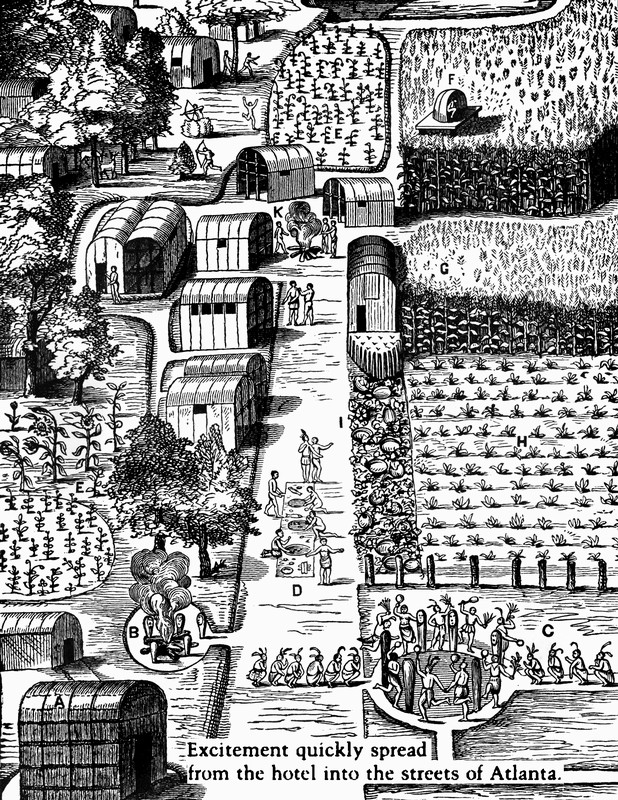
A collaged story we assembled for a singular Gordon and henceforth dedicate to all the Gordons of the world. Click on the thumbnails below to view an enlarged version in a new window.
Anthony Dhark writes: Gordon is clearly a remarkable and humble guy.
|
|
"The 'portable staircase' has long been a favourite scheme with many persons, and considerable ingenuity has been directed to this point, but hitherto without any success. Nothing sufficiently portable has yet been produced, and I fancy, never will."
—The Mechanics' Magazine, Museum, Register, Journal, and Gazette (1839)
|
|
Piecing together the secret of true peace . . . |
Page 4268 of 4337
Original Content Copyright © 2026 by Craig Conley. All rights reserved.
|





 by