CRAIG CONLEY (Prof. Oddfellow) is recognized by Encarta as “America’s most creative and diligent scholar of letters, words and punctuation.” He has been called a “language fanatic” by Page Six gossip columnist Cindy Adams, a “cult hero” by Publisher’s Weekly, a “monk for the modern age” by George Parker, and “a true Renaissance man of the modern era, diving headfirst into comprehensive, open-minded study of realms obscured or merely obscure” by Clint Marsh. An eccentric scholar, Conley’s ideas are often decades ahead of their time. He invented the concept of the “virtual pet” in 1980, fifteen years before the debut of the popular “Tamagotchi” in Japan. His virtual pet, actually a rare flower, still thrives and has reached an incomprehensible size. Conley’s website is OneLetterWords.com.
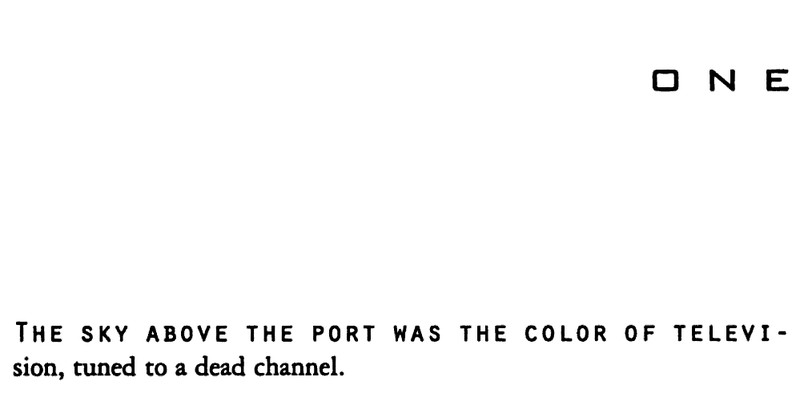
So there might be a song in this somewhere. Only we, the listeners, are outside of the club, so the sound is all filtered and echoed and mostly vibration … AND the club is probably what we call the “Welcome to Canada” bar from David Lynch's Fire Walk With Me, where Laura takes Donna to show her what the nights are like … AND it happens to be located on a spacecraft … AND the spacecraft is nearing the event horizon of a black hole. So … it’s not exactly music, but not exactly noise … more the experience of waiting in line to enter the “Welcome to Canada” club while simultaneously on a spaceship entering a black hole. Had the band consulted with us, we’d have advised they employ the two secrets of the Escher-Staircase eternally rising chords. But maybe they wanted some ups and downs to the sound of the event horizon. (It’s been long enough since we last approached a black hole that we can’t recall if it’s an eternally-upward or up-and-down vibe.) Of course, what first caught our attention and led us to click on this track was its title from the first line of Gibson’s Neuromancer:
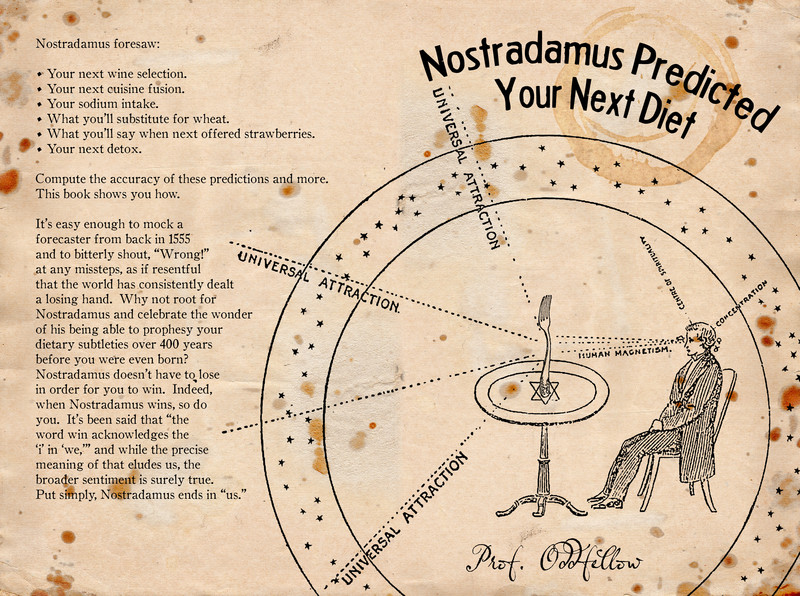
5 STARS. If there's anything more wearying than listening to people prattle on about their diets it's listening to them do so while in the thrall of whoever the most famous nutritional guru of the moment happens to be. Such individuals (and there are legions of them) tend to rhapsodize endlessly about the salubrious effects of his or her prescribed culinary regimen as though every last detail were sacred prophesy guaranteed to insure a state of physiological utopia to all unswerving adherents. Or maybe that's just me being a crank. I'm worn out by trying to evaluate 'expert' advice on every area of life and struggling to ascertain how many, *if any*, of the often conflicting recommendations I should follow. One might as well consult Nostradamus as to immerse oneself in the current iteration of The Received Wisdom vis-à-vis proper nutrition ... which is precisely what Craig Conley has done.
Although Nostradamus was a trained and licensed physician, I don't believe this book is intended to promote dietary advice from the 1500s. Instead, what it suggests to me is that universally applicable menu plans are more fanciful than factual because they tend to break down in practice. Thinking adults are better off combining their own common sense with some general research and then adding a secret ingredient: whimsy. Dining should be pleasurable. Even when health and weight concerns are a priority, meals need to provide more than calibrated sustenance. Planning and preparing them can actually be fun if we decide to take a Michel de Nostradamus/Craig Conley approach. 'Think outside the kitchen' and allow your inner chef to be inspired by history or mythology or perhaps a work of art.
A final comment regarding the illustration of Nostradamus Predicted Your Next Diet. Once again, Mr. Conley has outdone himself in providing a plethora of remarkable images to amplify and support his text. They alone are worth the price of the book, in my opinion. My favorite of them appears on the final page and it depicts a Charles Dana Gibson style lady, seemingly thrown into a swoon by the conundrum of how best to prepare her next meal. I can relate; can't we all? —Natasha K.
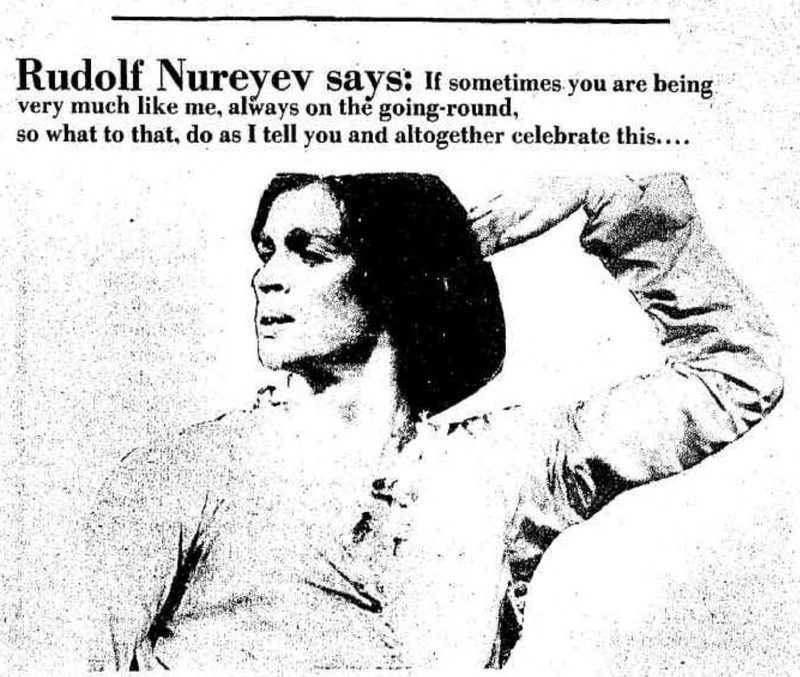
Rudolf Nureyev says, "If sometimes you are being very much like me, always on the going-round, so what to that, do as I tell you and altogether celebrate this." From Woroni, 1974.
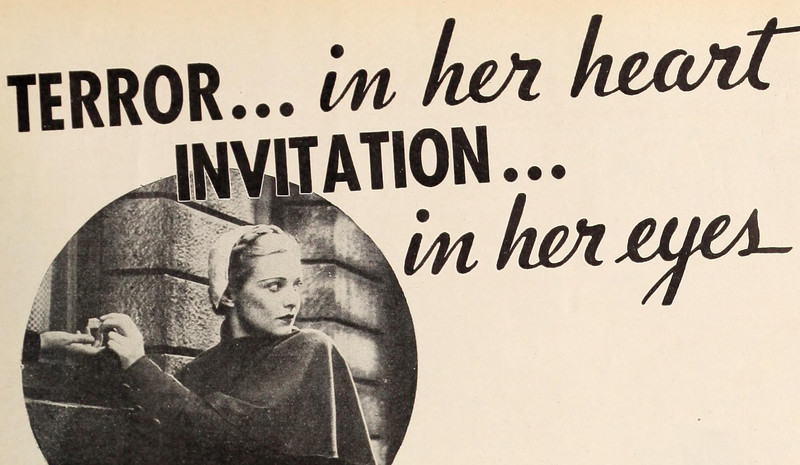
Reblog if there's terror in your heart but invitation in your eyes. The text reads, "Terror in her heart, invitation in her eyes." From The Film Daily, 1933.
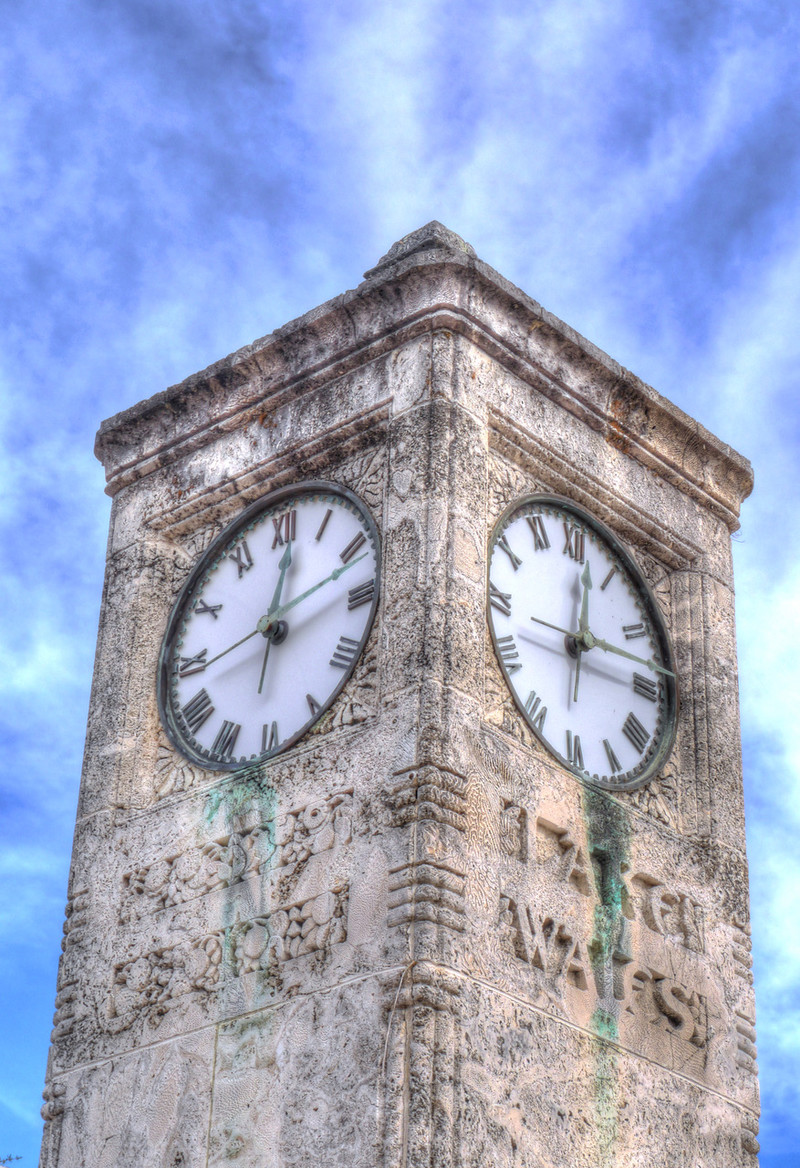
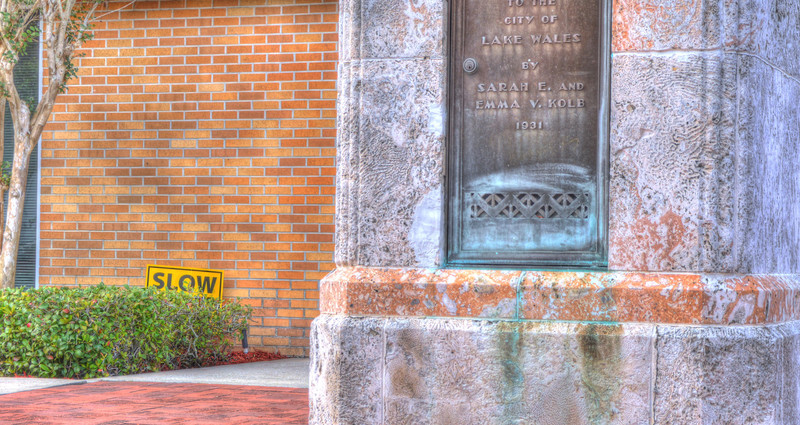
We encountered and determined the cause of a temporal anomaly in Lake Wales, Florida. Two faces of the town clock are a few minutes in disagreement. As constant investigators of such phenomena, we diagnosed the source of the problem at a glance. Directly below the clock faces in question is a sign with the word "Slow," just disruptive enough to sedate time by two to three minutes.
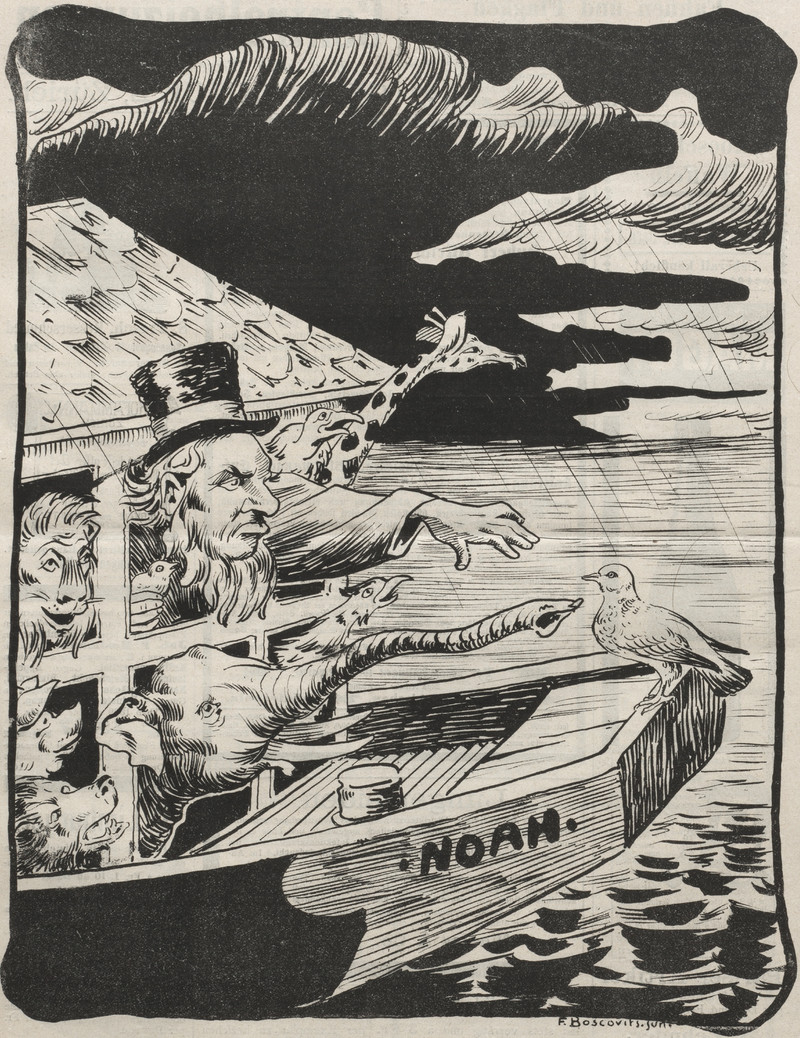
We bemoan how culturally illiterate folks are today, but even back in 1900 a cartoonist had to identify this obvious ship of animals as Noah's Ark. From Nebelspalter, 1900.