|
|
 |
|
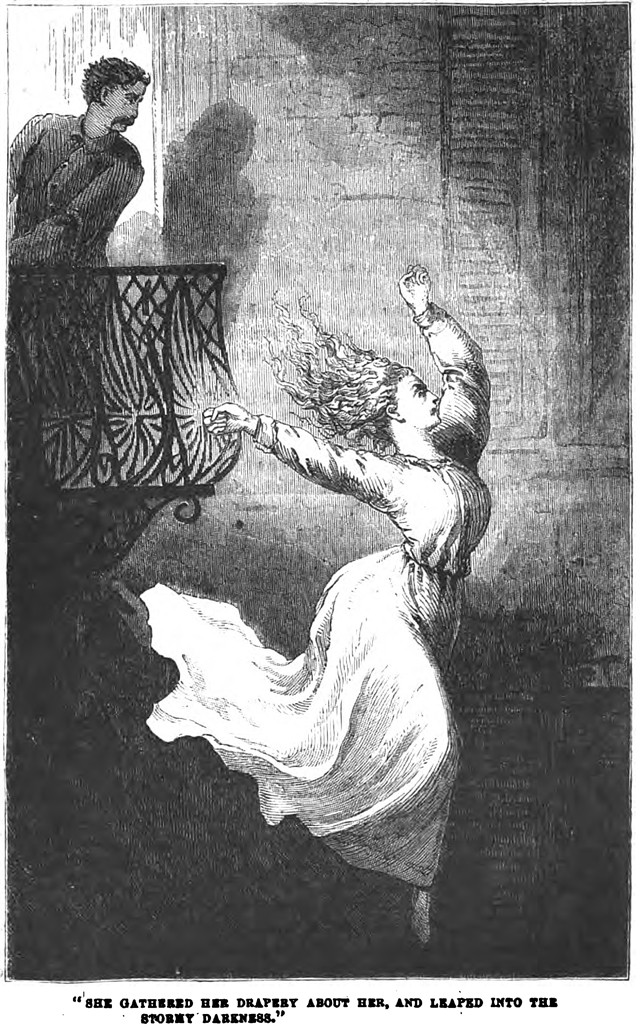
Staring into the depths: an illustration from Frank Leslie's Popular Monthly, 1881. The caption reads: "She gathered her drapery about her, and leaped into the stormy darkness."
Dedicated to Teresa Burritt.
|
|
 "With the exception of their eyes being closed and their bodies being relaxed, hypnosis subjects are fully awake. This may surprise you and may perhaps be a little difficult to understand." — Joe Niehaus, Investigative Forensic Hypnosis (1998)
|
|
| I Found a Penny Today, So Here's a Thought |
(permalink) |
|
|
|
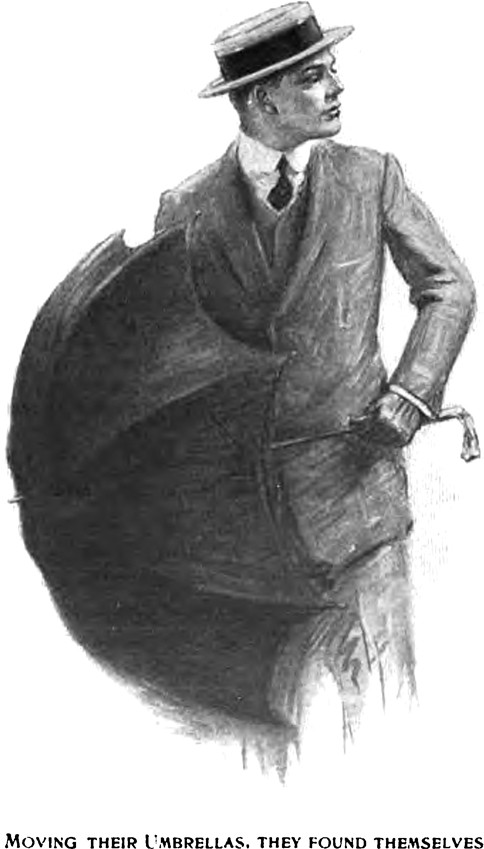
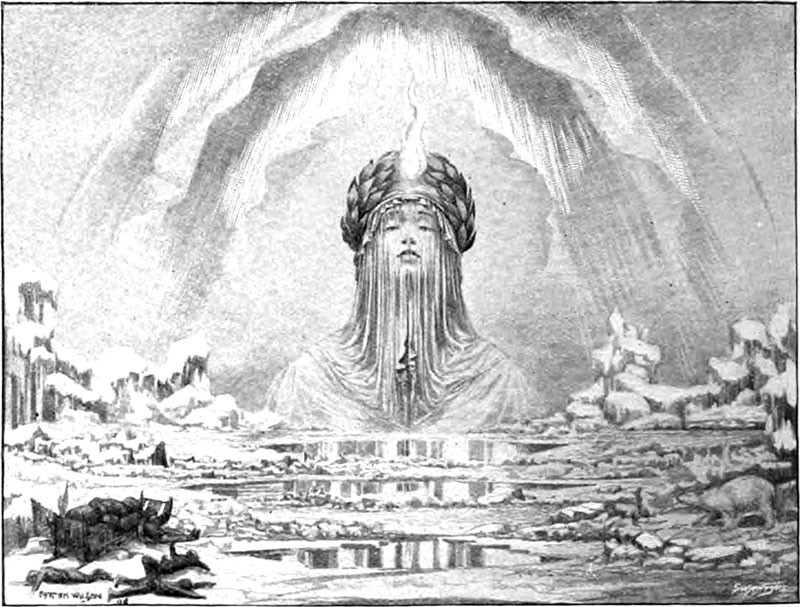
This quotation . . . "As one goes through it, one sees that the gate one went through was the self that went through it." —R. D. Laing (via Clifford Pickover) . . . reminds us of this illustration from Harper's magazine, 1912: |
|
| The Ghost in the [Scanning] Machine |
(permalink) |
|
|
|
We're delighted to share this review of our Ghost in the [Scanning] Machine: Bibliomancer Craig Conley turns his attention to a decidedly modern bit of marginalia—Google Books' scanned images of author portraits as found in the frontispieces of Victorian-era books. From his introduction: "In old books, frontispieces were typically protected by a sheet of translucent onionskin. So thorough is the Google Books scanning process that even this page of onionskin is scanned. The figure in the plate beneath the onionskin—'beyond the veil,' as it were—emerges as from a foggy otherworld. The frontispieces were never meant to be seen this way." However, the eyes of Conley have seen them such, and he presents here an entire book of paired portraits, veiled and unveiled. The presentation evokes "necromancy by proxy," as Conley puts it, the scanning machine taking up the role of the crystal ball. Quotes on ghosts, shadows, mist, and nothingness culled from Conley's tireless research accompany each diptych. Ephemera of ephemera, The Ghost in the [Scanning] Machine is an unexpectedly rewarding and transporting read. — Clint Marsh (editor of Swami Panchadasi's Clairvoyance and Occult Powers: A Lost Classic), from his review in The Pamphleteer |
|
Prof. Oddfellow found his ideal of a wonky homestead: the Carpenter's House (1908), once part of the Dow Museum's preserved city block in the heart of St. Augustine's historic district (but irresponsibly demolished). There was no lens distortion in the photo — the house really was that lopsided.
|
|
|
|
|
|
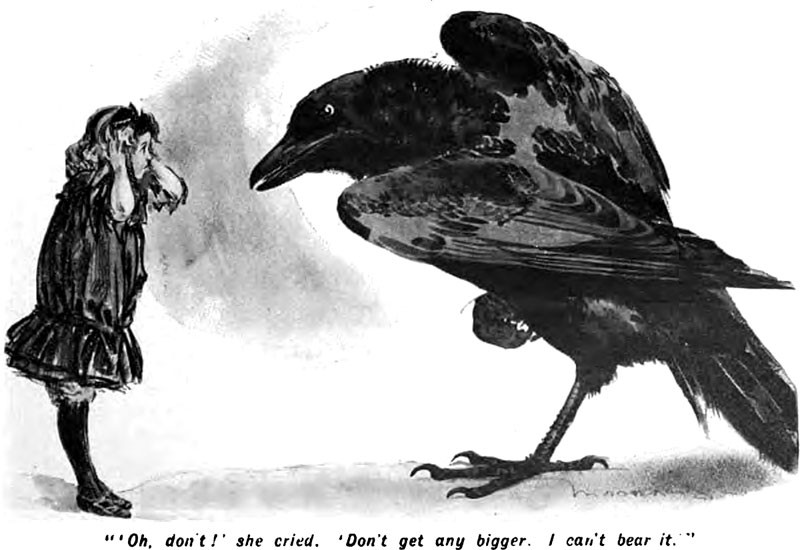
An illustration from a 1906 issue of Pall Mall magazine. The caption reads: "'Oh, don't!' she cried. 'Don't get any bigger. I can't bear it.'" |
|
From Prof. Oddfellow's sketchbook:
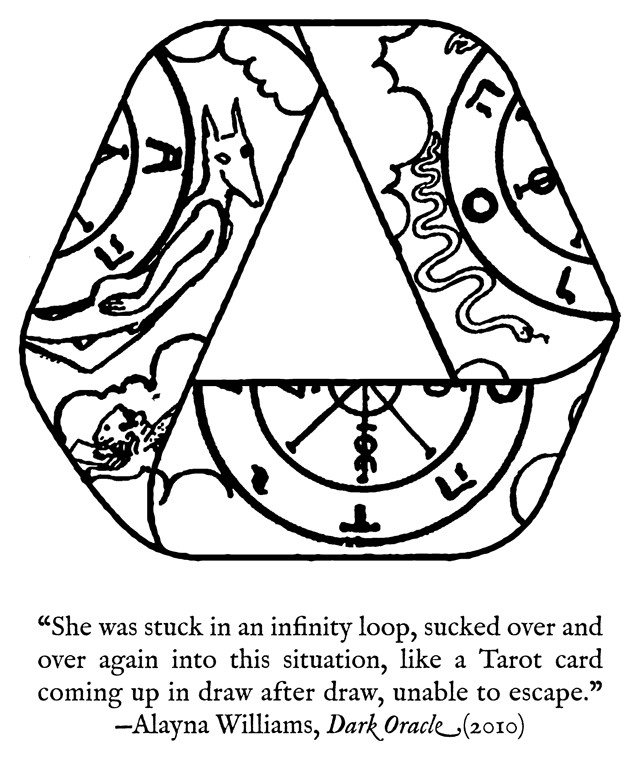
Dedicated to Alayna Williams, of course.
|
|
| The Ghost in the [Scanning] Machine |
(permalink) |
|
|
|
~ Amorphous Apparitions ~ 
Portrait from Memoir of Samuel Slater.
Slater’s ghost is a mirror image. The striped aura in his portrait appears courtesy of the scanning machine.
|
|
|
|
|
|
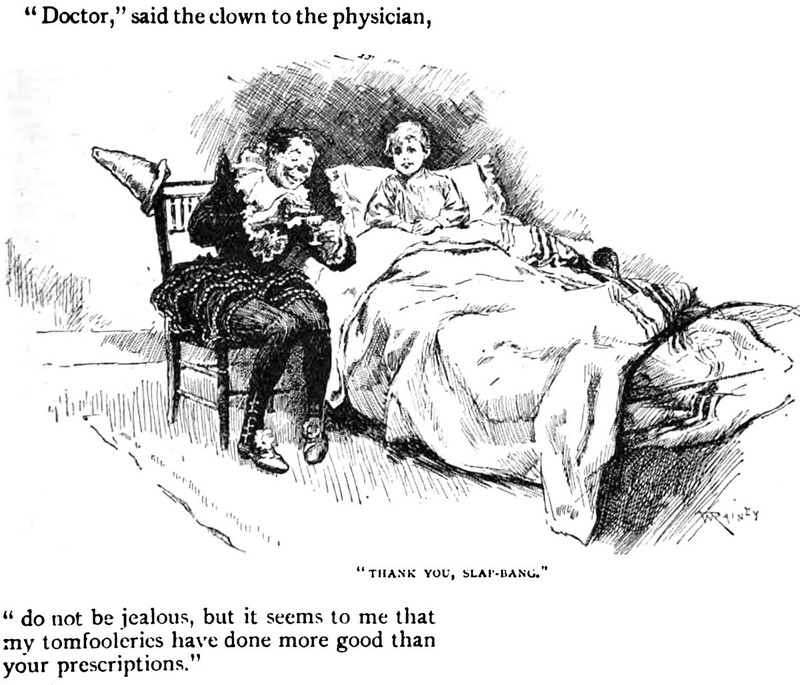
Pre-dating the hilarious comedy series " Childrens Hospital" [sic], about a clown doctor who heals through the power of laughter, here's an illustration from an 1891 issue of The Strand magazine. The text reads: "'Doctor,' said the clown to the physician, 'do not be jealous, but it seems to me that my tomfooleries have done more good than your prescriptions.'" The caption reads, 'Thank you, Slap-Bang." |
|
This bold, all-caps typo in Amanda Owen's The Power of Receiving disturbs us not because the apostrophe is upside down, and not because "don'r" isn't a word, but because "don'r" is pronounced "Donner," as in the snowbound American pioneers who didn't limit themselves to non-human meat. (Dedicated to the ever-beguiling Martha Brockenbrough.) |
|
| Puzzles and Games :: Which is Funnier |
(permalink) |
|
|
|
 Which word is funnier: moist or supercalifragilisticexpialidocious?Clue: Which word is funnier: moist or supercalifragilisticexpialidocious?Clue: This is according to feminist/humour academic Gina Barreca. Answer: ..............moist................ (The answer is in black text on the black background. Highlight it to view.) Citation: Gene Weingarten & Gina Barreca, I'm with Stupid (2006)
|
|
| The Ghost in the [Scanning] Machine |
(permalink) |
|
|
|
~ Amorphous Apparitions ~ 
Portrait from Margaret Woods.
Margaret’s insubstantial "Woods” is reminiscent of Victor Hugo’s perspective on death: "I feel in myself the future life; I am like a forest that has been more than once cut down.”
|
Page 2 of 5
> Older Entries...
Original Content Copyright © 2026 by Craig Conley. All rights reserved.
|