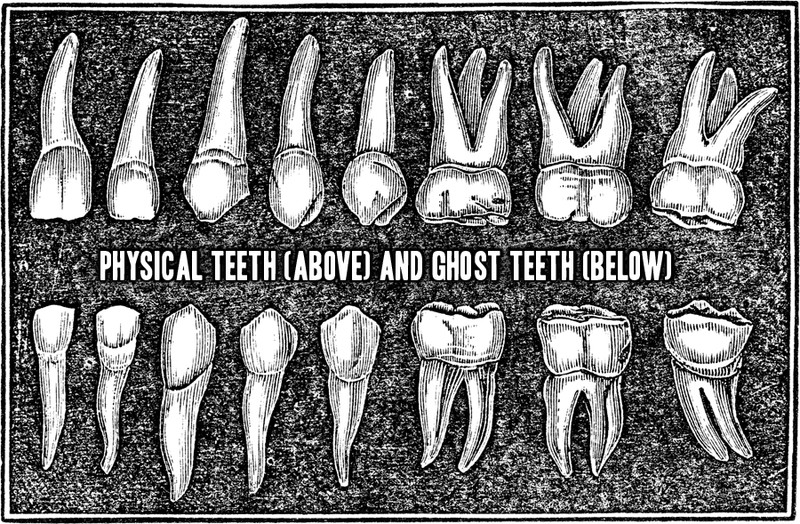
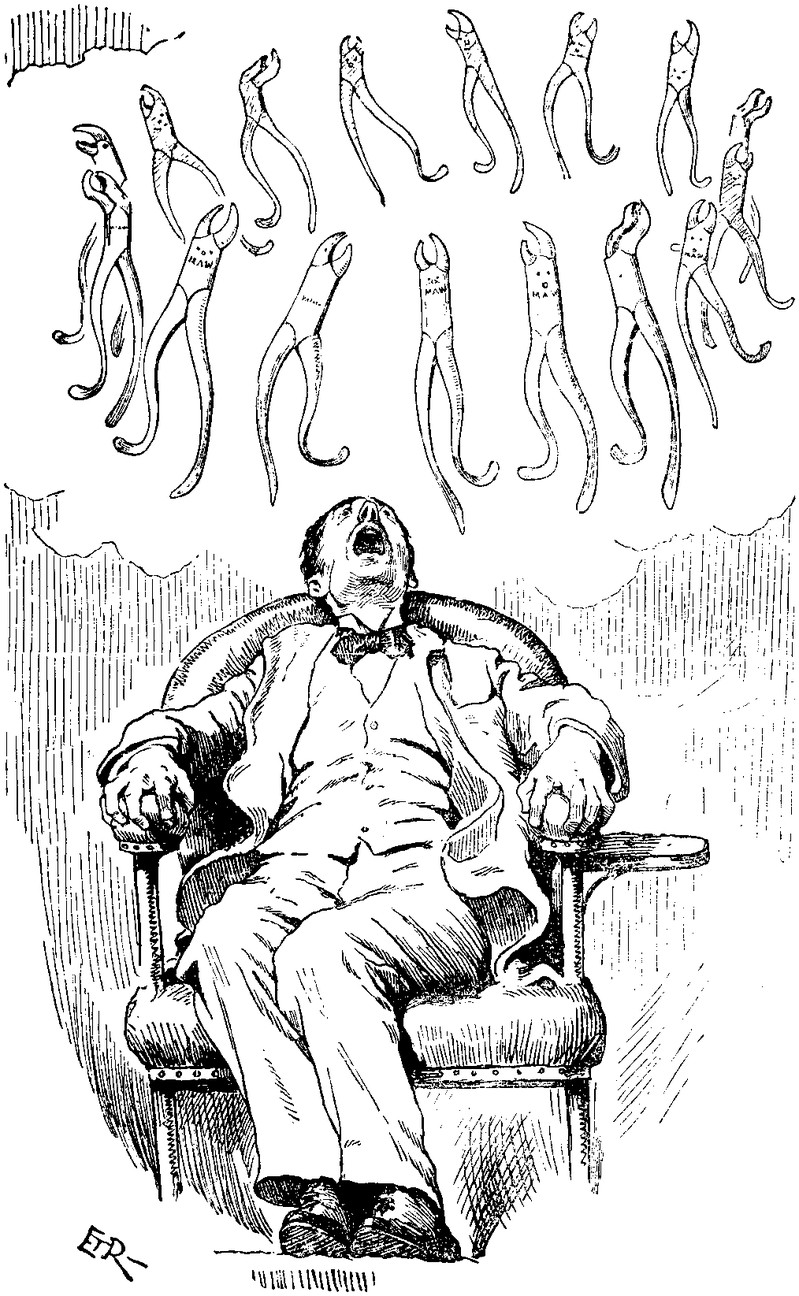
Ghost teeth (what Goethe called
Geisterzahn) are neutral entities, neither quite divine nor satanic, equally good and bad. "Their realm may be beyond human rationality, but it is not inaccessible to human experience. [Ghost teeth] have their home in the imagination. Neither concrete, i.e. empirically verifiable, nor rational, they inhabit the above and below of human rationality. They are a concrete experience of the non-concrete in the mind, an imaginary concretisation of extra-rational phantoms" (Maike Oergel,
Culture and Identity: Historicity in German Literature and Thought 1770-1815, 2006, p. 241).
We wrote a macabre tale about ghost teeth, and it appears in the
Spooky Tales ebook:
The Toothsayer
[Author's note: For every lost tooth, from babyhood to wisdom tooth extractions and so on, does a ghost inhabit our mouths? And do these phantom fangs have the power to drive us mad? That's the premise of this of bizarre horror story, whose playful vocabulary is deliberately meant to be a "mouthful."]
I curse myself for biting my tongue, forgetting for a moment that the nefarious responsibility lies elsewhere, then remembering with a curdled chill that the wickedness is in truth within my very mouth — though outside my own control. Execrable, inexorable, intractable, inextricable, non-extractible — I struggle to resist speaking in tongues by babbling meaningful adjectives, for the ghost teeth despise being noticed and described.
The first to name them, in the early 1800s, was Johann Wolfgang von Goethe; in Faust he called them Geisterzahn — phantom fangs. Virtually no one has uttered the word since, either out of denial (that last defense mechanism of the doomed) or — dare I suggest it? — because the phantom fangs "encourage" us not to. Scientists laugh at what their instruments can't detect, even as dentists commit suicide in record numbers.
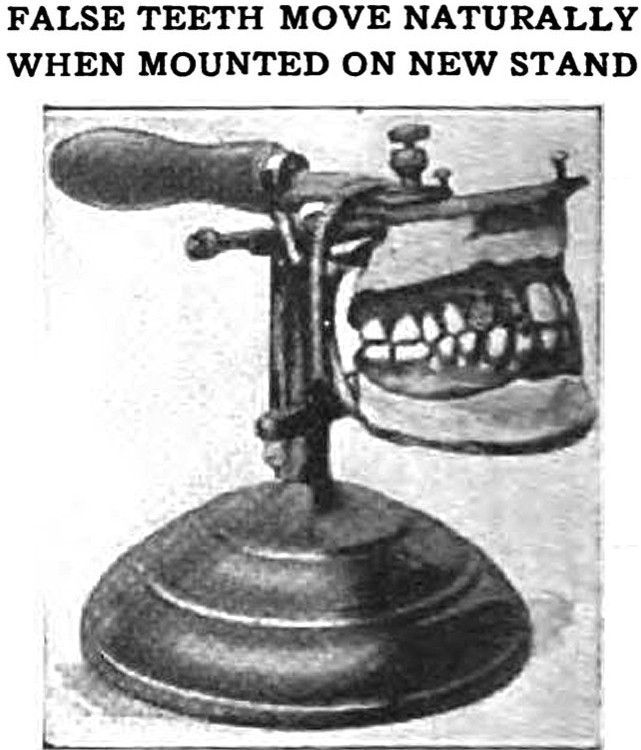
The Geisterzahn wed themselves to us so piteously early — with the loss of our first baby tooth. Our mouths make a non-concrete space, you see, and the ghost tooth is our very first "filling." Oh, the tooth fairy is real enough — her human emissaries are testament to that — but she's powerless to exorcize the inexorable. So we try not to think about what resides in our mouths, or we wind up those uncanny chattering teeth toys and giggle uncomfortably, fearing our dotage and the loss of our so-called permanent teeth, for then we'll play host to an additional set of phantom fangs. The old grow mean, and who's to blame them? The innocence of childhood is so brief, and for good reason. Not "good reason" — see how they twist our words? It's for bad reason — for bad unreasonableness. I scorn those who believe photography steals the soul; they're putting the cart before the horse's mouthpiece. When we smile for the camera, it's a frown turned upside down, a mocking display of the ghost teeth in all their ignoble, unknowable, ignitable ignominy.
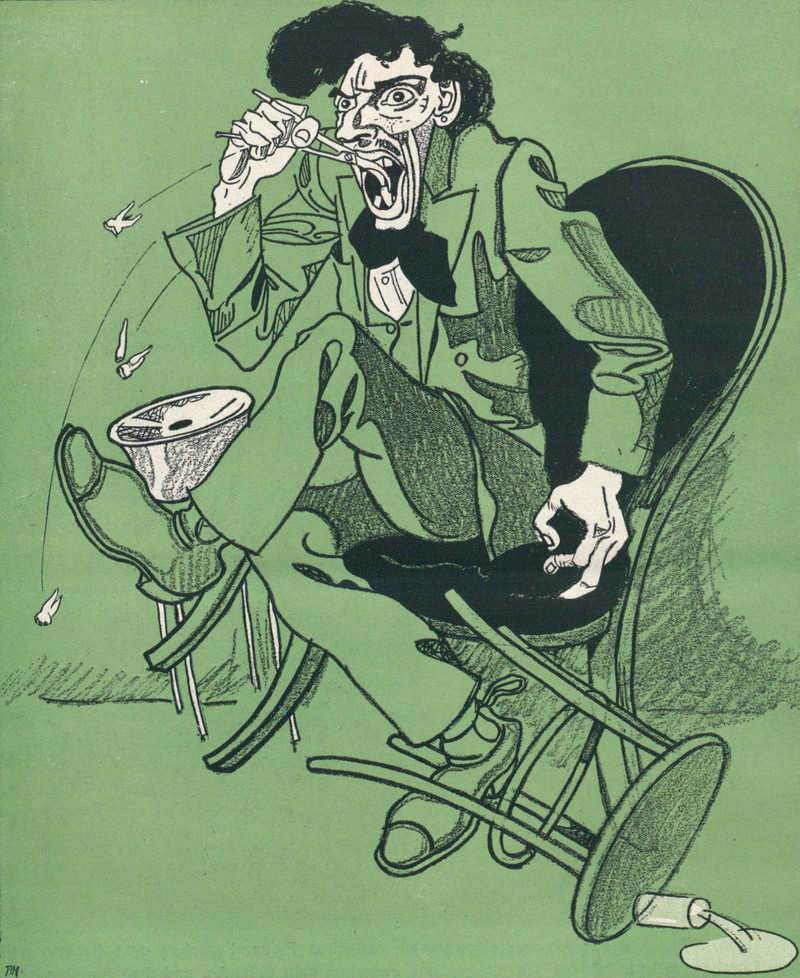
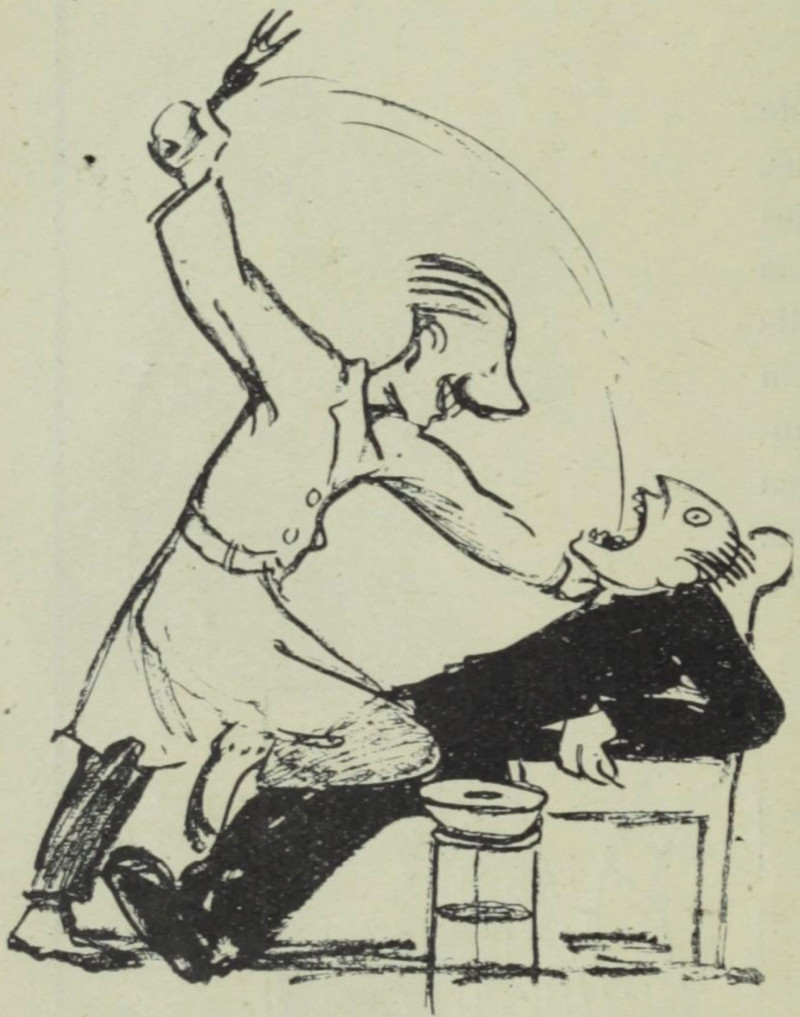
They took him away — Dr. Vipperschnapper, my dental surgeon. They said he couldn't cope, but "cope" originally meant to meet in battle — to come to blows — and Dr. Vipperschnapper took on the ghost teeth as no one before him dared. He'd had a fall alongside a railroad track. He'd knocked out a tooth, but painlessly so, and he knew instantly that he'd stumbled upon an extraordinary insight. But they didn't understand when he implanted those rusty nails into the child's gums. And they took him away, calling him insane, calling him a murderer.
So here I sit, holding a rusty nail for each milk tooth I lost as a child and another thirty-two deteriorating spikes. And I cry as I babble syllables to myself, for in losing all my teeth I've gained too many ghosts. And though they say that a nail implies a hammer, I have not a tool to my name.