|
 "The answer is simple but takes much work. Are you ready for the answer? Can you handle the truth? Sit down relax and let me give it to you straight. You must learn that it is not about you.” —Lynette Edwards, Take Off the Mask (2012)
|
|
|
|
|
|
| I Found a Penny Today, So Here's a Thought |
(permalink) |
|
|
|
Acclamation and Acclimation Marks
We don't necessarily "take requests," but truth be told we rarely turn down a fun challenge.
A friend, Dorothy, saw "exclamation point" malapropped as "acclamation point." Another friend, Jonathan, wished there were an acclamation point. "It would come in handy when a bunch of readers wanted to applaud somebody's blog post, or whatever." Dorothy further suggested an "acclimation mark, for when you finally get the hang of something. Someone should make those marks. And do a blog post on them."
Voilà!
We felt it important that the acclamation and acclimation points be typeable and not merely artist's renderings. So we'll note the Unicode entity identifiers for each mark.
 Let's begin with our favorite acclamation point — complete with a demonstrative waving flag. Type a regular exclamation point, then a triangular dingbat next to it. Superscript the dingbat to raise it up the flagpole. The dingbat we use is Lucida Grande #8227.
 Another acclamation point represents a martini glass raised in a toast (the Y portion is like the cross-section of a glass). It's Lucida Grande #7924.
 A third acclamation point communicates vocal approval. A big circular mouth engulfs the dot. It's Lucida Grande #0664.
Different from the acclamation point is the acclimation point — indicative of becoming accustomed to new conditions. There are two acclimation points:
 The first acclimation point signifies Dorothy's concept of "getting the hang of something." It features a dot at both the top and bottom, as if the mark were hanging from itself. It's Lucida Grande #7883.
 The second acclimation point represents acclimatization as symbolized by an umbrella. It's Ludica Grande #7788.
For copy/paste convenience, below are each of the marks:
!‣ Ỵ ʘ ị Ṭ
|
|
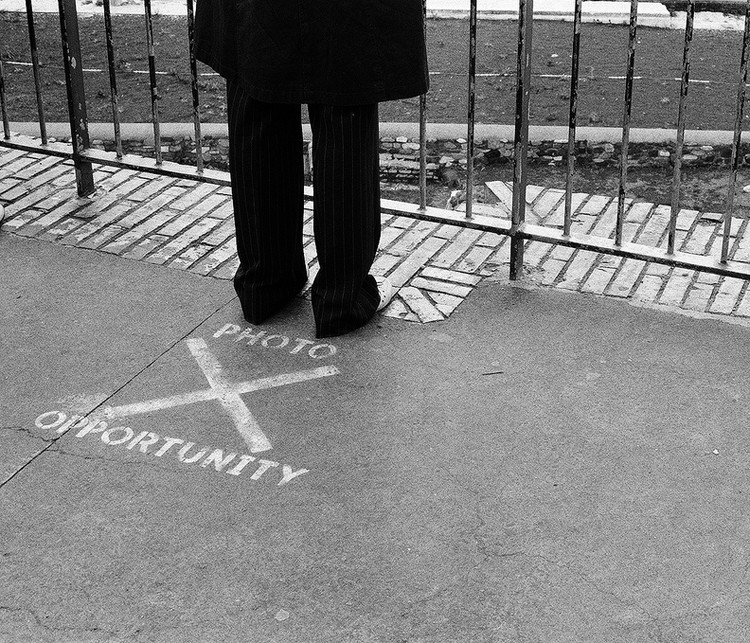
"Always remember that there is a photo in every situation, it's just a matter of how closely you look to find it."
—PHOTOVIDEOi (Feb. 2007)
|
|
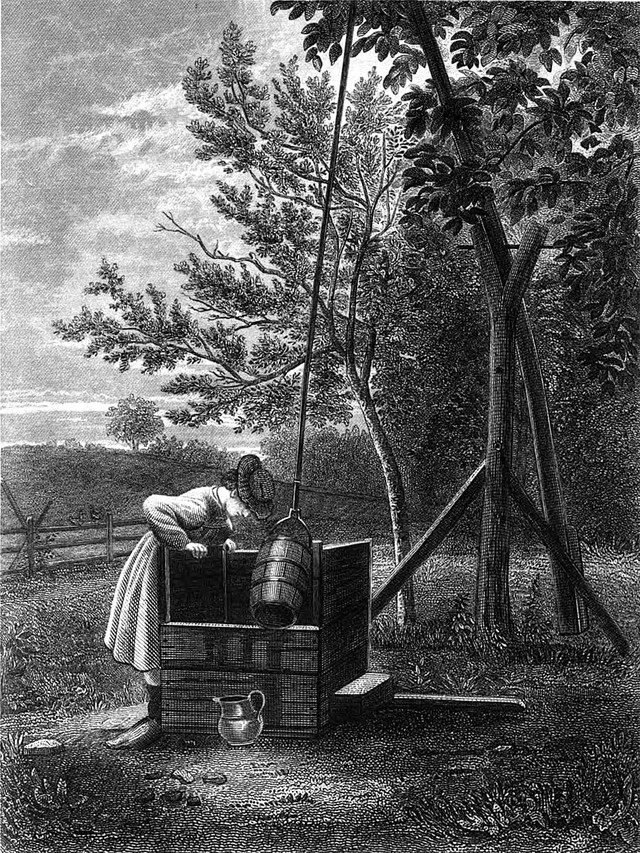
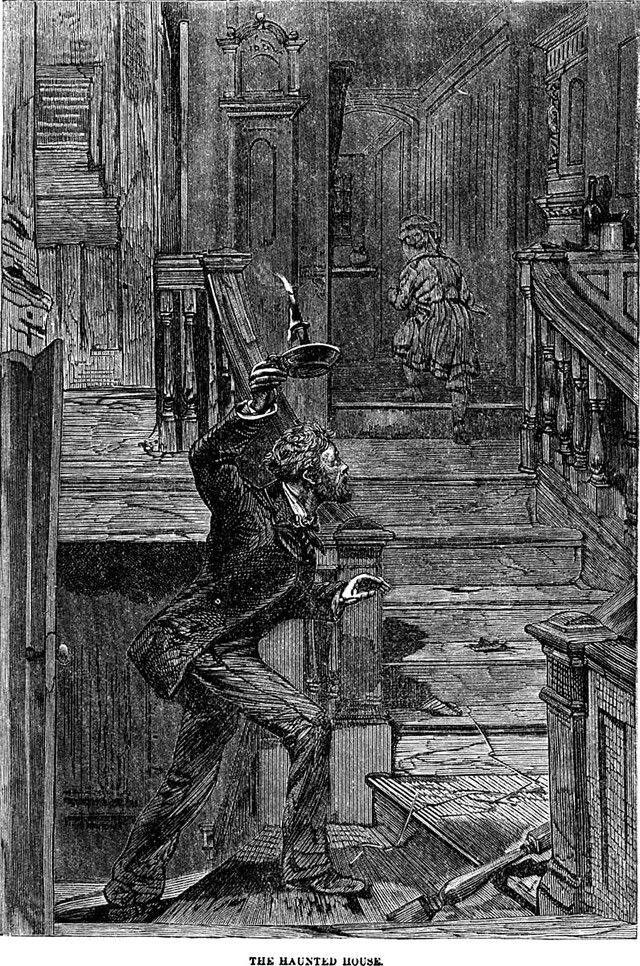
An illustration from an 1873 issue of Peterson's magazine.
|
|
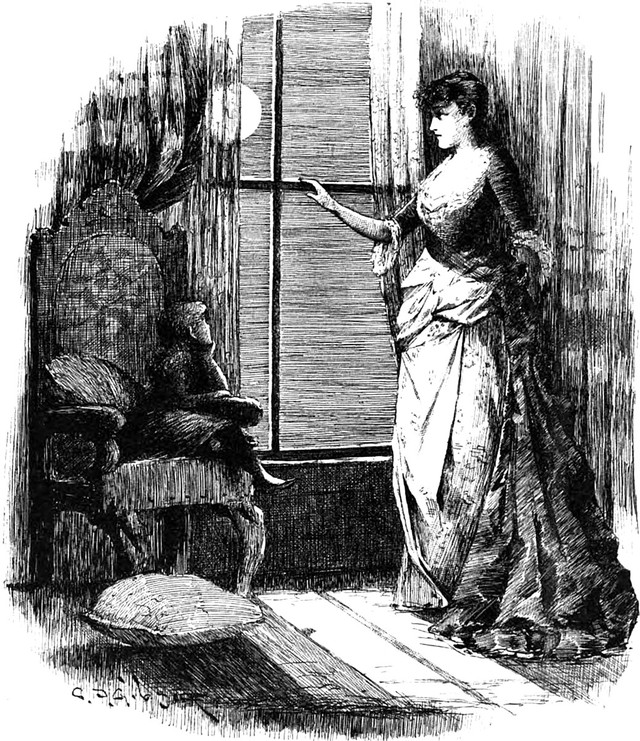
An illustration from an 1887 issue of Life magazine.
|
|
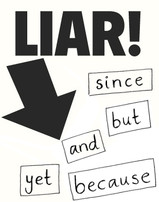
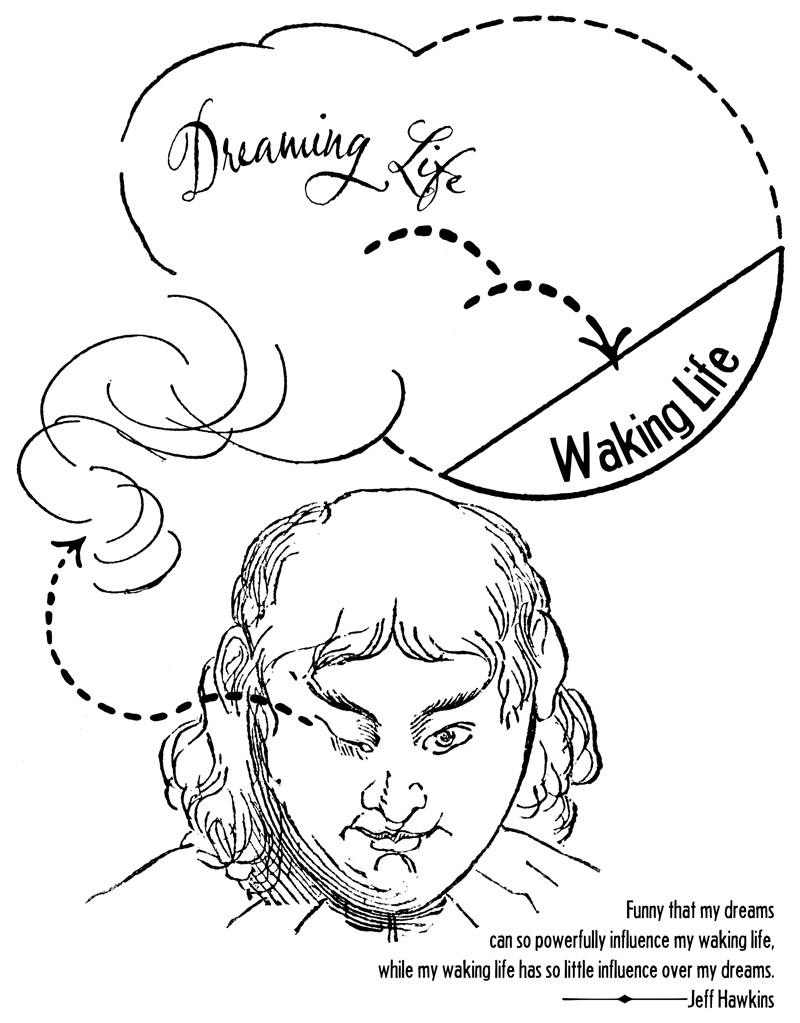
I dreamed again about a coordinating conjunction. It said the clauses
in our sentence were long and contained internal punctuation used to
separate long items in a series. This was what I wanted to hear:
it meant that I belonged in the sentence. But for some reason I
felt certain that the conjunction was lying.
I also dreamed that I had dinner and drinks with Michael Tomasky, who
said: "If I were linguistic emperor, not only would semicolons be
mandatory, but we’d all be writing like Carlyle: massive 130-word
sentences that were mad concatenations of em dashes, colons,
semicolons, parentheticals, asides; reading one of those Carlyle
sentences can sweep me along in its mighty wake and make me feel as if
I’m on some sort of drug. What writing today does that?
Some, maybe even a lot, in the realm of literature; but not much in
non-fiction, alas.”
|
|
From Prof. Oddfellow's sketchbook:
|
|
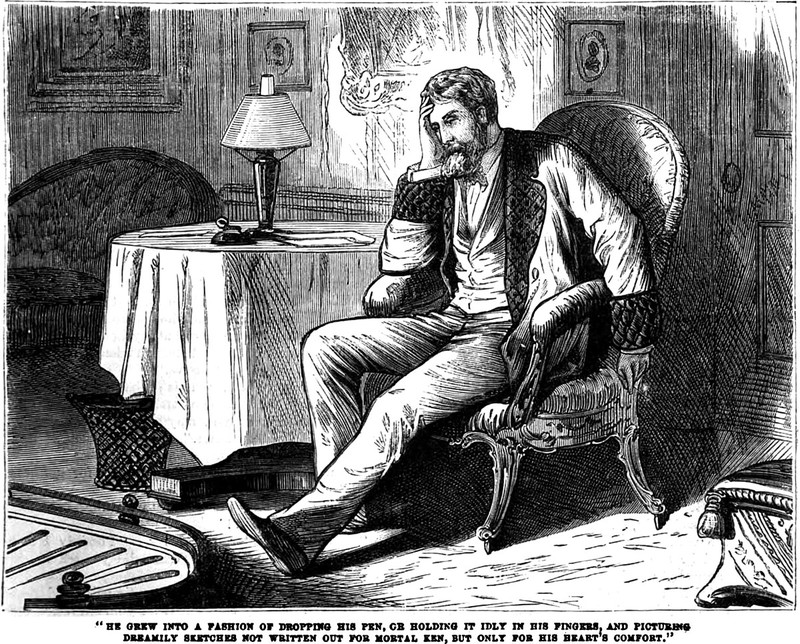
An illustration from an 1879 issue of Frank Leslie's Popular Monthly magazine. The caption reads: "He grew into a fashion of dropping his pen, or holding it idly in his fingers, and picturing dreamily sketches not written out for mortal ken, but only for his heart's comfort."
|
|
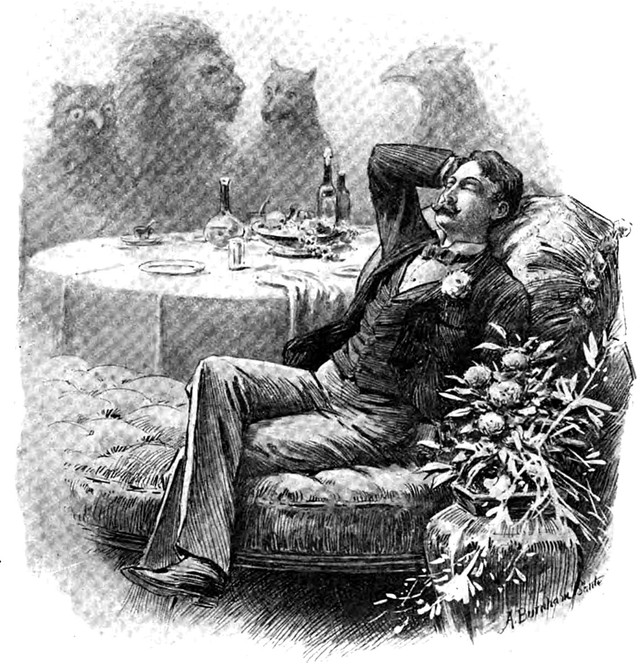
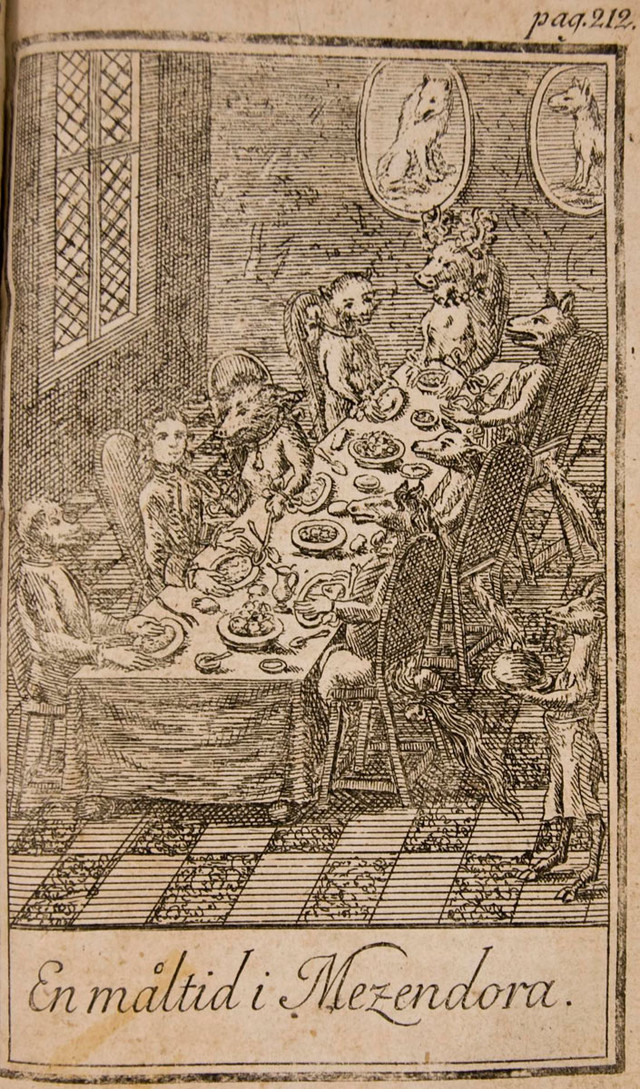
Above: An illustration from an 1894 issue of Frank Leslie's Popular Monthly magazine whose caption indicates that the faces of the subject's companions were transformed.
Below: An illustration from Niels Klim's Journey Under the Ground (1767) by Baron Ludvig Holberg.
|
Page 4056 of 4336
Original Content Copyright © 2026 by Craig Conley. All rights reserved.
|







 "In truth, everything is already healed right now."