|
|
 |
 |
The Bridge of St. Benezet (Avignon). From Shadowland, 1923.
|

 |
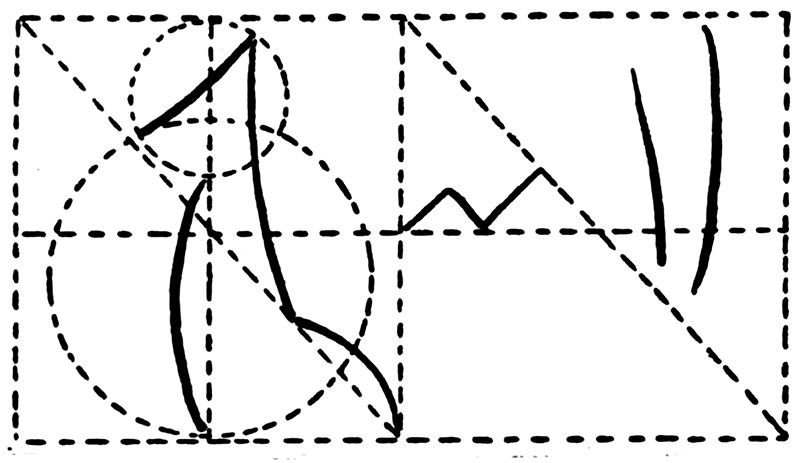
Omar Khayyám, from the endpapers of Wesleyan College's 1935 yearbook.
|

 |
 |
| [Inexplicable images from generations ago invite us to restore the lost
sense of immediacy. We follow the founder of the Theater of
Spontaneity, Jacob Moreno, who proposed stringing together "now and then
flashes" to unfetter illusion and let imagination run free. The images
we have collected for this series came at a tremendous price, which we explained previously.] |
|

 |
From the College of William and Mary's 1934 yearbook.
|


 |
"Alarm rings but no one answers." From The Gateway, 1965.
|

 |
Find the tiny men for a sense of scale. From The Century, 1891.
 |
| [Inexplicable images from generations ago invite us to restore the lost
sense of immediacy. We follow the founder of the Theater of
Spontaneity, Jacob Moreno, who proposed stringing together "now and then
flashes" to unfetter illusion and let imagination run free. The images
we have collected for this series came at a tremendous price, which we explained previously.] |
|

 |
From Denison University's 1891 yearbook.
|

 |
"Walk with the dead in the moonlight." From The Aberree, 1959.
|

 |
The temporal anomaly of course is in the bottom right corner. From Tufts University's 1977 yearbook.
|

 |
 |
| [Inexplicable images from generations ago invite us to restore the lost
sense of immediacy. We follow the founder of the Theater of
Spontaneity, Jacob Moreno, who proposed stringing together "now and then
flashes" to unfetter illusion and let imagination run free. The images
we have collected for this series came at a tremendous price, which we explained previously.] |
|

 |
 |
| [Inexplicable images from generations ago invite us to restore the lost
sense of immediacy. We follow the founder of the Theater of
Spontaneity, Jacob Moreno, who proposed stringing together "now and then
flashes" to unfetter illusion and let imagination run free. The images
we have collected for this series came at a tremendous price, which we explained previously.] |
|

 |
From Goucher College's 1957 yearbook.
|

 |
"Weak, tired, nervous." From the Duluth Evening Herald, 1896.
 |
| [Inexplicable images from generations ago invite us to restore the lost
sense of immediacy. We follow the founder of the Theater of
Spontaneity, Jacob Moreno, who proposed stringing together "now and then
flashes" to unfetter illusion and let imagination run free. The images
we have collected for this series came at a tremendous price, which we explained previously.] |
|

 |
From Lindenwood Tales by Marguerite Behman and illustrated by H. C. Meyer, 1921.
 |
| [Inexplicable images from generations ago invite us to restore the lost
sense of immediacy. We follow the founder of the Theater of
Spontaneity, Jacob Moreno, who proposed stringing together "now and then
flashes" to unfetter illusion and let imagination run free. The images
we have collected for this series came at a tremendous price, which we explained previously.] |
|

 |
|
|
 |
 |
| I Found a Penny Today, So Here's a Thought |
(permalink) |
 |
 |
 |
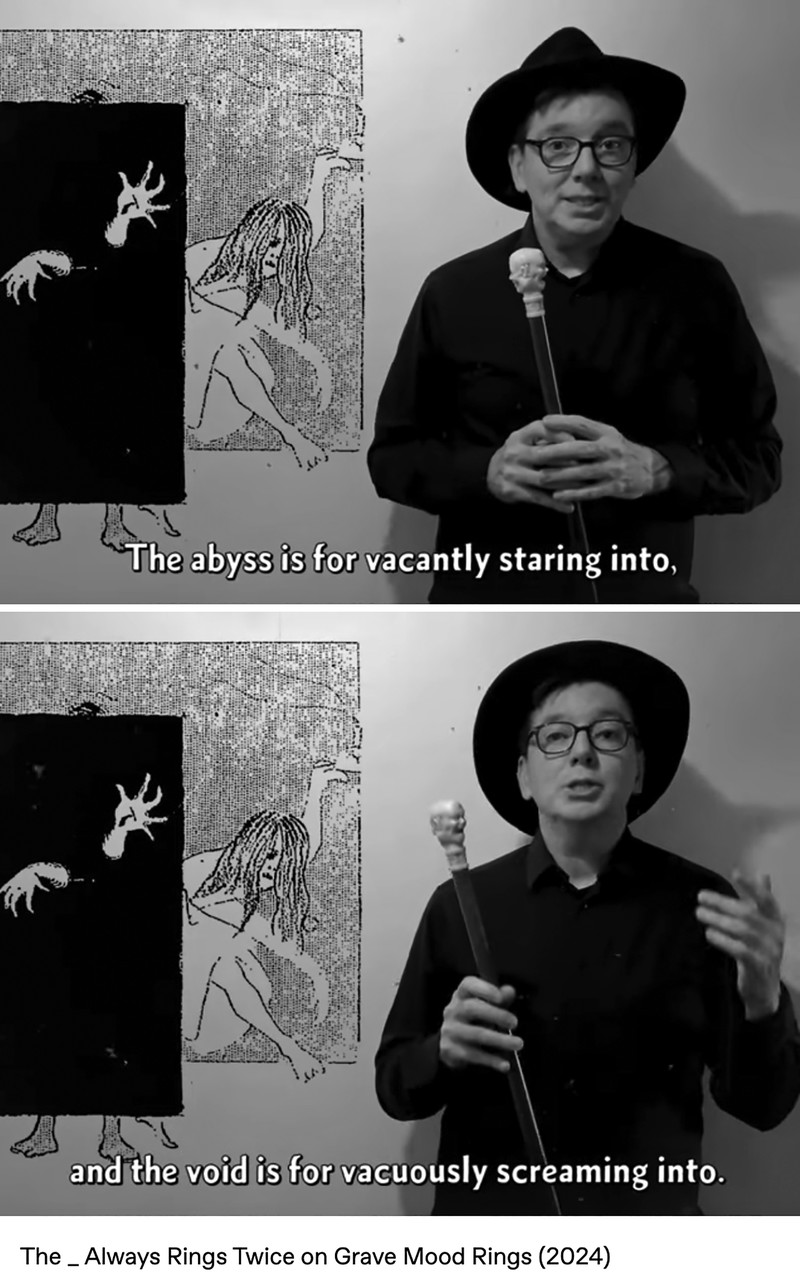
Hailed as "the best series running at this time" (thanks, Billy Brujo Show!), it's Grave Mood Rings.
Mixing vampire humor and 1970s tropes (like pet rocks, lava lamps, disco music, bell-bottom pants, mirror balls, and of course mood rings), the web series Grave Mood Rings pokes fast fun at classic slow-moving Gothic soap operas like Dark Shadows and the Canadian series Strange Paradise. In addition to a vampiric Viscount, a castle is home to a groovy Doctor (a phlebotomist, naturally), a jolly housekeeper with her own laugh track, a werewolf Vicar, and an arch-nemesis riddler wearing a Sphinx mask. Corny wordplay, the occasional bizarre sing-a-long, and haunted doughnuts punctuate the proceedings, in the tradition of the sketch comedy of MadTV, Kids in the Hall, and SCTV.
|

 |
We're honored by this review over at Dabodab:
Video Series Review: Grave Mood Rings
by Briyan Frederick
In an unexpected yet delightful twist of nostalgia and absurdity, Jonathan Caws-Elwitt has introduced us to “Grave Mood Rings,” a web series crafted alongside Craig Conley and Michael Warwick (of Captive Audience and Mystery Arts fame). This series is a carriage ride of humor that blends vampire lore with the most iconic clichés of the 1970s.
For a bit of personal context—as someone who was once nicknamed Barnabas Collins by schoolmates due to my hair—this show resonates on a unique level. Watching “Grave Mood Rings” feels like revisiting a beloved, albeit twisted, chapter of television history.
Each “emptive” episode runs just a few minutes but is packed with layered seventies tropes presented through gauze-lensed scenes. You can viscount on each episode to deliver absurd twists and puns forced through plastic teeth. The Viscount playing an invisible organ and singing with said teeth quickly became my favorite recurring element. His character embodies the blend of humor and homage that makes this series so engaging.
The artist or label describes the show as a mix of vampire humor and 1970s elements such as pet rocks, lava lamps, disco music, bell-bottom pants, mirror balls, and mood rings. (And that’s just the credits preface). “Grave Mood Rings” cleverly parodies slow-moving Gothic soap operas like “Dark Shadows” and the Canadian series “Strange Paradise.” This creative concoction culminates in a series that is both a satire and a love letter to the past.
The setting—a castle—hosts a colorful array of characters, including:
- A Groovy Doctor: A phlebotomist who adds a tongue-in-cheek nod to the show’s vampiric theme.
- A Jolly Housekeeper: Complete with her own laugh track, she brings a meta-comedic touch reminiscent of classic sitcoms.
- A Werewolf Vicar: Infusing the Gothic atmosphere with humorous howls.
- An Arch-Nemesis Riddler: Donning a Sphinx mask, he adds an aura of mystery and mischief.
Corny wordplay, bizarre sing-alongs, and even haunted doughnuts punctuate the proceedings. The humor is in line with sketch comedy classics like MadTV, Kids in the Hall, and SCTV, making “Grave Mood Rings” a refreshing addition to the genre.
Jonathan’s invitation to explore the series led me to the Grave Mood Rings playlist on YouTube. It’s a surreal journey into a world where vampires groove with werewolves and laugh-tracked housekeepers. It’s an experience replete with humor, nostalgia, and a touch of the absurd. Whether you have a penchant for Gothic soap operas or a soft spot for 1970s kitsch, this series offers a uniquely entertaining escape.
So, if you’re intrigued by the idea of witnessing a Viscount sing through plastic teeth or simply crave a good laugh, “Grave Mood Rings” is well worth your time. Dive into this wonderfully off-the-wall sendup and prepare for a nostalgic, yet refreshingly original ride.
 |
|
|

 |
"What are their names?" From The Children's Newspaper, 1961.
|

 |
From The Progressive Road to Reading, Book Two, 1912.
 |
| [Inexplicable images from generations ago invite us to restore the lost
sense of immediacy. We follow the founder of the Theater of
Spontaneity, Jacob Moreno, who proposed stringing together "now and then
flashes" to unfetter illusion and let imagination run free. The images
we have collected for this series came at a tremendous price, which we explained previously.] |
|

 |
Today's cat measuring a bat is from Follow Me by Thorn et al., 1970.
 |
| [Inexplicable images from generations ago invite us to restore the lost
sense of immediacy. We follow the founder of the Theater of
Spontaneity, Jacob Moreno, who proposed stringing together "now and then
flashes" to unfetter illusion and let imagination run free. The images
we have collected for this series came at a tremendous price, which we explained previously.] |
|

Page 611 of 4061


Original Content Copyright © 2026 by Craig Conley. All rights reserved.
|