CRAIG CONLEY (Prof. Oddfellow) is recognized by Encarta as “America’s most creative and diligent scholar of letters, words and punctuation.” He has been called a “language fanatic” by Page Six gossip columnist Cindy Adams, a “cult hero” by Publisher’s Weekly, a “monk for the modern age” by George Parker, and “a true Renaissance man of the modern era, diving headfirst into comprehensive, open-minded study of realms obscured or merely obscure” by Clint Marsh. An eccentric scholar, Conley’s ideas are often decades ahead of their time. He invented the concept of the “virtual pet” in 1980, fifteen years before the debut of the popular “Tamagotchi” in Japan. His virtual pet, actually a rare flower, still thrives and has reached an incomprehensible size. Conley’s website is OneLetterWords.com.
[Inexplicable images from generations ago invite us to restore the lost
sense of immediacy. We follow the founder of the Theater of
Spontaneity, Jacob Moreno, who proposed stringing together "now and then
flashes" to unfetter illusion and let imagination run free. The images
we have collected for this series came at a tremendous price, which we explained previously.]
[Inexplicable images from generations ago invite us to restore the lost
sense of immediacy. We follow the founder of the Theater of
Spontaneity, Jacob Moreno, who proposed stringing together "now and then
flashes" to unfetter illusion and let imagination run free. The images
we have collected for this series came at a tremendous price, which we explained previously.]
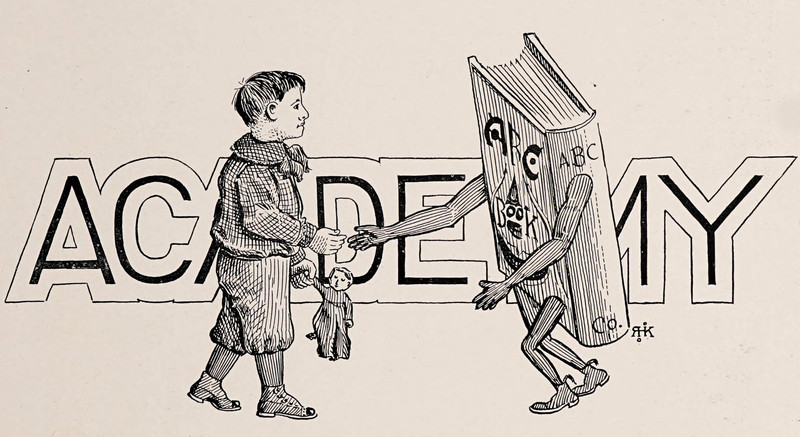
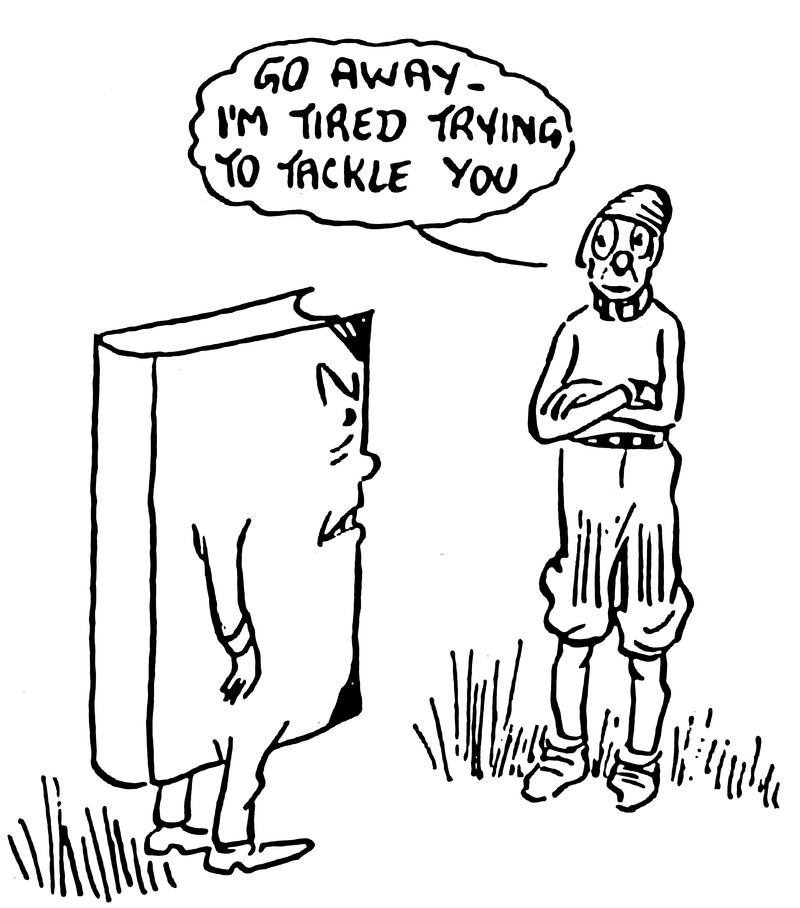
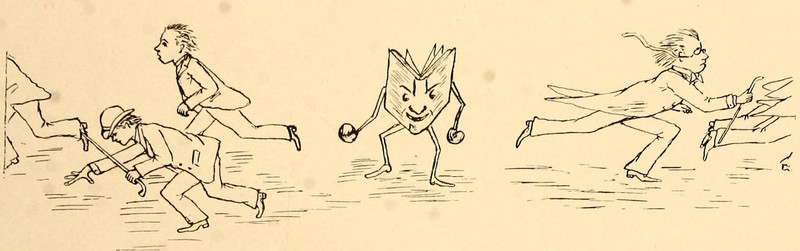
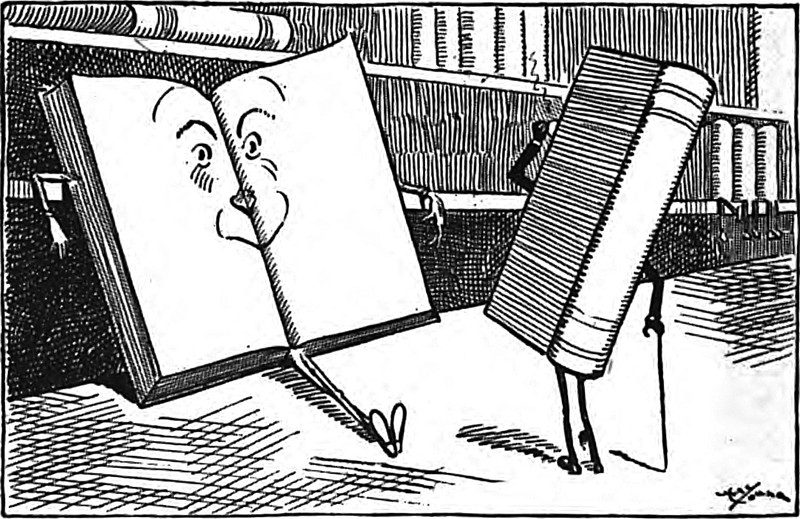
Rare to see a boxing book. The students aren't afraid of being knocked out, though -- they're afraid of paper cuts. From Indiana University's 1895 yearbook.
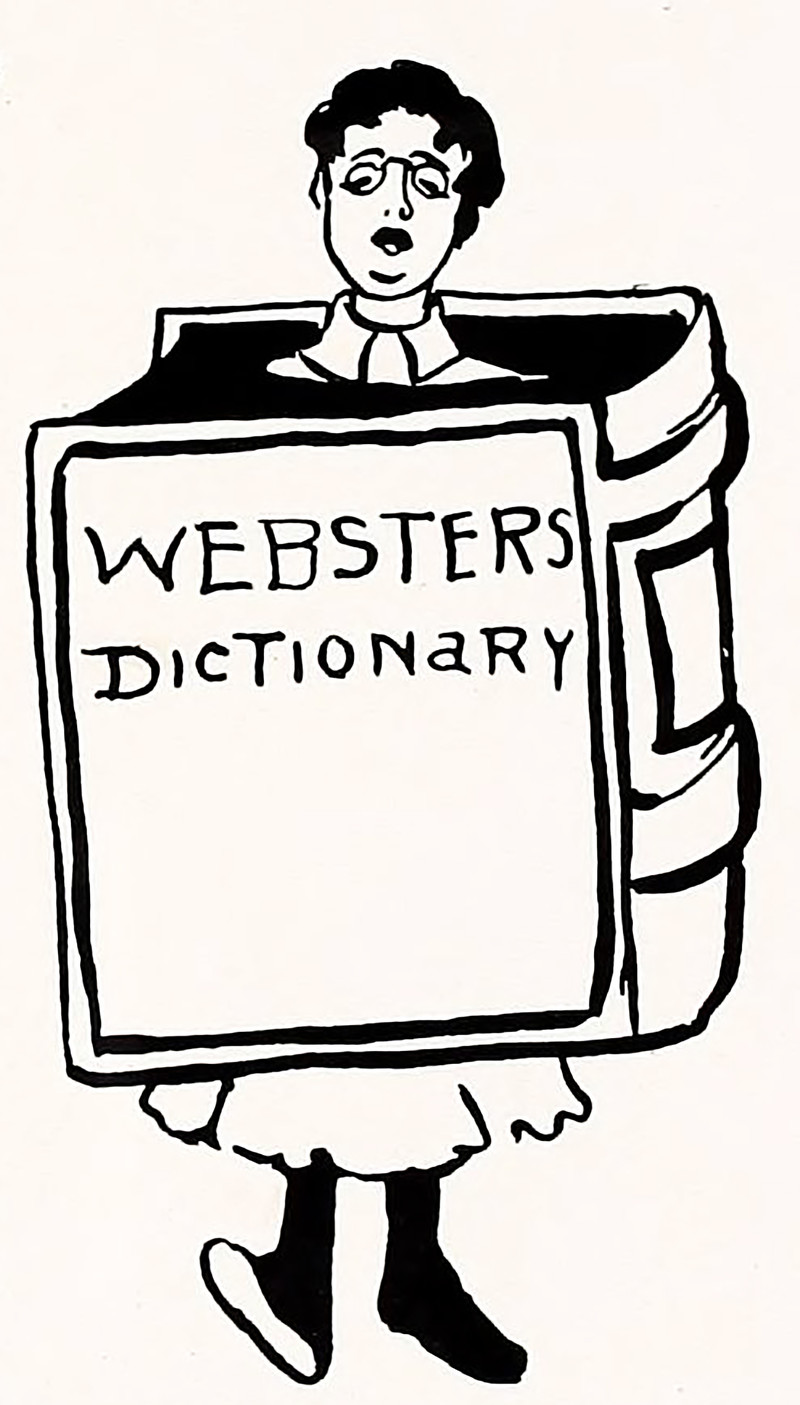
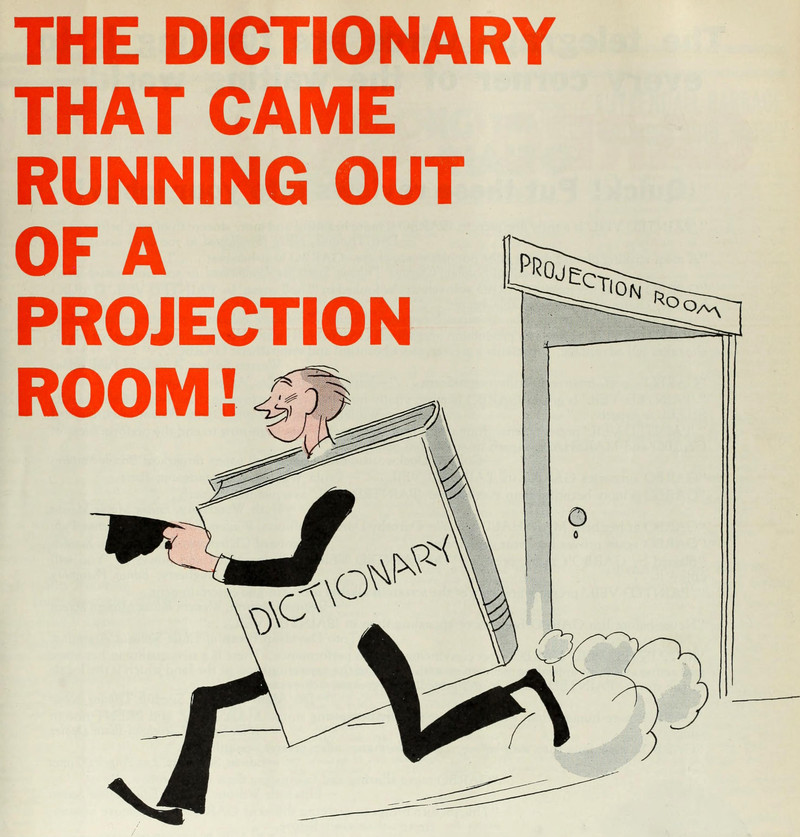
You noticed how dumbed-down movies are, and here's why -- the dictionary ran out in 1934. In case viewers couldn't follow the simple statement, both the projection room and dictionary are labeled. The artist put the book title on the back cover. From The Film Daily, 1934.
[Inexplicable images from generations ago invite us to restore the lost
sense of immediacy. We follow the founder of the Theater of
Spontaneity, Jacob Moreno, who proposed stringing together "now and then
flashes" to unfetter illusion and let imagination run free. The images
we have collected for this series came at a tremendous price, which we explained previously.]
[Inexplicable images from generations ago invite us to restore the lost
sense of immediacy. We follow the founder of the Theater of
Spontaneity, Jacob Moreno, who proposed stringing together "now and then
flashes" to unfetter illusion and let imagination run free. The images
we have collected for this series came at a tremendous price, which we explained previously.]
[Inexplicable images from generations ago invite us to restore the lost
sense of immediacy. We follow the founder of the Theater of
Spontaneity, Jacob Moreno, who proposed stringing together "now and then
flashes" to unfetter illusion and let imagination run free. The images
we have collected for this series came at a tremendous price, which we explained previously.]
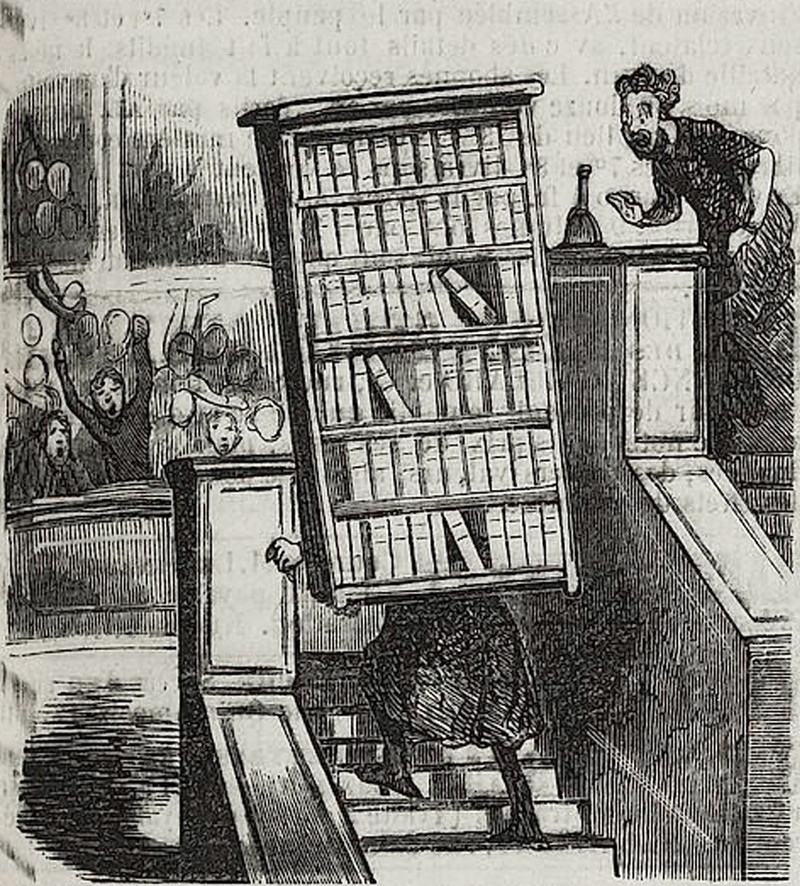
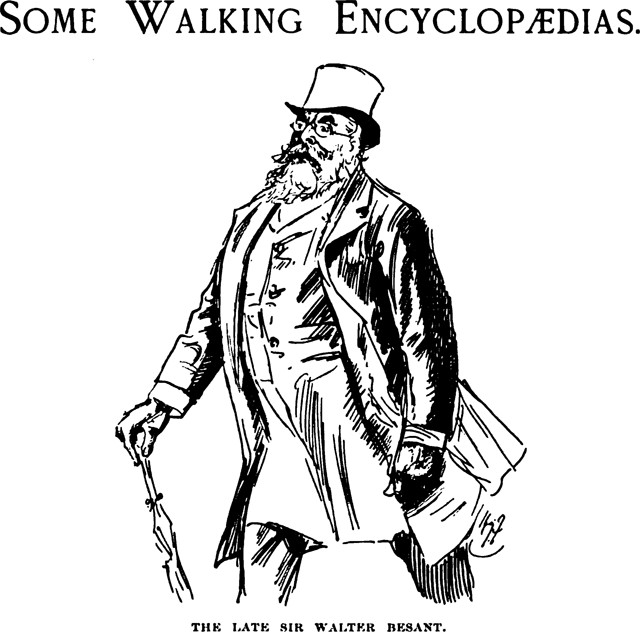
Speaking of walking encyclopedias, a few years ago we noted how we too often forget that even zombies were once better read than dead. A crucial example is an article in a 1905 issue of Windsor magazine, in which the first example of a "walking encyclopaedia" is technically deceased. Over the years, ravenousness for knowledge, even from beyond the grave, became equated with a base hunger for brains. Alas, it's all indicative of the "dumbing down" of popular culture.